Waterproofing concrete is the step that makes every other repair last. Concrete itself is porous. Rain, irrigation, pool water and salt spray soak in through the surface, cracks and joints, and carry chlorides to the reinforcing steel. Once the steel rusts, the concrete cracks and spalls. On a condominium, stopping water is how a board protects the structure it just paid to repair.
SERPE-CO is a Pompano Beach Certified General Contractor that builds concrete restoration, waterproofing and painting projects. The owner's engineer or architect specifies the waterproofing system and details. We price that scope and install it. Here is how the common systems fit a building.
Where water gets into condo concrete
- Balcony slabs with worn coatings and open railing post pockets.
- Pool decks and plazas over garages, lobbies or units.
- Planters holding wet soil against walls and slabs.
- Open walkways and catwalks exposed to rain.
- Garage decks where cars carry in water and salt.
- Walls with cracked stucco, failed sealants and aging paint.
6 proven systems for waterproofing concrete
1. Penetrating sealers
Silane and siloxane sealers soak into the surface and repel water while letting vapor escape. They suit vertical surfaces and some horizontal areas where a film coating is not wanted. They do not bridge cracks.
2. Elastomeric wall coatings
Thick, flexible coatings on stucco and concrete walls that bridge hairline cracks and shed wind-driven rain. Our elastomeric paint post covers them in detail.
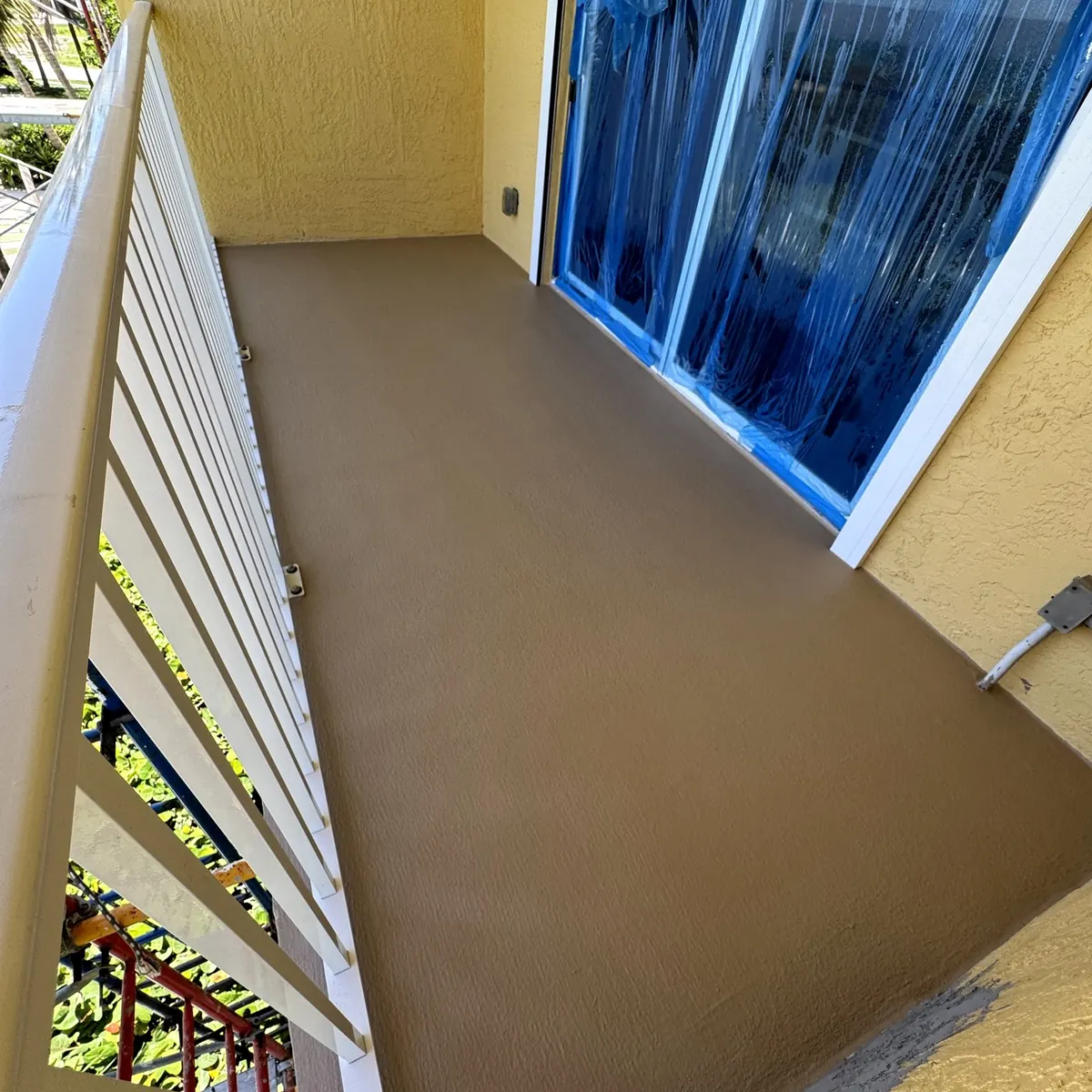
3. Balcony and walkway coatings
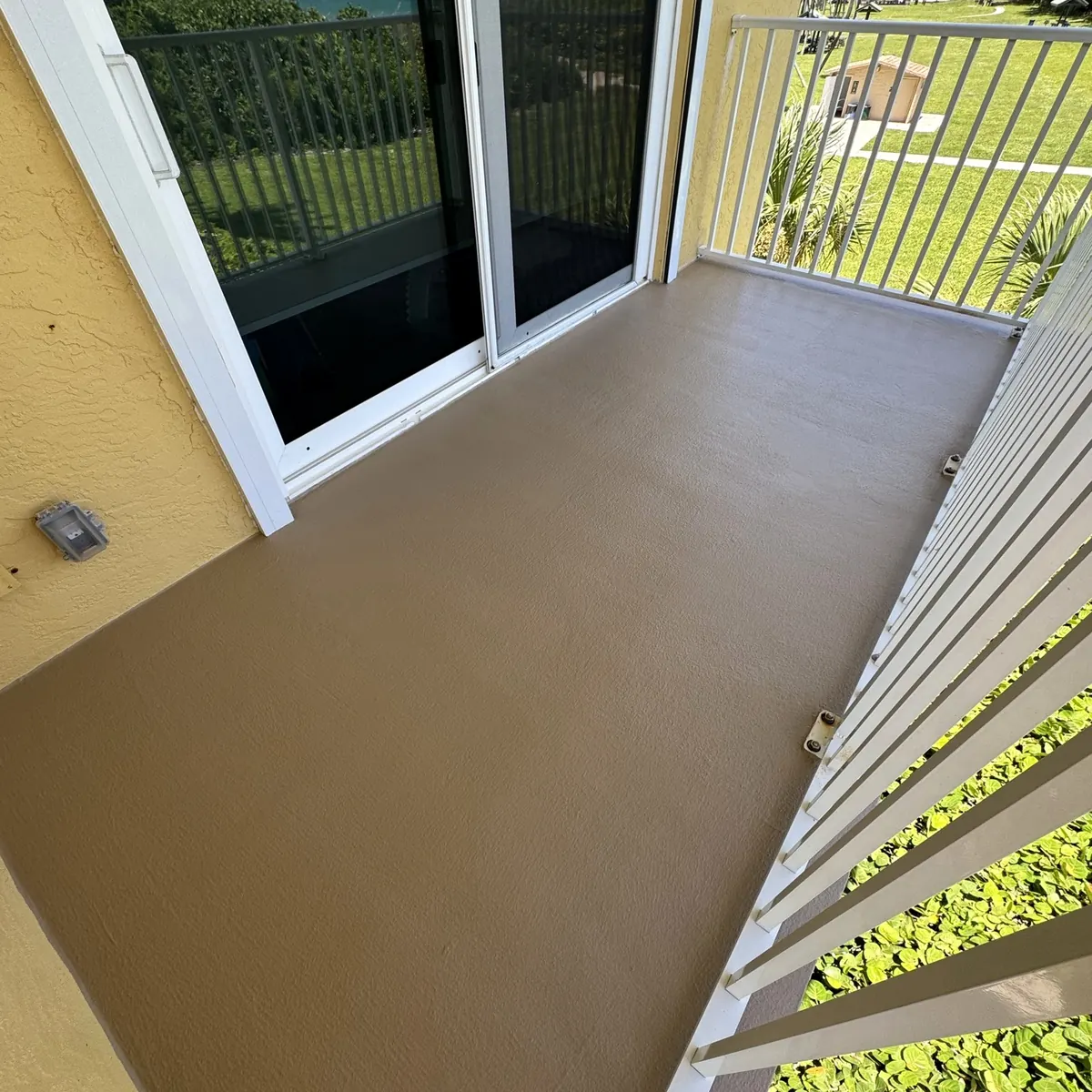
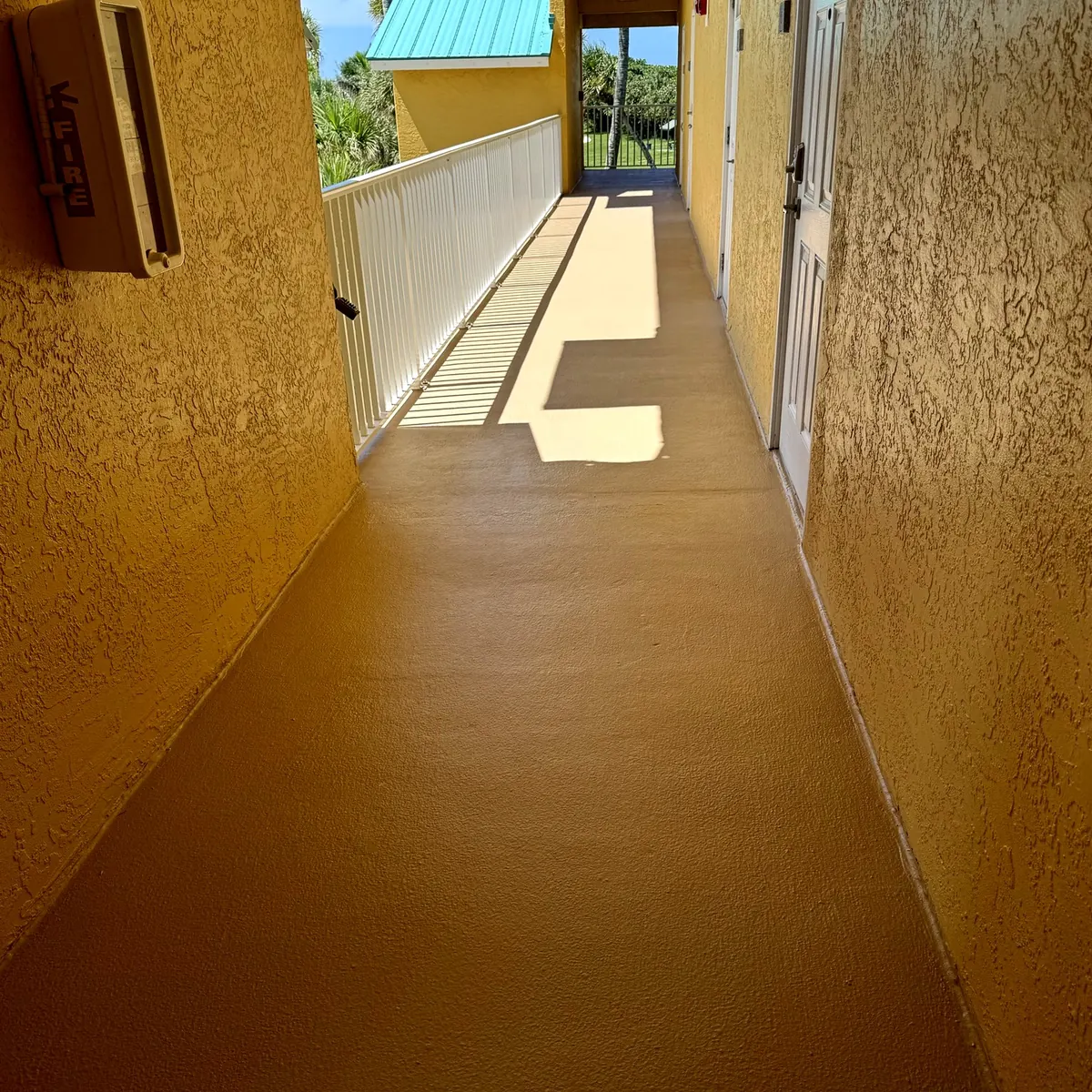
Fluid-applied, slip-resistant coatings that waterproof balcony and walkway slabs. Detailing at slab edges, door thresholds and railing posts makes or breaks them. Our balcony waterproofing post explains those details.
4. Traffic coatings
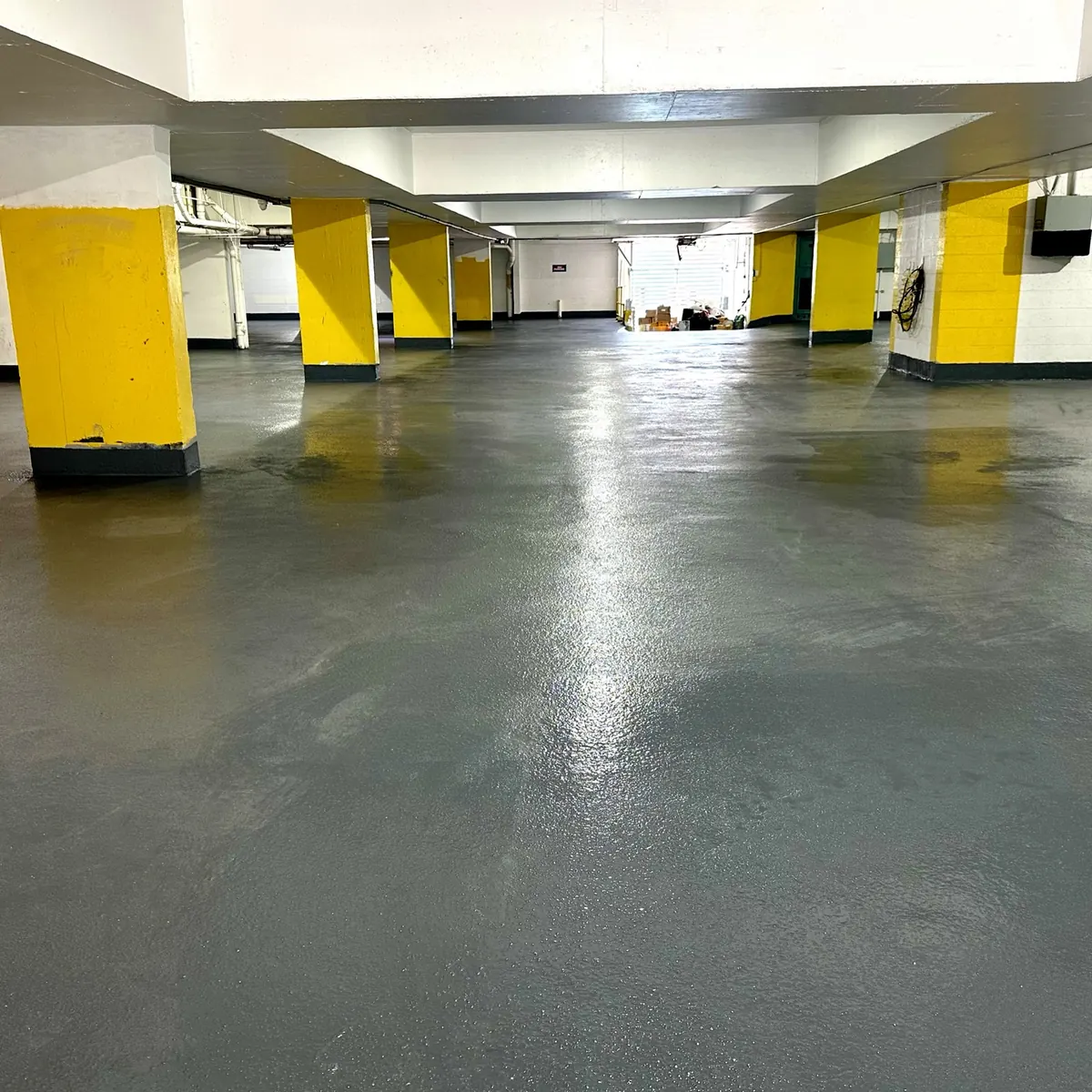
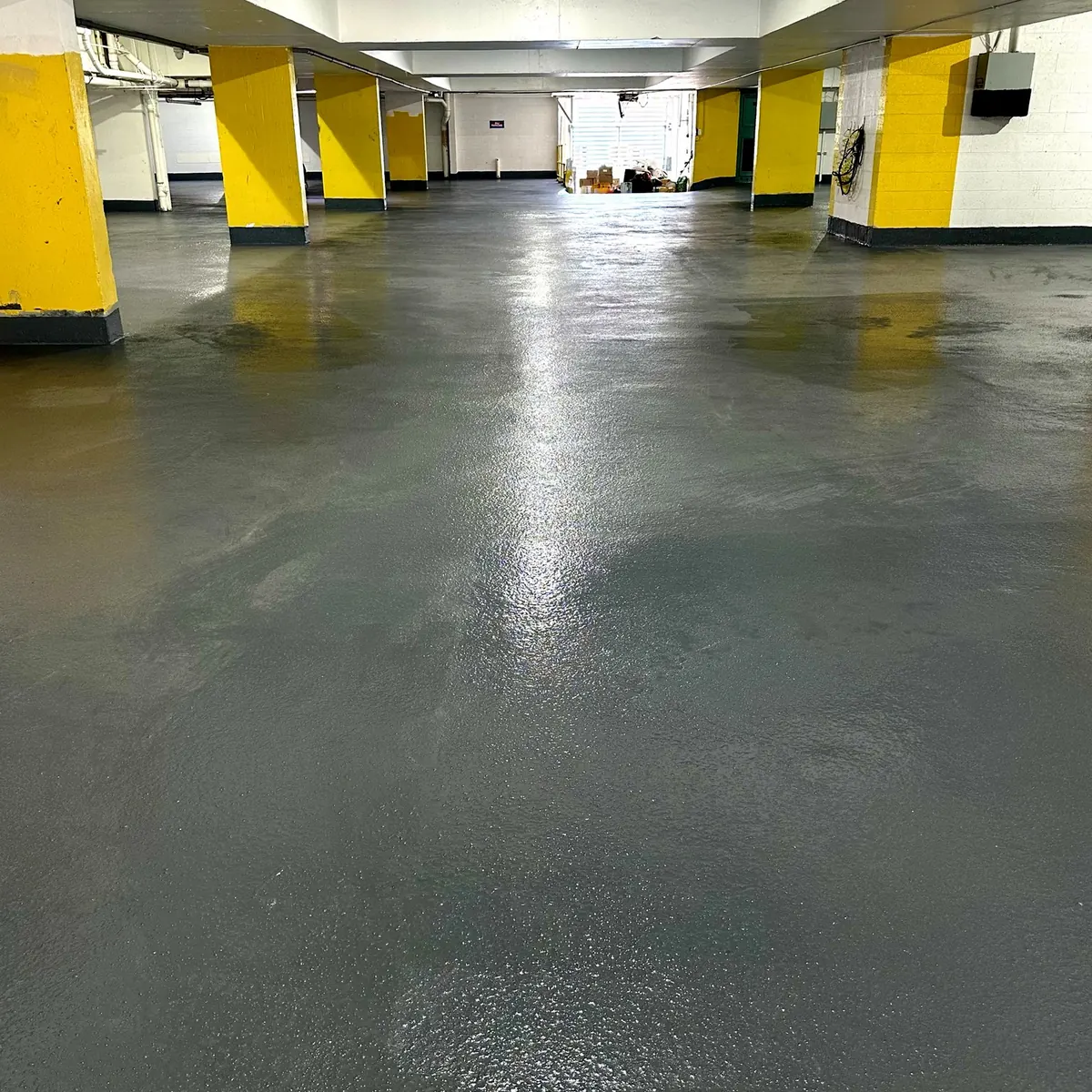
Multi-layer systems for garage decks and drive areas that resist tire wear while keeping water and salt out of the slab. See our traffic coating post.
5. Below-topping membranes
Sheet or fluid membranes under pavers, topping slabs or soil on plazas, pool decks and planters. Protection layers and drainage keep them working. Our pool deck pavers post shows that assembly.
6. Joint sealants and expansion joints
Every joint is a potential leak. Sealants at control joints and engineered expansion joint systems let the building move without opening a water path. Our expansion joint repair post covers them.
Repairs before waterproofing
Waterproofing concrete that is already delaminated or corroding wastes the waterproofing. The engineer's scope comes first: remove unsound concrete, treat or replace steel, rebuild sections and repair cracks. Only then does the membrane or coating go down. Applying waterproofing over damaged concrete traps the problem underneath, where it keeps growing out of sight.
Surface preparation is the other half. Most systems need clean, sound, properly profiled concrete at the right moisture level. The American Concrete Institute's guide to protective treatments, ACI 515.2R, is one of the references designers use when choosing and specifying systems.
Details decide whether waterproofing works
Most leaks start at edges and penetrations, not in the middle of a membrane. Upturns at walls, terminations under door thresholds, seals around drains, railings, light poles and pipes, and transitions between systems all need careful detailing. Good specifications include drawings of these details. Good crews follow them exactly.
Planters deserve special attention
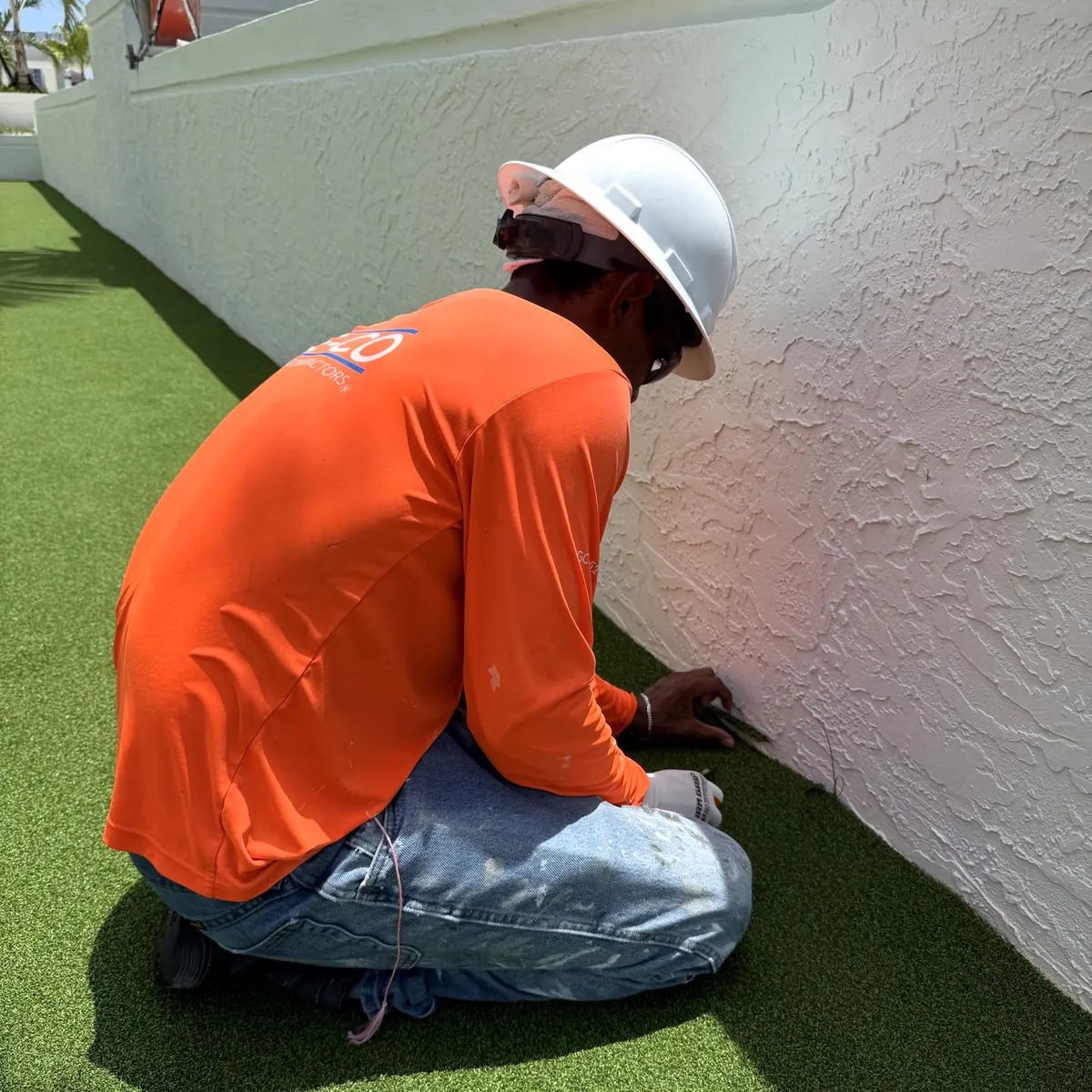
Planters on pool decks and plazas hold wet soil against concrete for years, and roots search for any gap. We waterproof planters as part of pool deck projects for that reason. The membrane, a root barrier where specified, drainage and a protection layer keep the planter from leaking into the garage or units below.
Maintenance keeps systems working
- Clean drains on decks, balconies and planters regularly.
- Inspect sealant joints yearly and replace failed sections.
- Repair coating damage from furniture, grills or equipment quickly.
- Recoat traffic and balcony coatings before the base layer wears through.
- Track leaks by location so the engineer can spot patterns.
Planning waterproofing in the reserve study
Waterproofing and exterior painting are components a structural integrity reserve study must cover under Florida Statute 718.112. Each system has a service life, and recoats or replacements belong on the reserve schedule. Our SIRS post explains how that funding works.
Signs your waterproofing is failing
Waterproofing concrete is never finished for good. Every system wears, and the signs below tell the board when waterproofing concrete on a deck, balcony or planter needs attention again.
- Leaks or stains on ceilings below decks, balconies or planters.
- White deposits or rust stains on garage ceilings.
- Peeling, blistered or worn-through coatings.
- Cracked or missing sealant at joints and door thresholds.
- Ponding water that sits for days after rain.
Cracks are often where water first gets through a coating, and our concrete crack repair post explains how they are treated before recoating. On post-tensioned decks, leaks can reach the tendons, which our post tension cable repair post covers. Report leak patterns to the engineer so repairs target the real source.
How SERPE-CO can help
SERPE-CO prices and builds the engineer's waterproofing scope, from repairs and coatings to membranes, planters and joints, across Broward, Palm Beach and Miami-Dade. See our waterproofing service and Miami-Dade County commercial waterproofing, then contact us or call (954) 718-3094.
CEO and co-founder of SERPE-CO, a family-owned Florida Certified General Contractor (CGC #1523974). In concrete restoration since 2005 and a contributor to the Florida Community Association Journal. This article is general information, not engineering or legal advice.