Amenity putting greens
Putting Green Installation for Condos, Clubs and Hotels
A putting green is only as true as the base under it. SERPE-CO shapes and compacts the base, sets the cups and builds the drainage, then lays a surface that rolls the way golfers expect.
In short
What goes into a commercial putting green installation?
A commercial putting green installation starts with excavation and a compacted stone base shaped with gentle contours, so putts break without water pooling. Next comes a short, dense putting surface, a longer fringe or collar turf around it, and cups set flush. Some putting surfaces are filled with sand and some are made to play without infill. Drainage, clean edges and a simple brushing and rolling routine keep the green true for years of resident and guest use.
Where a green fits
Putting green installation for condos, clubhouses and hotels
A putting green installation turns an unused lawn, a side courtyard or a corner of a pool area into an amenity people visit every day. Condominiums and clubhouses use greens as a gathering spot, hotels add them near the pool or the lobby terrace, and office campuses put them where staff take a break. Unlike a backyard green, an amenity green sees steady traffic, leaning putters, kids and the occasional dropped drink, so the build has to hold up to all of it.
Location comes first. A good spot is fairly level, easy to reach from a walkway, away from sprinkler overspray and falling palm fronds, and out of the path where people cut across. Sun matters because synthetic turf gets hot. Shade from a building or trees in the afternoon makes a green more pleasant in a Florida summer, and a bench or two nearby makes it a place to stay.
Size depends on the space and the board's goals. A compact green with three or four cups can fit a small courtyard, while a larger green with a fringe, a chipping area and several hole locations suits a clubhouse lawn. SERPE-CO walks the site with the board or manager, looks at access, drainage and what sits under the ground, and then sends a written proposal for a ground-level green.
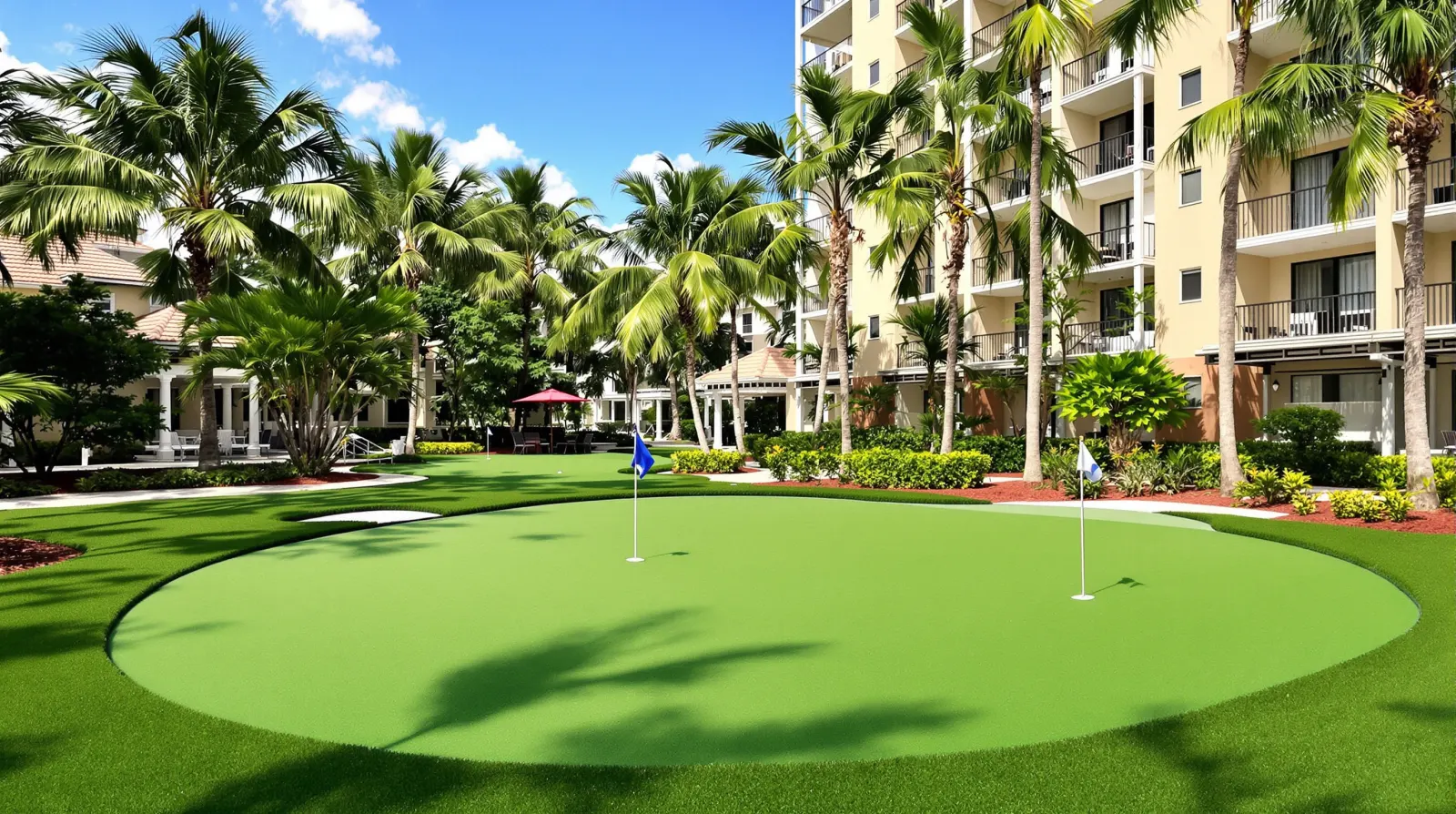
Shaping the base
Base, contours and compaction
The base sets how a green plays. Crews excavate the area, usually about 3 to 4 inches for a standard turf base and sometimes more where the soil is soft or the contours are deep. Geotextile fabric goes down where the soil needs it, then crushed stone or aggregate goes in thin lifts, each compacted before the next. Fine screenings on top are graded and rolled smooth, because every small dip under the surface shows up as a wobble in a putt.
Contours give a green its character. Gentle breaks, a tier or a small crown make putting more interesting, but every slope also has to send water somewhere. Contours are shaped into the base itself, not built up with padding, and the grade is checked with a level and a straightedge before turf goes down. A green that looks good but holds a puddle in the low corner will not play well after an afternoon storm.
Concrete and grading are SERPE-CO's everyday work, which is why we treat the base on a putting green installation the same way we treat a slab: set the grades, compact in lifts, and check it before covering it up. Any green on a rooftop, a podium or a deck over a membrane is different. There, the building's structural engineer or design professional confirms loads, drainage and hold-down, and we build to that design.
Surface and fringe
Putting surface, fringe and collar turf
A green uses two kinds of turf. The putting surface is a short, dense turf made for a ball to roll true at a steady speed. The fringe or collar is a longer turf that wraps the green, frames it visually and slows a ball that runs off the edge. Some designs add a rough or a chipping area in a longer turf again. Where the products meet, the seam is cut cleanly and glued on seam tape, so the transition is flat and does not catch a ball.
Cup placement is decided on the base, not the turf. Cups are set in the base at the right depth and level with the finished surface, and the turf is cut neatly around them. Placing cups on gentle breaks, away from the fringe edge and away from each other, gives residents a mix of short and long putts. Flags and flagsticks come with the cups, and most amenity greens add a few extra hole locations so the setup can change.
Edges get the same attention as seams. Along walkways and planters, nailer boards, edge trim or a concrete curb keep the perimeter tight. Where the green meets an existing paver or concrete walk, SERPE-CO sets the edge so the turf sits flush, with no trip lip for people walking past in sandals.
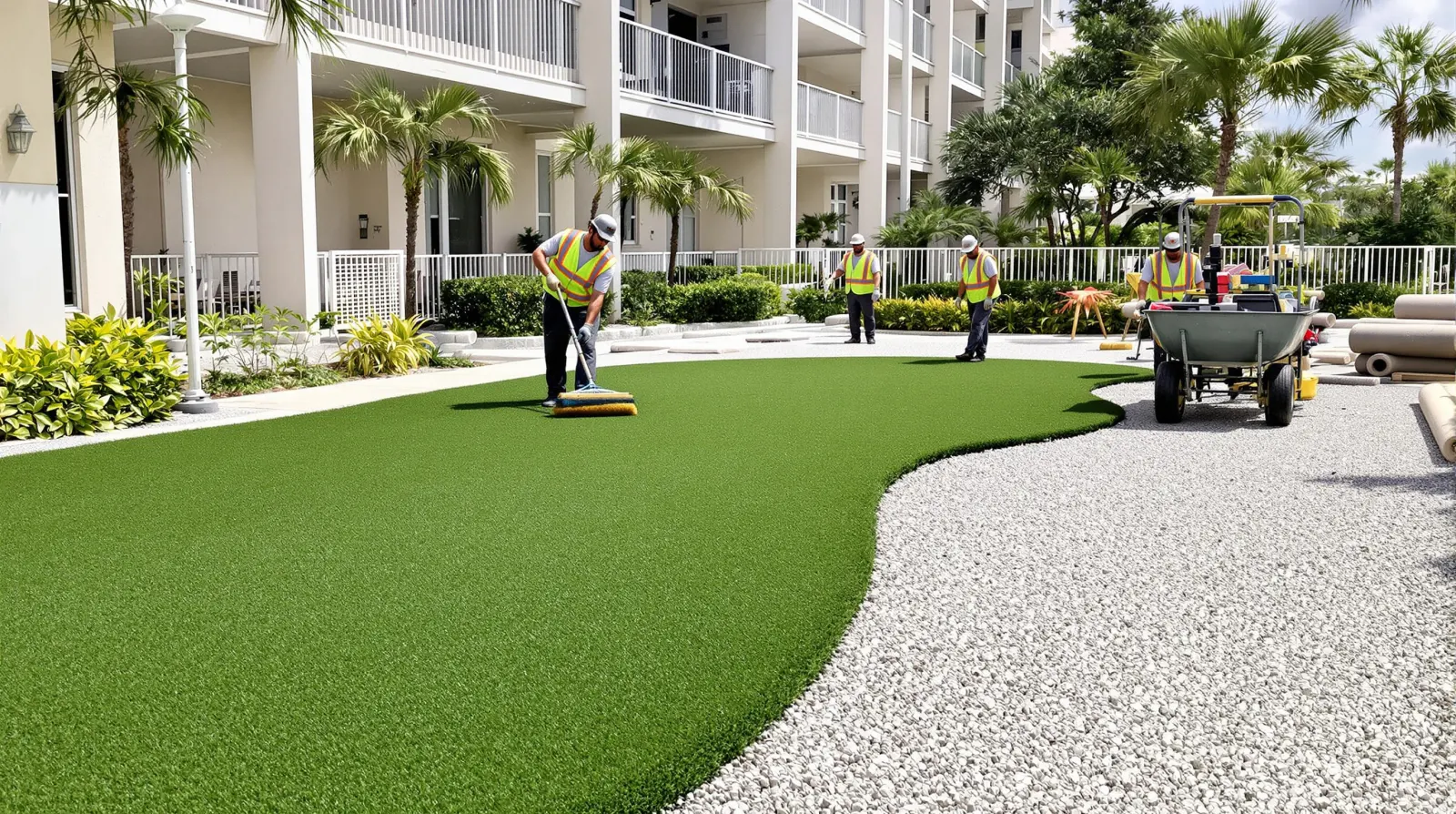
Sand or no sand
Sand-filled and non-infill putting surfaces
Putting turf generally comes in two families. Sand-filled surfaces are brushed full of fine silica sand, which supports the fibers, adds weight and lets the speed of the green be tuned by how much sand goes in and how it is rolled. Non-infill surfaces are made with a dense, textured fiber that plays without sand, which means less material to manage and nothing to wash out in a heavy rain.
Each type has tradeoffs. A sand-filled green can play more like a real green and be adjusted over time, but the sand needs topping up and a periodic brushing to stay even. A non-infill green is simpler to keep and suits areas near pools or entries where loose sand could track indoors. The board's use, the location and how much care staff can give help decide which fits a particular putting green installation.
SERPE-CO does not push a brand. We explain the tradeoffs, share product data and care instructions from the turf makers, and build the surface the board chooses. Samples on site are a good way for residents to see and putt on the options before the decision is made.
Where water goes
Drainage under an outdoor green
South Florida greens see sudden, heavy afternoon rain. Turf backing for outdoor use is perforated or permeable, so water goes down through the surface and into the stone base. From there the base has to carry it away, toward a perimeter drain, a lawn drain or a planting area that can take it. On a site where the soil is dense or the water table is high, a perforated drain line at the low side of the base keeps the green from staying soft after a storm.
Drainage also protects what is next to the green. Water from a green should not run onto a walkway, into a building wall or toward a pool deck. SERPE-CO plans the grade of the whole area, not just the turf, and ties the drainage into what the property already has where possible. On a deck over a membrane, a drainage mat under the turf keeps water flowing to the deck drains as the design professional specifies.
Irrigation changes too. Once grass becomes turf, the old sprinkler heads in that zone should be capped or adjusted by the property's irrigation contractor, so the green does not get soaked twice a week. The South Florida Water Management District year-round irrigation rule limits landscape watering to 2 days a week in most areas, with no watering between 10 a.m. and 4 p.m., and local rules can be stricter.
After it is built
Brushing, rolling and infill top-ups
A green stays true with a light, regular routine. Leaves, palm fronds and debris get blown off weekly, and more often in the fall or after storms. The surface is brushed to stand the fibers up and spread any infill evenly. On sand-filled greens, rolling now and then firms the surface and keeps the speed consistent from one end to the other.
Sand-filled greens need infill top-ups, usually around the cups, at the edges and in the spots where people stand. Non-infill greens skip that step but still benefit from brushing and debris removal. Cups and flags should be checked for level and wear, and any seam that starts to lift should be fixed early. The Synthetic Turf Council publishes general maintenance guidelines that work well alongside the turf maker's care instructions.
At the end of every putting green installation, SERPE-CO leaves the manager a short care sheet with a weekly and monthly routine and a list of what to watch for. A well-built base means the routine stays about the surface, not about fixing what is underneath.
More turf areas
Other places turf earns its keep.
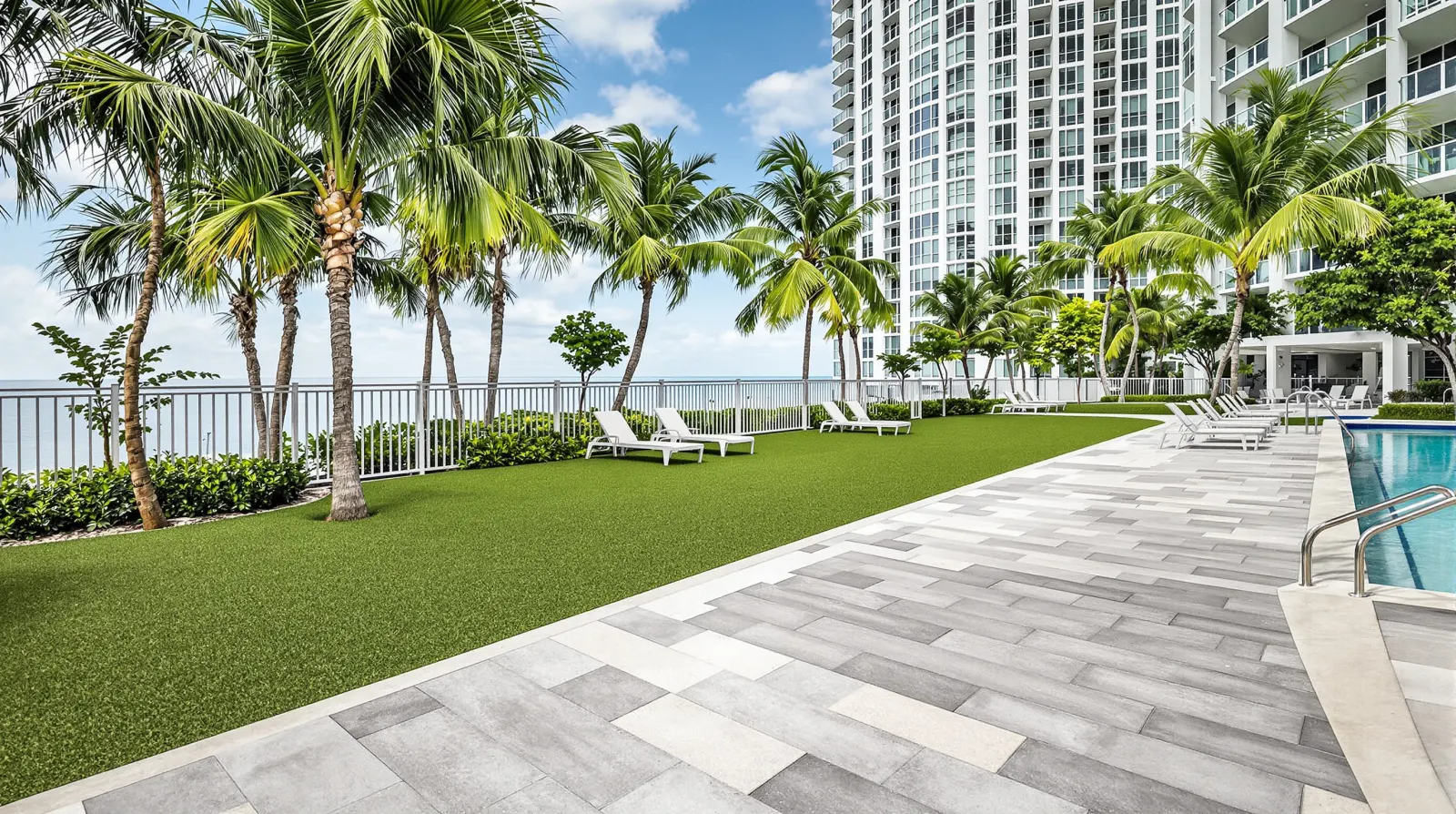 Pool Decks
Turf beside the pool that drains fast and meets pavers and coping cleanly.
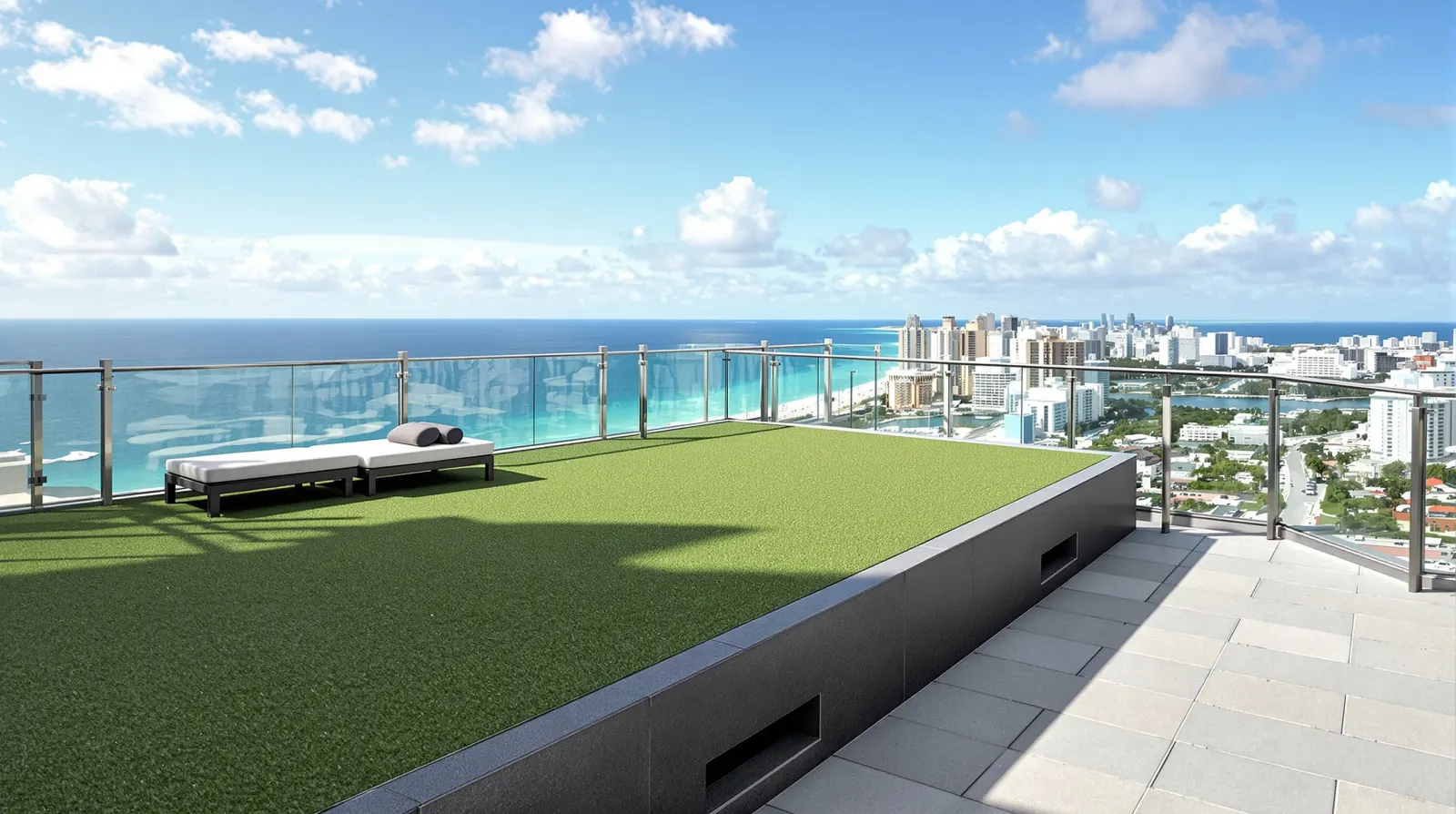 Rooftops & Terraces
Green amenity decks and terraces that protect the waterproofing underneath.
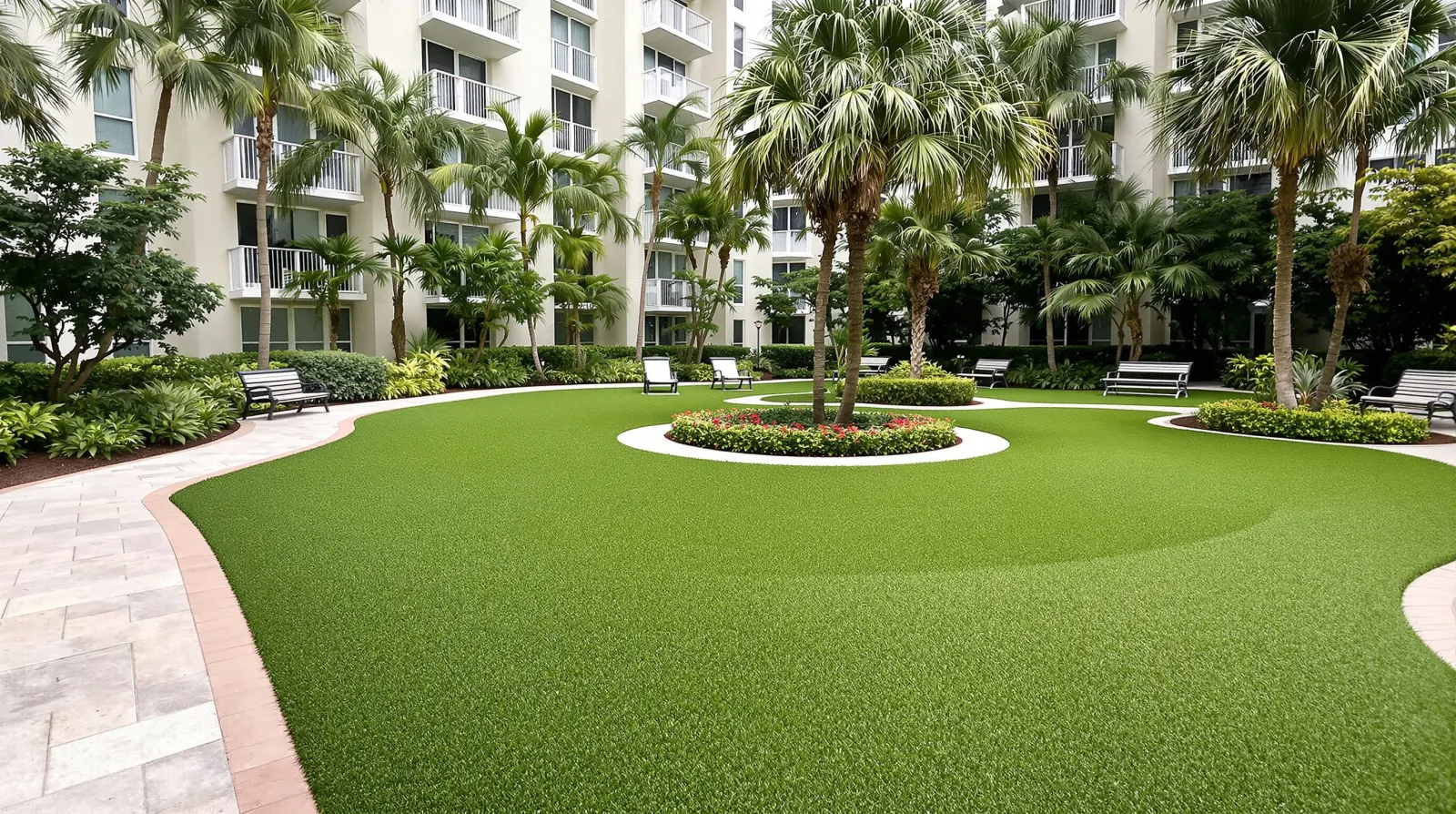 Condo Common Areas
Courtyards, entries, medians and shady strips that stay green year-round.
Artificial turf by city: Miami · Fort Lauderdale · Pompano Beach · Boca Raton · West Palm Beach · All turf services
Checklist
What to settle before a putting green installation
- 01A location with easy access, some shade and no sprinkler overspray
- 02Green size and number of cups and hole locations
- 03Contours that break putts and still drain
- 04Sand-filled or non-infill putting surface
- 05Fringe or collar turf and any chipping area
- 06Edge details along walkways, planters and pavers
- 07Drainage path for heavy afternoon rain
- 08A simple brushing, rolling and infill routine
Related work
Concrete and waterproofing work that often goes with it.
Summary
Points to remember
- 01
A true green starts with a base compacted in lifts and checked before turf goes down.
- 02
Contours are shaped into the base and must still send water to a drain.
- 03
The putting surface and the fringe are different turfs joined with a flat, glued seam.
- 04
Sand-filled surfaces can be tuned; non-infill surfaces are simpler to keep.
- 05
Rooftop or deck greens need the design professional to confirm loads, drainage and hold-down.
Questions
Common questions.
How long does a putting green installation take?
A ground-level amenity green usually takes days, not weeks, once materials are on site, but timing depends on size, contours, drainage and access. Weather matters in rainy season. SERPE-CO plans the work around residents and guests, with a fenced work area and a clear path for staff, and shares the schedule with the manager before starting.
Can a putting green go on a rooftop or pool deck?
Yes, with care. Over a waterproofing membrane or a structural slab, the building's structural engineer or design professional confirms loads, drainage and how the turf is held down. In Miami-Dade and Broward, the High-Velocity Hurricane Zone adds extra wind attention for rooftop items. SERPE-CO builds the green to that design, with a drainage mat to protect the membrane.
Should we choose a sand-filled or non-infill putting surface?
Both work. A sand-filled surface can play closer to a real green and its speed can be adjusted, but it needs sand top-ups and regular brushing. A non-infill surface needs less upkeep and suits spots near pools or doors where sand could track inside. Putting on samples on site helps the board decide.
Does a putting green need drainage?
Every outdoor putting green installation in South Florida needs a drainage plan. The turf backing lets water through, but the stone base below has to move it to a drain or planting area. Contours have to break putts without trapping water. Old sprinkler heads in the area should be capped or adjusted by the property's irrigation contractor.
How do we take care of an amenity putting green?
Blow off leaves and debris weekly, brush the surface to stand the fibers up, and roll a sand-filled green now and then to keep its speed even. Top up infill around cups and edges as needed, and check cups, flags and seams. SERPE-CO leaves a written care sheet at the end of the job.
What does SERPE-CO need to price a putting green?
For a ground-level green, a site visit is the first step. We look at the space, the soil, slopes, drainage, access for equipment and what sits under the ground. A rough idea of size, number of cups and the board's goals helps. After the visit, we send a written proposal. Rooftop and deck greens need the design professional's drawings first.
Sources and standards
- Synthetic Turf Council guidelines
- SFWMD year-round landscape irrigation rule (fact sheet)
- Florida Building Commission (Florida Building Code, HVHZ)
Photos on this page show typical turf installations. Turf over a structural slab, a roof or a waterproofing membrane follows the building's design professional and the product maker's instructions. Treat this page as general information, not engineering or legal advice.
Request an estimate
Tell us about your turf project.
Tell us where the building is and what you are seeing. We set up a visit to the property, then send a written proposal, or tell you an engineer needs to write the scope first.
- More than 20 years in the field
- St. Lucie, Martin, Palm Beach, Broward and Miami-Dade
- Family-owned Certified General Contractor
Rather call?(954) 718-3094