Post tension cable repair is one of the more specialized jobs on an older condominium. Many South Florida condominiums and garages use post-tensioned slabs: concrete reinforced with high-strength steel tendons that are stretched tight after the concrete hardens. The tension lets slabs span farther and stay thinner. When water reaches those tendons and they corrode, the repair needs an engineer's plan and crews who follow it exactly.
SERPE-CO is a Certified General Contractor in Pompano Beach that builds structural concrete and restoration repairs. Engineers evaluate post-tensioned structures and design the repairs. Tendon work is performed by qualified specialists under the engineer's direction. This post is general background for boards, not engineering advice.
How post-tensioned slabs work
A tendon is a bundle of high-strength steel strand inside a protective sheath, anchored at each end of the slab. After the concrete cures, the strand is stretched with a hydraulic jack and locked off, putting the slab in compression. That compression is what lets the slab carry its loads. The Post-Tensioning Institute publishes the industry's technical guidance on design, installation and repair.
Why tendons fail
- Water and chlorides enter through cracks, failed coatings or leaking joints.
- Older systems had less corrosion protection at anchors and sheaths than modern encapsulated systems.
- Anchor pockets at slab edges were sometimes poorly sealed and let water in.
- Garage decks collect water and salt, which concentrate at low spots and drains.
Warning signs on condo slabs and garages
Boards should report these to the engineer promptly:
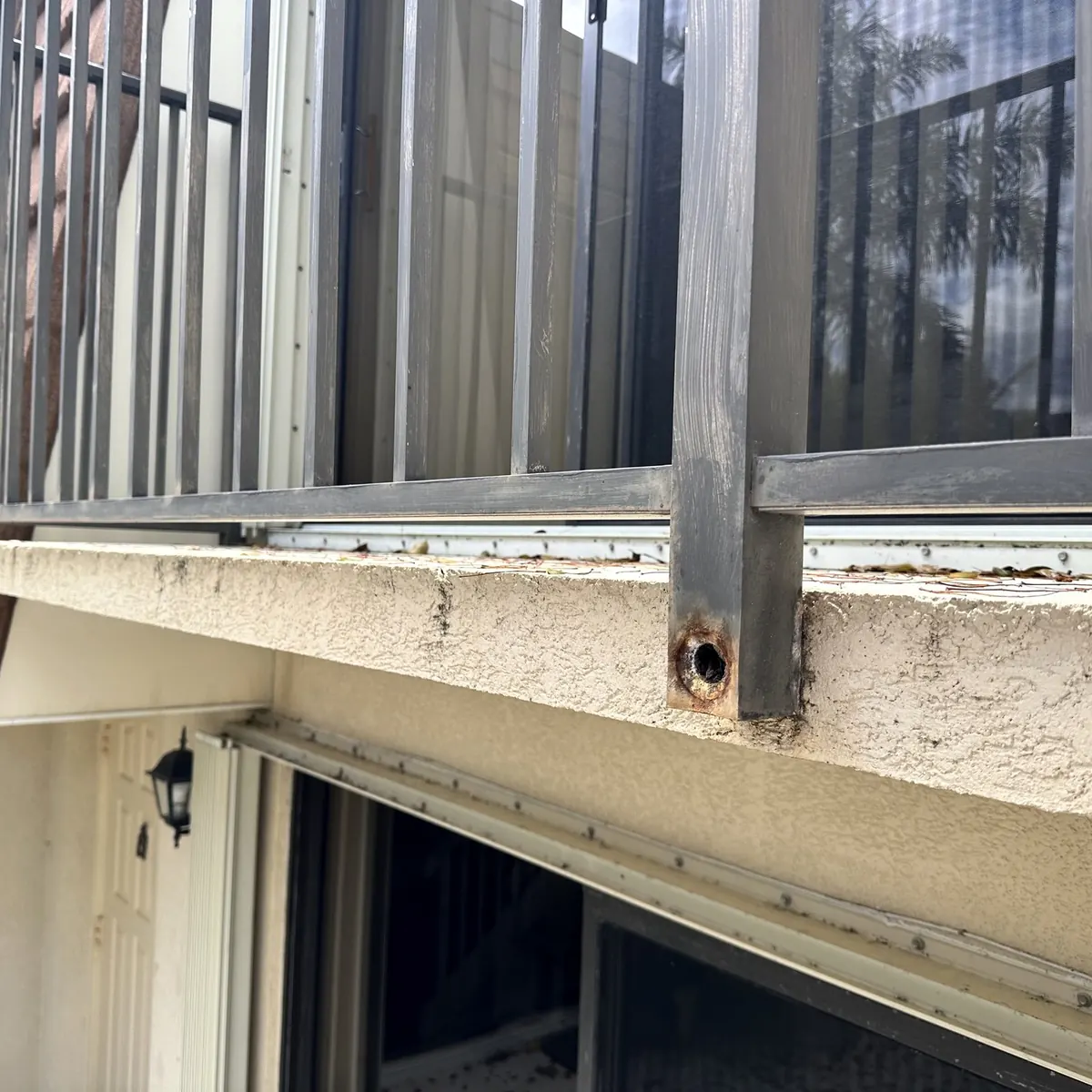
- Rust stains or bulging at slab edges where tendon anchors sit.
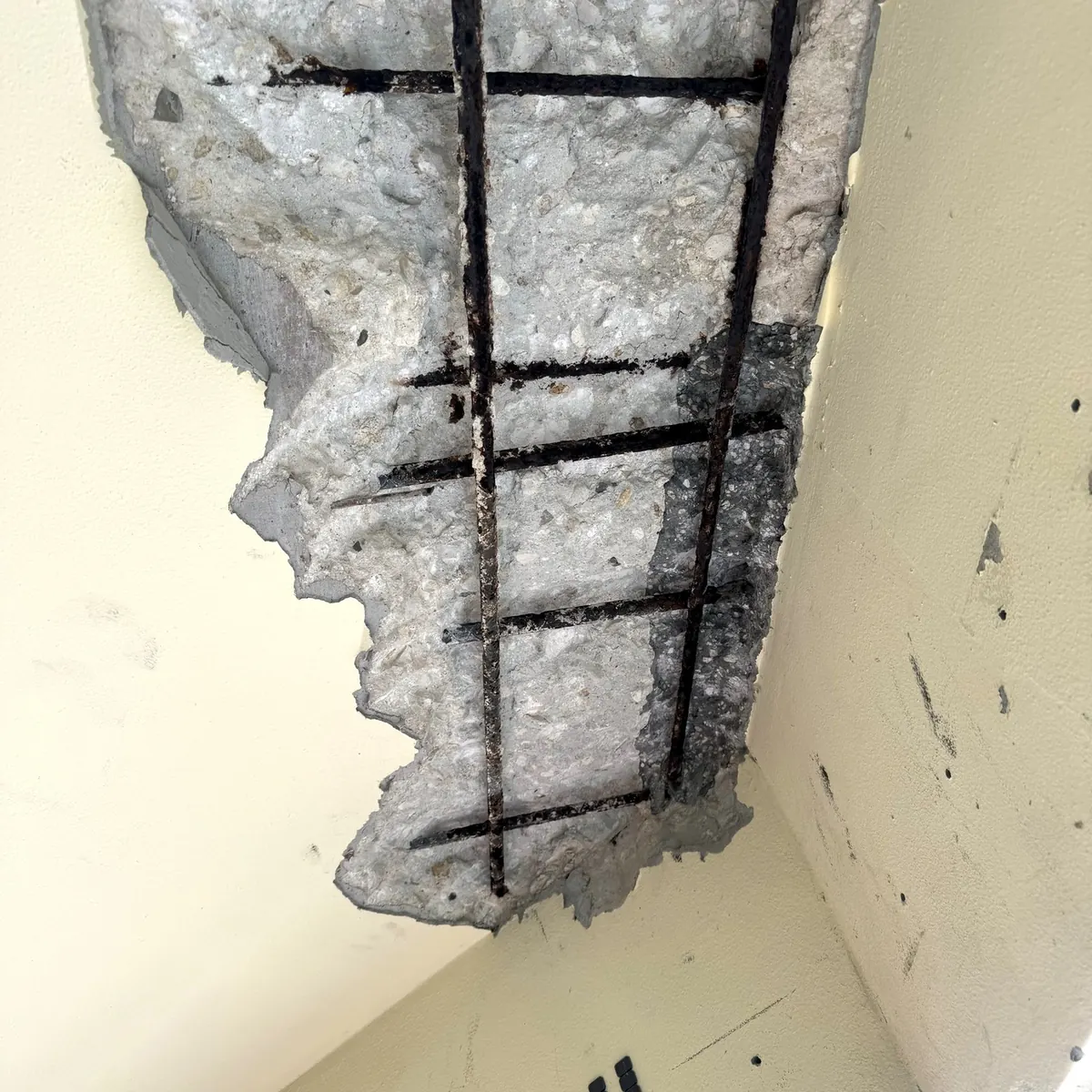
- Strand or sheathing visible through cracked or spalled concrete.
- Cracks running along the line of a tendon.
- Increased sag or new cracking in a slab.
- Persistent leaks and efflorescence in garages under decks.
Our posts on rust stains on concrete and efflorescence explain what those stains can mean.
Why post tension cable repair is different
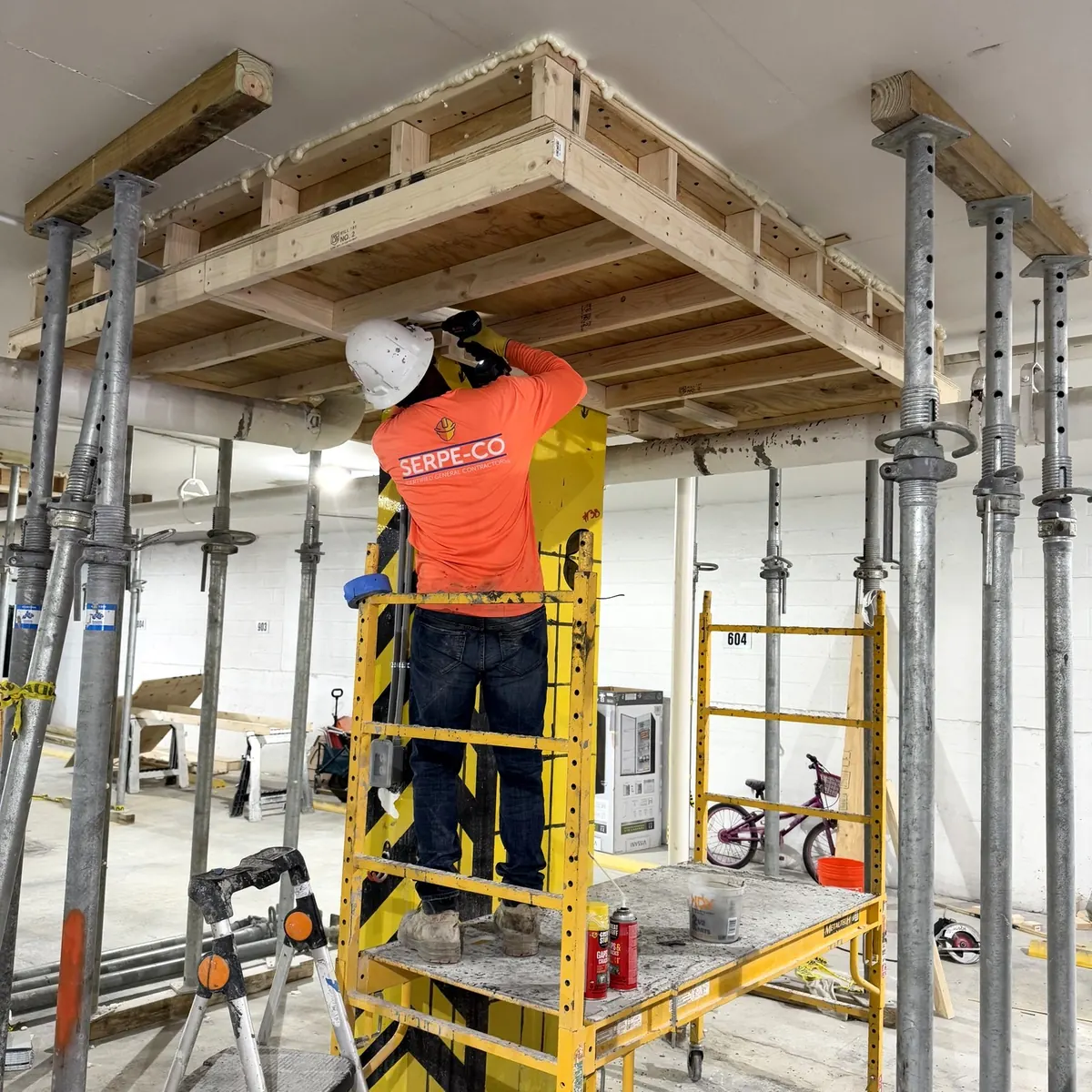
A tensioned tendon stores a great deal of energy. Cutting or damaging one without a plan can release that energy suddenly and also take load out of the slab. Ordinary concrete repair steps, such as chipping around steel, must be planned so tendons are located, protected and never nicked. Engineers often call for tendon locating before any demolition, and federal rules address post-tensioning safety, including OSHA 29 CFR 1926.701, which restricts access behind jacks during tensioning.
How a post tension cable repair usually works
- The engineer evaluates the slab, often with openings at suspect tendons, and designs the repair.
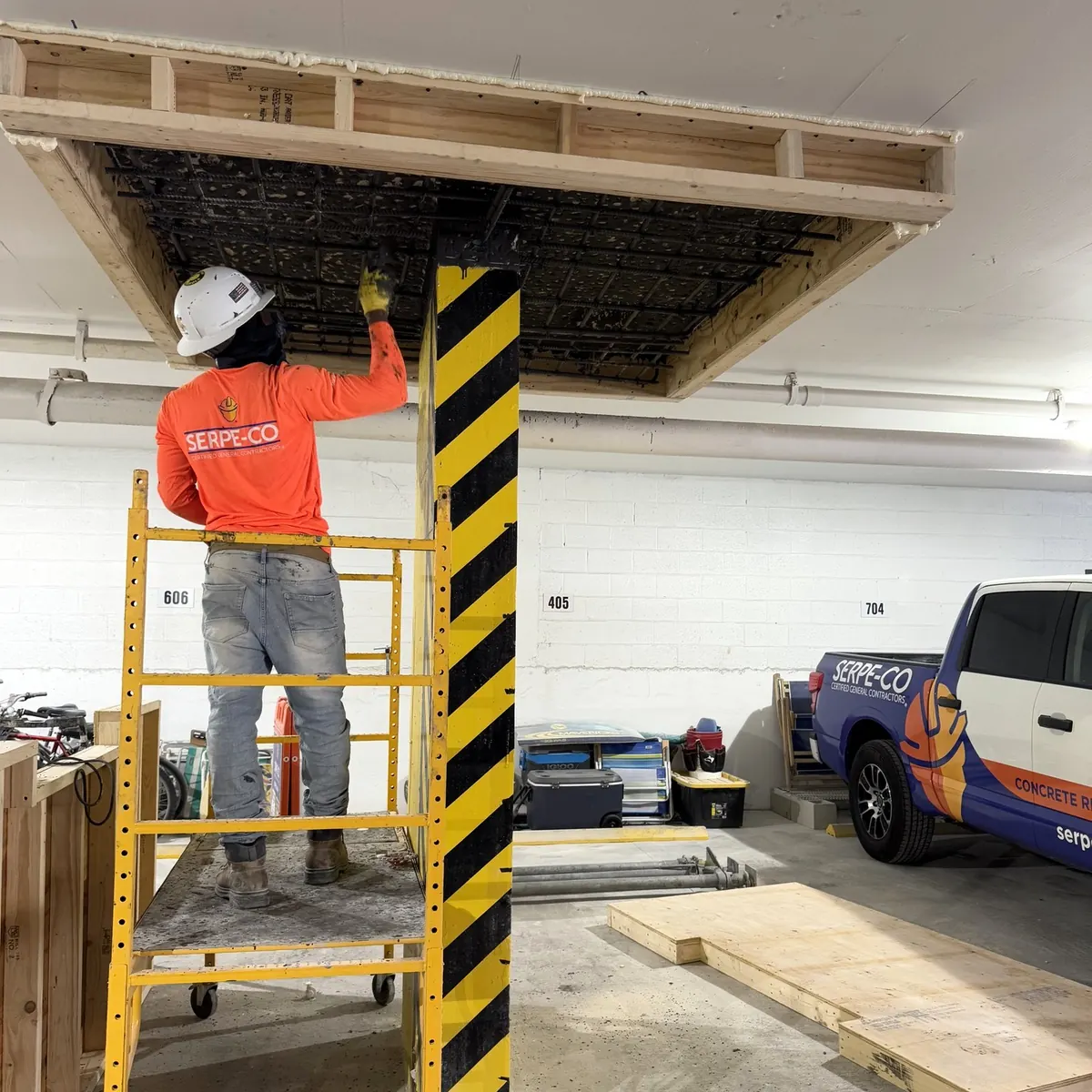
- Shoring is installed where the engineer requires it. Our concrete shoring post explains why.
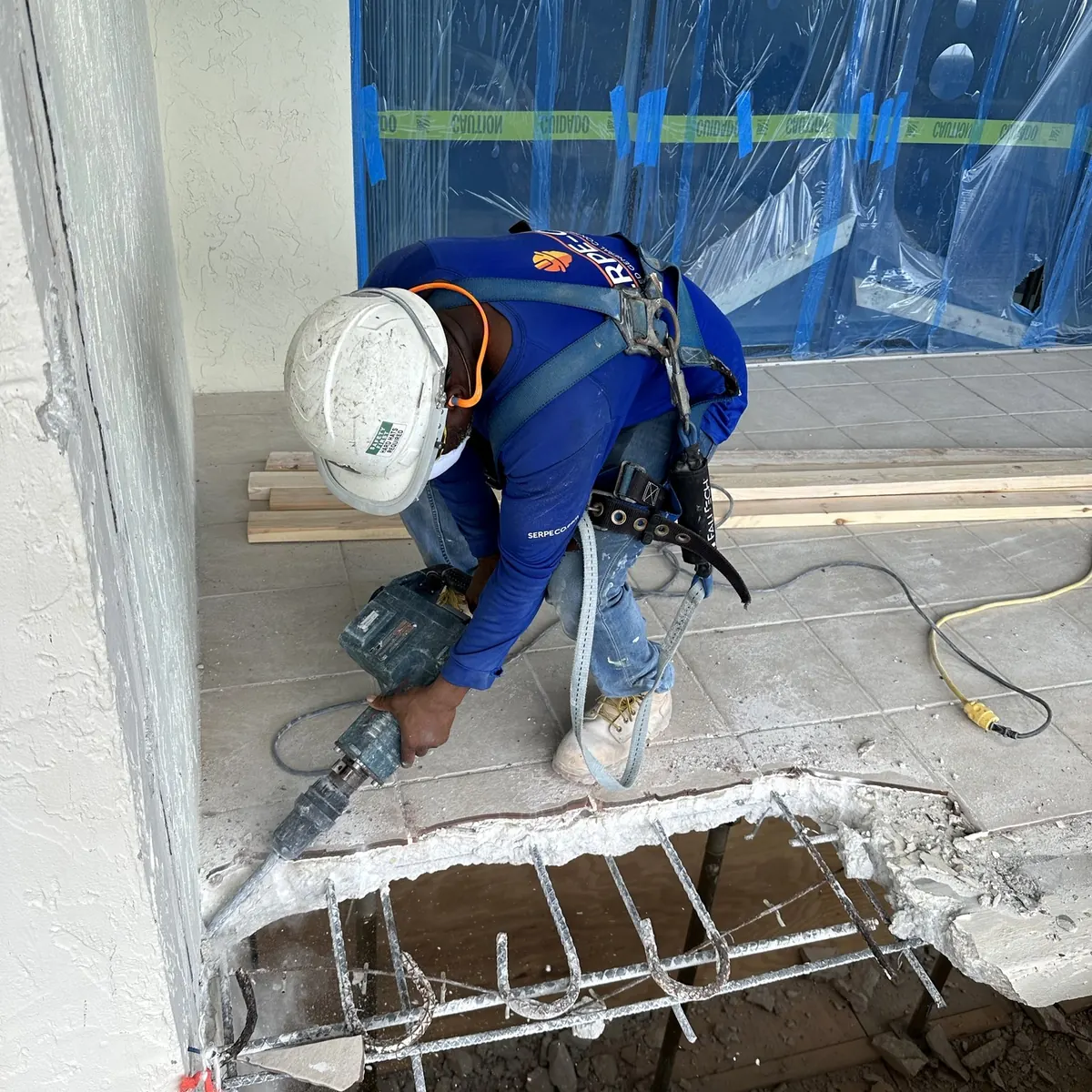
- Concrete is removed carefully to expose the damaged tendon and anchors.
- Specialists detension the tendon, splice in new strand or replace the tendon and anchors as designed.
- The tendon is re-stressed to the engineer's values and the stressing is recorded.
- Pockets and openings are filled, and the slab surface is protected with coatings and sealants.
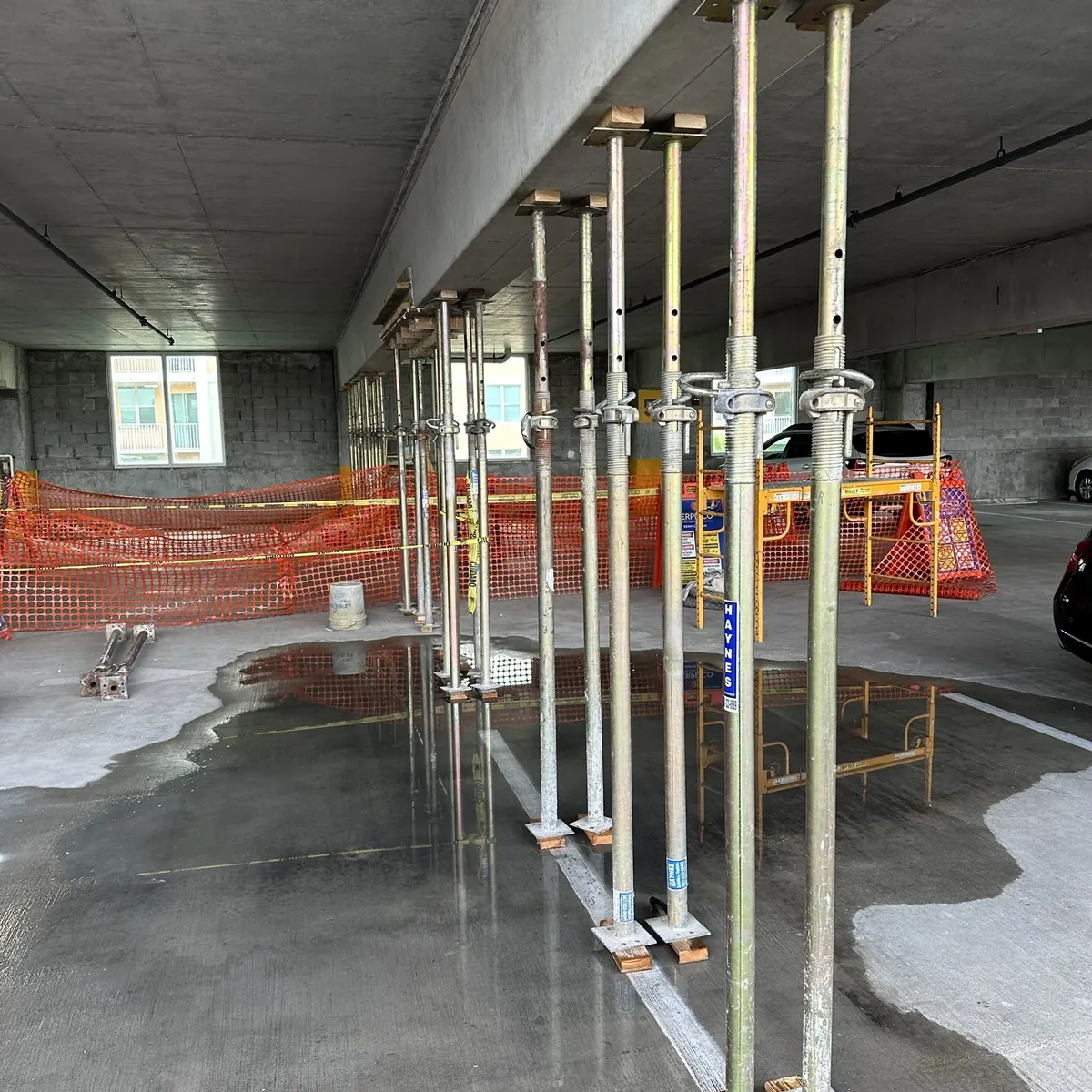
Protecting tendons after the repair
Repairs do not last if water keeps reaching the tendons. Garage decks usually get a traffic coating, joints get new sealants or expansion joint systems and drains are cleared. Our traffic coating and parking garage repair posts cover those steps.
What boards can do now
- Find out whether your building has post-tensioned slabs from drawings or the engineer.
- Keep garage drains clear and leaks reported.
- Never allow anyone to drill or core a post-tensioned slab without the engineer's approval and tendon locating.
- Tell owners and vendors the same rule, especially for renovations inside units.
- Keep records of any past tendon repairs for the next inspection and reserve study.
Owner renovations and post-tensioned slabs
Unit renovations are a hidden risk. Plumbers and electricians who core through a floor to run a new line can cut a tendon without knowing it. Many associations require engineer review and tendon scanning before any coring or anchoring into slabs. Put that rule in the renovation guidelines and enforce it.
Records and the next inspection
Tendon repairs should be fully documented: which tendons were exposed, repaired or replaced, the stressing records and the engineer's approvals. Those records tell the next inspector what was done and help the reserve professional plan future work. Keep them with the permit, the engineer's completion letter and the drawings. Our posts on the milestone inspection report and Broward recertification explain how repairs are closed out.
Cracks that run along tendons deserve special attention, because they can mean water is reaching the strand. Our concrete crack repair post explains why the cause of a crack matters more than the crack itself.
How SERPE-CO can help
SERPE-CO prices and builds the engineer's structural repair scope, coordinating post tension cable repair with qualified tendon specialists, shoring and concrete work. See our structural concrete and parking garage restoration services, or our Broward County garage work, then contact us or call (954) 718-3094.

CEO and co-founder of SERPE-CO, a family-owned Florida Certified General Contractor (CGC #1523974). In concrete restoration since 2005 and a contributor to the Florida Community Association Journal. This article is general information, not engineering or legal advice.