General Contracting
General Contracting & Project Management
A single contractor answering for the trades, the timeline and the finished result.
In short
What is general contracting?
General contracting puts one company in charge of a construction or restoration project under a single contract, answerable for the permit, schedule, safety, every subcontracted trade and the finished result. SERPE-CO, a Certified General Contractor (CGC #1523974), takes on that role for jobs that combine multiple trades, a building permit and a design professional, or for owners without staff to coordinate them.
Free milestone planner
Is a milestone inspection coming due on your building?
Enter the year your building got its certificate of occupancy and how many stories it has. The planner estimates your deadline under Florida law, then you can send it to SERPE-CO for a second look.
Add the year and story count for an estimated due date.
Want a second look at your timeline? Send your building details and SERPE-CO will follow up about the inspection, likely repairs and how to plan for them.
About this estimate
This is a planning estimate drawn from the statewide rule in Florida Statute 553.899. Your local building department sets the real deadline and may call for the first inspection at 25 years instead. Broward County also has its own Building Safety Inspection Program. Check your date with your building official and engineer, or contact SERPE-CO and we will help you sort it out.
General Contracting
A restoration job can touch concrete, paint, railings, waterproofing, glazing, roofing and more. SERPE-CO runs it all as general contractor, giving the association a single contract, a single schedule and one team to call.
With more than 20 years in the field, SERPE-CO handles general contracting work from St. Lucie to Miami-Dade for condominium associations, property managers and owners of commercial buildings.
Reviewed by Brett Serpe, MBA, GC, CEO of SERPE-CO · Florida Certified General Contractor CGC #1523974
Prepared by the SERPE-CO project team, with more than 20 years in concrete restoration. Last reviewed November 2026.
Why it happens
Why one contractor should own the job
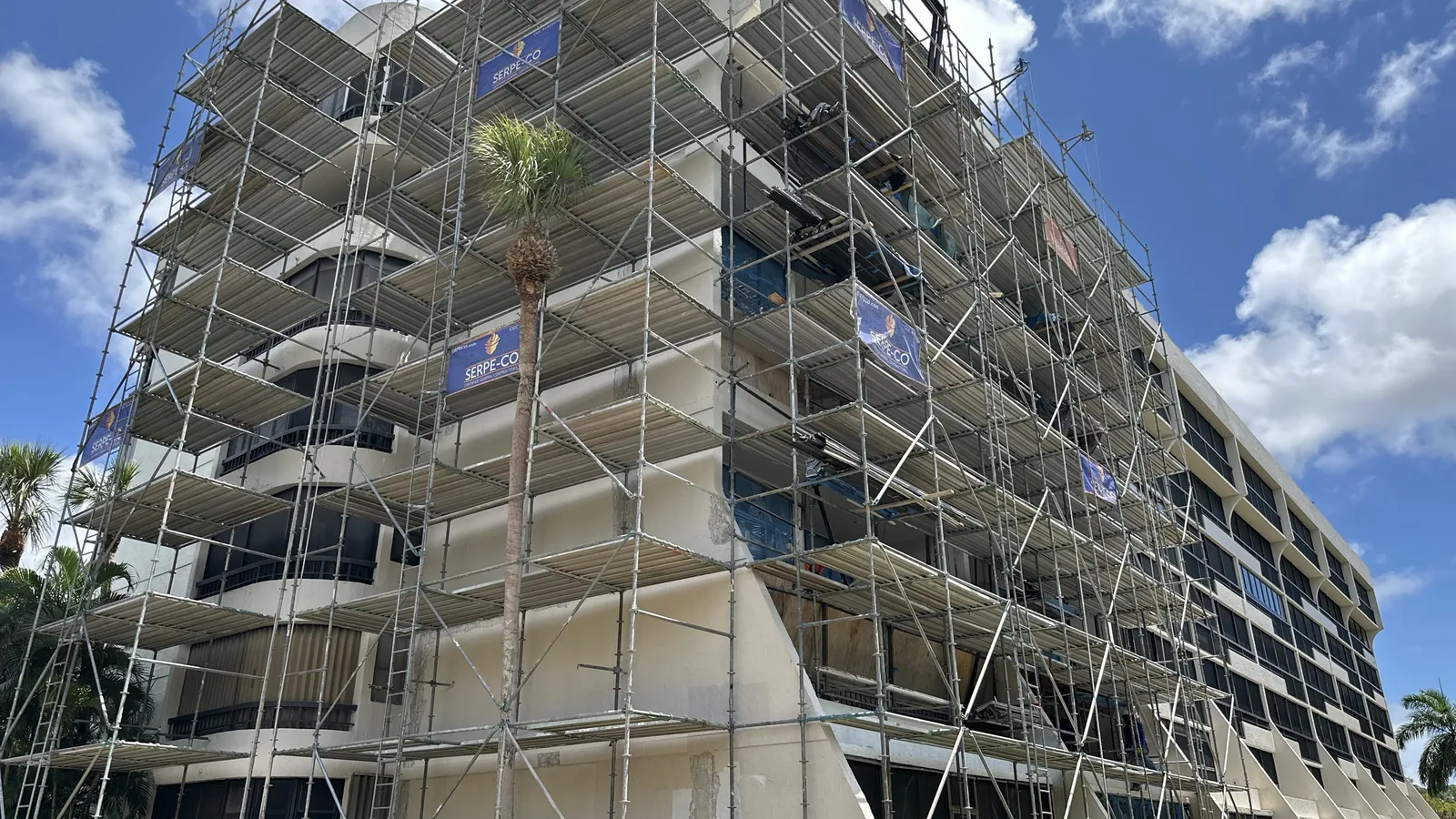
Repairing a building is a sequence where each step waits on the one before it. Concrete repairs must cure before a membrane can go over them. Railings get anchored through that membrane and sealed only after it is finished. Stucco patches have to cure before painting, and windows have to be in before the perimeter can be sealed and coated. When different contractors each own one piece, the handoffs between them are where leaks, delays and arguments start.
South Florida brings constraints of its own. People keep living and working in the building, so access, noise, dust and parking need managing every day. Permits involve both the engineer of record and the building department, and each has its own inspections. During hurricane season, swing stages, materials and open work have to be secured on short notice. One party has to own the whole schedule, keep every trade on it and report to the board or owner whenever conditions shift.
The work
General Contracting: what the job covers
- 01Commercial build-outs and general construction
- 02Capital improvement and building renovation work
- 03Coordinating roofing and roof repairs
- 04Permits, scheduling and trade coordination
- 05Site assessments, consultation and budget planning
- 06Long-term maintenance programs for communities and buildings
How we do it
How we plan, run and close out each project
Planning starts with the drawings, specifications and engineer's report, which we review for gaps and conflicts before building the schedule. Each trade gets a written breakdown of its share of the engineer's scope that spells out who handles every handoff, for example sealing around railing anchors or patching stucco at a new window. Submittals, the shop drawings and product data that need the engineer's approval, are tracked closely so materials with long lead times get ordered early.
Before the first crew starts, we set the site up with access equipment, overhead protection, staging and storage areas, signs and a calendar of notices for residents or tenants. We pull the permit and line the inspection sequence up against the schedule. Phasing lets each trade follow the one before without waiting or crowding, and a short look-ahead schedule gets refreshed often. Questions from the field go to the engineer in writing, and every answer is kept on record.
As the job runs, we check quality at the moments when it can still be seen: steel before concrete covers it, membranes before tile hides them, anchors before sealant goes on. We believe a crew can never work too safely, so site safety and housekeeping are reviewed every day, and the board or owner gets regular progress reports. Closeout means walking the punch list with the owner and engineer, final inspections, closing the permit, and handing over warranties, product data and records.
Materials we use
The working tools of a general contractor: contracts, schedules and access equipment
A general contractor works mostly with documents and systems rather than products. The contract form defines the job: a fixed lump sum when the design is complete, unit quantities when hidden conditions make the extent hard to know, or construction management, where the contractor joins during design. Restoration jobs often combine the first two. Schedules are usually built with the critical path method, which ties each task to the ones it depends on and shows which delays push back the finish date.
Equipment and trades follow from the building itself. Whether crews reach the work from a boom lift, scaffold, mast climber or swing stage shapes productivity, disruption to residents and how fast the site can be secured ahead of a storm. Subcontractors are chosen for the exact systems specified, because a lot of membrane, coating and glazing makers only back work by installers they have approved. Submittal, RFI and inspection logs leave a trail for every decision. Questions of design intent are settled by the engineer or architect, along with the manufacturers' data sheets.
Built to hold up
Why some projects run smoothly and others turn into trouble
Most problems start at the handoffs. A membrane crew showing up before concrete patches have cured, railing installers drilling through a deck coating that was just finished, or painters caulking joints that belonged to the glazing crew are coordination failures, not bad workmanship. A capable general contractor prevents them with a pre-installation meeting per trade, mock-ups signed off before production and an inspection at each handoff. SERPE-CO backs that up with an organized schedule and regular updates so the owner can see the plan being followed.
When comparing general contracting proposals, look beyond the bottom line to what is included: supervision, permits, testing, access equipment, protection of occupied areas and cleanup. Find out who the full-time site superintendent will be, which trades the contractor's own crews perform, how change orders are approved and recorded, and how often the owner gets reports. Check licenses and insurance with the agencies and carriers that issue them. The closeout package should hold the closed permit, as-built records, maintenance instructions and each manufacturer's warranty papers.
How we run a job
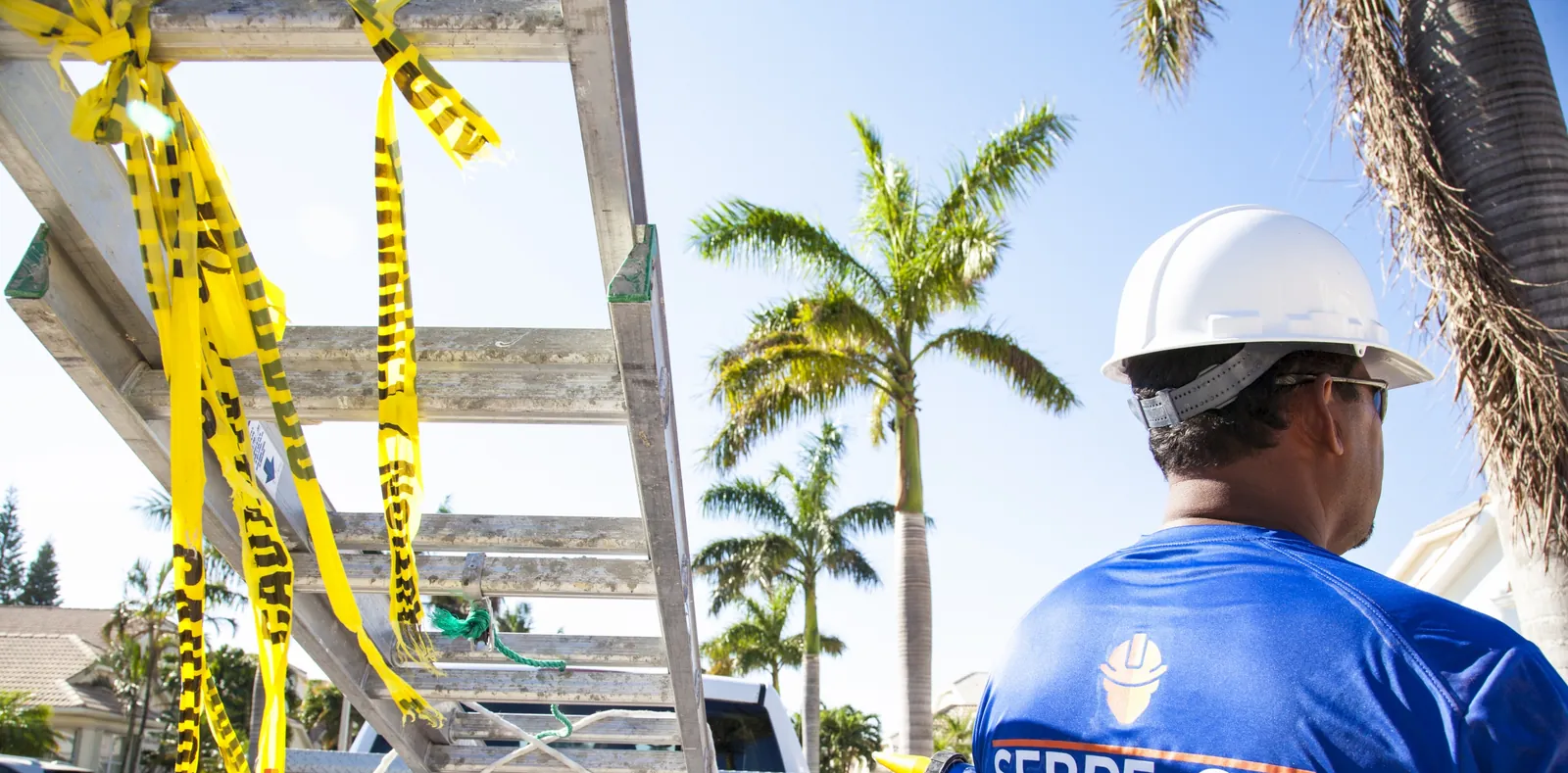
Scheduled around the residents and staff who use the building.
- 01
Meet on site
Each job starts on site, walking the property and its conditions with your manager, board or engineer.
- 02
Follow the engineer's scope
The engineer writes the scope. We price it line by line, plan access and lay out each phase to build it.
- 03
Put safety first
We can never work too safely: shoring, swing stages, barricades and notices go up first.
- 04
Build the repairs
Crews work through the repairs in order, stopping for inspections wherever the engineer calls for them.
- 05
Finish and document
Final inspections, a closed permit and a full record of the work for the association.
Counties we cover
General Contracting, county by county
Summary
General Contracting: what to remember
- 01
One general contractor, one contract: that company answers for the permit, the schedule, safety and every trade on site.
- 02
Defects and delays most often appear where one trade passes the work to the next, so that is where coordination counts.
- 03
Mock-ups and pre-installation meetings lock in methods and appearance before full production starts.
- 04
A full closeout package holds the closed permit, as-built records, care instructions and manufacturer warranty papers.
Glossary
Words that show up in an engineer's report
- Critical path
- The longest string of linked activities in a project schedule. Any delay to an activity on that chain moves the completion date.
- Request for information
- Often shortened to RFI, a formal written query the contractor sends the design professional when drawings are unclear or site conditions differ. The answer becomes part of the record.
- Change order
- Paperwork both parties sign to adjust the contract for a change in scope, time or both, put in place before the altered work starts.
- Punch list
- The closing to-do list on a job: unfinished or flawed items found on walk-throughs, which the contractor fixes before the owner signs off.
- Mock-up
- A sample of the work, such as a single repaired balcony or one painted wall panel, built first so methods, look and quality can be approved.
Questions
General Contracting: questions boards ask
Who pulls the permits?
We do. Permits and building department inspections are built into how we manage every job, together with scheduling, coordinating the trades and keeping the board or owner updated.
What are submittals, and why do they matter here?
Submittals are the product data, samples or shop drawings a contractor submits so the engineer or architect can review them before anything is ordered or installed. They confirm the proposed material is the specified one, or an accepted equal. Skipping that step risks putting in a product the engineer rejects later, which means tearing it out and losing time.
How is the site secured before a hurricane hits?
Our hurricane plan is set before the season starts. Once a storm is on the way, our crews lower and tie off the swing stages, clear or secure loose materials and debris, button up unfinished openings and open repairs as well as we can, and anchor equipment. Work starts again after the site is checked for damage.
How is a general contractor different from an owner's representative on a project?
The general contractor signs the construction contract, brings in the trades and carries responsibility for getting the work built. An owner's rep works on the owner's side instead, as does a construction manager hired only to advise: reviewing proposals and tracking progress, but building nothing. Bigger associations sometimes use both. Separate from both, the engineer of record answers for the design itself.
How do residents stay informed during a long job?
Communication gets planned like every other part of the job. Through the property manager, residents get a regular look-ahead of upcoming work, notices go out before balconies, parking or entrances are affected, and one contact answers questions. SERPE-CO keeps the board and engineer up to date on progress, the next phases and anything found since the last update.
Do owners need to leave during the work?
Rarely. Residents stay home while crews move through the building by elevation or stack. Each balcony is closed only during its own repair, and owners hear from us before anything affects them. The board and manager approve the sequence and access plan first.
Will you coordinate with our engineer?
Always. SERPE-CO works closely with associations and professional engineers, building every structural repair to the engineer of record's specification and lining up their inspections as the job goes. No engineer yet? We can help you take the first step.
Industry standards and guides
- International Concrete Repair Institute (ICRI): repair guidelines for concrete
- American Concrete Institute (ACI): codes and guides for concrete construction and repair
- Florida Building Code
On every project, our repair methods and materials follow the engineer's specification, the product maker's requirements and the current building code. Treat this page as general information, not engineering advice.
Other services we provide
 Balconies & Railings
Edges rebuilt, decks waterproofed, new railings set into sound concrete.
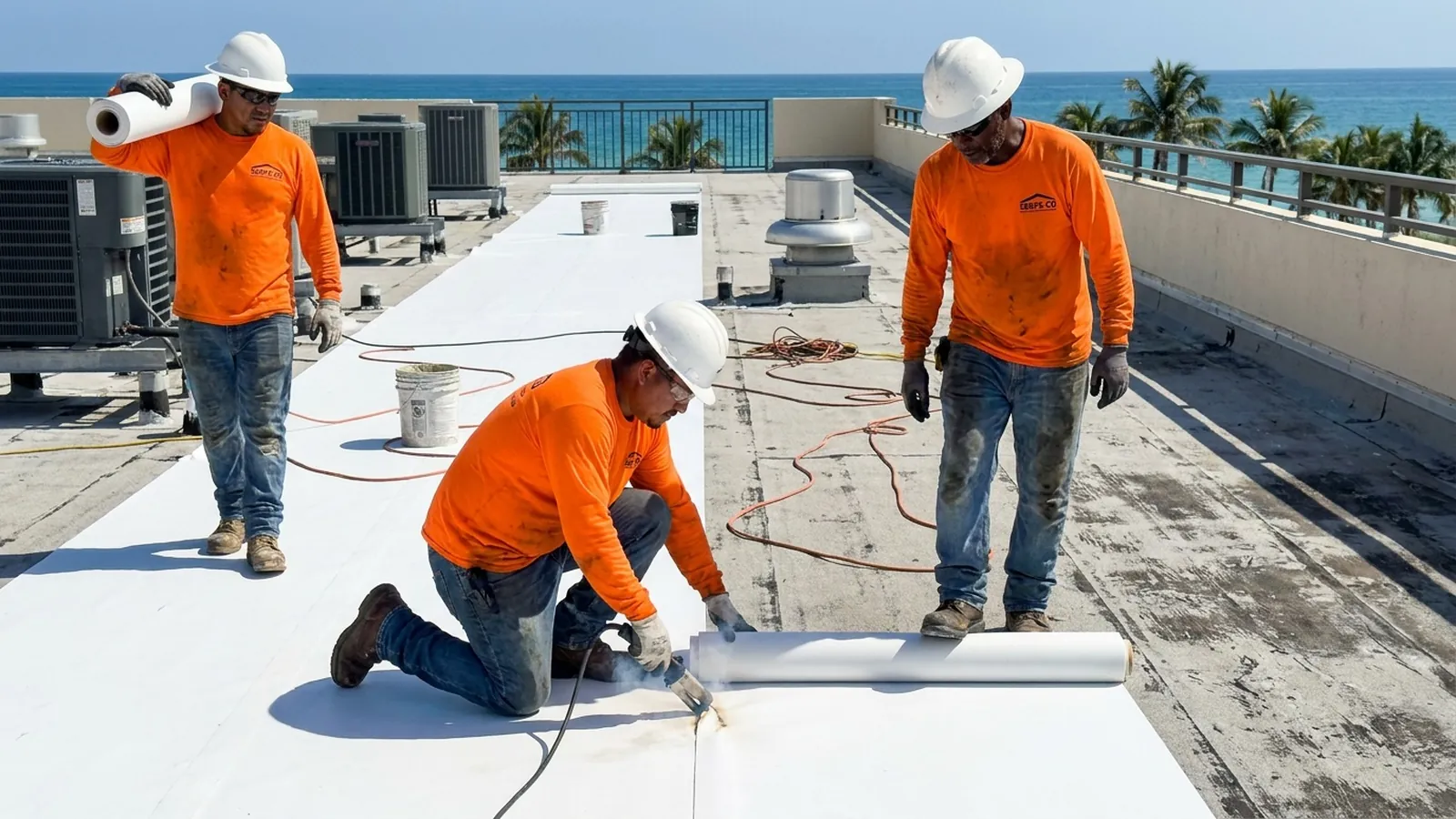 Commercial Roofing
Low-slope roofs repaired, recoated or replaced per the consultant's spec, once the deck below is sound.
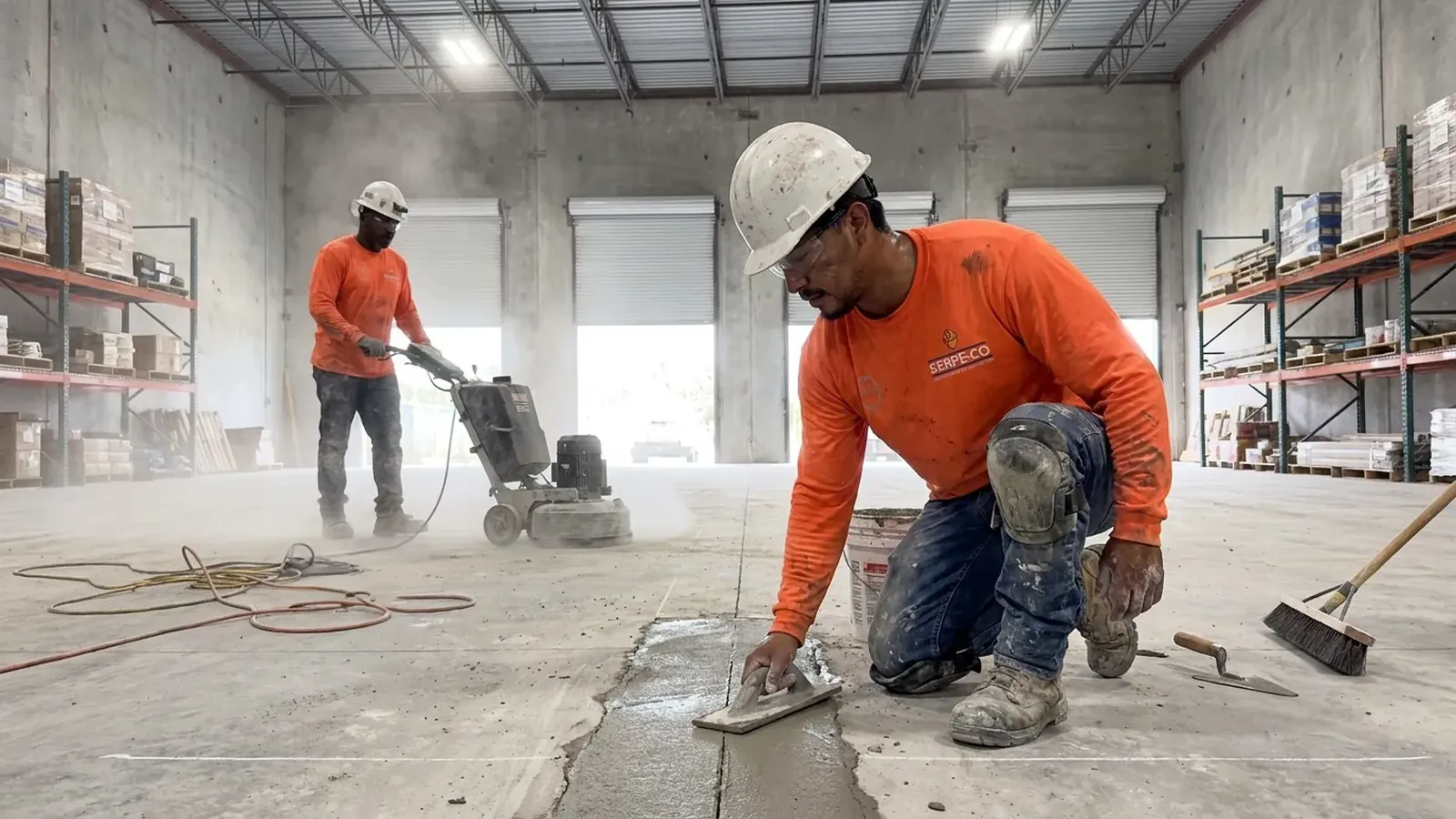 Industrial Floors
Flat new slabs, joints built for forklift traffic and finishes made to last.
Working with an engineer?
Holding drawings, specifications or a complete set of bid documents?
Structural engineers, property engineers and board members send SERPE-CO much of our restoration, pool and roofing work. Once a scope has been drawn and specified, our team prices what the documents show, raises questions where something is unclear, and lays out each line so boards can weigh the bids on equal terms.
Request an estimate
Let's plan your restoration.
Tell us where the building is and what you are seeing. We set up a visit to the property, then send a written proposal, or tell you an engineer needs to write the scope first.
- More than 20 years in the field
- St. Lucie, Martin, Palm Beach, Broward and Miami-Dade
- Family-owned Certified General Contractor
Rather call?(954) 718-3094