Commercial Pools
Commercial Pools & Pool Decks
Resurfaced pool shells, repaired decks and sound structure under elevated pools.
In short
What is commercial pools?
Work on commercial pools covers concrete shell repair, a new interior finish, fresh tile, coping and joints, and repairs to the deck around the water. Condominium, hotel and club pools need it when the finish gets rough or stained, hollow areas show up, the pool loses more water than evaporation explains, the deck cracks or heaves, or leaks appear below an elevated pool.
Free milestone planner
Is a milestone inspection coming due on your building?
Enter the year your building got its certificate of occupancy and how many stories it has. The planner estimates your deadline under Florida law, then you can send it to SERPE-CO for a second look.
Add the year and story count for an estimated due date.
Want a second look at your timeline? Send your building details and SERPE-CO will follow up about the inspection, likely repairs and how to plan for them.
About this estimate
This is a planning estimate drawn from the statewide rule in Florida Statute 553.899. Your local building department sets the real deadline and may call for the first inspection at 25 years instead. Broward County also has its own Building Safety Inspection Program. Check your date with your building official and engineer, or contact SERPE-CO and we will help you sort it out.
Commercial Pools & Decks
Owners notice the pool first. We remove delaminated finish to the substrate, resurface in plaster or gem quartz such as Diamond Brite, waterproof decks and planters, and repair the structure under elevated pools, where a leak turns structural.
With more than 20 years in the field, SERPE-CO handles commercial pools work from St. Lucie to Miami-Dade for condominium associations, property managers and owners of commercial buildings.
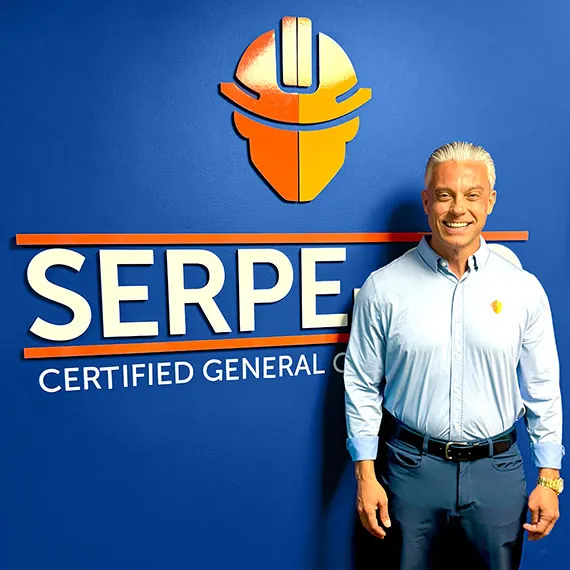
Reviewed by Brett Serpe, MBA, GC, CEO of SERPE-CO · Florida Certified General Contractor CGC #1523974
Prepared by the SERPE-CO project team, with more than 20 years in concrete restoration. Last reviewed November 2026.
Why it happens
What wears down pool shells and decks
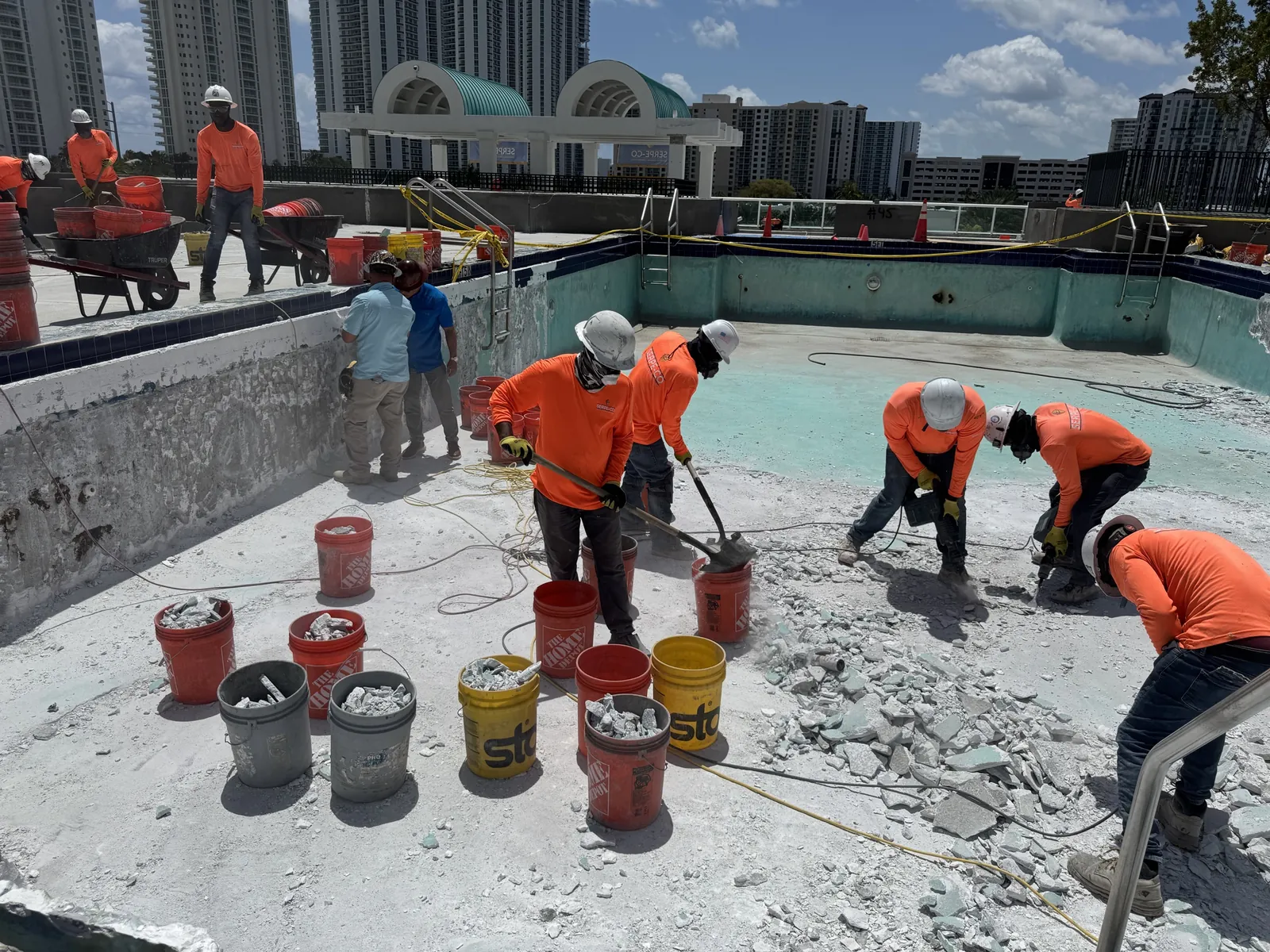
Every pool shell is a reinforced concrete tank holding chemically treated water year round. The interior finish is the layer that takes the wear, and it erodes with time: when the water chemistry drifts, it etches the plaster, exposes the aggregate and leaves the surface rough. Drain the pool and the spots where the finish has lost its bond show up as hollow areas. Water also escapes through cracked shells and failed fittings, into the soil or the structure.
Pool decks take sun, salt, splash-out and steady foot traffic all year. The coping joint is built to move, and once its sealant fails, water gets beneath the slab and behind the tile band. A pool that sits above a garage or occupied rooms puts a leak right onto structural slabs and beams already carrying enormous weight. Rust at that level is a structural issue, not a cosmetic one.
The work
Commercial Pools: what the job covers
- 01Pool shell repairs and quartz resurfacing
- 02New tile, coping and expansion joints
- 03Pool deck repairs, pavers, overlays and coatings
- 04Elevated deck topping slabs, structure and waterproofing
- 05Planter waterproofing, fountains and amenity decks
- 06Deck drainage and re-sloping
How we do it
Our approach to restoring pool shells and decks
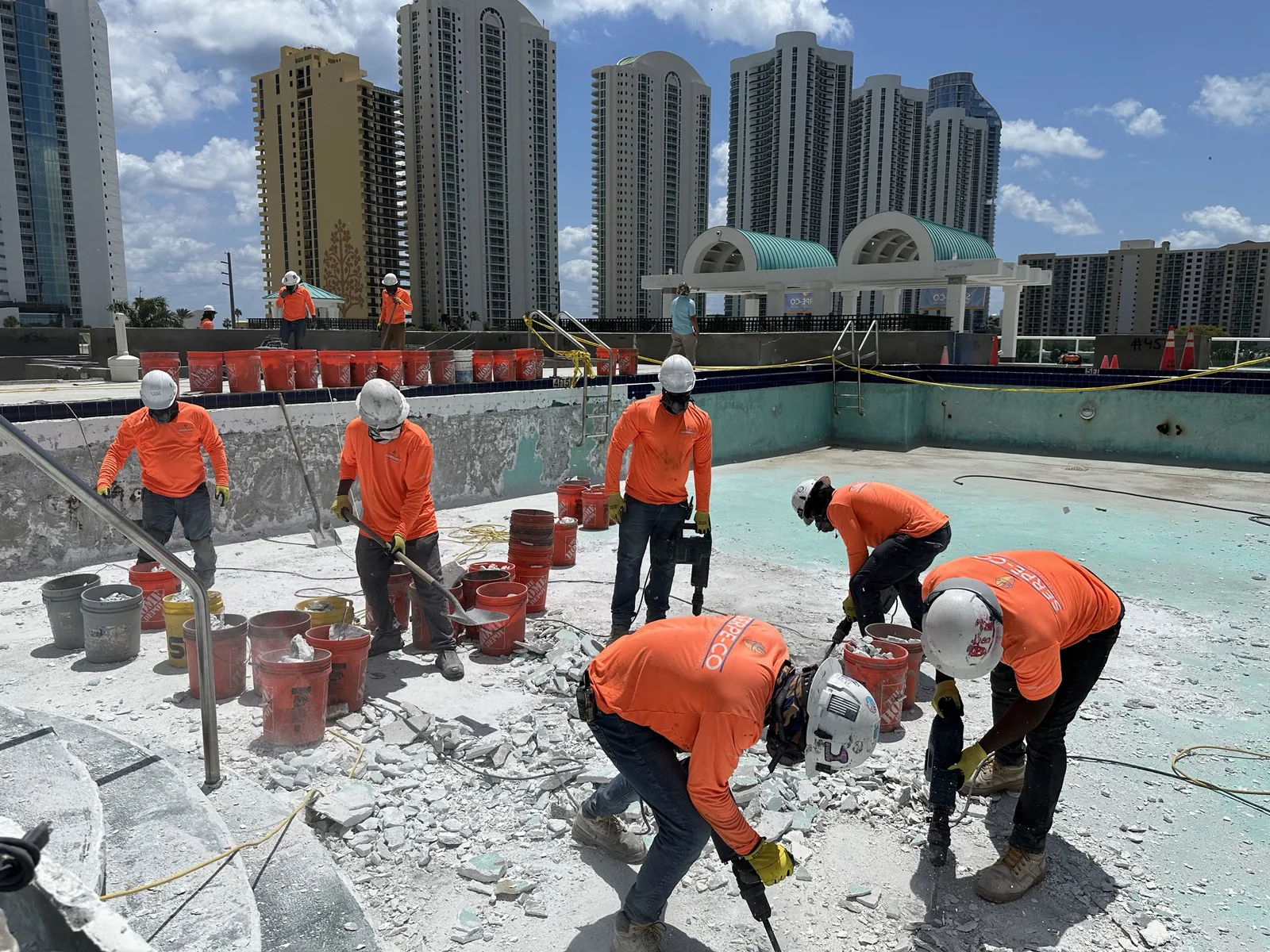
Draining is planned carefully around groundwater, since an empty shell sitting in a high water table can float. Where the pool has hydrostatic relief valves, they are opened. The crew sounds the old finish, then removes delaminated material down to the substrate or strips and prepares the full surface, based on what we find. Cracks, fittings, light niches and returns get a close look, and any structural shell repair follows the engineer's detail.
A bond coat goes onto the prepared shell, then the new interior finish, either plaster or a gem quartz finish such as Diamond Brite. Tile and coping get reset or replaced where needed. We trowel the finish in one continuous run so there is no cold joint. The pool is refilled the moment the finish maker allows and runs without stopping, which keeps a ring from forming. For the first weeks, start-up chemistry is watched closely while the new surface cures under water.
Deck repairs happen at the same time. Our crew fixes damaged concrete, corrects slope toward the drains, and rebuilds the coping joint over backer rod with fresh sealant. The surface gets pavers, an overlay or a slip-resistant coating. Where the deck sits over occupied space, it gets a membrane and a flood test before finishes go down, and its planters are waterproofed too. Because public pools are regulated, any work on the pool itself goes through the permits and approvals that apply.
Materials we use
Pool finishes, deck surfaces and membranes, and how each gets picked
Interior finishes are all cement-based and differ mostly in the aggregate. Classic white plaster, white cement mixed with marble dust, feels smoothest but reacts most to water chemistry. Quartz finishes such as Diamond Brite add a harder, colored aggregate that wears and resists stains better, while exposed pebble gives the toughest, most textured surface. When SERPE-CO resurfaces a pool, delaminated material comes off down to the substrate before the new plaster or gem quartz finish goes on.
Deck surfaces are chosen for grip when wet, how hot they get underfoot and how well they tolerate pool chemicals. Common choices are travertine or concrete pavers set on sand or pedestals, polymer deck coatings and acrylic-modified cement overlays. On an elevated pool deck, a membrane sits under the finish, usually polyurethane, PMMA or hot rubberized asphalt, and SERPE-CO's elevated deck work also covers pavers, drainage, topping slab and expansion joint repairs. Waterline tile and coping are set in immersion-rated mortar and grout.
Built to hold up
Why some resurfaced pools and decks hold up longer
Early finish failures usually come from a weak bond to the shell or a rough first few weeks. A lasting finish needs a shell cleaned and roughened to a sound profile, a bond coat placed exactly as the manufacturer instructs, and a start-up period of daily brushing and close attention to chemistry while the cement cures underwater. Draining carries its own risk, because ground water can lift an empty shell. On decks, the common failures are rigid joints at the coping and coatings rolled over damp or dirty concrete.
Owners of commercial pools should get a proposal that keeps shell repairs found after draining separate from the base resurfacing scope, since the real condition shows up only after the water is out. Ask who pulls the permits and gets any agency approvals, what the start-up steps are and who performs them, and how long the flood test on the deck membrane will run. Keep the start-up checklist and every water chemistry log, because finish warranties from manufacturers often depend on documented water balance.
How we run a job
Scheduled around the residents and staff who use the building.
- 01
Meet on site
Each job starts on site, walking the property and its conditions with your manager, board or engineer.
- 02
Follow the engineer's scope
The engineer writes the scope. We price it line by line, plan access and lay out each phase to build it.
- 03
Put safety first
We can never work too safely: shoring, swing stages, barricades and notices go up first.
- 04
Build the repairs
Crews work through the repairs in order, stopping for inspections wherever the engineer calls for them.
- 05
Finish and document
Final inspections, a closed permit and a full record of the work for the association.
Counties we cover
Commercial Pools, county by county
Summary
Commercial Pools: what to remember
- 01
Plaster, quartz and pebble finishes differ mostly in how hard, textured and chemistry-sensitive the aggregate is.
- 02
In a high water table an empty shell can float, so draining is planned around ground water and the hydrostatic relief valve.
- 03
The coping-to-deck joint has to stay flexible, since a rigid joint cracks the tile and lets water get under the slab.
- 04
On an elevated pool deck, flood test the membrane before any pavers or coating go over it.
Glossary
Words that show up in an engineer's report
- Coping
- Stone, precast or cast-in-place concrete pieces that cap the top of the pool wall where the water meets the deck.
- Hydrostatic relief valve
- A floor fitting that opens when ground water pushes up under a drained pool, letting water in so the shell does not lift or crack.
- Bond beam
- The thicker, reinforced top band of a pool wall that carries the tile and coping. Cracking here often traces back to a failed deck joint.
- Gunite
- Concrete shot at high speed onto a rebar cage to build a pool shell, sprayed against one form or straight against the dug-out soil.
- Start-up
- The first few weeks after a fresh finish is filled, when crews brush the surface and adjust the water chemistry as the cement cures.
Questions
Commercial Pools: questions boards ask
How long does resurfacing keep the pool closed?
That depends on the pool's size and on what the shell needs once it has been drained and examined. The association gets a schedule before closing day, and where possible we time the work around the busy season.
How can we tell whether our pool leaks or just evaporates?
A bucket test is the first check. Set a bucket of pool water on a step and compare how much each loses over the same stretch of time. A noticeably bigger drop in the pool means water is getting out. Pressure testing the plumbing and dye testing suspect cracks and fittings then pinpoint the source before any repair is planned.
Can we resurface a pool deck and keep its concrete?
In many cases, yes. A structurally sound slab can have its cracks and spalls patched and then take a bonded overlay or coating, which restores texture and grip underfoot. Where the slab has sunk, heaved or no longer drains, the bad sections usually come out and are repoured before a new finish is applied.
How often does a commercial pool need a new finish?
No set schedule applies. How long a finish lasts depends on the material, how steadily the water chemistry has been balanced and how heavily the pool is used. Practical signs a new finish is due include a surface rough enough to snag swimsuits, stains that will not clean off and hollow spots found once the pool is drained.
How is repairing an elevated pool any different?
When a pool rests on a structural slab above a parking garage or occupied rooms, any leak wets the beams and slabs carrying the weight of the water. The engineer therefore reviews the structure below as well as the shell. Typical repairs pair concrete work from underneath with a membrane system and close attention to drains and pipe penetrations.
Do owners need to leave during the work?
Rarely. Residents stay home while crews move through the building by elevation or stack. Each balcony is closed only during its own repair, and owners hear from us before anything affects them. The board and manager approve the sequence and access plan first.
Will you coordinate with our engineer?
Always. SERPE-CO works closely with associations and professional engineers, building every structural repair to the engineer of record's specification and lining up their inspections as the job goes. No engineer yet? We can help you take the first step.
Industry standards and guides
- International Concrete Repair Institute (ICRI): repair guidelines for concrete
- American Concrete Institute (ACI): codes and guides for concrete construction and repair
- Florida Building Code
On every project, our repair methods and materials follow the engineer's specification, the product maker's requirements and the current building code. Treat this page as general information, not engineering advice.
Other services we provide
 Structural Concrete
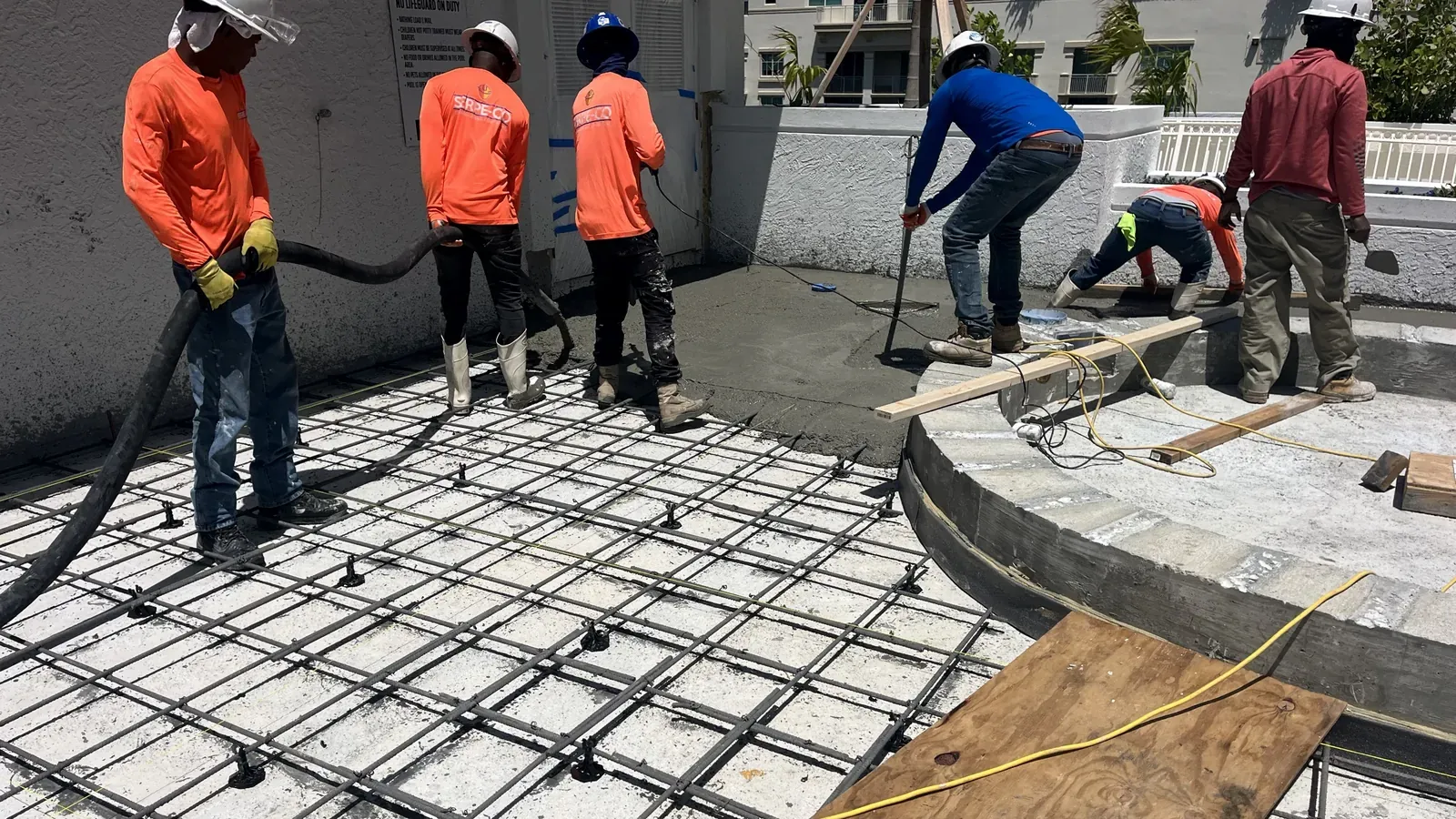
Footings, slabs and structural pours for additions and new buildings.
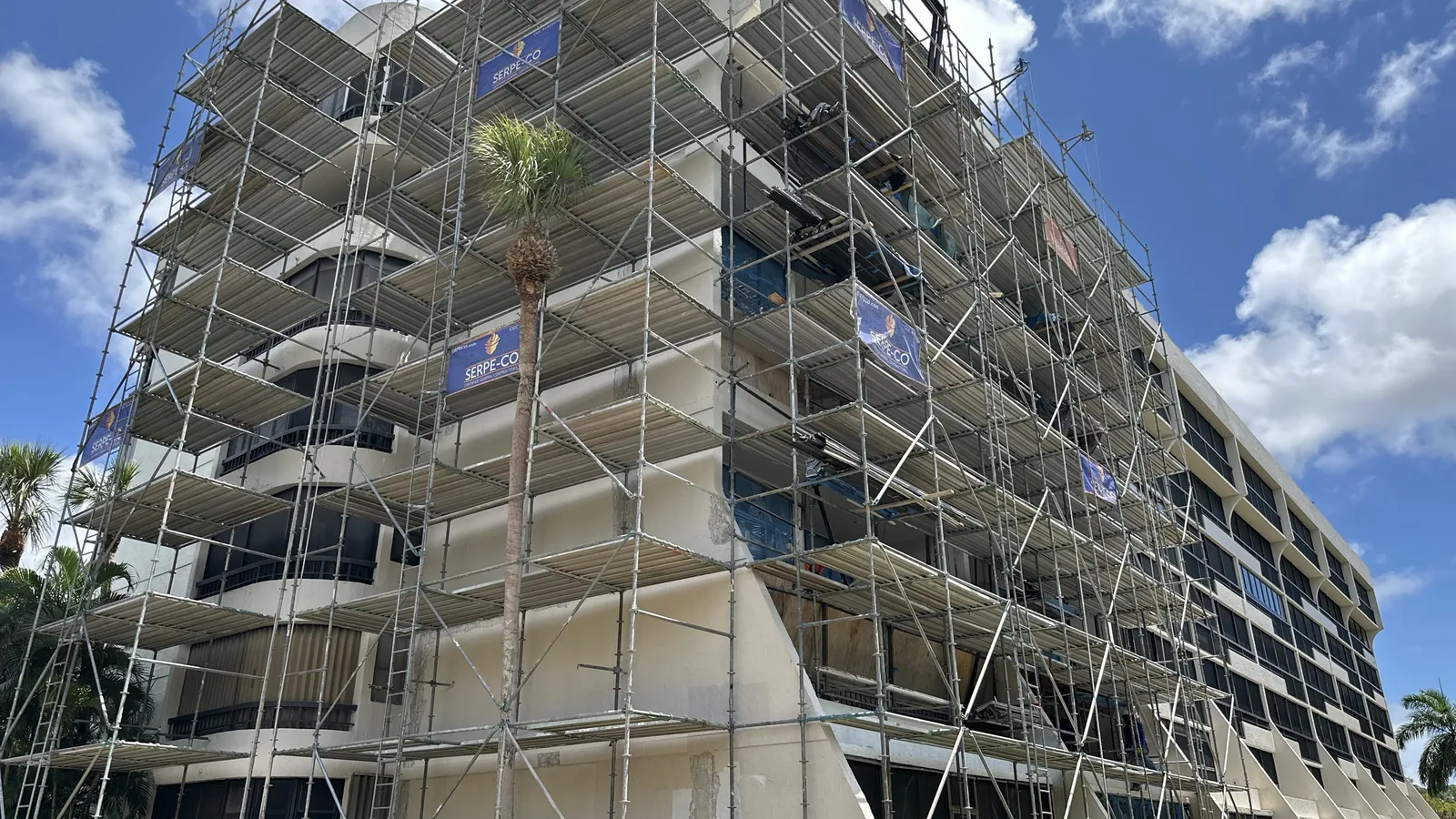 General Contracting
A single contractor answering for the trades, the timeline and the finished result.
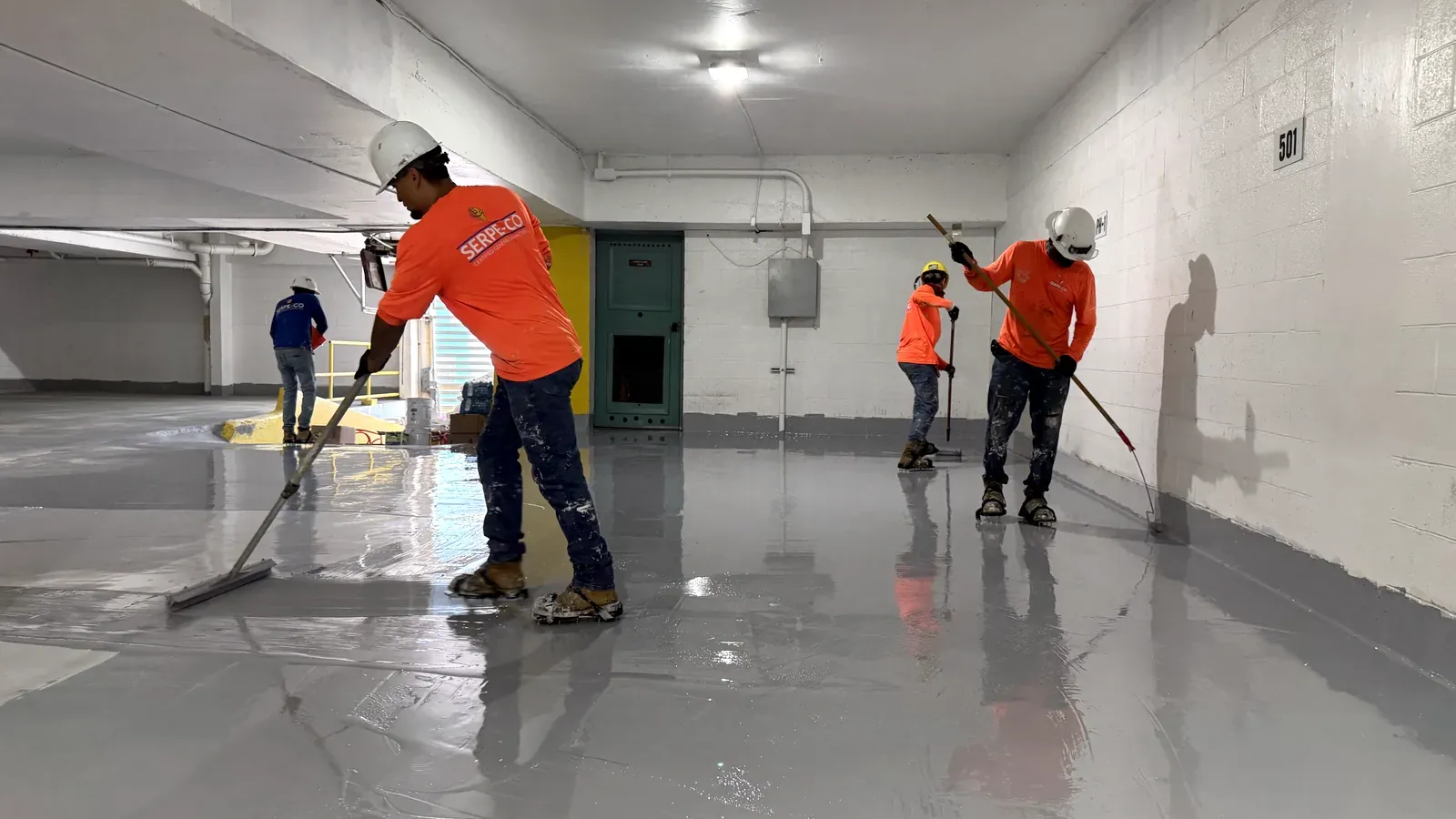 Parking Garages & Plaza Decks
Repairs and traffic coatings for decks that handle vehicles, foot traffic and rain.
Working with an engineer?
Holding drawings, specifications or a complete set of bid documents?
Structural engineers, property engineers and board members send SERPE-CO much of our restoration, pool and roofing work. Once a scope has been drawn and specified, our team prices what the documents show, raises questions where something is unclear, and lays out each line so boards can weigh the bids on equal terms.
Request an estimate
Let's plan your restoration.
Tell us where the building is and what you are seeing. We set up a visit to the property, then send a written proposal, or tell you an engineer needs to write the scope first.
- More than 20 years in the field
- St. Lucie, Martin, Palm Beach, Broward and Miami-Dade
- Family-owned Certified General Contractor
Rather call?(954) 718-3094