A traffic coating is the waterproof, wear-resistant surface rolled over a parking deck, ramp or plaza so cars and people can use it without water reaching the concrete below. On a Florida condominium garage, that coating is often the main thing standing between salt-laden rain and the reinforcing steel in the slab. When it wears through, leaks and corrosion follow. This post explains what a traffic coating does, how to tell when one is failing, and how the work can be phased so residents keep parking.
What a traffic coating is
The American Concrete Institute's guide to durable parking structures, ACI 362.1R, defines a traffic-bearing membrane as an elastomeric coating capable of withstanding vehicular traffic. Contractors, engineers and product makers usually just call it a traffic coating or a deck coating.
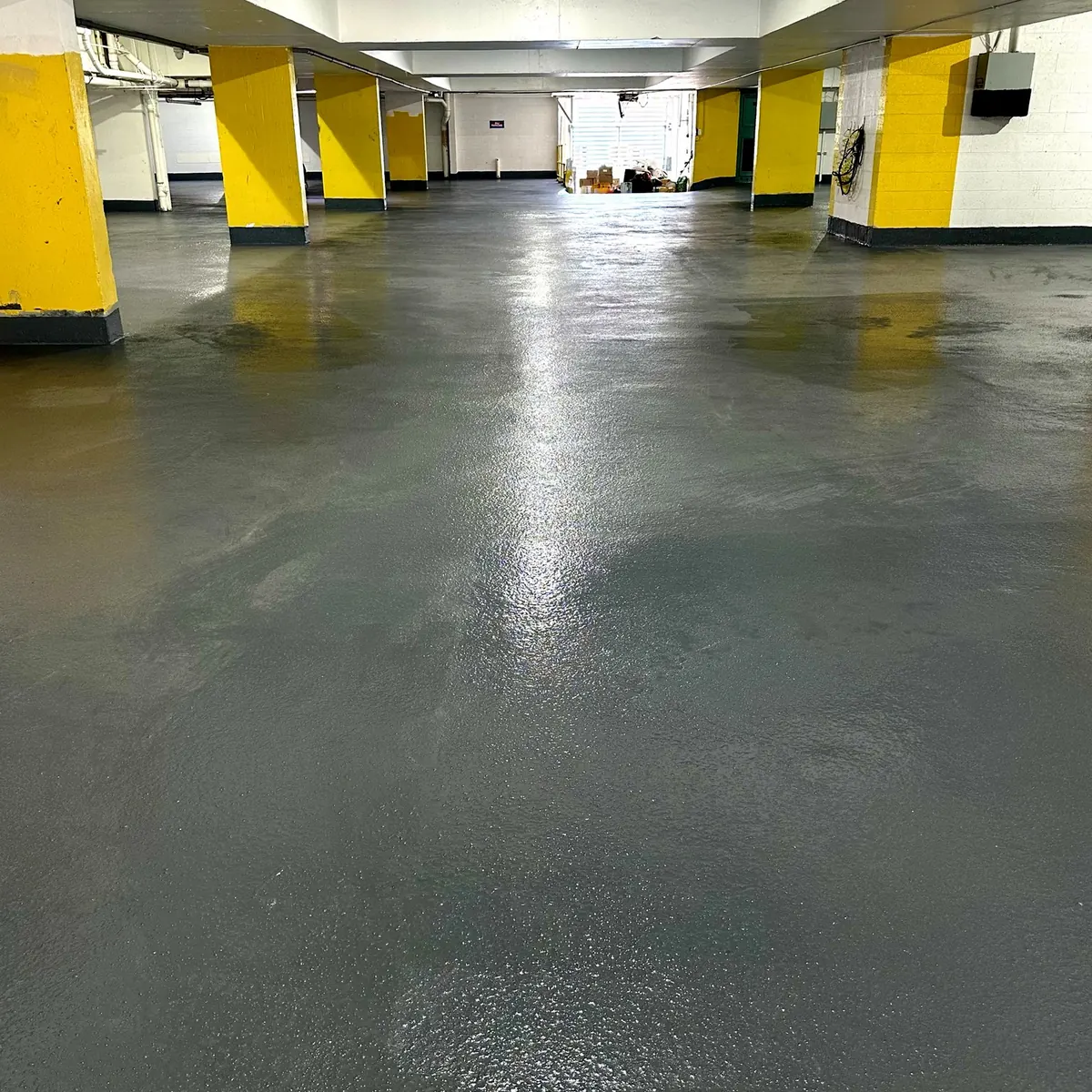
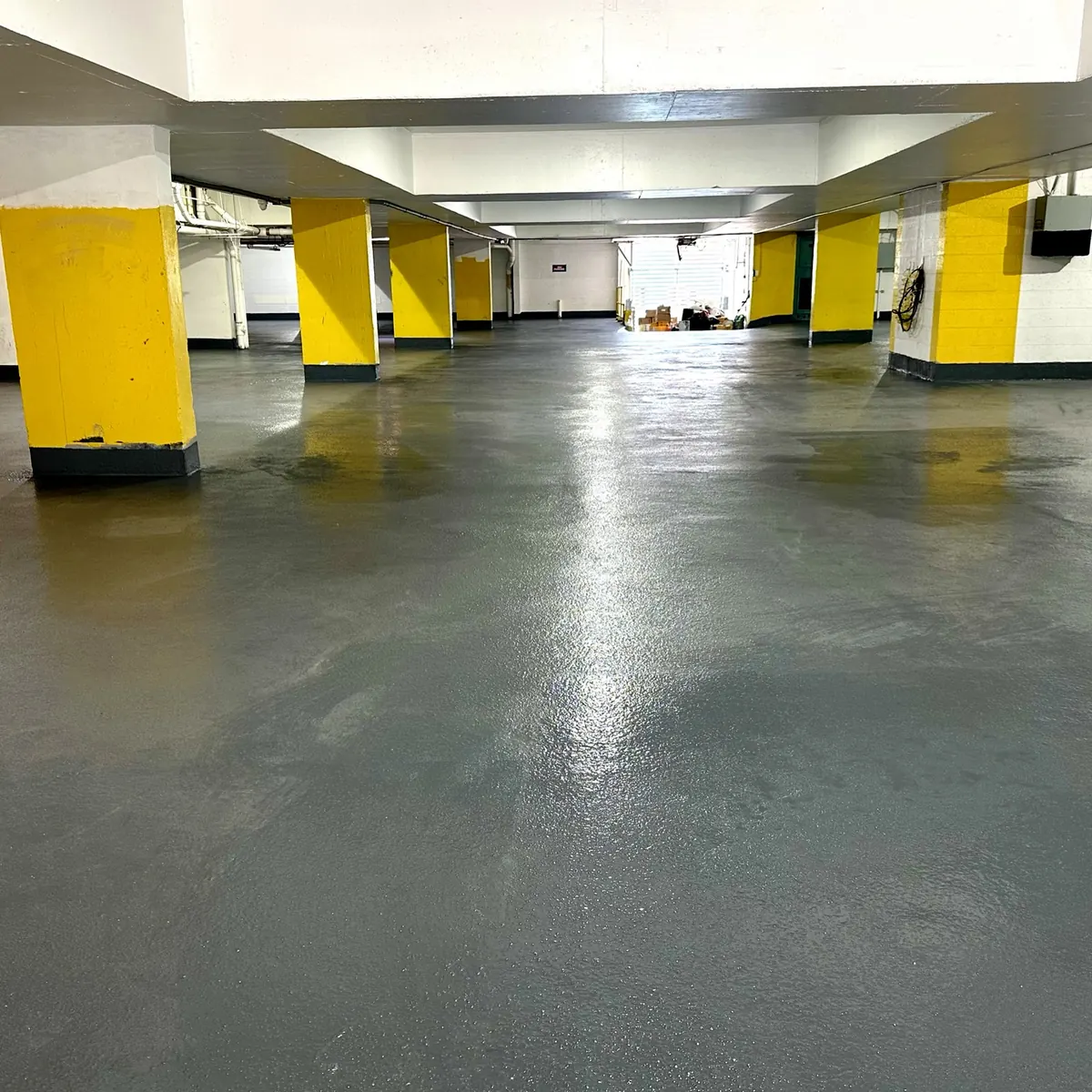
Most systems are built in layers. The industry specification for this type of product, ASTM C957, describes a base coat that provides the primary waterproofing and one or more top coats whose job is to resist wear and weather. Aggregate is often broadcast into the top coat for wear and skid resistance, which gives a finished deck its sandpaper texture.
A deck coating is not the same thing as floor paint or a clear penetrating sealer. Paint can look similar on day one but has little stretch to bridge cracks. Sealers soak into the concrete and reduce water absorption, but they do not form a flexible membrane on top. Which product a deck needs is a call for the engineer of record.
What a traffic coating protects
Parking structures take more abuse than most of the building. The ACI guide points out that garages have less cladding and roofing than other concrete buildings, so they see more direct exposure to rain, sunlight, temperature swings and airborne chlorides, plus heavy moving loads from cars. It also lists closeness to sea water as one of the environmental conditions that drive durability decisions.
For a coastal condo, that means two things worth protecting:
- The concrete and reinforcing steel in the deck. Water and chlorides that soak in reach the steel, and rusting steel expands and cracks the concrete around it.
- Whatever sits below the deck. On an upper garage level, that might be another parking level, storage rooms, lobbies or occupied units. A failed traffic coating can show up as drips, stains and rust on the ceiling below long before anyone notices the deck surface.
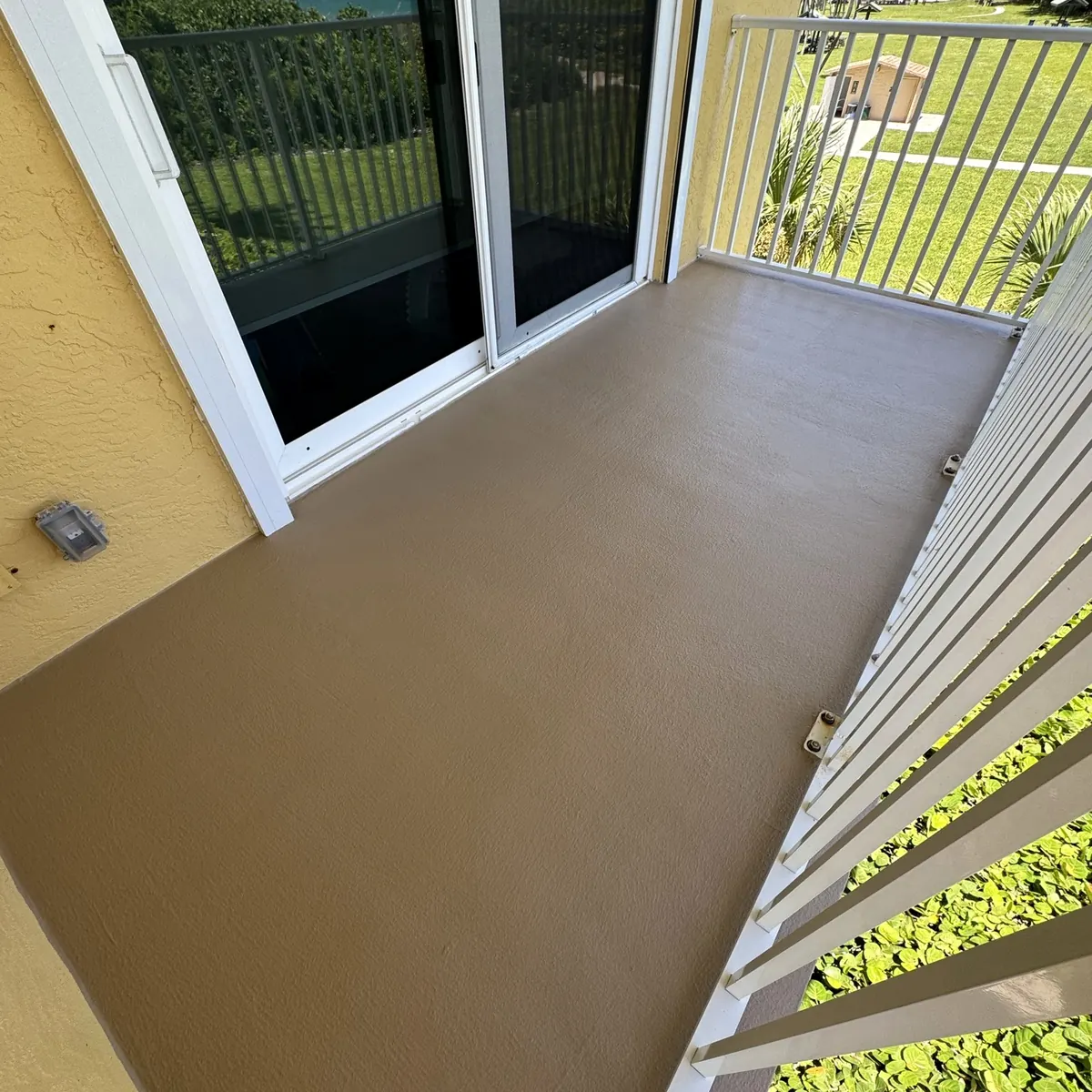
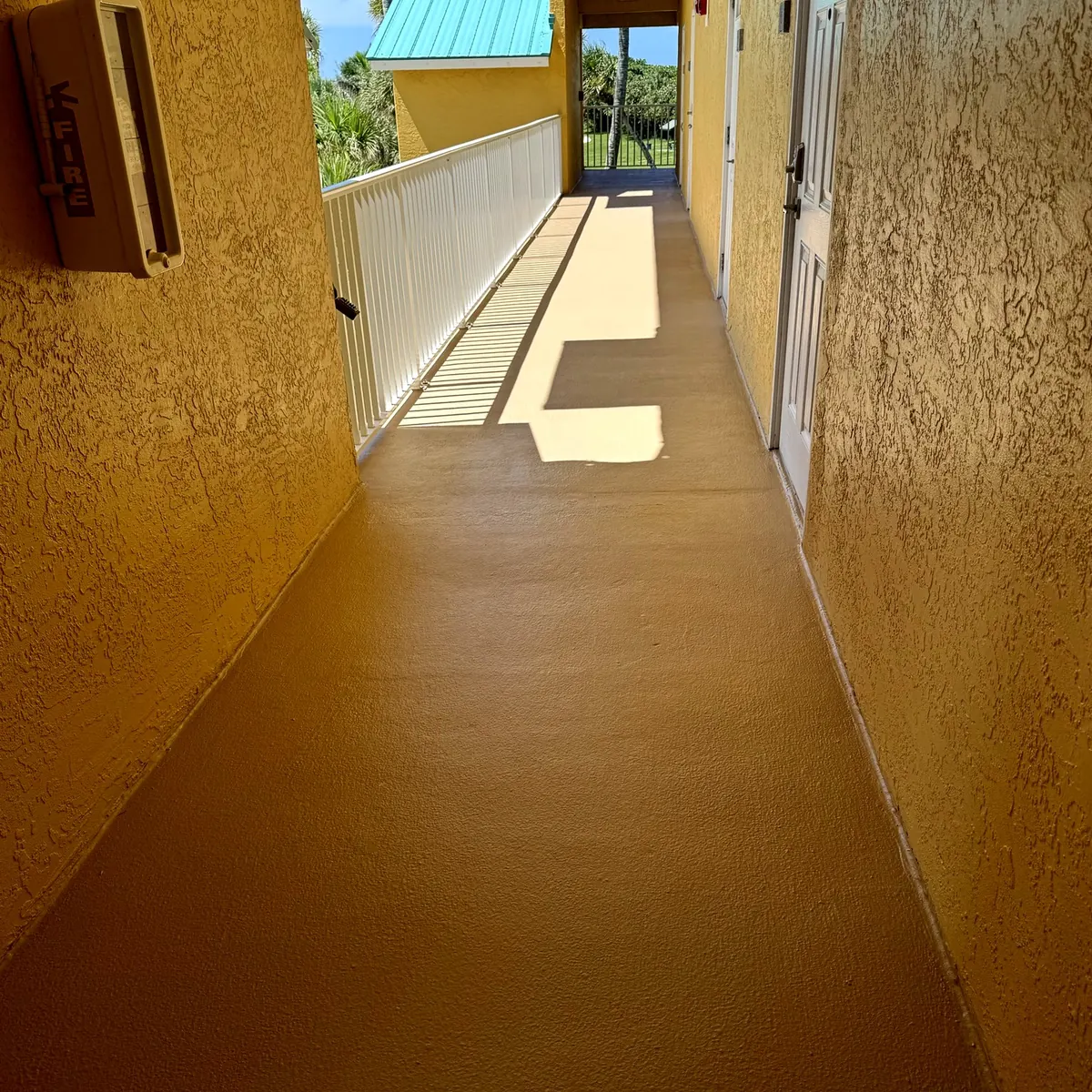
Plaza decks, pool decks over garages and exterior walkways face the same problem with foot traffic instead of tires. A walkway coating is the same idea in a lighter-duty form, and condominiums such as Beach Villas included walkway coating as part of a larger repair project.
Signs your traffic coating is failing
Traffic coatings wear unevenly. Drive lanes, turning areas, ramps and the spots where tires stop and turn wear first, while parked stalls can look almost new. Ask your manager or engineer to take a closer look if you see any of these:
- Worn paths where the top coat is gone and the base coat or bare concrete shows.
- Peeling, blistering or delaminating coating, especially at joints and edges.
- Cracks in the coating that follow cracks in the slab below.
- Ponding water that stays on the deck after a storm.
- Failed or missing sealant at expansion joints, drains and the joint where the deck meets walls and columns.
- Leaks, white mineral deposits, rust stains or spalling on the ceiling of the level below.
- Hollow-sounding concrete when the deck is sounded, a sign of delamination under the surface.
None of these signs tells you on its own how deep the damage goes. A licensed engineer evaluates the deck, often by sounding the concrete and reviewing the level below, and writes the repair plan. For more on what hollow concrete means, see our post on concrete delamination in slabs and garages.
Concrete repair comes before the traffic coating
A new coating over damaged concrete is a short-lived fix. If the steel is already corroding, the rust keeps expanding under the new surface, and the coating cracks and lifts as the concrete breaks up. The coating is the finish on a repair project, not a replacement for one.
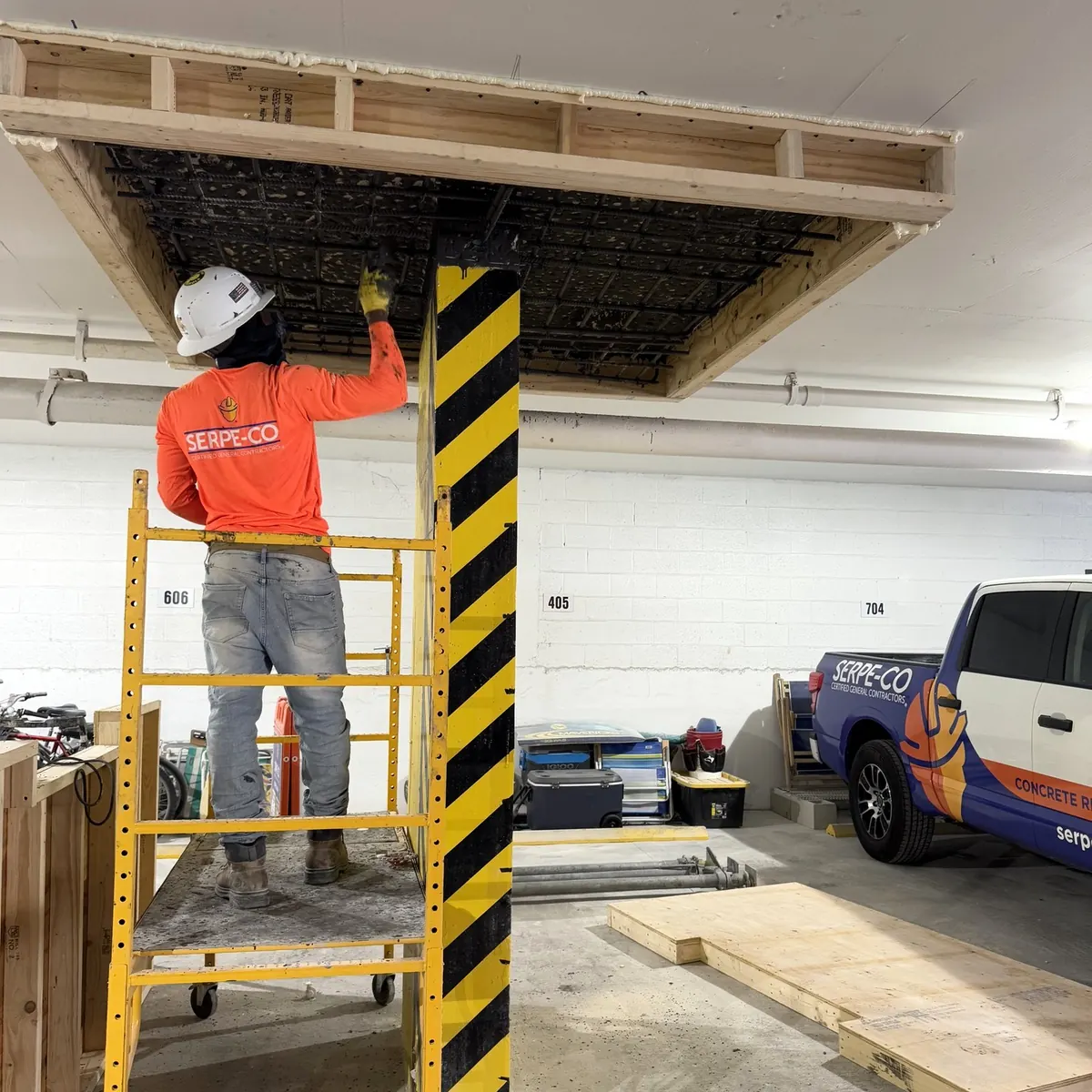
On a typical garage project, the engineer's documents call for removing deteriorated concrete on the deck and the ceiling below, cleaning or replacing corroded reinforcing, and rebuilding the areas with repair mortar or new concrete. Shoring goes in where the engineer requires it. Only after the structure is repaired does the deck get prepared for coating. Our post on concrete cancer and rebar corrosion explains why stopping the corrosion first matters so much near the coast.
How a traffic coating goes down
Every manufacturer publishes its own installation steps, and the engineer's specification sets the details. The general sequence on a condominium garage looks like this:
- Surface preparation. The deck is cleaned and mechanically prepared as specified so the coating can bond. Old failed coating is removed.
- Cracks and joints. Cracks are routed and sealed or treated with the manufacturer's detail, and expansion joints and cove joints at walls get new sealant.
- Primer. A primer goes on where the system calls for one.
- Base coat. The waterproofing layer is applied at the thickness the manufacturer requires.
- Top coat with aggregate. The wearing layer goes on, with aggregate broadcast in for traction, and heavier build in drive lanes and ramps where the system allows it.
- Cure, stripe and reopen. Each coat cures per the manufacturer before the next, and the deck is restriped before cars return.
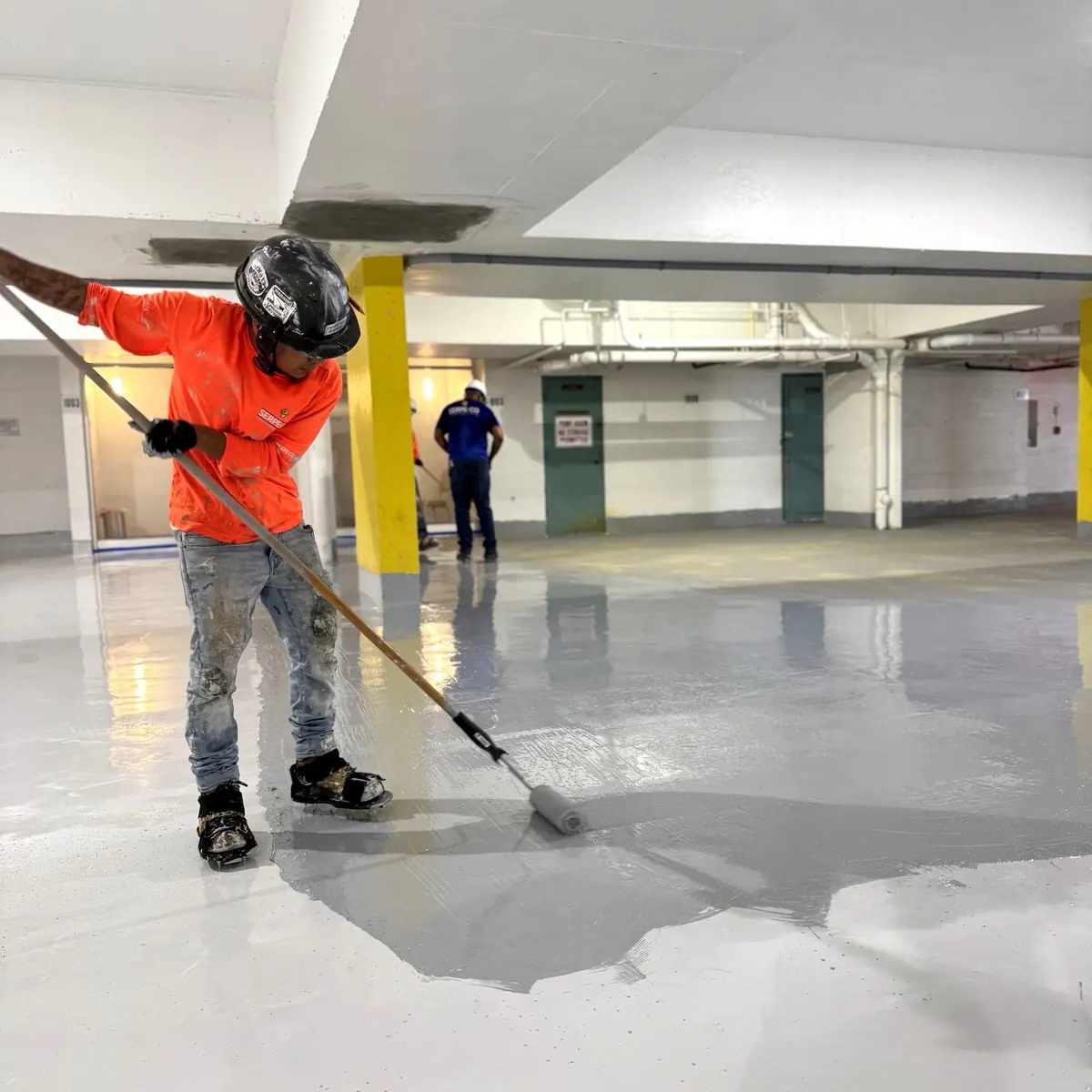
Florida weather affects every step. Heat, humidity and afternoon rain change cure times and work windows, so a realistic schedule builds in weather days rather than assuming every day is a coating day.
Boards can make the job smoother before it starts. Name one point of contact for the contractor, share the engineer's drawings and specifications with every bidder, and decide early how owners will hear about closures. Ask each bidder to explain how they would sequence the garage, where cars will go during each phase and how they will keep the work area separated from residents walking to their cars.
Phasing a traffic coating so parking continues
Residents still need to park while the work happens. Most condominium garages can be coated in sections so only part of the garage is closed at any one time. Good phasing starts at the planning stage, with the board, manager, engineer and contractor agreeing on the order before the first notice goes out.
A workable phasing plan usually covers:
- Which sections close first, how long each stays closed and where those residents park in the meantime.
- Clear notices to owners well before each phase, with dates and car-removal instructions.
- Barricades, signage and safe walking routes around the active area.
- Keeping ramps, entrances and fire lanes open, or setting temporary routes where they must close.
- Cure time before each section reopens, based on the product used.
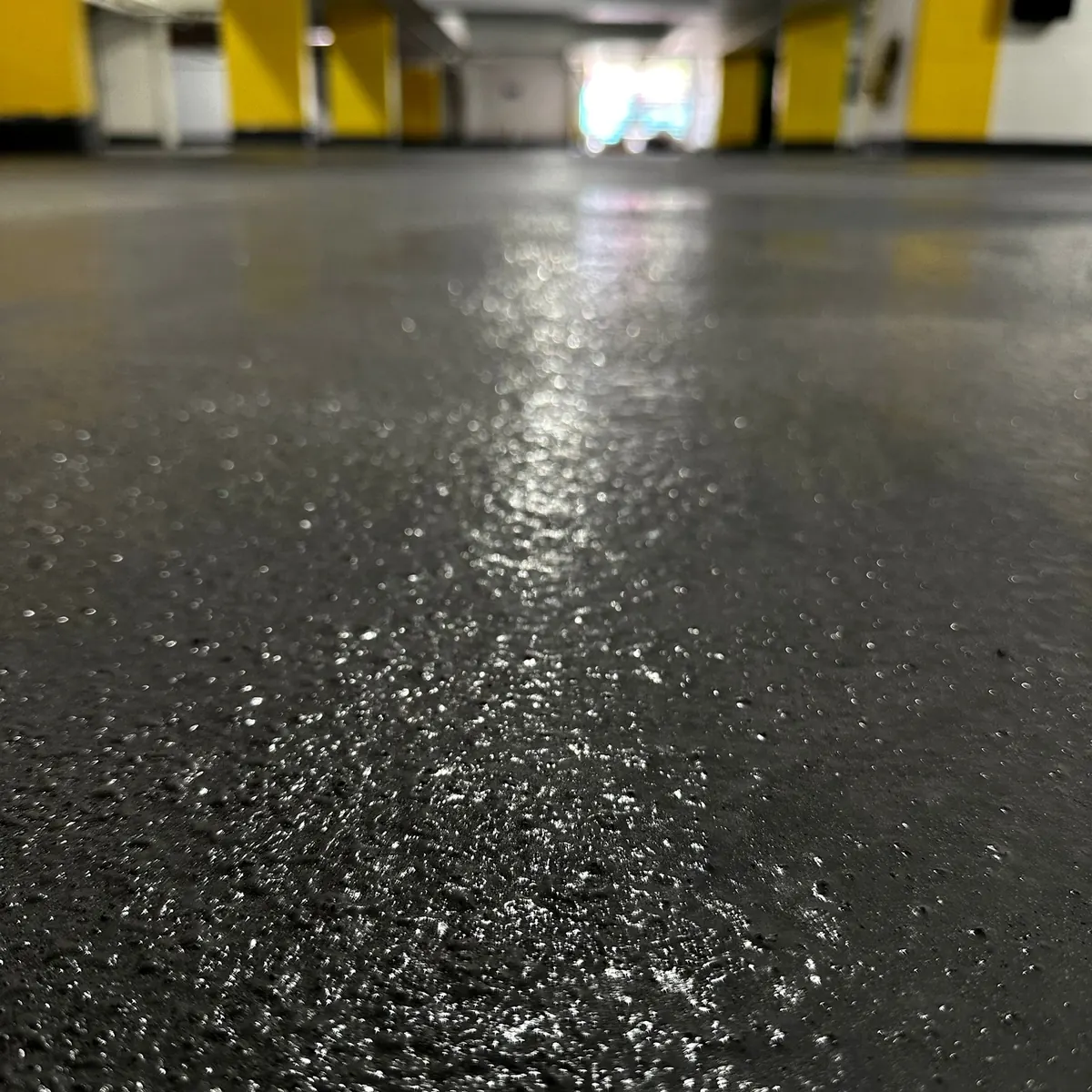
At condominiums such as Edgewater, where we handled garage repair and a new deck coating, the work combined overhead concrete repair with coating the parking level end to end. Planning the phases around how residents actually use the garage makes a big difference to how the project feels to owners.
Keeping a traffic coating working
The ACI guide says maintenance of parking structures is essential to durability and longevity, and that applies directly to coatings. Sweeping and washing the deck, keeping drains clear and fixing damaged sealant quickly all extend the life of the system. Many manufacturers offer a top coat renewal so worn drive lanes can be recoated before the base coat is damaged.
How long a traffic coating lasts depends on the product, the traffic, the exposure and the maintenance. Your engineer and the manufacturer's guidance should set the inspection and recoat schedule. Florida's milestone inspections and structural integrity reserve studies are good moments to review the garage, and our milestone inspection guide explains how those programs work. Balconies face a similar water problem on a smaller scale, which we cover in balcony waterproofing for Florida condos.
How SERPE-CO can help
SERPE-CO is a family-owned Florida Certified General Contractor, CGC #1523974, based in Pompano Beach. We build the garage repairs and the deck coating systems that licensed engineers specify, from St. Lucie County to Miami-Dade County, and we plan the work around the residents who still need to park. Brett and Jason Serpe bring more than 20 years in the field, and safety is of the utmost importance on every occupied site.
Read more about our parking garage restoration services or our parking garage restoration in Broward County. To review your engineer's plan or request a bid, contact SERPE-CO or call (954) 718-3094.
The information in this article is general guidance for condominium boards and managers, not engineering or legal advice. Your engineer of record and association attorney should guide decisions for your building.
CEO and co-founder of SERPE-CO, a family-owned Florida Certified General Contractor (CGC #1523974). In concrete restoration since 2005 and a contributor to the Florida Community Association Journal. This article is general information, not engineering or legal advice.