Miami-Dade County, Florida
Commercial Waterproofing in Miami-Dade County
Track down where water enters, then seal the envelope so the building stays dry.
In short
Who handles commercial waterproofing in Miami-Dade?
SERPE-CO carries out commercial waterproofing in Miami-Dade County for condominium associations, hotels and commercial owners. The work involves tracing leaks to their source, replacing sealant joints, installing balcony, plaza and pool deck membranes, waterproofing planters, injecting cracks and coating exterior walls, with any damaged concrete or stucco repaired first and every system installed to the specification.
Free milestone planner
Is a milestone inspection coming due on your building?
Enter the year your building got its certificate of occupancy and how many stories it has. The planner estimates your deadline under Florida law, then you can send it to SERPE-CO for a second look.
Add the year and story count for an estimated due date.
Want a second look at your timeline? Send your building details and SERPE-CO will follow up about the inspection, likely repairs and how to plan for them.
About this estimate
This is a planning estimate drawn from the statewide rule in Florida Statute 553.899. Your local building department sets the real deadline and may call for the first inspection at 25 years instead. Broward County also has its own Building Safety Inspection Program. Check your date with your building official and engineer, or contact SERPE-CO and we will help you sort it out.
Waterproofing · Miami-Dade
Commercial waterproofing in Miami-Dade County keeps rain, wind-driven water and tidal moisture out of condominium towers, hotels, offices and retail buildings. SERPE-CO installs pedestrian and traffic deck membranes, replaces failed sealant at windows, control joints and expansion joints, waterproofs planters and pool decks, injects cracks and coats exterior walls. The goal is a continuous envelope, because water that finds one gap will travel to the reinforcing steel and start the damage that later becomes a concrete repair.
Finding the path the water takes comes before choosing a product. A stain on a ceiling is often several feet away from where the water actually enters, and a leak around a window can begin at a failed joint above it. We trace leaks back with the building engineer or the owner's consultant, flood-test balconies and planters when needed, and then repair the source with the system specified. Paint is part of the envelope too, and a sound coating over repaired stucco and concrete is the outer layer of the waterproofing.
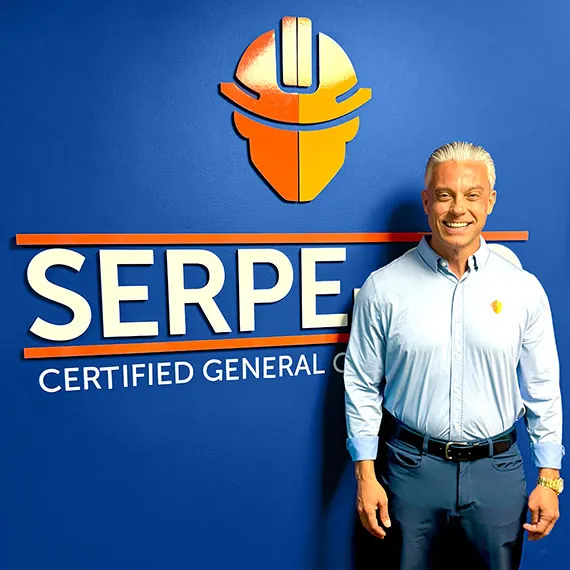
Reviewed by Brett Serpe, MBA, GC, CEO of SERPE-CO · Florida Certified General Contractor CGC #1523974
Prepared by the SERPE-CO project team, with more than 20 years in concrete restoration. Last reviewed November 2026.
Local conditions
What drives water into Miami-Dade buildings
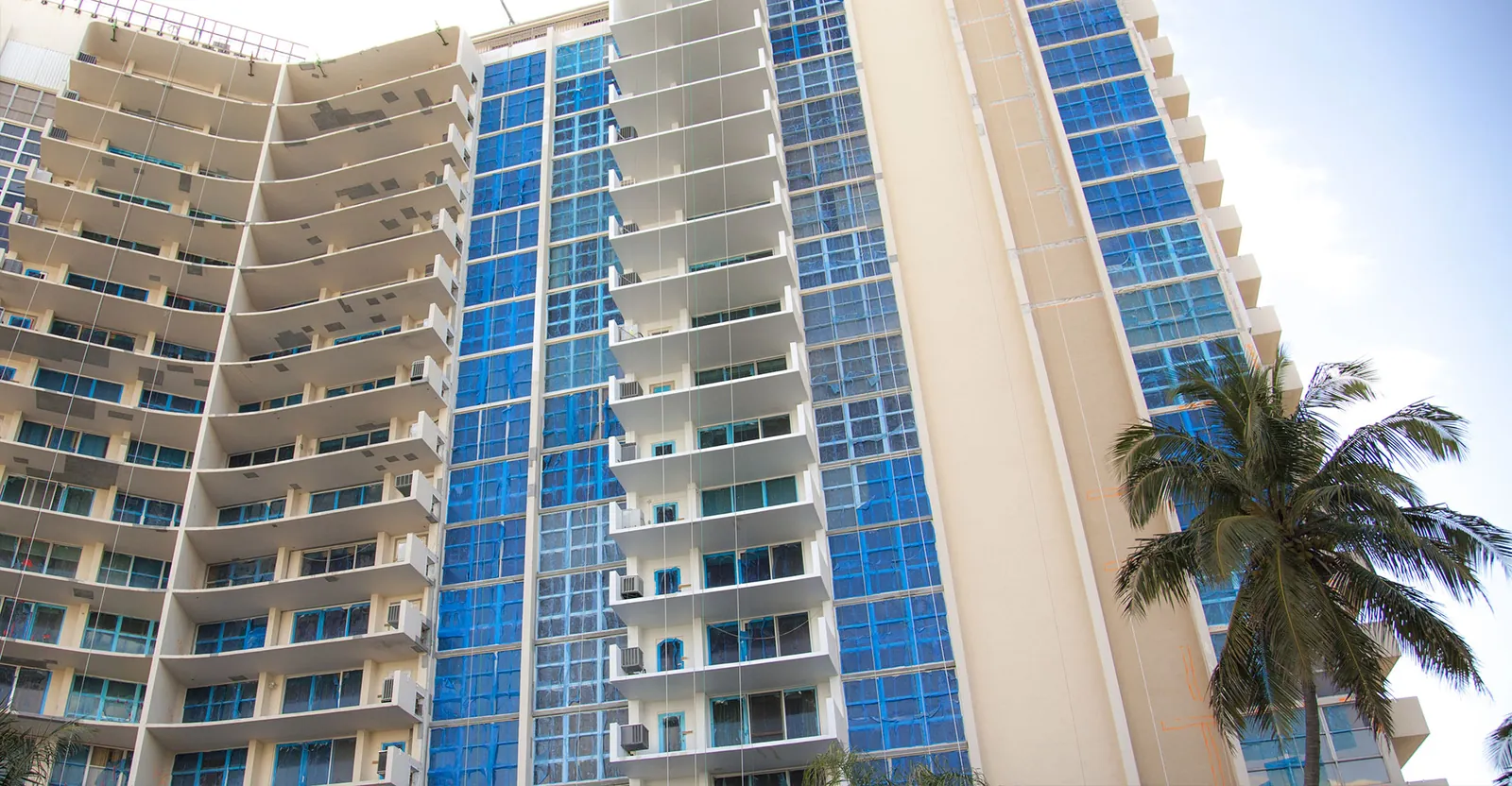
South Florida rain arrives hard and sideways. Summer storms and tropical systems push water against the facade under wind pressure, so joints, window perimeters and wall cracks that seem tight on a calm day leak during a squall. The rainy season runs roughly from mid-May to mid-October, and hurricane season from June 1 to November 30, so buildings across Miami-Dade see long stretches of wet weather each year. Sealants and coatings also age faster under strong sun and salt air.
Location shapes the problem. Oceanfront towers on Miami Beach, Surfside, Bal Harbour, Sunny Isles Beach and Key Biscayne take salt spray that attacks sealant joints and metal flashings. Bayfront buildings in Brickell, Edgewater and downtown Miami often have plaza decks, pool decks and planters above occupied space or parking, where a membrane failure leaks into the level below. Inland, in Doral and Coral Gables, flat roofs, parapets and window walls on offices and warehouses are the usual entry points.
Buildings that need this work
Where Miami-Dade buildings take on water
Oceanfront towers on the barrier islands leak most often at balcony thresholds, window perimeters and sealant joints that salt and sun have hardened. In Sunny Isles Beach, Bal Harbour, Surfside, Miami Beach and Key Biscayne, wind-driven rain during summer storms pushes water through gaps that stay dry on calm days. Roof-to-wall transitions, mechanical penetrations and stair towers are other common entry points, and the water often surfaces far from where it enters, inside a unit, a corridor or a garage ceiling.
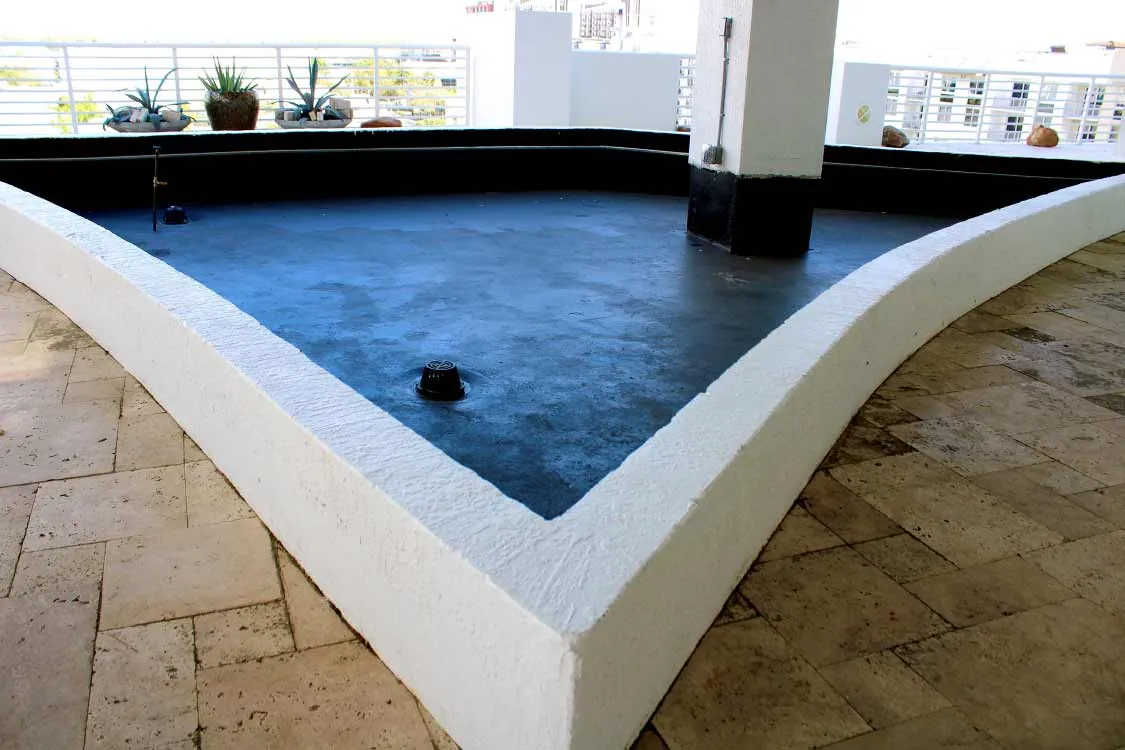
On the mainland, plaza and pool decks over occupied space are the largest waterproofing jobs. Brickell, Edgewater and downtown Miami towers commonly have amenity decks with planters, pavers and drains above garages or lobbies, and when the membrane fails the leak shows up in the level below. Aventura and North Miami Beach condominiums along the Intracoastal have similar podium decks. Offices and warehouses in Doral and Coral Gables usually leak at parapets, window walls, roof penetrations and the joints between tilt-up panels.
The work
Commercial waterproofing in Miami-Dade County: what the job covers
- 01Water testing to trace leaks
- 02Sheet and liquid-applied membrane systems
- 03Pool deck, plaza and balcony waterproofing
- 04Below-grade and planter waterproofing
- 05New sealants and expansion joints
- 06Door and window perimeter sealant
Our approach
How we stop leaks and keep them stopped
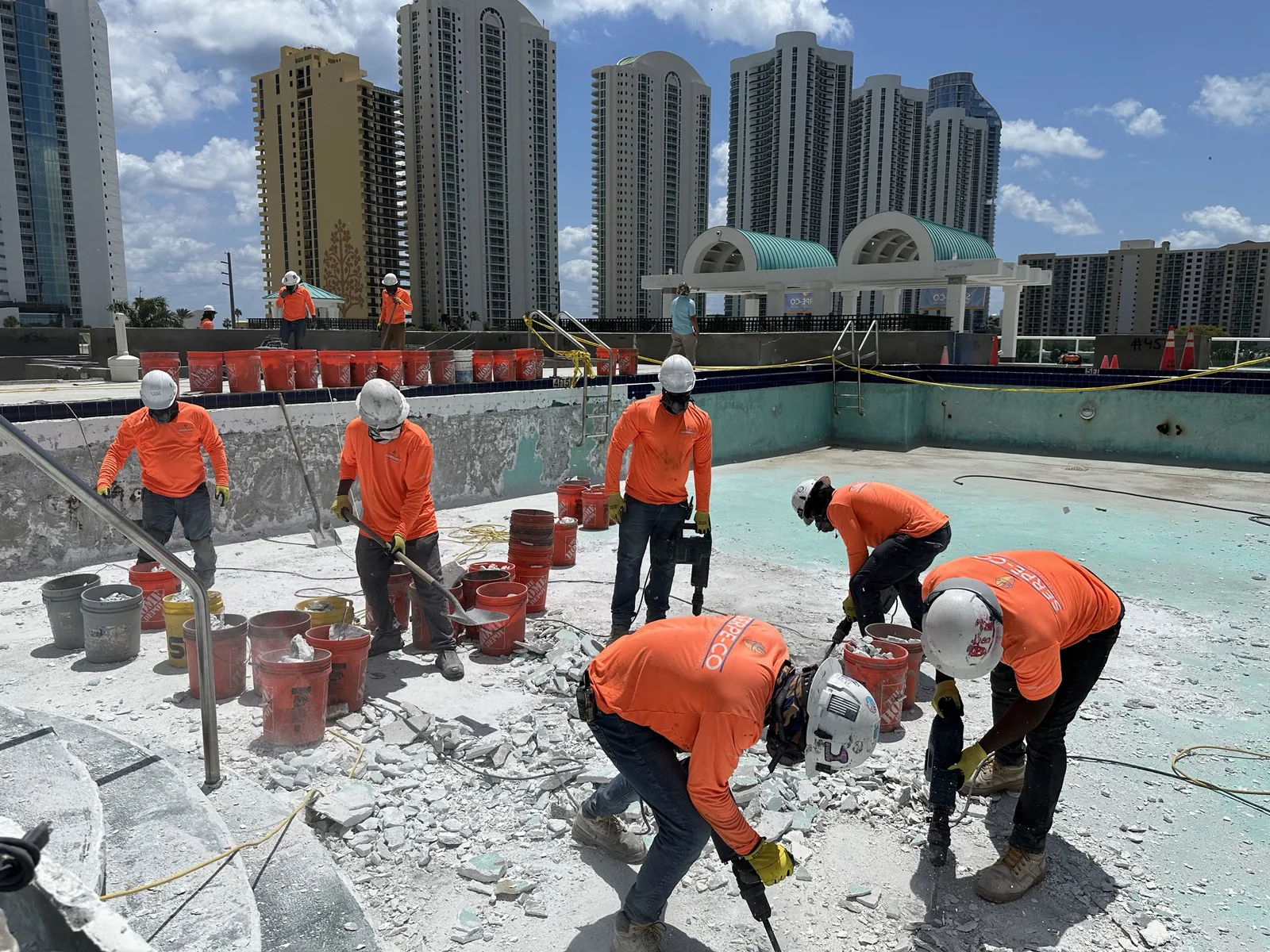
Investigation comes first. We look at the interior damage, inspect the exterior around it, and where needed run controlled water or flood tests to confirm the source before anything is removed. The engineer or consultant then writes the scope to the cause: cut out and replace sealant joints, rebuild a balcony membrane, waterproof a planter or treat cracks in the wall. Concrete or stucco damaged by the water is repaired before the waterproofing goes on, so the new system sits on a sound substrate.
Every system is installed to the manufacturer's requirements and the specification, with surface preparation, primers, reinforcing at corners and terminations and the correct cure time between coats. Coatings and membranes need dry substrates, so we schedule them around the afternoon storms of the rainy season. When the work is done, we test the repaired areas where testing makes sense and give the association a record of what was installed and where.
SERPE-CO brings more than 20 years in the field to every job. Read about our full waterproofing service or browse all our work in Miami-Dade County.
Planning ahead
Planning a waterproofing project in Miami-Dade
Good waterproofing projects start with diagnosis. The board or owner should expect investigation, water testing where useful, and a written scope from the engineer or consultant tied to the cause before any membrane is chosen. When a recertification report also lists concrete or stucco damage, those repairs belong in the same project, because a new membrane laid over unsound concrete fails early. The engineer or consultant specifies systems, and the building department permits work that touches the structure or the building envelope.
Weather drives the schedule. Coatings, membranes and sealants need dry, clean surfaces and the cure times their manufacturers set, and the rainy season from mid-May to mid-October brings storms most afternoons. Work is planned in areas that can be finished and protected the same day. During hurricane season, from June 1 to November 30, open deck areas and loose materials are secured when a storm is forecast, and the calendar includes allowance for lost days.
How we run a job
Site walk first, closed permit last.
- 01
Meet on site
Each job starts on site, walking the property and its conditions with your manager, board or engineer.
- 02
Follow the engineer's scope
The engineer writes the scope. We price it line by line, plan access and lay out each phase to build it.
- 03
Put safety first
We can never work too safely: shoring, swing stages, barricades and notices go up first.
- 04
Build the repairs
Crews work through the repairs in order, stopping for inspections wherever the engineer calls for them.
- 05
Finish and document
Final inspections, a closed permit and a full record of the work for the association.
Cities served
Waterproofing throughout Miami-Dade County
Summary
What Miami-Dade boards and owners should remember
- 01
Wind-driven rain during summer storms finds gaps in Miami-Dade buildings that stay dry on calm days.
- 02
Plaza and pool decks above garages or lobbies are the largest waterproofing jobs on mainland Miami-Dade towers.
- 03
Concrete and stucco damage listed in a recertification report should be repaired before new waterproofing goes on.
- 04
Membranes and coatings in Miami-Dade are scheduled around the afternoon storms of the rainy season.
Questions
Waterproofing in Miami-Dade: questions we hear
Why does the ceiling leak below a Key Biscayne balcony that was just retiled?
Tile and grout are not waterproof. If the new tile was set without a membrane, or if the membrane was not turned up at the walls and tied into the door threshold, water still reaches the slab and runs through cracks to the ceiling below. The fix is to remove the finish, repair the slab and install a continuous membrane under the new surface.
How often should sealant joints be replaced on a Miami Beach building?
Joint sealants on coastal buildings face strong sun, salt and movement, and their service life is shorter than many owners expect. The right interval depends on the product and exposure. A periodic review by the building engineer or our crews shows when joints are cracking, pulling away or hardening, and replacement is planned before leaks start rather than after.
Can a pool deck over a garage in Brickell be waterproofed without removing the pavers?
Rarely. The membrane that keeps water out of the garage sits beneath the pavers, the bedding and any topping slab. When it fails, the finish above usually has to be lifted to reach it. Pavers can sometimes be saved and reinstalled. The engineer or consultant decides the extent based on testing and the condition of the slab.
How do you find the source of a leak in a Sunny Isles Beach tower?
We start at the interior damage, inspect the exterior around and above it, and use controlled water testing to confirm the path before anything is opened. Joints, window perimeters, thresholds and roof penetrations are the usual suspects. Once the source is confirmed, the repair is written to that cause.
Does waterproofing work on a Miami-Dade building need a permit?
Work that touches the structure or the building envelope, such as deck membranes over occupied space or repairs tied to a recertification report, is generally permitted through the local building department. Commercial waterproofing in Miami-Dade County that is pure maintenance may not need one. The building official decides, and we confirm before work starts.
Can a planter on a Brickell amenity deck be waterproofed without removing the trees?
Usually not. The membrane lines the inside of the planter and runs under the soil, so plants and soil have to come out to reach it. Drainage and electrical are corrected at the same time, and the planter is replanted once the waterproofing is complete.
Laws and rules cited
- Miami-Dade County: Building Recertification (Milestone) Inspections, Code of Miami-Dade County Section 8-11(f)
- Miami-Dade County Product Control: Notice of Acceptance for building envelope products
- Florida Statute 553.899: mandatory structural inspections for condominium and cooperative buildings
- Florida Statute 718.112: structural integrity reserve studies
Treat this page as general information only, not legal or engineering advice. Licensed engineers and architects perform the inspections, and the building official decides which dates apply to your property. SERPE-CO's role is to carry out the repairs.
Working with an engineer?
Holding drawings, specifications or a complete set of bid documents?
Structural engineers, property engineers and board members send SERPE-CO much of our restoration, pool and roofing work. Once a scope has been drawn and specified, our team prices what the documents show, raises questions where something is unclear, and lays out each line so boards can weigh the bids on equal terms.
Request an estimate
Let's plan your restoration.
Tell us where the building is and what you are seeing. We set up a visit to the property, then send a written proposal, or tell you an engineer needs to write the scope first.
- More than 20 years in the field
- St. Lucie, Martin, Palm Beach, Broward and Miami-Dade
- Family-owned Certified General Contractor
Rather call?(954) 718-3094