Commercial turf, built right
Commercial Artificial Turf for Condos, HOAs and Properties
Green that stays green through a South Florida summer, built by a family contractor that already does the hard parts: concrete, drainage, waterproofing and pool decks.
In short
Who installs commercial artificial turf for condos and HOAs in South Florida?
SERPE-CO, a family-owned Certified General Contractor (CGC #1523974) in Pompano Beach, installs commercial artificial turf for condo associations, HOAs and commercial owners from St. Lucie County to Miami-Dade. Turf is only as good as what sits under it, and the base, the drainage, the edges and the tie-ins to concrete and pool decks are the same work our crews handle every day on restoration projects. Ground-level areas get a site visit and a written proposal.
Where it goes
Artificial turf areas we build for South Florida properties
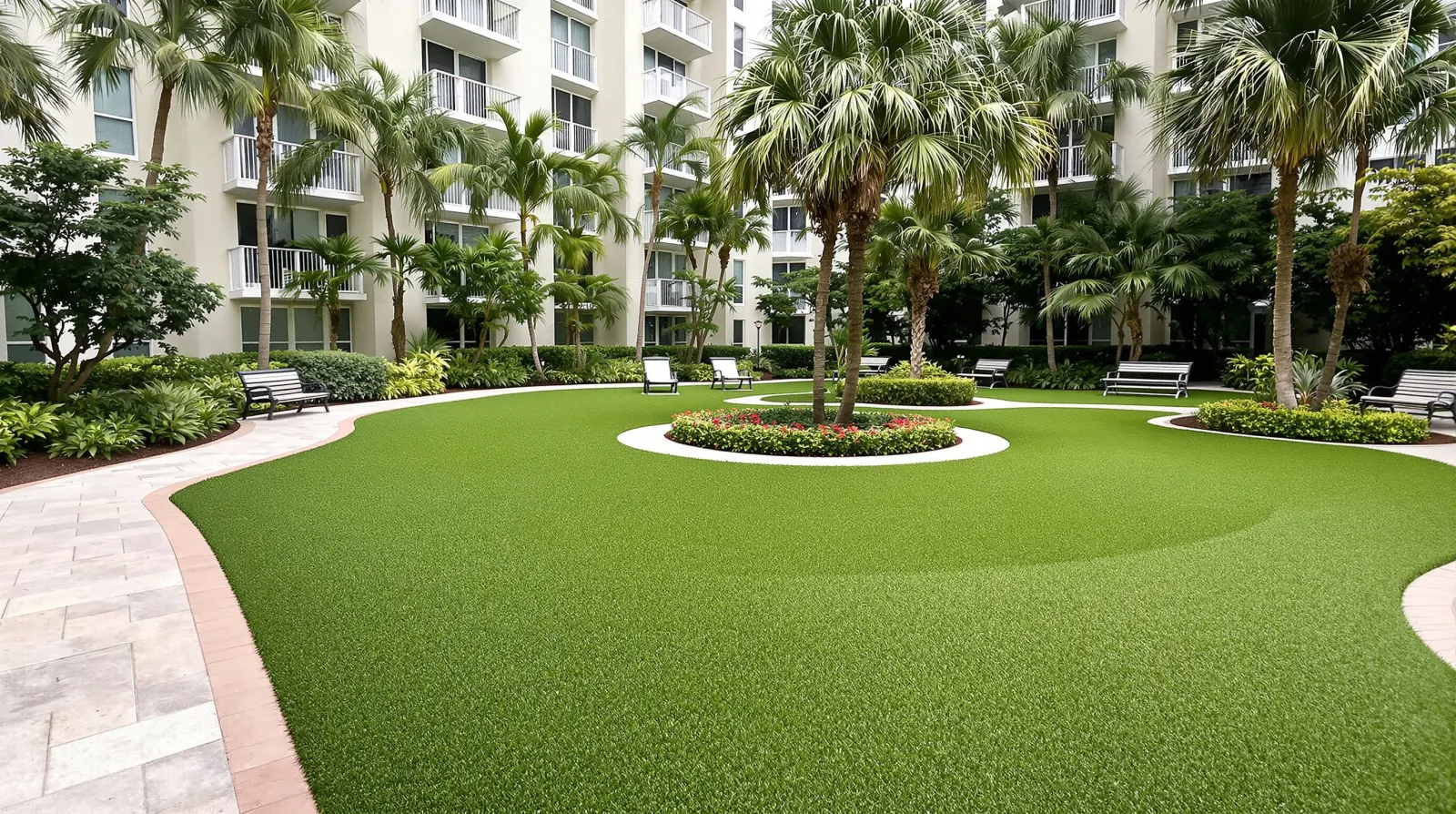
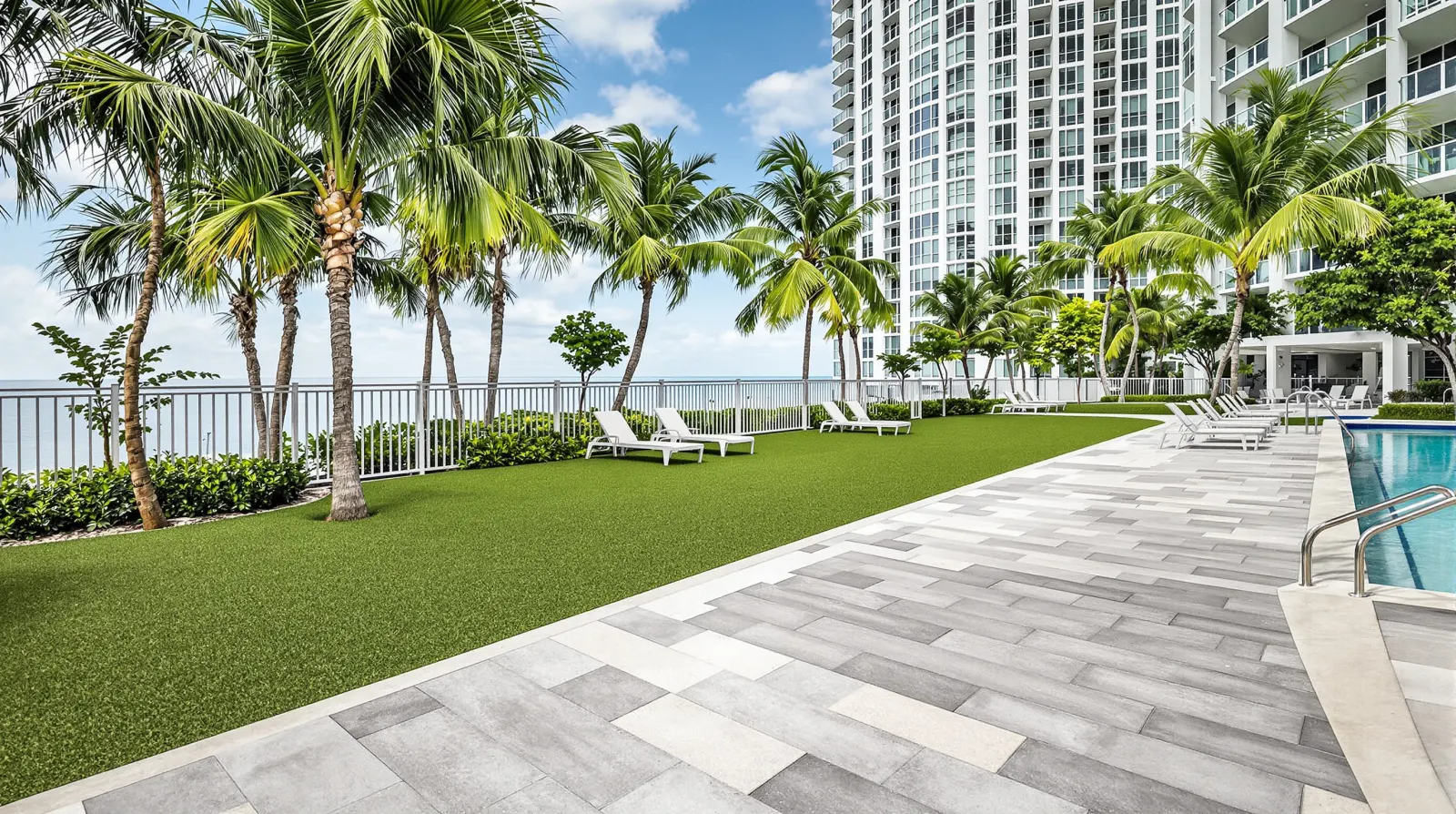
Artificial turf earns its place on a property where real grass keeps failing or keeps costing the association attention. Pool decks are the most common request: a strip of green between lounge chairs and the paver field, or a full lawn panel beside the pool. Common areas come next, meaning courtyards, building entries, medians, the narrow beds along walkways, and the shady side of a tower where sod thins out every summer no matter how often it is replaced.
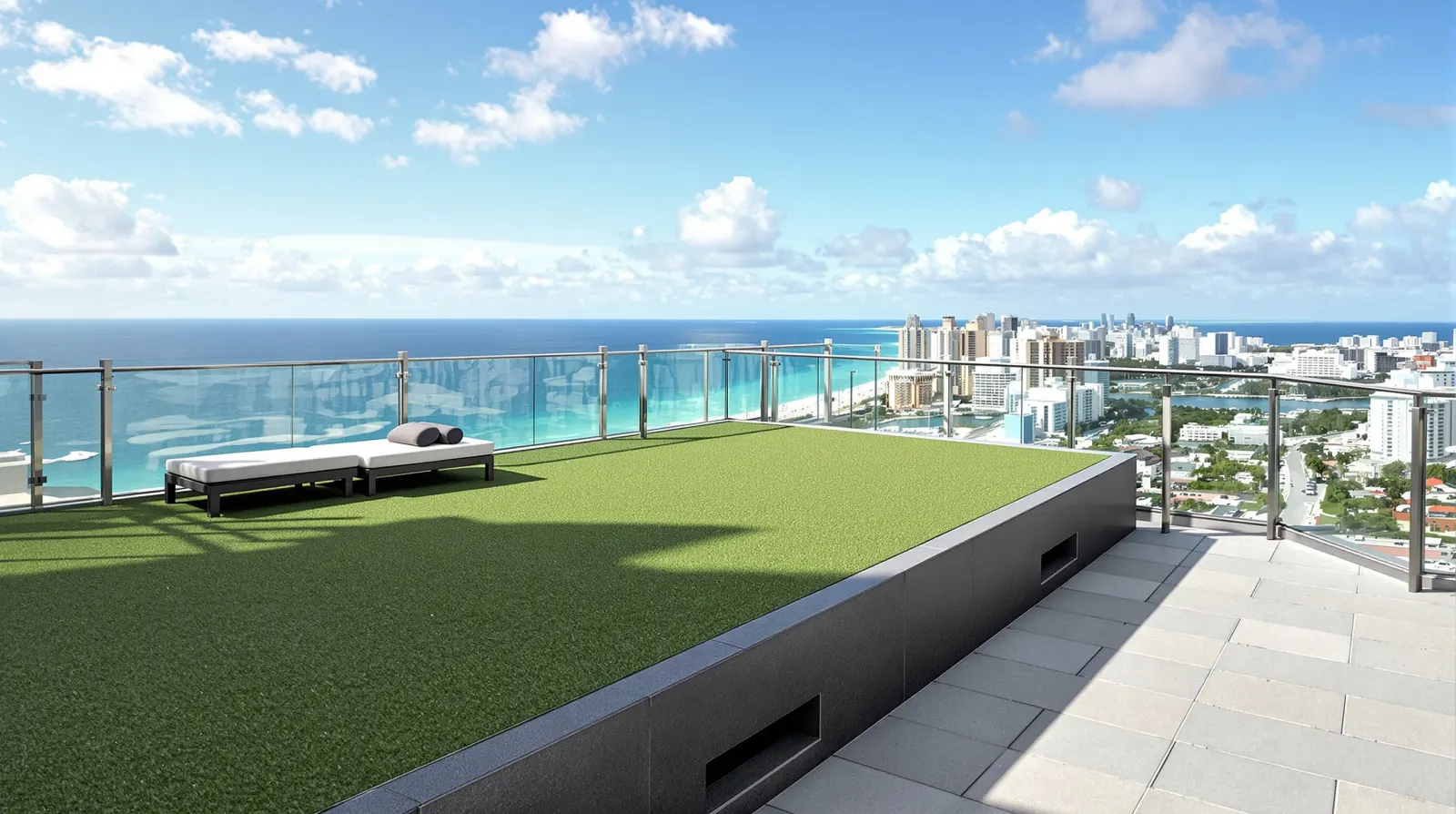
Rooftops and amenity decks are a growing share of the work, because a green terrace over a garage or a podium slab makes an unused deck feel like a park. Pet relief areas and dog parks are another, since a dog run takes a beating that no lawn survives. Putting greens and playgrounds round out the list, each with its own surface and, for playgrounds, its own safety standard. Every one of these areas has its own page here with the details that matter for it.
Why a concrete contractor
Why a concrete and waterproofing contractor fits artificial turf
Most turf failures start below the surface. A base that was never compacted settles into dips that hold water. A slope that runs the wrong way sends rain toward a building wall or across a walkway. An edge that was never anchored lifts and curls the first time a mower or a maintenance cart catches it. SERPE-CO spends its days on grading, drainage, slab edges, curbs and expansion joints, so the parts that decide how artificial turf performs are the parts we already know.
Waterproofing is the other half of the reason. Turf over a membrane, a pool deck above a parking garage or a rooftop amenity deck sits on top of the most expensive layer in the building. A turf crew that drives stakes into a slab or blocks a drain can cause a leak that shows up in a garage ceiling months later. Our crews work around membranes, drains and expansion joints on restoration jobs all the time, and that habit carries straight over to turf.
Boards also like having one contractor on the job. When a pool deck needs a few concrete repairs, a coping fix or new pavers before the turf goes in, SERPE-CO can handle that work in the same project and the same schedule, with the same superintendent keeping the manager informed.
How a project runs
How an artificial turf project runs, start to finish
Every project starts with a site visit. Our team walks the area with the manager or a board member, looks at how water moves today, checks the edges, the soil or slab underneath, the irrigation heads and any trees or roots, and asks how the space gets used. For ground-level areas such as courtyards, medians and dog runs, SERPE-CO follows the visit with a written proposal. For anything over a membrane or a structural slab, the building's structural engineer or design professional confirms loads, drainage and hold-down first, and we price and build to that.
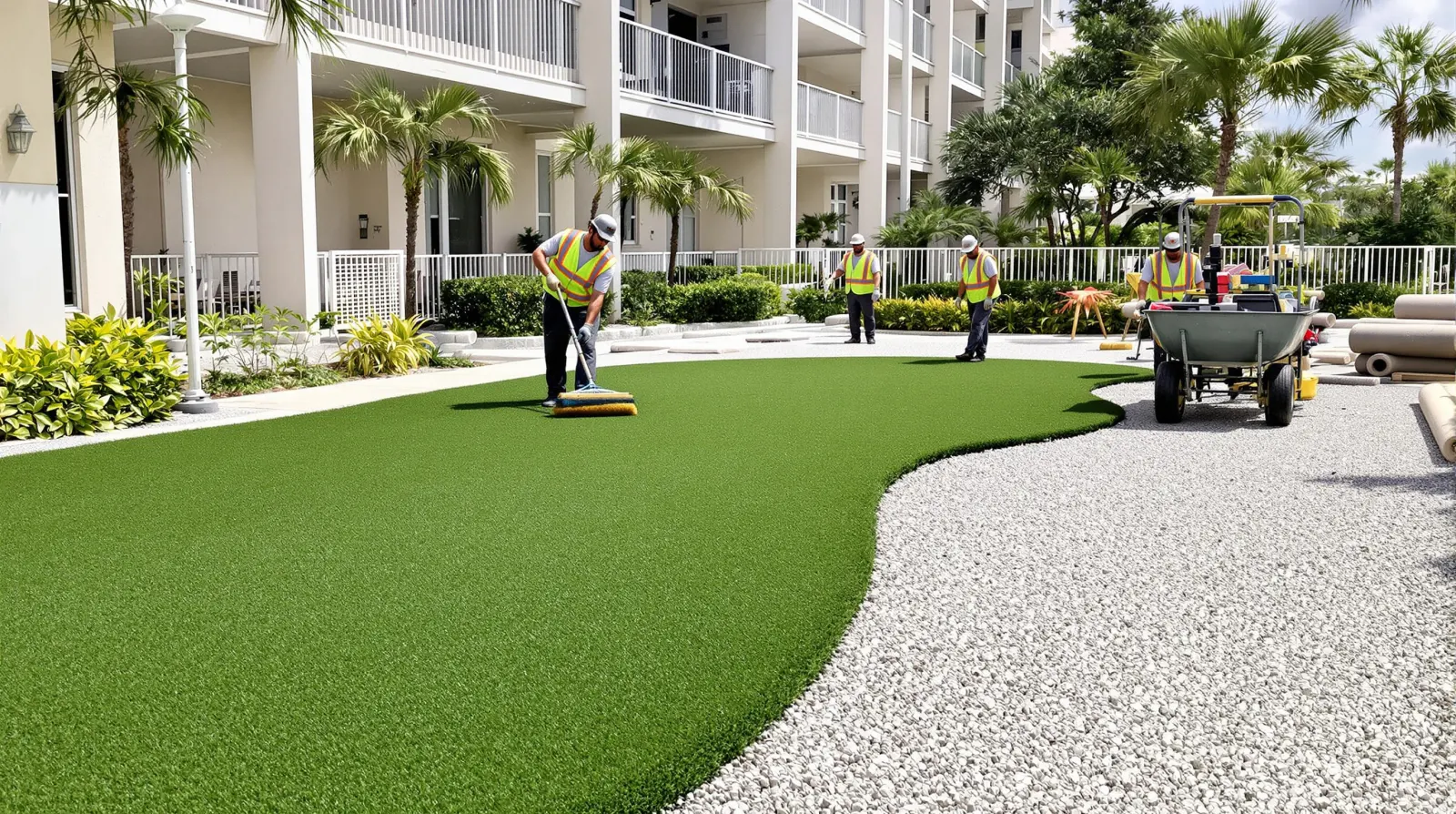
On ground-level work the typical sequence is to cap or reroute irrigation, remove the old sod and soil to a depth of about three to four inches, lay geotextile fabric where the soil calls for it, and place a crushed stone base graded to drain and compacted in lifts. Edges get nailer boards or edge trim, the turf is rolled out with the grain running the same way, seams are glued on seam tape, and infill is spread and power-broomed into the fibers.
Residents keep living around the work, so the schedule matters as much as the materials. SERPE-CO plans staging, deliveries and noisy days with the manager, keeps walkways open or clearly detoured, and cleans up at the end of each day. Safety is part of every plan, because on our sites we can never work too safely.
What goes into it
Artificial turf materials: turf, base, infill and drainage
The turf itself is chosen for the use. A lounge lawn by the pool wants a soft, denser pile. A dog run wants a shorter, tighter fiber that rinses clean and drains fast. A putting green uses a dedicated putting surface, and a playground uses a system tested over a cushioned pad. Color, pile height and backing all change how the turf looks and how hot it gets, so our team brings samples and talks through the trade-offs with the board.
Under the turf, the base and drainage do the real work. On soil that means compacted aggregate with a slight fall toward a drain or a planting bed. On concrete, a drainage mat or pad lets water run underneath to the existing drains. Infill holds the fibers upright and adds weight: silica sand, coated sand, cooling infills or organic infills, and antimicrobial infill for pet areas. The Synthetic Turf Council publishes installation and maintenance guidelines that are a good reference for owners comparing proposals.
Honest trade-offs
Heat, shade and South Florida water rules
Artificial turf gets hot in full sun, and boards should know that before they vote. A 2025 University of Florida IFAS report found natural grass was consistently cooler than synthetic turf, often by more than 18°F, and a UNLV and Desert Research Institute study measured synthetic turf peaks around 169°F, about 69°F above irrigated grass. Shade sails, trees, lighter colors, cooling infills and a quick rinse before busy times all help. On a pool deck or a playground, plan seating and shade along with the turf.
Water savings are real, and the rules behind them are worth knowing. The South Florida Water Management District's year-round landscape irrigation rule, Chapter 40E-24 of the Florida Administrative Code, has applied across its 16 counties since March 2010. Landscape watering is limited to two days a week in most areas (three in some), with no watering between 10 a.m. and 4 p.m., and cities and counties can be stricter. Turf removes those zones from the schedule entirely, which also removes overspray onto walls and walkways.
After it is installed
Maintenance that keeps artificial turf looking new
Artificial turf is low maintenance, not no maintenance. Plan on brushing high-traffic areas so the fibers stand up, blowing off leaves and debris, and rinsing pet areas regularly so odor does not build. Infill settles and migrates over time, especially near pool edges and walkways, and a top-up every so often keeps the surface even and the fibers protected. Edges and seams deserve a quick look after big storms.
Your landscape company can usually take over routine care with a few changes to how they work, such as swapping a mower for a blower and a stiff broom. SERPE-CO walks the maintenance crew or the manager through what to look for when the project is handed over, so small issues get caught while they are still small.
Turf areas
Where we install commercial turf.
 Pool Decks
Turf beside the pool that drains fast and meets pavers and coping cleanly.
Condo Common Areas
Courtyards, entries, medians and shady strips that stay green year-round.
 Rooftops & Terraces
Green amenity decks and terraces that protect the waterproofing underneath.
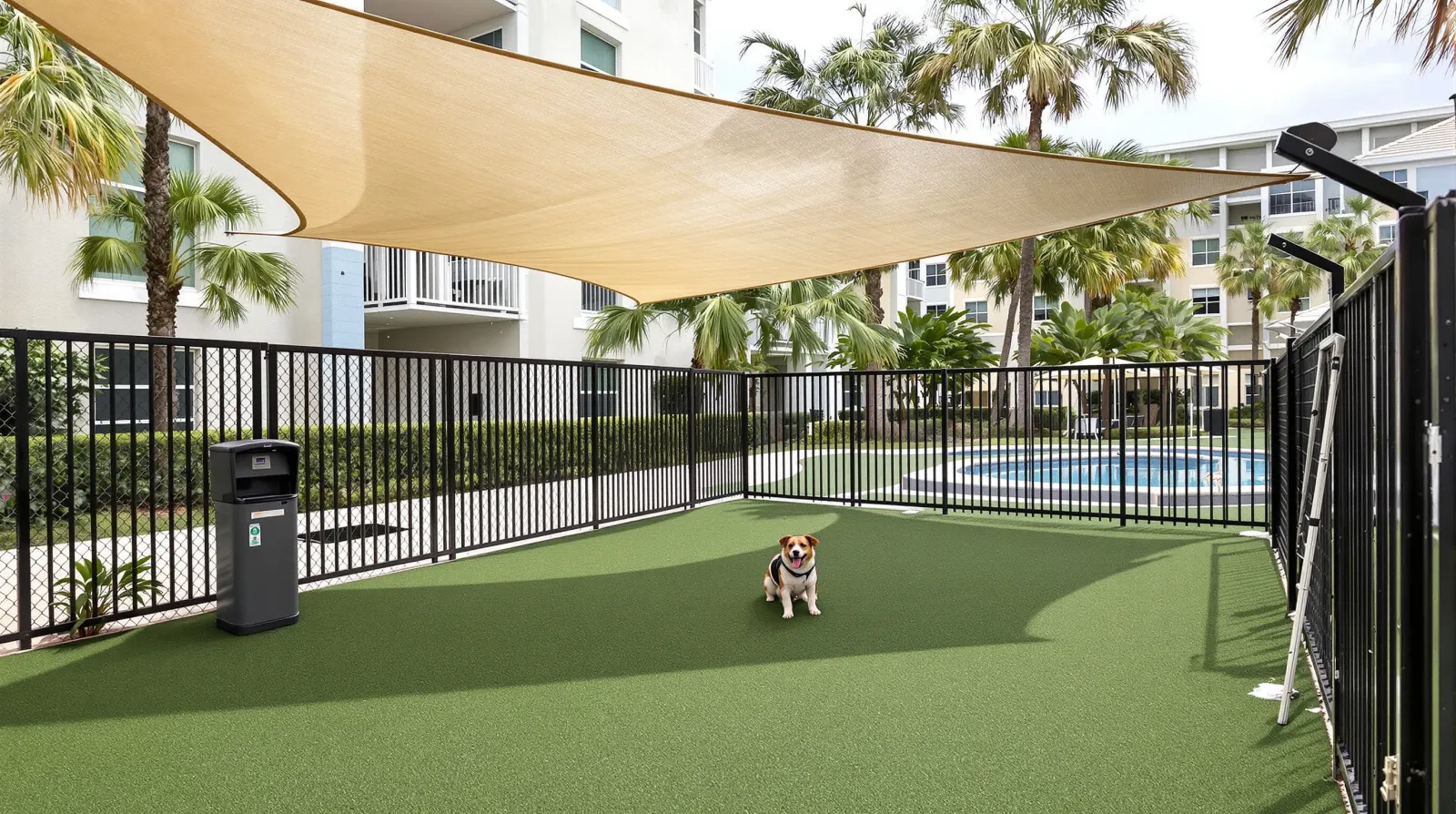 Dog Parks
Dog runs and pet relief areas built to drain, rinse clean and stay fresh.
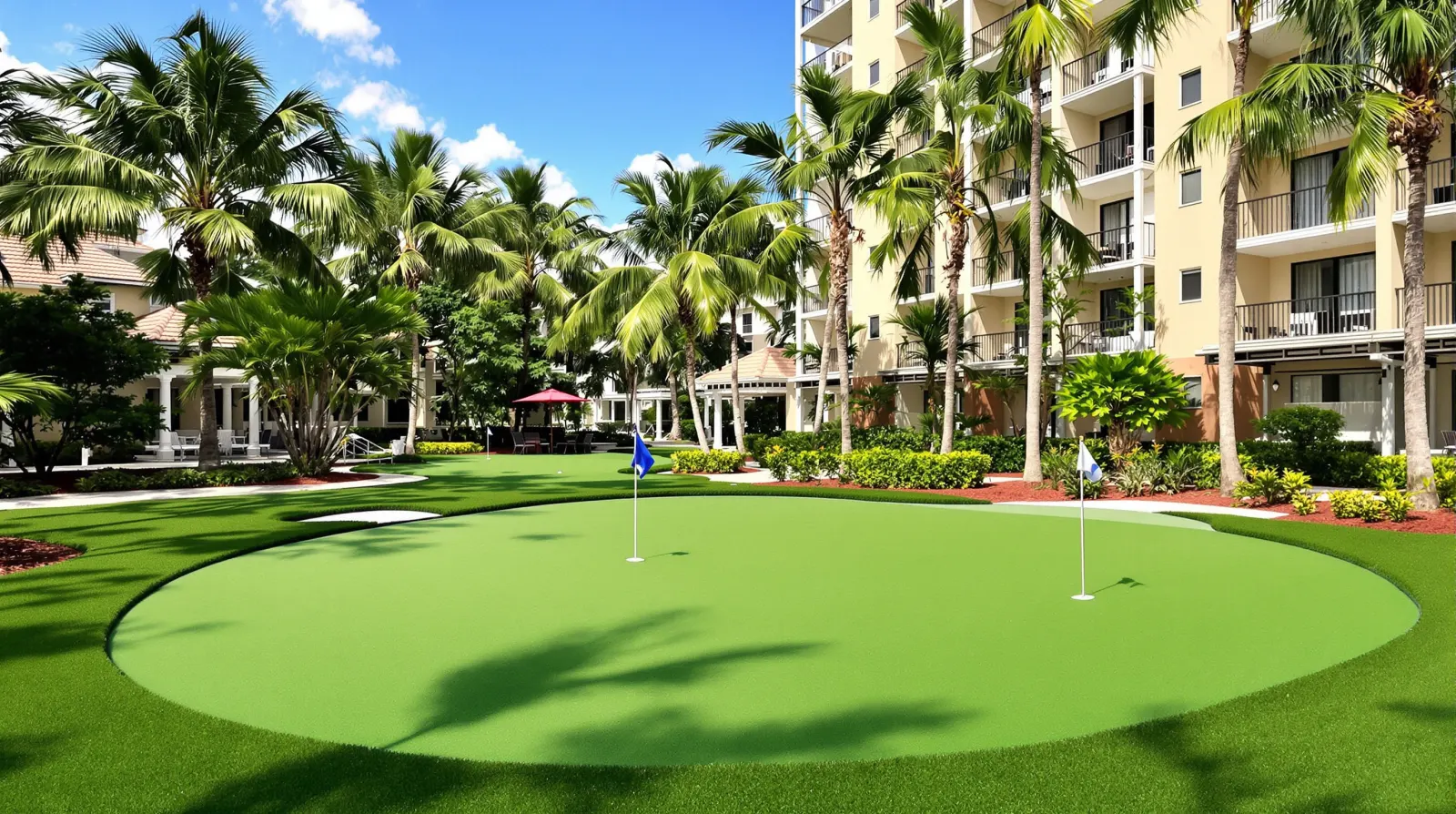 Putting Greens
Amenity putting greens with a shaped base, clean fringe and drainage that keeps up.
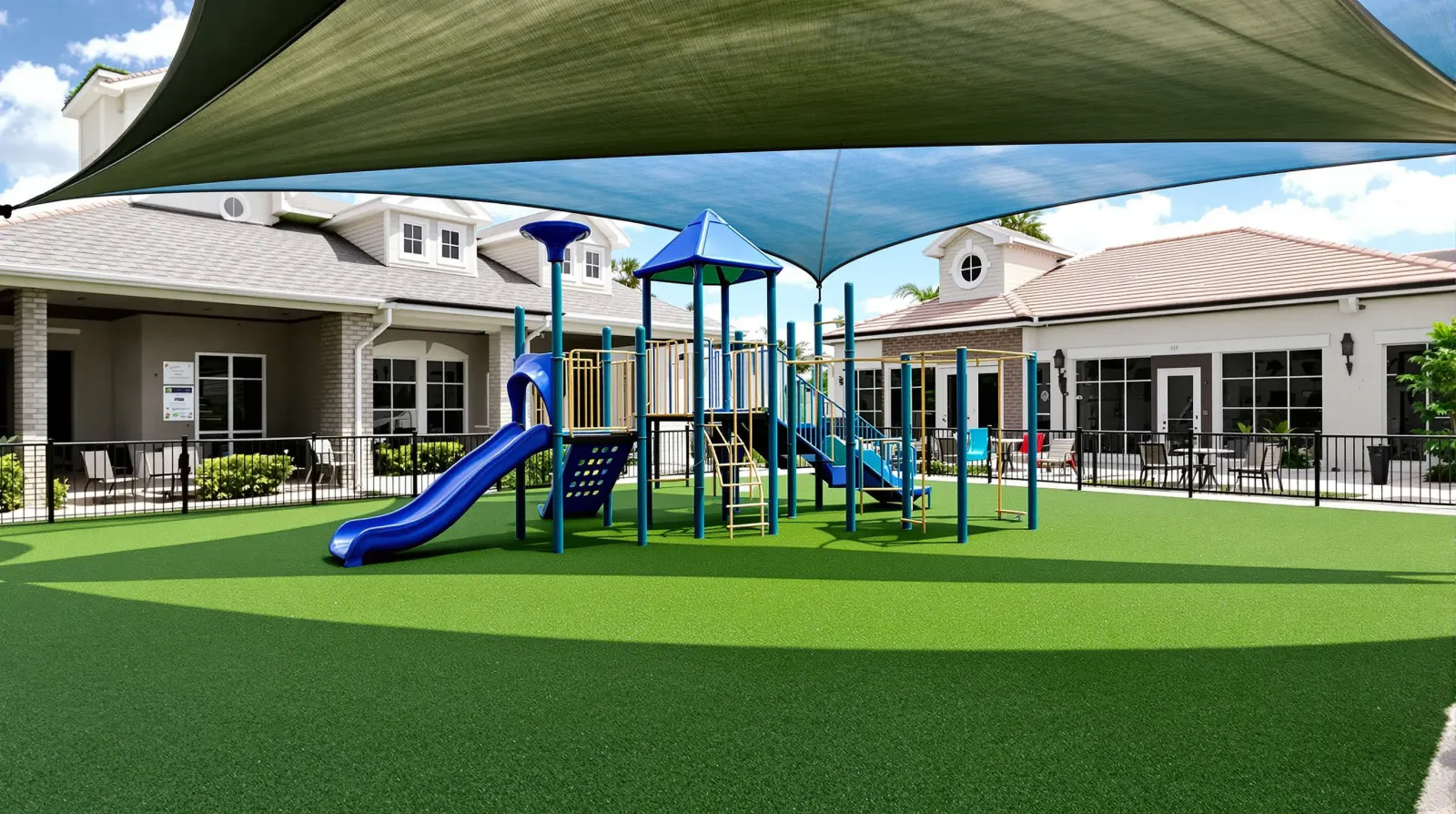 Playgrounds
Playground turf and shock pad matched to fall height, accessible and built to drain.
Artificial turf by city: Miami · Fort Lauderdale · Pompano Beach · Boca Raton · West Palm Beach
Checklist
What to have ready before an artificial turf site visit
- 01A rough sketch or photos of each area you want to convert
- 02Where irrigation zones and valves run in those areas
- 03Any known drainage problems, puddles or low spots
- 04Whether any area sits over a garage, a membrane or a roof
- 05Who uses the space: residents, guests, kids, pets
- 06Board or HOA rules on landscaping and approvals
- 07The best days and hours for work around residents
Related work
Concrete and waterproofing work that often goes with it.
Summary
Points to remember
- 01
Turf performance is decided by the base, the drainage and the edges, which is concrete contractor work.
- 02
Over membranes and structural slabs, the structural engineer or design professional confirms loads and hold-down, and we build to that.
- 03
Turf gets hot in full sun, so plan shade, lighter colors and seating along with it.
- 04
Removing irrigated grass takes zones off the SFWMD watering schedule and stops overspray.
- 05
Routine care is brushing, blowing, rinsing pet areas and topping up infill.
Questions
Common questions.
How long does commercial artificial turf last?
Lifespan depends on the product, the sun exposure, how much traffic the area gets and how well it is maintained. Pool lawns and courtyards with light foot traffic hold up longer than a busy dog run. Our team gives you the manufacturer's published information for the products we propose, and a sound base and good drainage go a long way toward reaching it.
Can artificial turf go over existing concrete?
Yes, in many cases. Turf over concrete needs a drainage mat or pad so water can reach the existing drains, and the slab should be sound and sloped to drain. If the concrete is cracked or spalled, SERPE-CO can repair it first. If the slab is a structural deck or sits over a membrane, the building's engineer or design professional confirms the approach before we start.
Does artificial turf get too hot to walk on?
In full Florida sun it can. University studies have measured synthetic turf far hotter than irrigated grass at midday. Shade, lighter turf colors, cooling infills and a quick rinse help a lot, and our team will tell you honestly where turf makes sense and where shade or another surface would serve residents better.
Do we need board approval for turf in common areas?
Common areas belong to the association, so the board decides, following its governing documents and the city's landscape code. Some boards also take it to the owners. Turf questions with a legal angle should go to the association's attorney. SERPE-CO can provide samples, a written proposal and photos of similar areas to help the board present it.
What areas of a property are good candidates for turf?
The best candidates are shady spots where grass keeps dying, narrow strips that are hard to mow and irrigate, pool lawns, dog runs, and rooftop or amenity decks that need a green space. Areas in full afternoon sun with heavy barefoot use need a careful look at heat and shade first.
Do you work outside Broward County?
Yes. SERPE-CO works from St. Lucie County down through Martin, Palm Beach and Broward to Miami-Dade. Send us photos and a short description of the areas you are considering, and our team will set up a site visit.
Sources and standards
- SFWMD year-round landscape irrigation rule (fact sheet)
- UF/IFAS: artificial turf heat in humid states like Florida
- UNLV: study finds artificial turf may be too hot for summer use
- Synthetic Turf Council: installation and maintenance guidelines
Photos on this page show typical turf installations. Turf over a structural slab, a roof or a waterproofing membrane follows the building's design professional and the product maker's instructions. Treat this page as general information, not engineering or legal advice.
Request an estimate
Tell us about your turf project.
Tell us where the building is and what you are seeing. We set up a visit to the property, then send a written proposal, or tell you an engineer needs to write the scope first.
- More than 20 years in the field
- St. Lucie, Martin, Palm Beach, Broward and Miami-Dade
- Family-owned Certified General Contractor
Rather call?(954) 718-3094