Green beside the water
Pool Deck Turf for Condos, Clubs and Resorts
A lawn by the pool without the mud, the sprinklers or the brown patches. Built by a contractor that already restores pool decks, coping and pavers.
In short
What should a condo board know about pool deck turf?
Pool deck turf works well when it drains fast, meets the pavers and coping with a clean, anchored edge, and is planned with shade, since turf gets hot in full sun. SERPE-CO restores pool decks, pools and planters, so we look at the whole deck, not just the green part. Where the pool deck sits over a garage or other structure, the building's structural engineer confirms the details before work starts, and we build to them.
Planning the deck
Where pool deck turf works, and where it does not
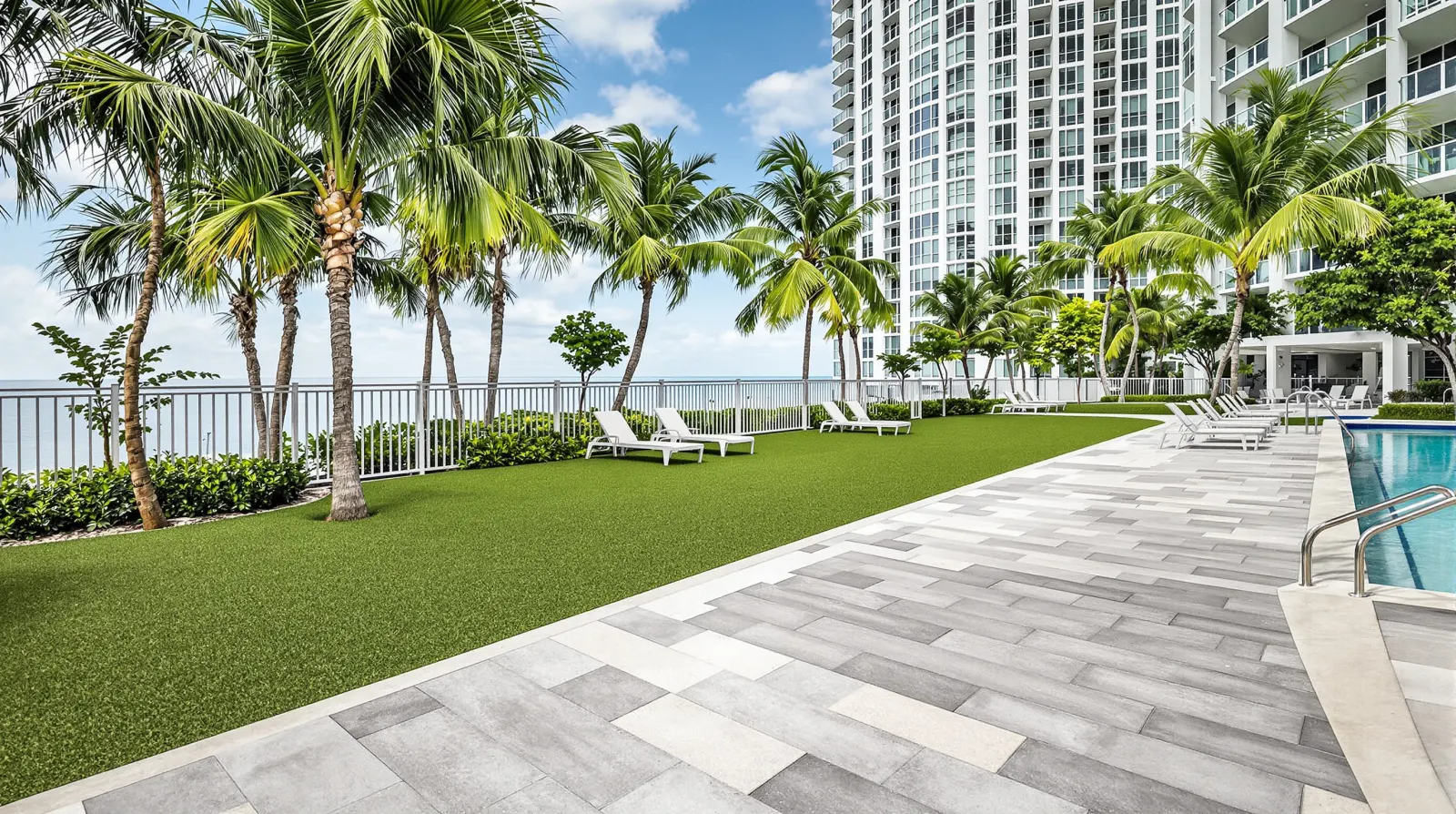
Pool deck turf is at its best as a lawn zone set back from the water: a band behind the lounge chairs, a panel around a cabana or a soft area where kids sit and play. Those spots get barefoot traffic but not constant splash, so the turf stays cleaner and infill stays put. Turf right up to the coping can work too, but it needs more care, because splash carries sand and chlorinated water back and forth and wet fibers near the edge stay damp longer.
Many boards end up with a mix: pavers or a coated deck in the wet zone closest to the pool and around the ladders and steps, and pool deck turf in the lounge areas beyond. That layout keeps the walking surface at the edge predictable and gives residents the green space where they actually spend time. Our team sketches options on the site visit so the board can see how the zones fit together before choosing.
Pavers, coping and edges
Tying pool deck turf into pavers, coping and concrete
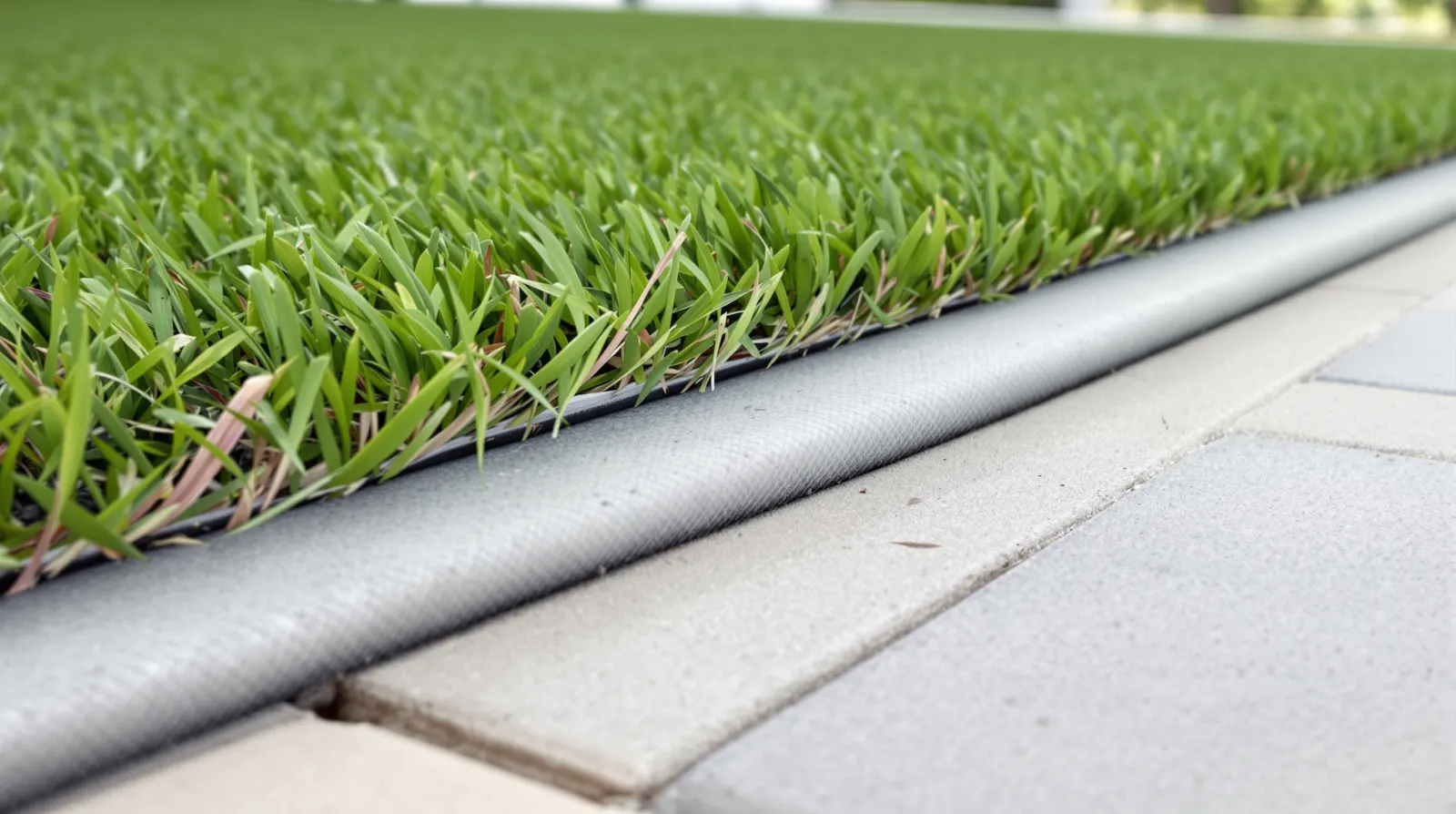
The edge is where pool deck turf either looks finished or looks like an afterthought. Next to pavers, our crews set a restrained edge so the pavers cannot drift and the turf can be tucked or trimmed tight against it. Against a concrete deck or a coping stone, the turf usually needs a fixed edge trim or a recessed detail so there is no lip to catch a toe or trip someone walking out of the pool.
Heights matter. Turf plus its pad or base needs to finish flush with the surrounding surface, or very close to it, so a sunbather walking from the paver field onto the lawn does not stub a foot. On a slab, that may mean adjusting the pad thickness or cutting the deck back. On soil, it means setting the base elevation carefully before the turf goes down. Edges near gates and paths get extra attention because that is where carts and chairs roll.
Because SERPE-CO already restores pool decks, coping and planters, any repairs found along the way can be handled in the same project. Cracked concrete, a loose coping stone or settled pavers next to the new lawn are worth fixing before the turf goes in, not after.
Water, chlorine and salt
Drainage and splash on pool deck turf
A pool deck sheds a lot of water: rain, splash, wet swimmers and deck rinsing. Pool deck turf over soil needs a stone base graded to carry that water away from the pool shell and the building, toward a deck drain or a planting bed. Over concrete, a drainage mat or pad under the turf lets water run beneath it to the existing deck drains. Those drains must stay open and reachable, so our crews cut clean access around them instead of burying them.
Chlorine and salt water splash onto any surface near the pool. Most commercial turf fibers tolerate pool water, but salt residue and sand can build up near the edge, so a fresh-water rinse is part of good care. Ask the manufacturer for its published guidance on chlorinated and saltwater pools for the product you choose, and our team will include it with the proposal.
Heat and footing
Barefoot heat, slip and safety on pool deck turf
Barefoot heat is the honest trade-off with pool deck turf. A 2025 UF/IFAS report found natural grass consistently cooler than synthetic turf, often by more than 18°F, and a UNLV study measured synthetic turf peaks near 169°F. On a pool deck that means shade is not optional. Umbrellas, shade sails, cabanas and trees all help, as do lighter colors and cooling infills. A quick rinse before peak hours also cools the surface.
Footing is the other safety question. Turf generally gives a grippy surface underfoot, but the transitions are where people slip or trip: wet paver to turf, turf to a step, or a loose seam near a gate. Our crews keep transitions flush, keep seams tight and glued, and avoid running turf onto pool steps or the wet zone at the edge. The board and its pool consultant decide the final layout, and SERPE-CO builds it carefully.
Decks over structure
Pool deck turf on decks above garages
Plenty of South Florida condo pools sit on a deck over a parking garage. Under the pavers or topping on those decks is a waterproofing membrane protecting the garage below, plus drains and expansion joints. Pool deck turf on a deck like this is a structural and waterproofing question first. The building's structural engineer or design professional confirms the added load, the drainage path and how the turf is held in place, and SERPE-CO builds to that direction.
SERPE-CO already works on these decks: pavers, drainage, topping slabs and expansion joint repairs are standard restoration scope. If the membrane is due for replacement, it usually makes sense to do that work first and put the turf down over a fresh, tested system, rather than covering a tired membrane with a new lawn. Nothing gets nailed or staked into the slab, and expansion joints stay accessible.
Through the season
Keeping the lawn by the pool clean and even
A pool lawn collects things a courtyard never sees: sunscreen, spilled drinks, sand carried up from the beach, leaves from the palms and the occasional dropped snack. A quick blow-off each morning and a fresh-water rinse a few times a week keep the surface clean and cooler. Spills rinse out of turf more easily than they come out of grout, which is one reason boards like it next to the lounge chairs.
Infill moves more on a pool deck than anywhere else, because wet feet and splash carry it toward the coping and the drains. Brushing the fibers upright and topping up thin spots near the edge keeps the surface even underfoot. Lounge chair feet can press dents into the turf over a summer, so moving the furniture now and then and brushing those spots helps the lawn recover.
After a tropical storm, someone should walk the edges and seams, clear debris from the deck drains and check that no section has lifted. SERPE-CO walks the manager and the pool or landscape crew through that routine at handover, so the people who care for the deck every week know what a small problem looks like before it turns into a bigger one.
More turf areas
Other places turf earns its keep.
 Rooftops & Terraces
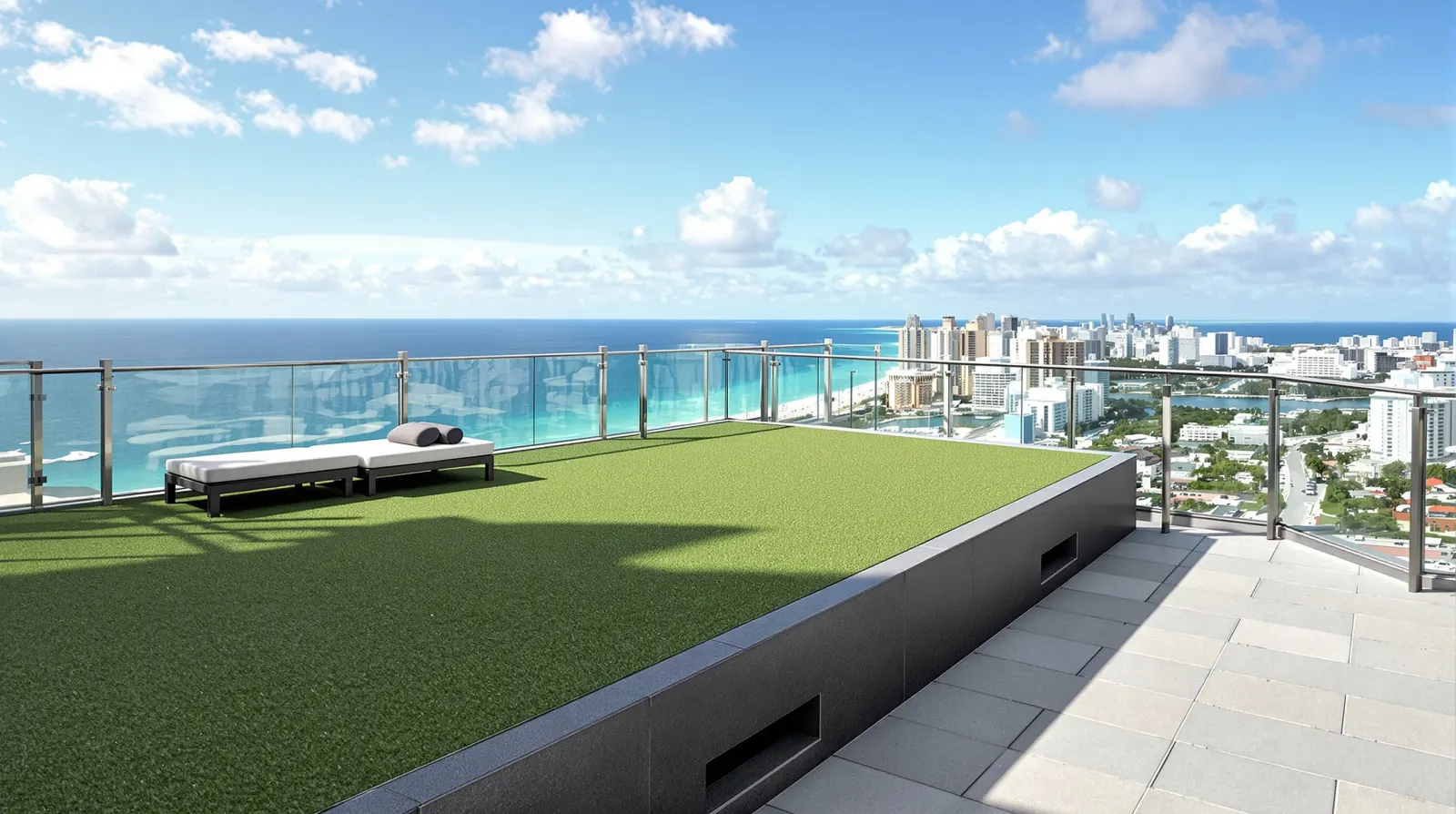
Green amenity decks and terraces that protect the waterproofing underneath.
 Condo Common Areas
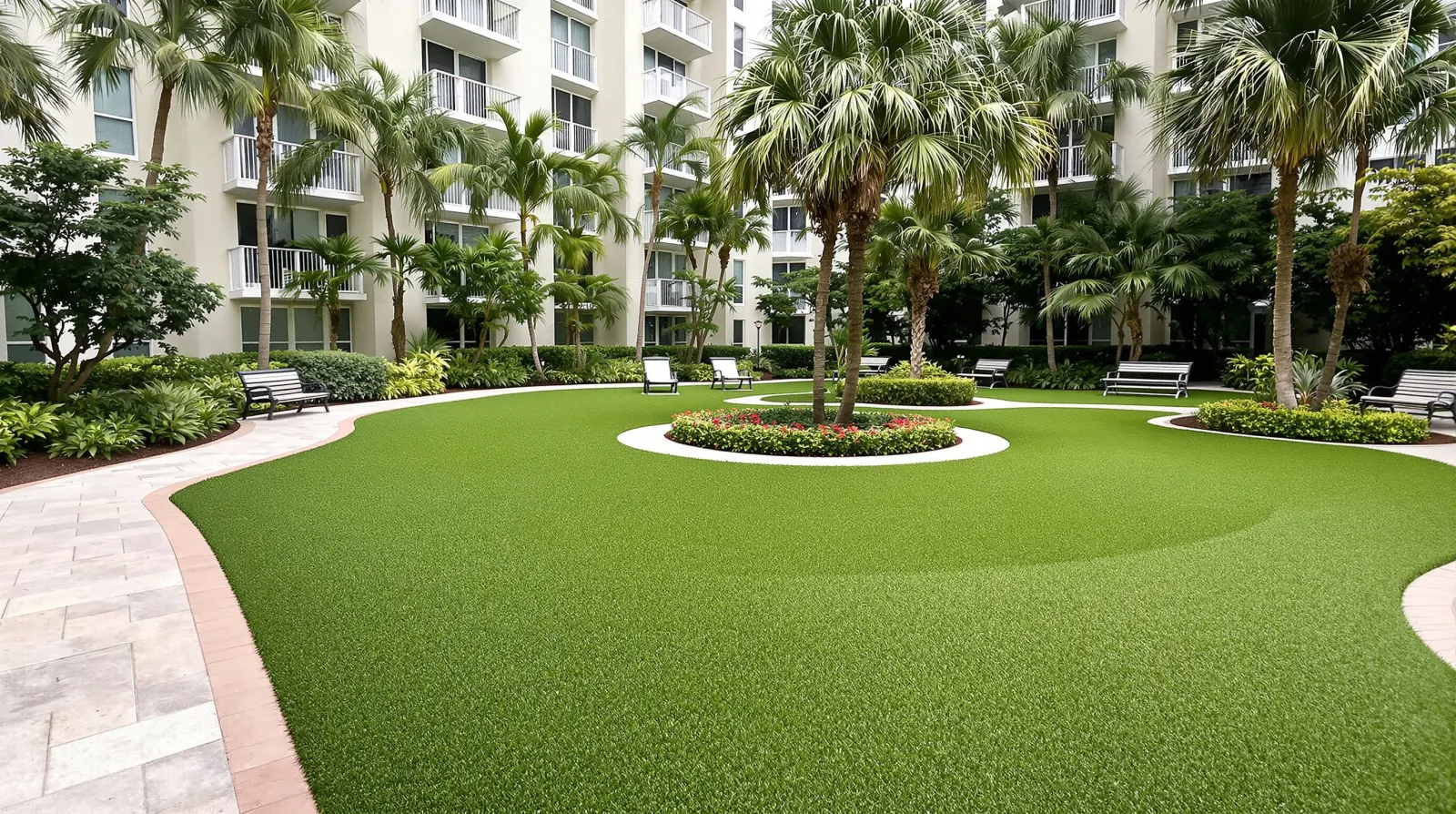
Courtyards, entries, medians and shady strips that stay green year-round.
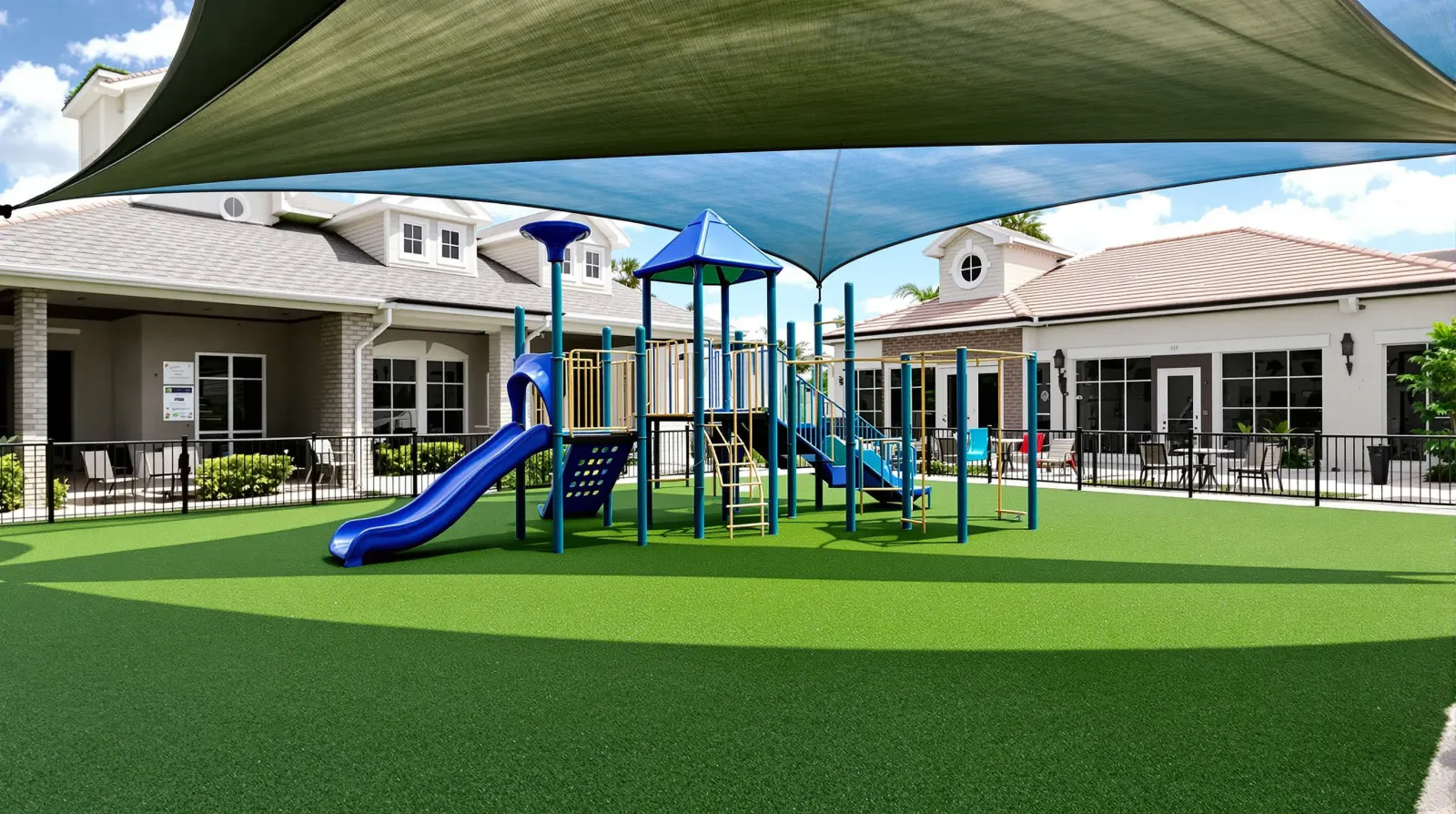 Playgrounds
Playground turf and shock pad matched to fall height, accessible and built to drain.
Artificial turf by city: Miami · Fort Lauderdale · Pompano Beach · Boca Raton · West Palm Beach · All turf services
Checklist
Pool deck turf planning checklist for boards
- 01Which zones stay paver or coating and which become turf
- 02Shade plan: umbrellas, sails, cabanas or trees
- 03Where deck drains and expansion joints run
- 04Whether the deck sits over a garage or other structure
- 05Any concrete, coping or paver repairs needed first
- 06Pool type: chlorine or salt, and the turf maker's guidance
- 07Season and pool closure dates that work for residents
Related work
Concrete and waterproofing work that often goes with it.
Summary
Points to remember
- 01
Turf works best as a lounge zone set back from the wet edge of the pool.
- 02
Clean, flush, anchored edges against pavers and coping prevent trips and curling.
- 03
Drains stay open and reachable, with a drainage mat over concrete or a graded base over soil.
- 04
Shade is part of the design, because synthetic turf gets much hotter than grass in full sun.
- 05
On decks over garages, the structural engineer confirms load, drainage and hold-down first.
Questions
Common questions.
Can pool deck turf go right up to the edge of the pool?
It can, but most boards are happier with a strip of pavers or deck coating at the wet edge and turf beyond it. Turf at the coping catches more splash, sand and chlorinated water and stays damp longer. Our team shows both layouts on the site visit so the board can pick what fits how residents use the pool.
Will chlorine or salt water damage the turf?
Most commercial turf products are made to handle pool water, but every manufacturer publishes its own guidance. We include that information with the proposal. A regular fresh-water rinse near the edge keeps salt residue and sand from building up, whatever product is chosen.
Does the pool have to close during installation?
Usually for part of the project. The pool deck is the work area, and residents should not walk through an active turf job. SERPE-CO plans the schedule with the manager to keep the closure as short as practical, often by phasing the deck so part of it stays open.
Our pool deck sits over the garage. Can we still add turf?
Often yes, but the building's structural engineer or design professional confirms the load, the drainage and how the turf is held down before work starts. The waterproofing membrane under the deck also needs a look. If it is near the end of its life, replacing it first is usually the better plan.
How do we keep the turf cool for barefoot residents?
Shade does the most: umbrellas, sails, cabanas and trees. Lighter colors and cooling infills help, and a short rinse before peak hours brings the surface temperature down. Turf in full afternoon sun with no shade is the layout to avoid.
Can you repair the pool deck and add turf in one project?
Yes. SERPE-CO restores pool decks, pools and planters, so cracked concrete, loose coping, settled pavers or a planter that needs waterproofing can be handled in the same project and schedule as the new lawn. Doing the repairs first means the turf goes down against sound, level edges instead of covering a problem.
Sources and standards
- UF/IFAS: artificial turf heat in humid states like Florida
- UNLV: study finds artificial turf may be too hot for summer use
- Synthetic Turf Council: installation and maintenance guidelines
Photos on this page show typical turf installations. Turf over a structural slab, a roof or a waterproofing membrane follows the building's design professional and the product maker's instructions. Treat this page as general information, not engineering or legal advice.
Request an estimate
Tell us about your turf project.
Tell us where the building is and what you are seeing. We set up a visit to the property, then send a written proposal, or tell you an engineer needs to write the scope first.
- More than 20 years in the field
- St. Lucie, Martin, Palm Beach, Broward and Miami-Dade
- Family-owned Certified General Contractor
Rather call?(954) 718-3094