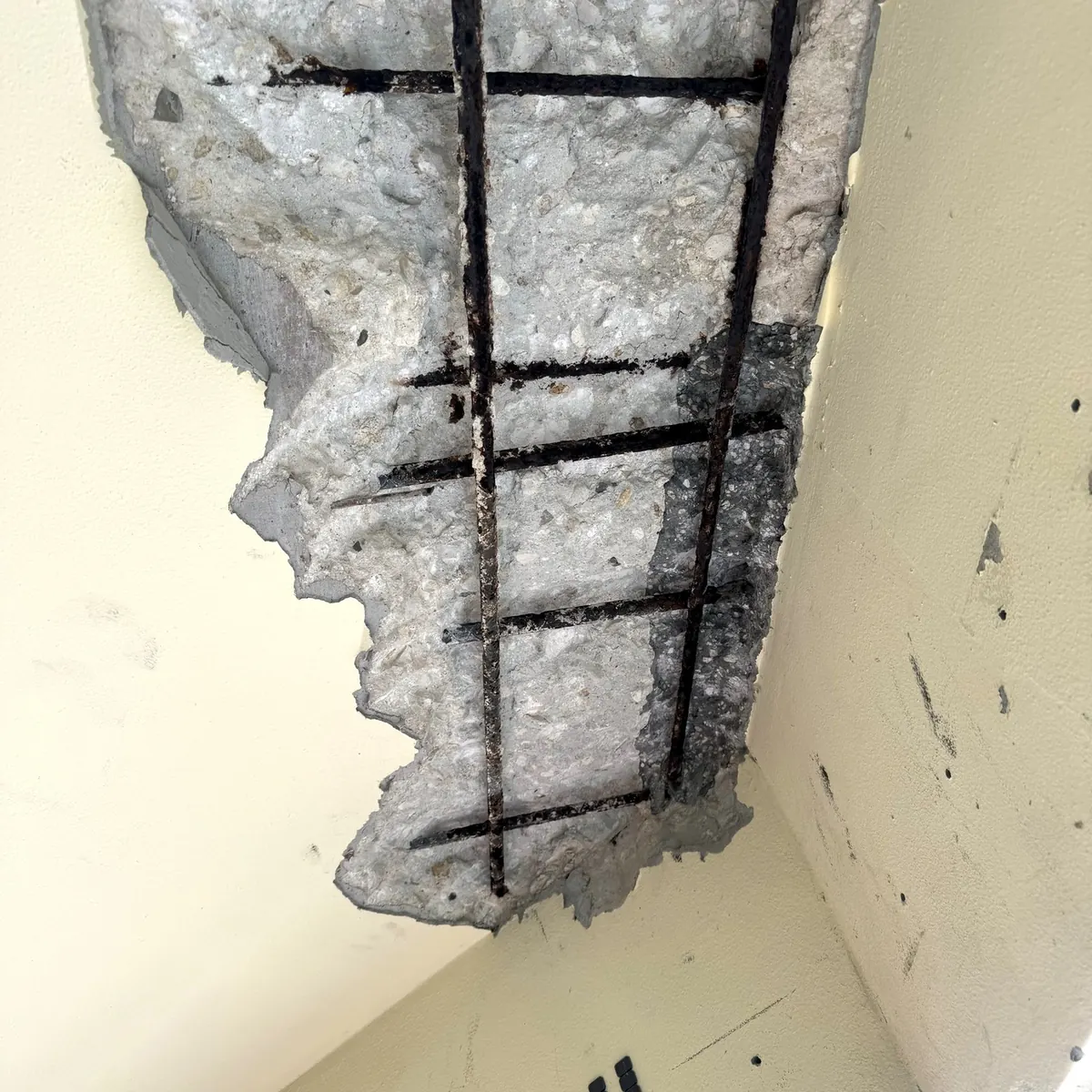
Spalling concrete is one of the most common problems we see on older South Florida condominiums. A chunk of the balcony edge breaks loose, the underside of a walkway starts dropping flakes, or a column corner pops off and shows rusty steel underneath. For a board or property manager, the question is always the same: how serious is it, and what happens next?
The short answer is that spalling is a symptom, not the disease. The damage you see on the surface is almost always driven by corroding steel inside the slab. Below we cover why spalling concrete shows up on coastal buildings, the warning signs to watch, how a proper repair is built, and why quick patches so often come back.
What is spalling concrete?
Spalling is when pieces of the concrete surface crack, loosen and break away from the slab, beam, column or wall behind them. Sometimes the piece falls. Sometimes it stays in place but sounds hollow when tapped, held on by nothing more than paint.
On condominiums, spalling concrete shows up most often at balcony slab edges, railing posts, the soffits under balconies and walkways, parking garage ceilings and the corners of columns. Those are the places where water, salt and steel meet with the least concrete cover protecting the reinforcing.
What causes spalling concrete on Florida condos
Reinforced concrete depends on a partnership. The concrete carries compression and the steel rebar carries tension, and the alkaline concrete around the bar keeps the steel in a protected, passive state. As long as that protection holds, the steel can last for decades.
Coastal Florida works against that protection. Salt spray and wind-driven rain carry chlorides into the concrete, and over time carbon dioxide from the air lowers the alkalinity near the surface, a process called carbonation. The American Concrete Institute notes that once chloride levels at the steel get high enough, or the cement paste around the bar is carbonated, there is a high risk of continuing corrosion (ACI 364.6T technical note).
Rust takes up more space than the steel it came from. As the bar corrodes, it pushes outward on the concrete around it until the concrete cracks. Water then gets into the crack, the steel corrodes faster, and eventually the cover concrete breaks off. That cycle is why many people call it concrete cancer: the damage keeps growing out of sight long before it shows.
A few conditions make the cycle start sooner:
- Thin concrete cover over the steel, especially at slab edges and drip edges.
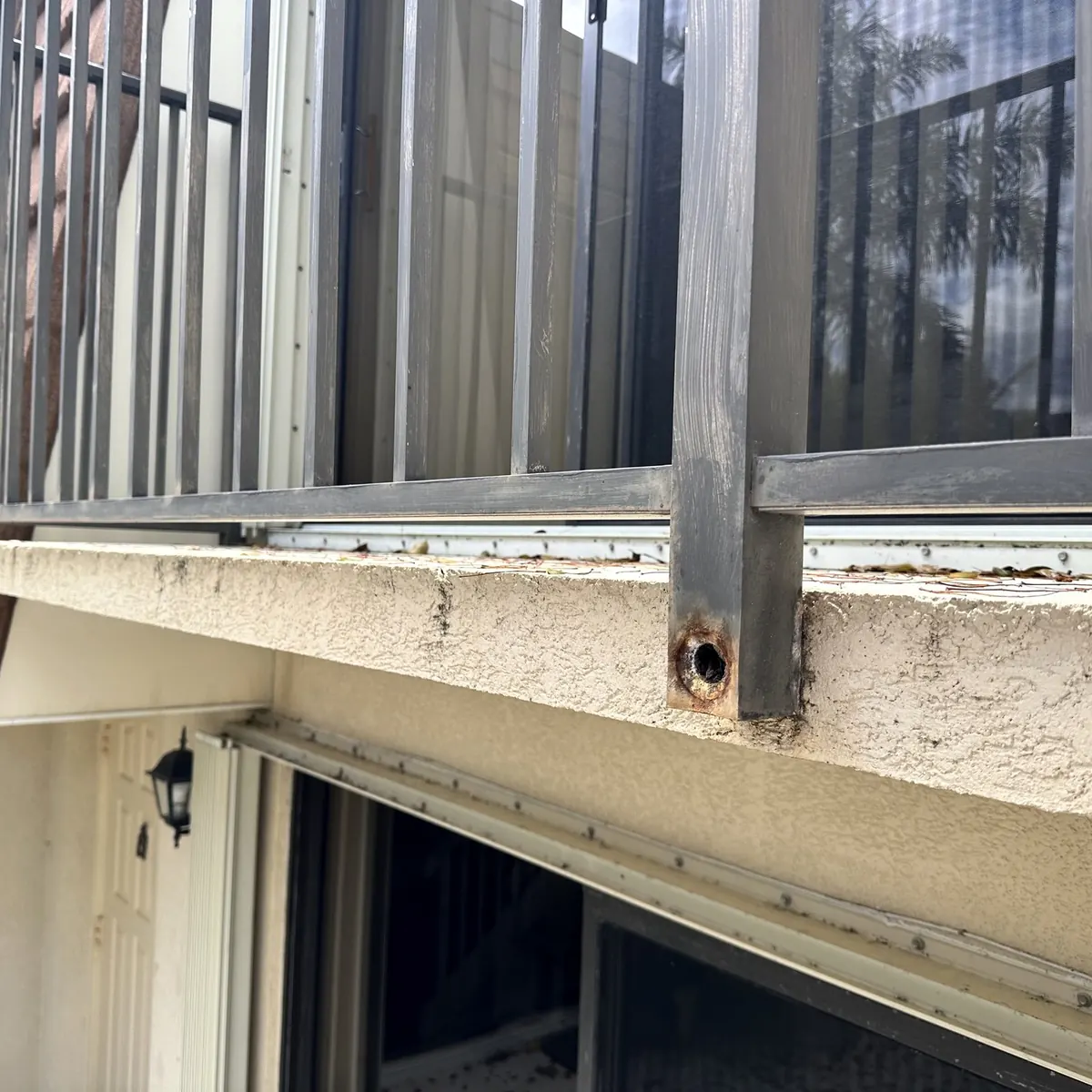
- Railing posts set into pockets in the slab, where water can sit around the base.
- Failed sealants at doors, windows and expansion joints.
- Worn balcony or walkway coatings that no longer shed water.
- Poor drainage that leaves standing water on a slab after every storm.
Warning signs boards should not ignore
Spalling rarely appears without warning. In the September 2026 Florida Community Association Journal, SERPE-CO's Brett Serpe wrote about catching corrosion early in Catch It Before the Crack, also listed on our press page. The signs are usually visible from the ground or a balcony if someone knows what to look for:
- Rust stains bleeding out of cracks or streaking down from slab edges and railing posts.
- Cracks that run in straight lines along the edge of a slab or the corner of a column, often following the steel below.
- Hollow-sounding concrete when the surface is tapped, a sign the cover has already separated. Our post on concrete delamination covers what that sound means.
- Bubbling or peeling paint and stucco that pushes outward instead of lying flat.
- Loose railings or posts that move at the base.
- Concrete debris on the ground below balconies or on parked cars in the garage.
Any of these deserve a call to the association's engineer. Pieces of concrete falling from height are a safety issue for residents and anyone walking below, and areas under active spalling are often roped off or protected until repairs are made.
Who decides what gets repaired
A licensed engineer or architect evaluates the building, sounds the concrete, maps the damaged areas and writes the repair specifications. SERPE-CO is the contractor that builds those repairs. We work closely with associations and their engineers, but we do not inspect buildings or make structural determinations.
Spalling concrete is often documented during a milestone inspection. Under Florida Statute 553.899, cracks or peeling finishes alone do not count as substantial structural deterioration unless the inspector says they signal it, so the engineer's judgment matters. Our milestone inspection guide explains how Phase 1, Phase 2 and the repair deadlines fit together.
How a spalling concrete repair works
Every project follows the engineer's drawings, but a lasting repair usually moves through the same steps. Our concrete restoration crews build it in this order:
1. Protect and shore
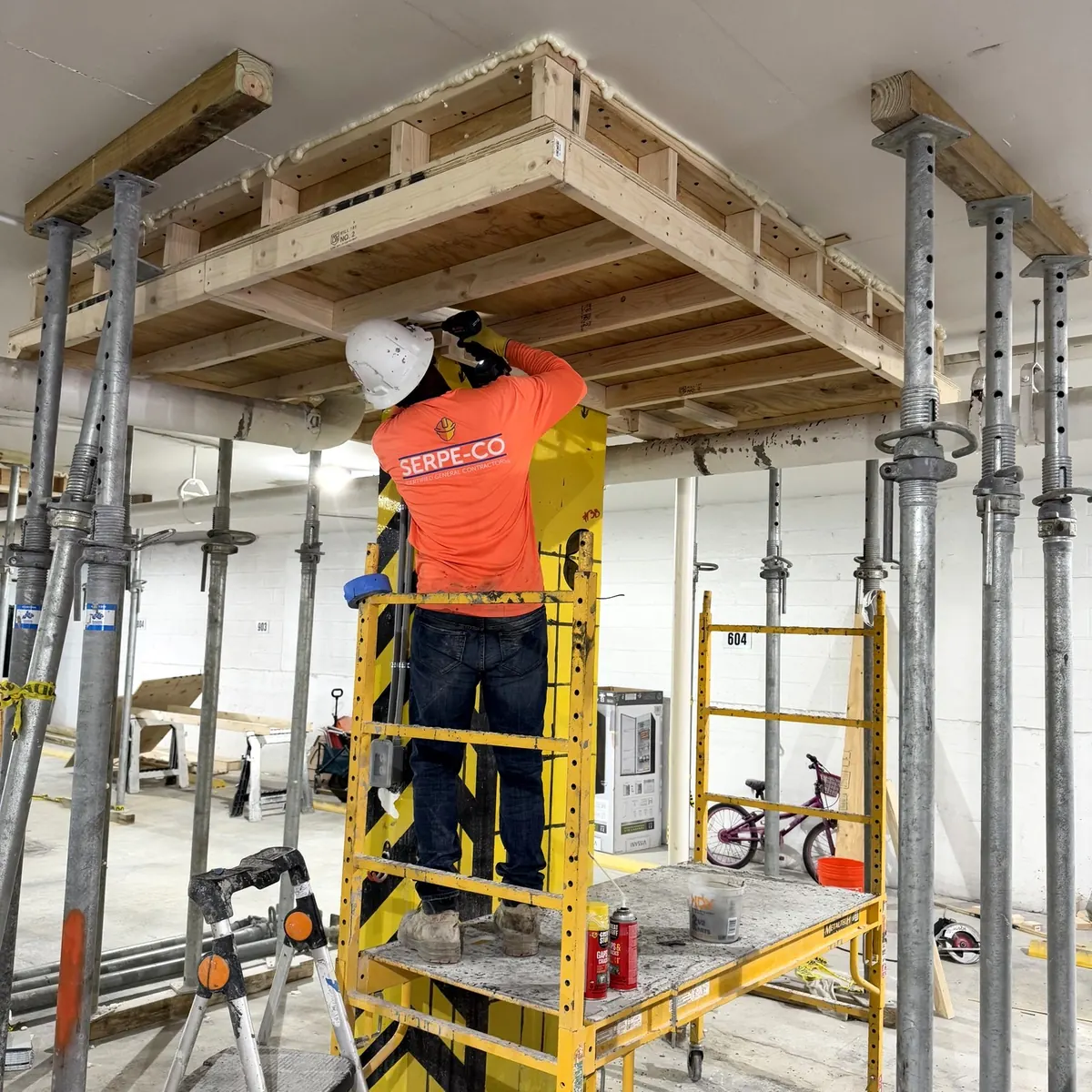
Before the first cut, the work area is set up with barricades, overhead protection and notices for residents. Where the engineer calls for it, shoring is installed under the slab or beam so the structure stays supported while damaged concrete is removed.
2. Remove all unsound concrete
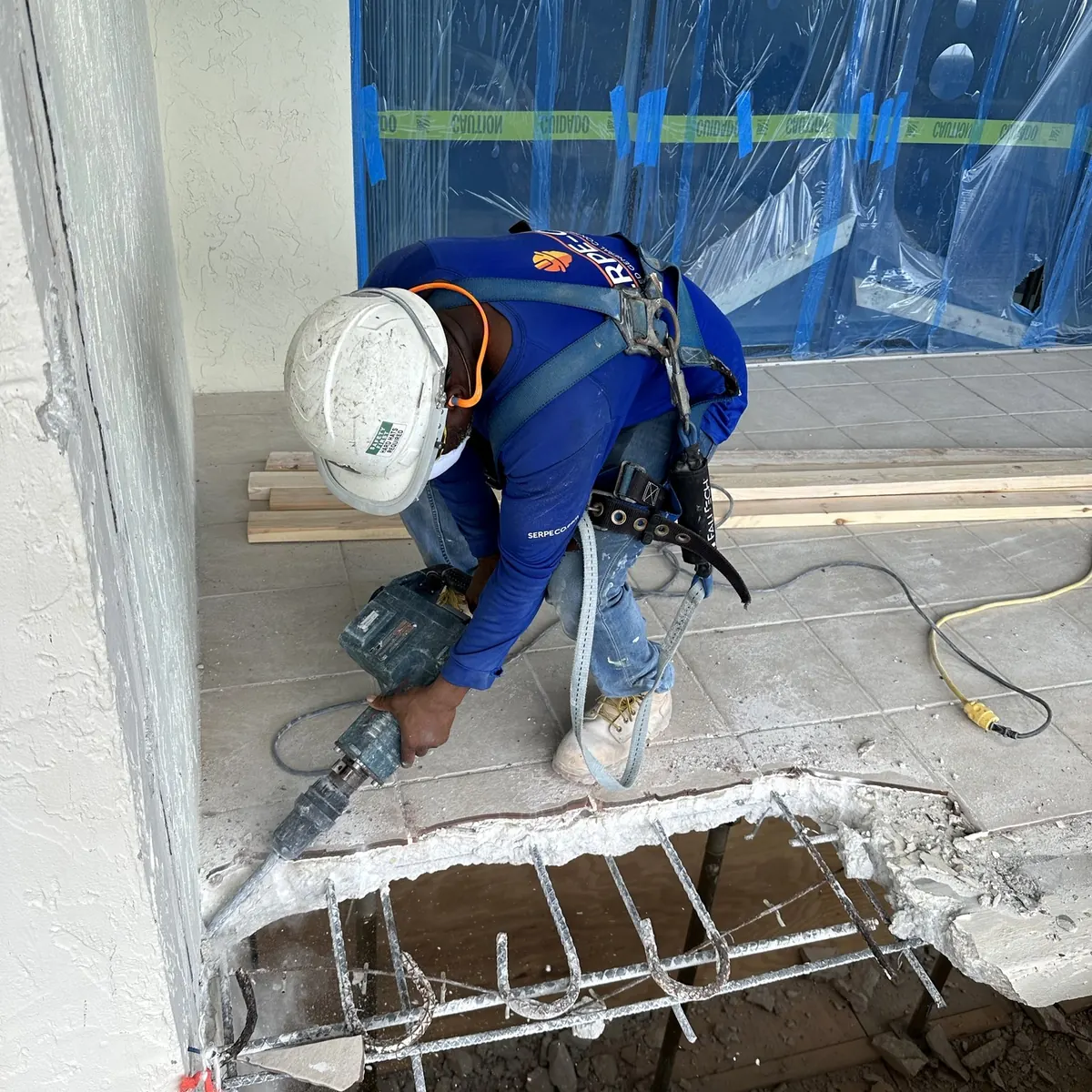
The repair area is outlined, often with a saw cut at the perimeter, and the loose and deteriorated concrete is chipped out. Removal keeps going until sound concrete is reached. ACI's technical note says concrete should be removed around a corroded bar to leave a clear space of at least 1/4 inch plus the size of the largest aggregate in the repair material, and removal along the bar should continue until the bar is essentially free of corrosion products.
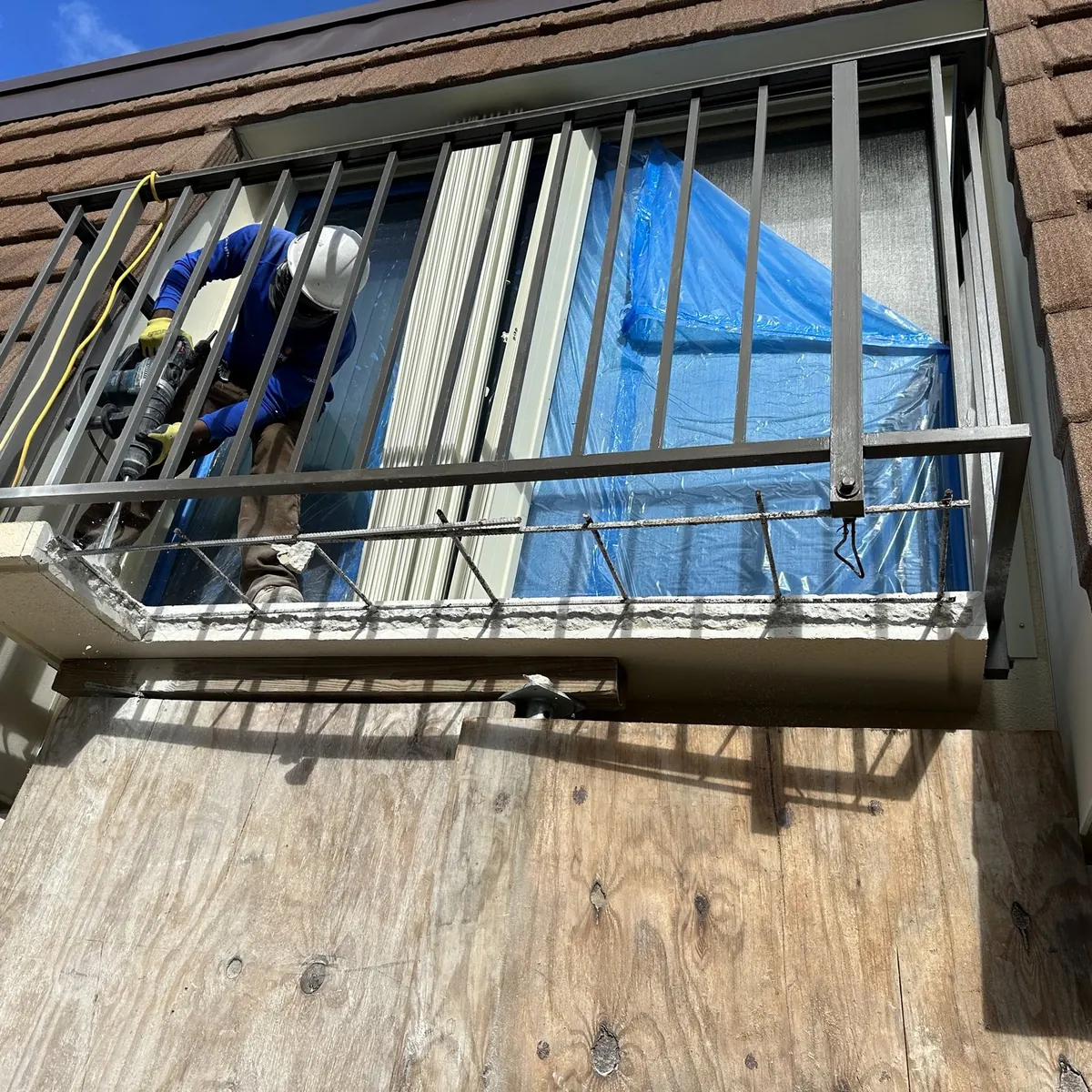
3. Clean and treat the steel
Exposed rebar is cleaned of rust and scale. The engineer then looks at how much steel has been lost. Bars that are too far gone are supplemented or replaced, and the specification may call for a protective coating or corrosion inhibitor on the steel before new material goes in.
4. Place repair mortar or new concrete
Small and medium repairs are rebuilt with a repair mortar suited to the depth and position, whether that is a vertical face, an overhead soffit or a slab edge. Larger sections are formed and poured with new concrete. The material is then cured properly so it bonds and does not shrink away from the old concrete.
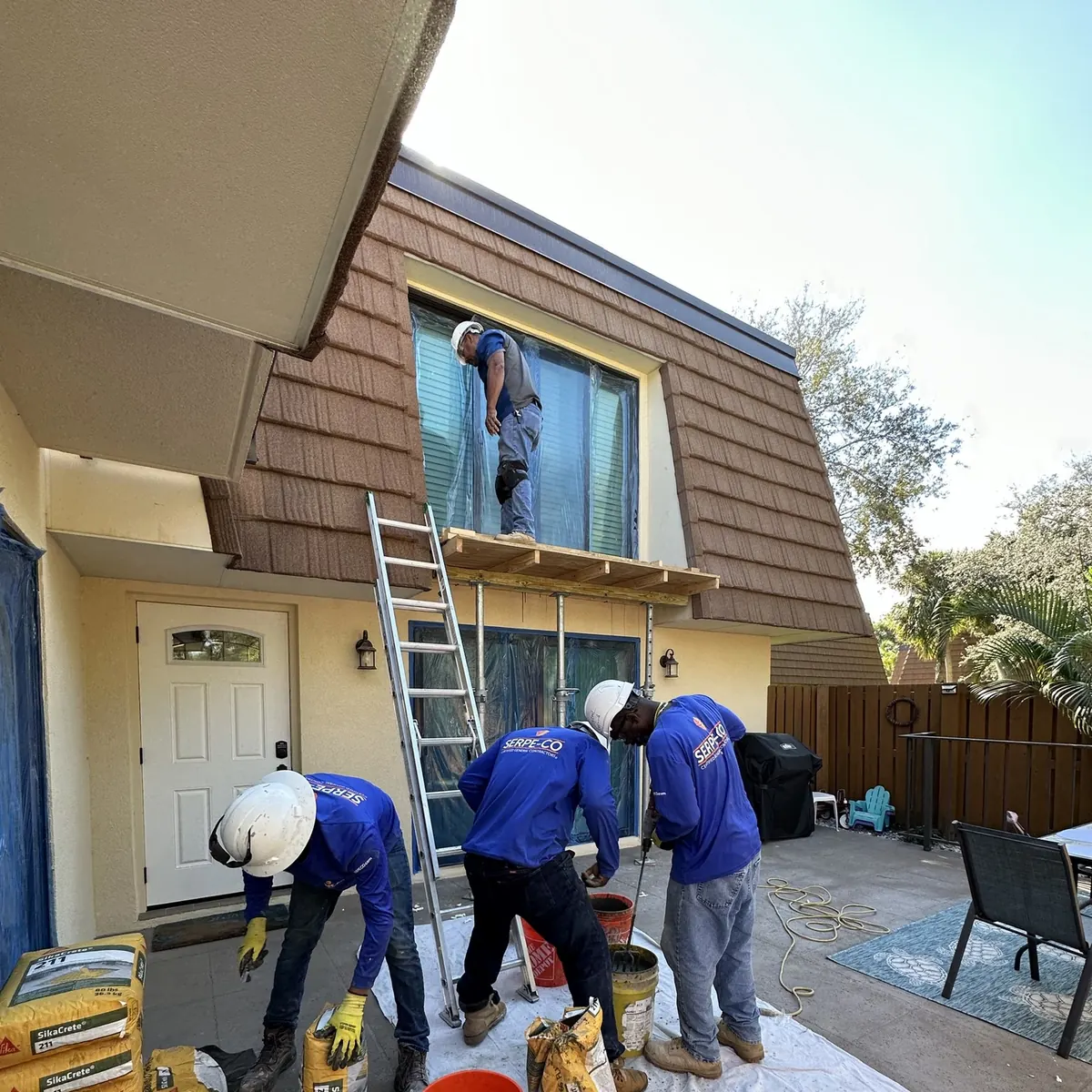
5. Close the water path
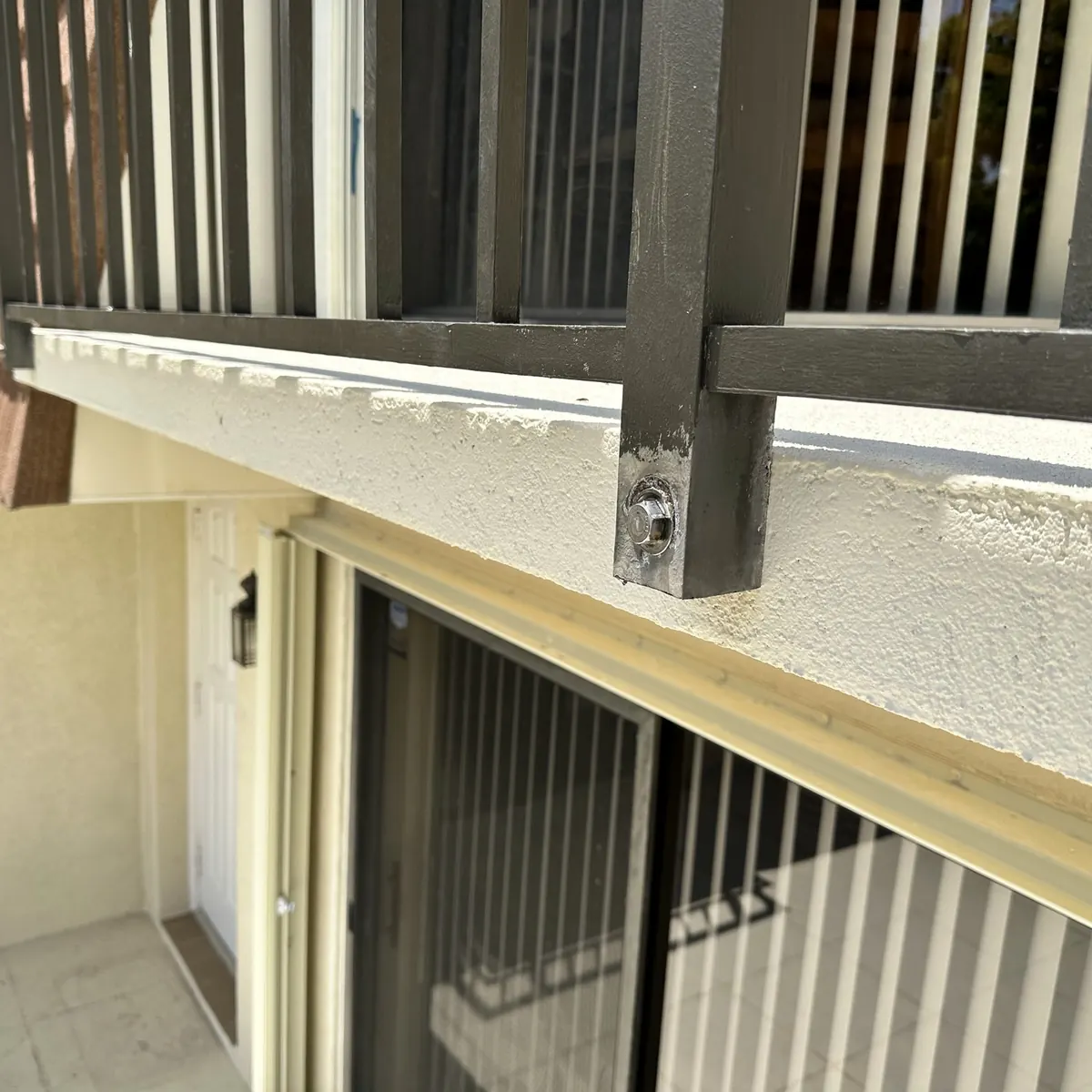
The repair is only finished once water is kept out. Railings get reset, sealants are replaced, balcony and walkway coatings are restored, and the building is painted. On the coast, paint is part of the waterproofing layer, and we generally plan for repainting roughly every 7 to 10 years.
Why patches fail on spalling concrete
Many associations have seen the same spot repaired twice in a few years. The cause is usually one of three things.
First, the patch only covered the visible damage. If the removal stopped short of sound concrete, or the bar was never cleared all the way around, corrosion keeps working right next to the new material.
Second, the patch can speed up corrosion nearby. ACI describes what is often called the ring or halo effect: when part of a bar sits in new, chloride-free repair material and the rest stays in contaminated concrete, corrosion next to the repair may be accelerated. Good repair design accounts for that from the start.
Third, the water path was left open. Brett's article makes the point plainly: fix the sealants, expansion joints, waterproofing, coatings and drainage, not just isolated patches. A repair that keeps getting wet will not hold.
Planning repairs as a board
Spalling concrete does not stand still. The longer corrosion runs, the more concrete has to come out and the more steel has to be replaced, so costs rise the longer it waits. The better path is to get the engineer involved early, build the repairs into the reserve plan and the milestone schedule, and phase the work so residents keep using the building.
Our crews have built balcony slab repairs on condominiums such as The River North. Boards in Fort Lauderdale, Pompano Beach and the rest of the county can find our local work on the Broward County concrete restoration page.
How SERPE-CO can help
SERPE-CO is a family-owned Florida Certified General Contractor, CGC #1523974, based in Pompano Beach and working from St. Lucie County to Miami-Dade County. Brothers Brett and Jason Serpe have more than 20 years in the field, and our crews build the concrete repairs your engineer specifies, safely and on an organized schedule.
If your building is showing spalling concrete, rust stains or loose railings, contact SERPE-CO or call (954) 718-3094 to talk through the repair sequence and phasing with our team.
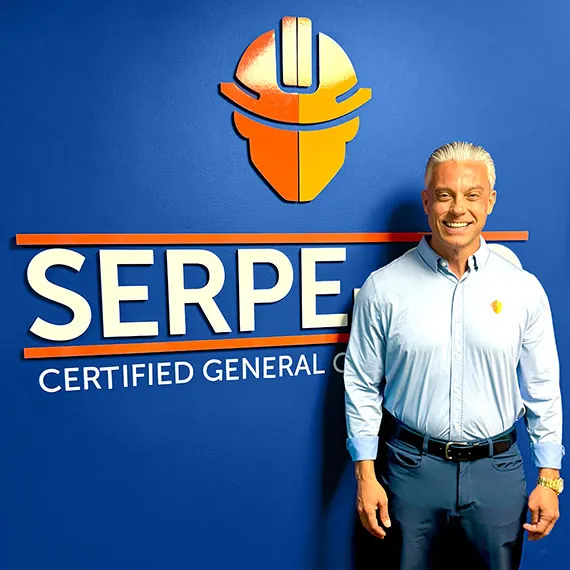
CEO and co-founder of SERPE-CO, a family-owned Florida Certified General Contractor (CGC #1523974). In concrete restoration since 2005 and a contributor to the Florida Community Association Journal. This article is general information, not engineering or legal advice.