Miami-Dade County, Florida
Concrete Flatwork in Miami-Dade County: Sidewalks, Driveways and Pavers
Level, code-compliant concrete for every surface people walk or drive across.
In short
Who handles concrete flatwork in Miami-Dade?
SERPE-CO handles concrete flatwork in Miami-Dade County for condominium associations, homeowner associations and commercial properties. The work includes removing and replacing cracked or lifted sidewalks, curbs, driveways, entry aprons and pool surrounds, correcting trip hazards and drainage, and resetting pavers on a properly compacted base, phased so the property stays open.
Free milestone planner
Is a milestone inspection coming due on your building?
Enter the year your building got its certificate of occupancy and how many stories it has. The planner estimates your deadline under Florida law, then you can send it to SERPE-CO for a second look.
Add the year and story count for an estimated due date.
Want a second look at your timeline? Send your building details and SERPE-CO will follow up about the inspection, likely repairs and how to plan for them.
About this estimate
This is a planning estimate drawn from the statewide rule in Florida Statute 553.899. Your local building department sets the real deadline and may call for the first inspection at 25 years instead. Broward County also has its own Building Safety Inspection Program. Check your date with your building official and engineer, or contact SERPE-CO and we will help you sort it out.
Flatwork & Pavers · Miami-Dade
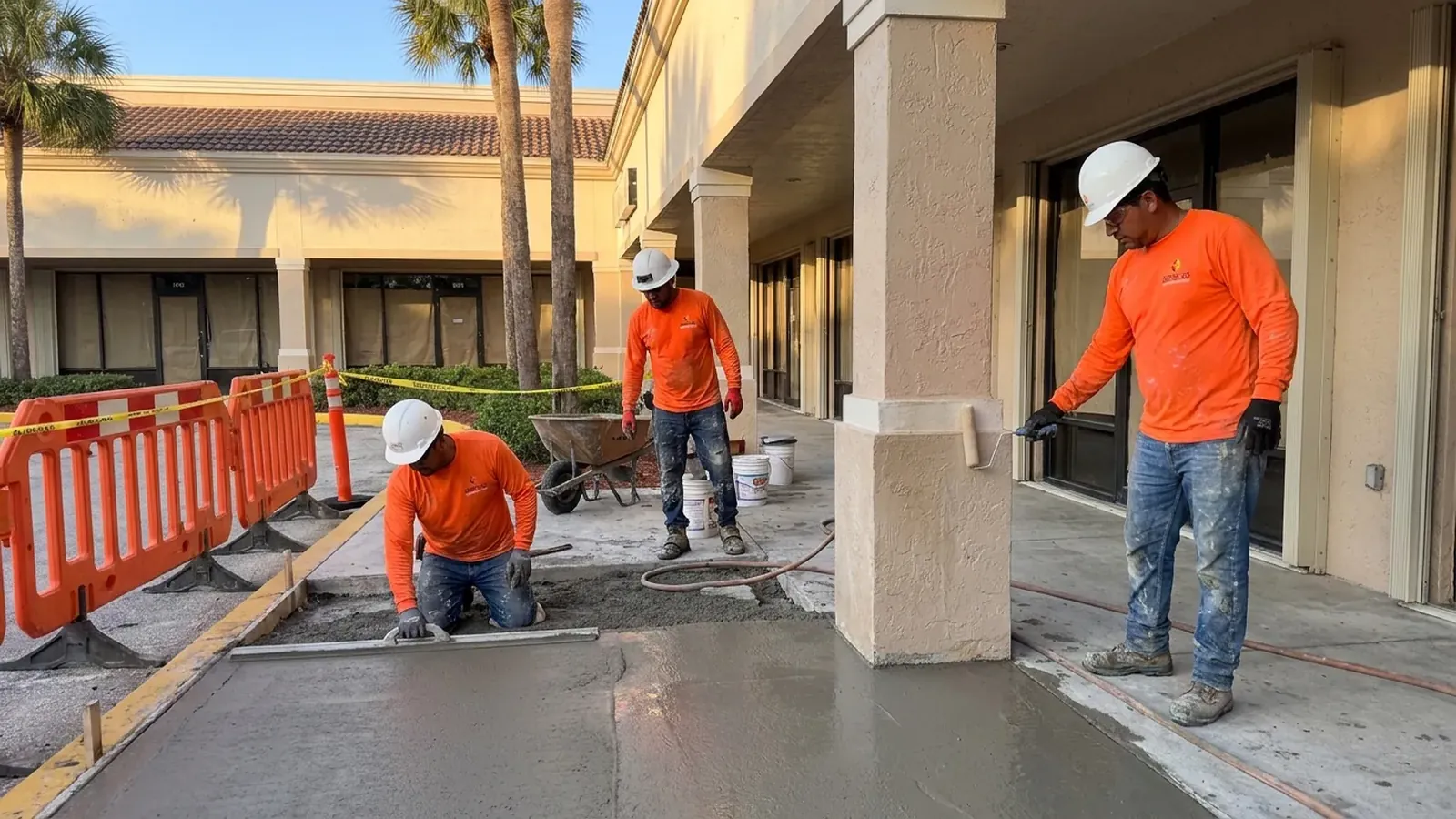
Concrete flatwork in Miami-Dade County means the walks, curbs, driveways, entry aprons, ramps, pool surrounds and paver fields that residents, guests and customers cross every day. SERPE-CO replaces cracked and lifted concrete, removes trip hazards, resets and relevels pavers and resurfaces tired slabs for condominium associations, homeowner associations, retail centers, office properties and industrial sites. The work is planned so the property stays open and people always have a safe way through.
Flatwork rarely fails at random. Roots heave panels, loose fill settles, delivery trucks crack slabs poured for cars and standing water washes out the base. Pouring a new panel over the same conditions only resets the clock. Before we form anything, SERPE-CO checks the drainage, the base and the loads the surface will carry, then sets slope and joints so the new concrete sheds water and stays flat.

Reviewed by Brett Serpe, MBA, GC, CEO of SERPE-CO · Florida Certified General Contractor CGC #1523974
Prepared by the SERPE-CO project team, with more than 20 years in concrete restoration. Last reviewed November 2026.
Local conditions
Paving conditions across Miami-Dade properties
Along the coast in Miami Beach, Sunny Isles Beach, Bal Harbour and Key Biscayne, flatwork is mostly the ground plane around condominium towers: porte-cocheres, drop-off lanes, walkways to the beach and the paver and concrete decks around pools. Salt air attacks embedded steel in walks and ramps that sit close to the ocean, and sandy fill under paver driveways settles unevenly. Mainland communities in Aventura, North Miami Beach and Coral Gables add shaded walks where tree roots have lifted the panels.
Rain is the other constant. The South Florida rainy season runs from mid-May to mid-October, the land is flat and the water table is high, so any surface with the wrong slope ends up holding water. Parking areas carry an added layer in Miami-Dade: the county recertification process checks parking lot lighting under Section 8C-3 and guardrails at lots beside a lake, canal or other water body under Section 8C-6, and missing or damaged items are tracked by the building official until they are corrected.
Buildings that need this work
Where Miami-Dade properties need flatwork
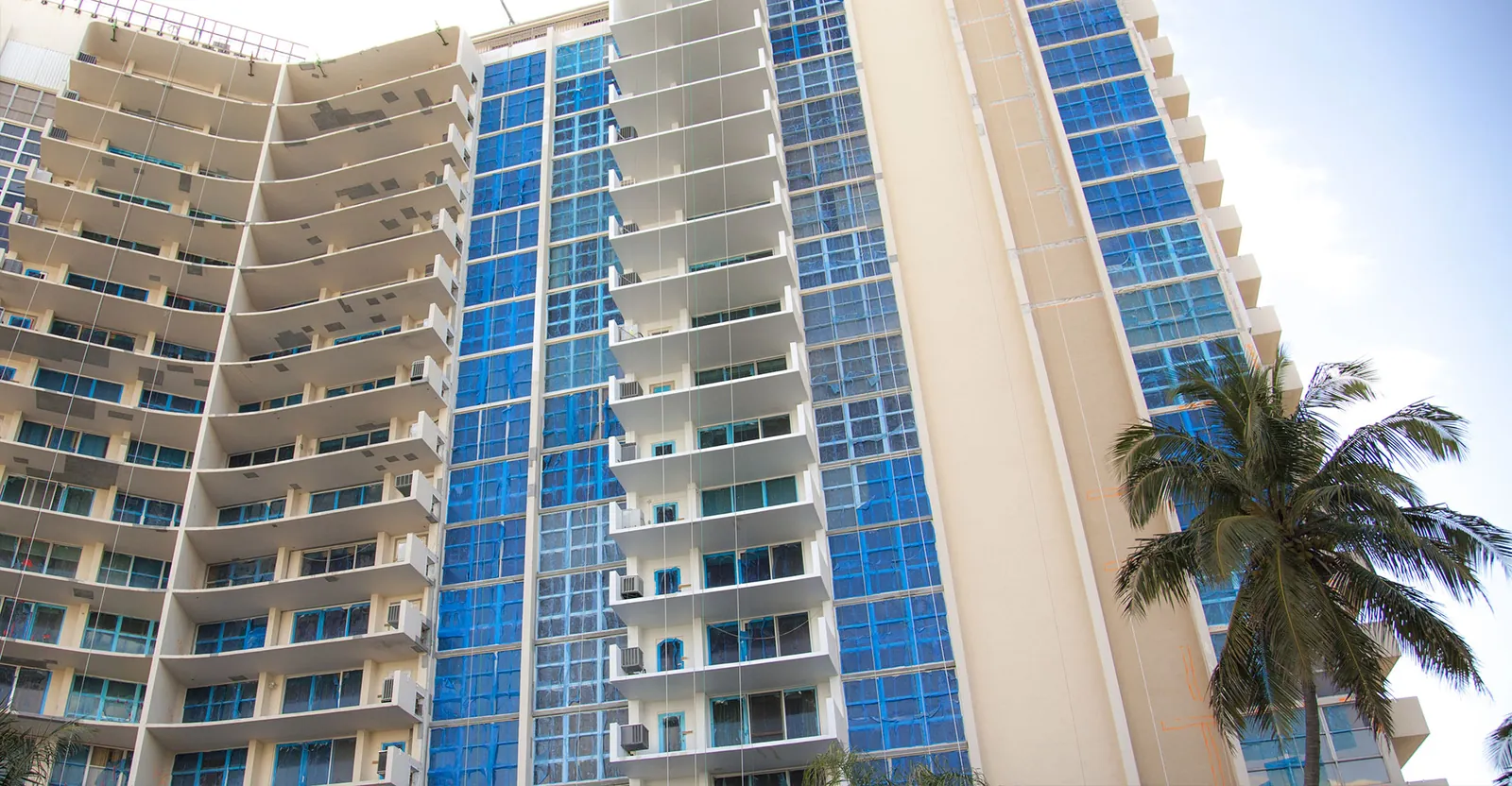
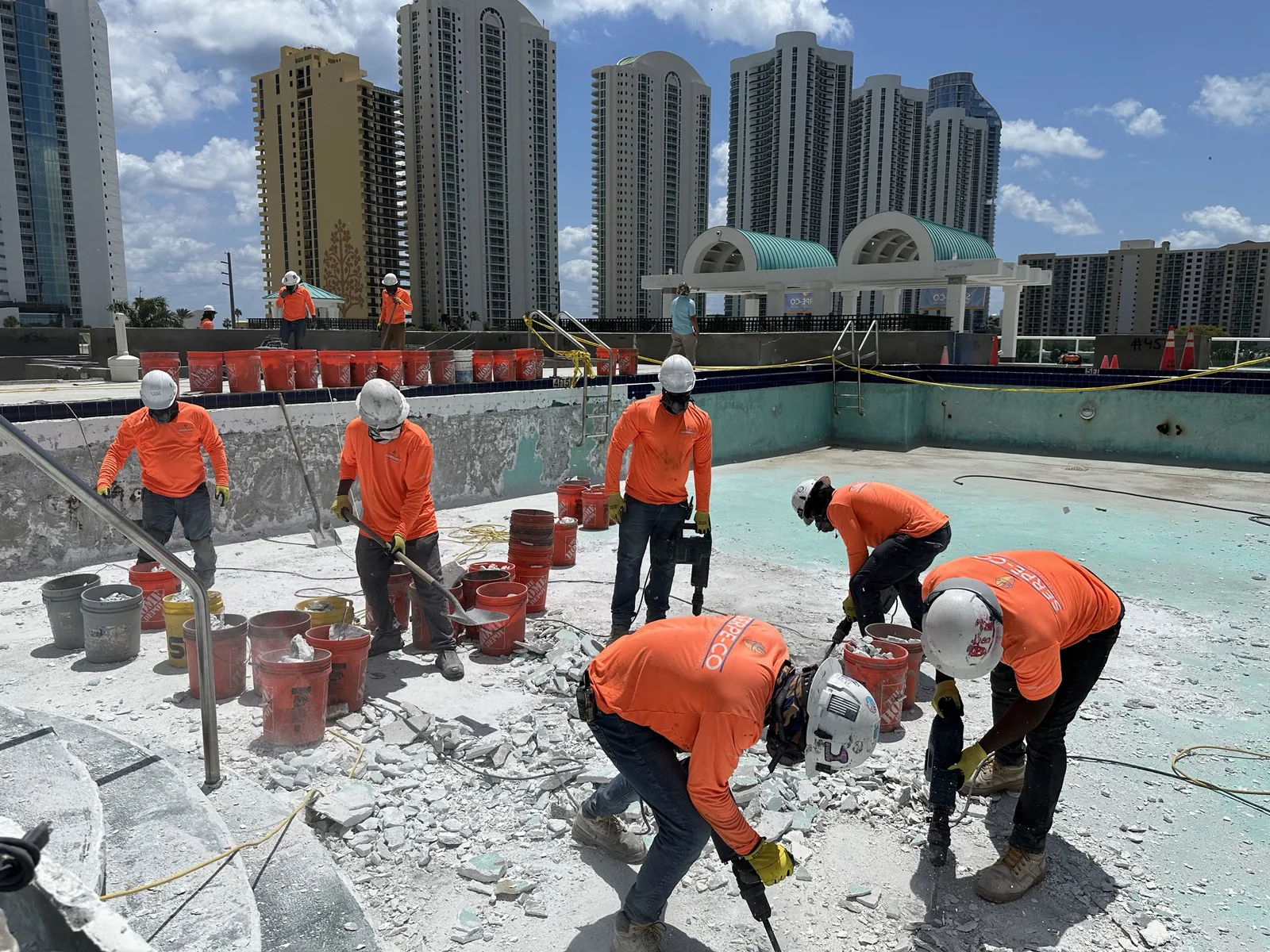
Coastal condominium towers in Sunny Isles Beach, Bal Harbour, Surfside, Miami Beach and Key Biscayne have compact sites where every square foot of ground is used. Drop-off lanes, garage ramps, walks to the beach access and pool surrounds take constant traffic from residents, deliveries and valets. Salt air reaches any steel in those slabs, sandy fill under paver driveways settles, and drains clog with sand, so the same areas are repaired again and again unless the base and drainage are corrected.
On the mainland, the work spreads out. Communities in Aventura, North Miami Beach and Coral Gables have long shaded walks where roots lift panels, and older parking areas with cracked curbs and wheel stops. Retail centers and office properties in Miami and Doral carry heavier loads from delivery trucks and garbage service, which break up slabs poured for cars. In Homestead, newer communities have walks and drives on fill that is still settling.
The work
Concrete flatwork in Miami-Dade County: what the job covers
- 01Replacing sidewalks, curbs and gutters
- 02Parking areas, aprons and driveways
- 03Trip hazard removal and accessible ramps
- 04Pavers installed and re-leveled
- 05Resurfacing with decorative concrete overlays
- 06Equipment slabs and dumpster pads
Our approach
How we replace walks and drives on an open property
The job starts with a walk of the property alongside the manager. Every panel and paver area to be replaced is marked, photographed and listed, and the board agrees on the order of work. Sections are barricaded and replaced in short runs so there is always a protected route, and entries and drop-off lanes are done one half at a time or outside busy hours.
Our crews recompact the base and work with the landscaper on roots before forms go in. Concrete is placed at the thickness the traffic calls for, finished with a slip-resistant texture and jointed to control cracking. Pavers are lifted, the bedding is regraded and they are relaid with restored edges. Work in a public right-of-way is permitted through the city or county agency that controls it.
SERPE-CO brings more than 20 years in the field to every job. Read about our full flatwork & pavers service or browse all our work in Miami-Dade County.
Planning ahead
What a Miami-Dade board settles before flatwork starts
A flatwork project in Miami-Dade goes smoother when the board settles three things first. The survey of every hazard is accepted as the scope, so owners know which panels will and will not be replaced. Ownership of each walk is confirmed, since sidewalks along public streets belong to the city or the county and need a right-of-way permit. Finish choices, such as a broom finish, a decorative overlay or pavers, are decided once so the property looks consistent.
Timing comes next. Concrete placement needs dry weather, and in the rainy season afternoon storms can wash out a fresh finish, so pours are planned for mornings or drier stretches. Parking lot work is a good moment to check the items that county recertification looks at, such as lot lighting under Section 8C-3 and guardrails beside water under Section 8C-6, so they can be corrected in the same mobilization if the engineer has noted them.
How we run a job
Site walk first, closed permit last.
- 01
Meet on site
Each job starts on site, walking the property and its conditions with your manager, board or engineer.
- 02
Follow the engineer's scope
The engineer writes the scope. We price it line by line, plan access and lay out each phase to build it.
- 03
Put safety first
We can never work too safely: shoring, swing stages, barricades and notices go up first.
- 04
Build the repairs
Crews work through the repairs in order, stopping for inspections wherever the engineer calls for them.
- 05
Finish and document
Final inspections, a closed permit and a full record of the work for the association.
Cities served
Flatwork & Pavers throughout Miami-Dade County
Summary
What Miami-Dade boards and owners should remember
- 01
Coastal Miami-Dade sites repeat the same flatwork repairs until the base, drainage and sandy fill below are corrected.
- 02
Sidewalks along public streets in Miami-Dade belong to the city or the county and need a right-of-way permit.
- 03
Parking work is a sensible time to correct lot lighting or waterside guardrail items noted during recertification.
- 04
Pours in the rainy season are planned for mornings or dry stretches to protect the fresh finish.
Questions
Flatwork & Pavers in Miami-Dade: questions we hear
Who fixes a raised sidewalk inside a condominium community in Aventura or North Miami Beach?
Ownership decides. Walks within the private property are generally the association's responsibility, while sidewalks along a public street follow the rules of the city or the county. The manager or association attorney can confirm who owns which walk. SERPE-CO can survey and map every raised or cracked panel so the board has a clear list.
Should a lifted panel on a Miami-Dade property be ground down or replaced?
Grinding suits a small offset on concrete that is otherwise sound. Replacement is the right call when a panel is cracked, heaved sharply by roots or ponding, and the root or base problem gets fixed first so the new panel stays level. We make that call panel by panel during the site walk and note it on the survey.
Can the pavers around a Miami Beach pool deck be relaid instead of replaced?
In most cases, yes. Sound pavers are lifted and stacked, the bedding and base are regraded and compacted, and the same units go back down with new joint sand and secure edge restraints. New pavers are needed only where units are broken or the association wants a different color or pattern.
Can driveway and drop-off areas at a Sunny Isles Beach tower stay open during replacement?
Yes, with phasing. Entries and drop-off lanes are replaced one half at a time, with the open half marked for two-way use or a temporary route set up with the manager. Pours are timed for the quietest hours, and the new concrete is protected until it can carry vehicles.
How does SERPE-CO decide which panels need replacing on a large Miami-Dade property?
Our team walks every walk and drive, marks each raised, cracked or ponding panel and records it on a site plan with photos. For concrete flatwork in Miami-Dade County, that survey becomes the scope, so the board can approve the full list or set priorities, starting with trip hazards at entries and along the busiest routes.
Why do pavers sink around pool decks in Miami Beach and Key Biscayne?
Sandy fill near the coast settles over time, and water from rain or pool splash can carry fine material out of the bedding when edges and joints are open. The pavers then drop and rock. Lifting the pavers, regrading and compacting the base, restoring edge restraint and refilling the joints corrects the problem.
Laws and rules cited
- Miami-Dade County: Building Recertification (Milestone) Inspections, Code of Miami-Dade County Section 8-11(f)
- Miami-Dade County Product Control: Notice of Acceptance for building envelope products
- Florida Statute 553.899: mandatory structural inspections for condominium and cooperative buildings
- Florida Statute 718.112: structural integrity reserve studies
Treat this page as general information only, not legal or engineering advice. Licensed engineers and architects perform the inspections, and the building official decides which dates apply to your property. SERPE-CO's role is to carry out the repairs.
Working with an engineer?
Holding drawings, specifications or a complete set of bid documents?
Structural engineers, property engineers and board members send SERPE-CO much of our restoration, pool and roofing work. Once a scope has been drawn and specified, our team prices what the documents show, raises questions where something is unclear, and lays out each line so boards can weigh the bids on equal terms.
Request an estimate
Let's plan your restoration.
Tell us where the building is and what you are seeing. We set up a visit to the property, then send a written proposal, or tell you an engineer needs to write the scope first.
- More than 20 years in the field
- St. Lucie, Martin, Palm Beach, Broward and Miami-Dade
- Family-owned Certified General Contractor
Rather call?(954) 718-3094