Miami-Dade County, Florida
Concrete Restoration in Miami-Dade County
Spalled concrete and rusted rebar, fixed exactly as your engineer specifies.
In short
Who handles concrete restoration in Miami-Dade?
SERPE-CO, a family-owned Certified General Contractor (CGC #1523974) with more than 20 years in the field, carries out concrete restoration in Miami-Dade County for condominium associations, hotels and commercial owners. Crews sound the structure, remove spalled concrete, clean or replace corroded reinforcing steel and rebuild slabs, beams and columns to the repair details issued by the owner's licensed engineer, under a permit from the local building department.
Free milestone planner
Is a milestone inspection coming due on your building?
Enter the year your building got its certificate of occupancy and how many stories it has. The planner estimates your deadline under Florida law, then you can send it to SERPE-CO for a second look.
Add the year and story count for an estimated due date.
Want a second look at your timeline? Send your building details and SERPE-CO will follow up about the inspection, likely repairs and how to plan for them.
About this estimate
This is a planning estimate drawn from the statewide rule in Florida Statute 553.899. Your local building department sets the real deadline and may call for the first inspection at 25 years instead. Broward County also has its own Building Safety Inspection Program. Check your date with your building official and engineer, or contact SERPE-CO and we will help you sort it out.
Concrete Restoration · Miami-Dade
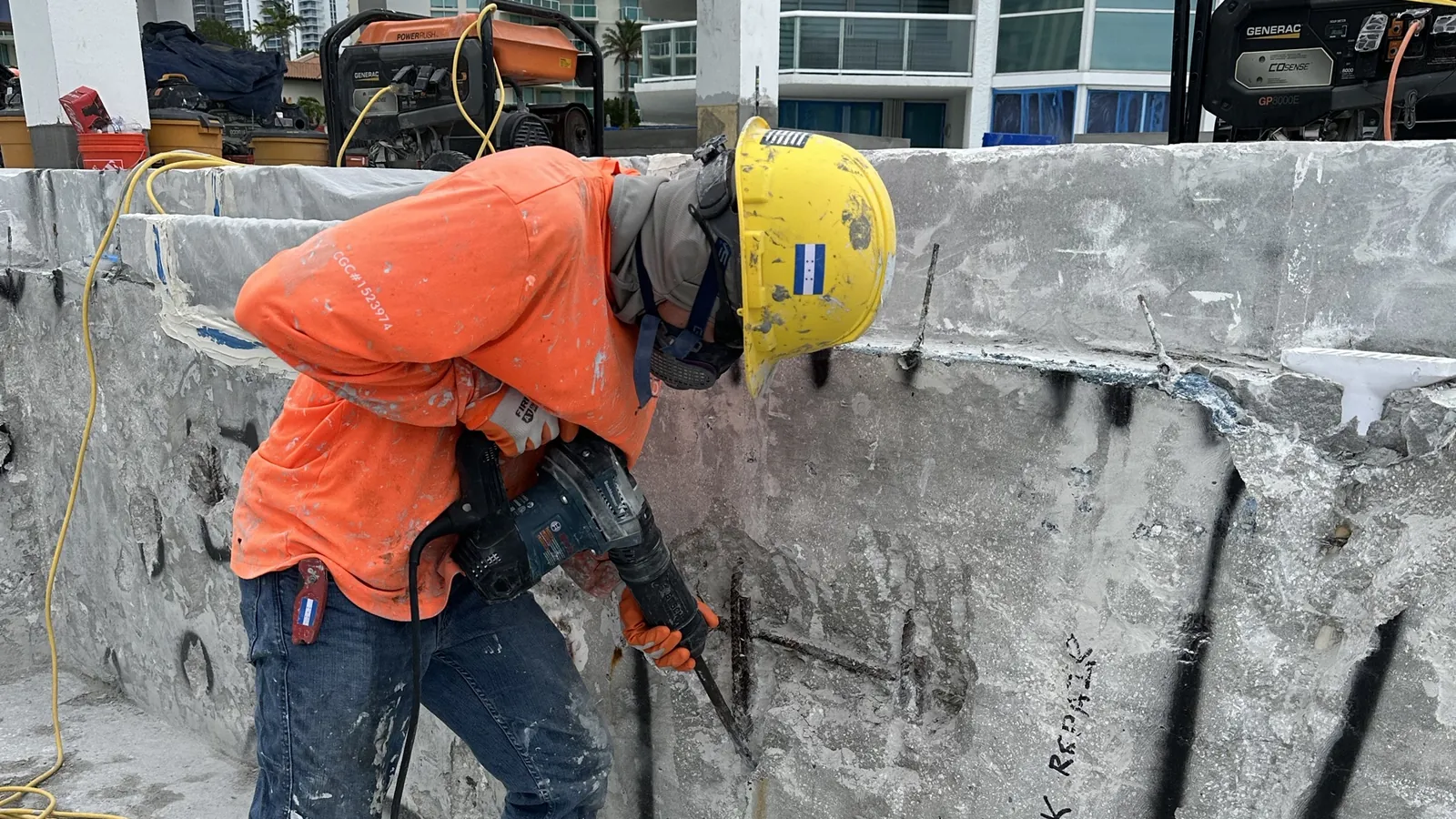
Concrete restoration in Miami-Dade County usually means rebuilding reinforced concrete that salt air and moisture have already reached. Once chlorides travel through the cover to the steel, the bars rust, swell and push the concrete apart, and the surface cracks, sounds hollow and eventually breaks off. SERPE-CO cuts out the unsound material, cleans or replaces the corroded reinforcing, protects the steel against further rust and restores the full section using repair mortar, or new concrete placed in forms, exactly as the owner's licensed engineer has detailed it.
Our crews work on columns, beams, slab edges, shear walls, stair towers and roof slabs at condominium buildings, hotels, office towers, parking structures and retail properties across the county. Some projects are a handful of spalls uncovered while a facade is being prepared for paint. Others are full repair programs that follow a recertification report. Small or large, the job follows one sequence: find where sound material begins, clear the corroded bars completely, restore the original shape and seal the surface so the repair lasts as long as the concrete next to it.
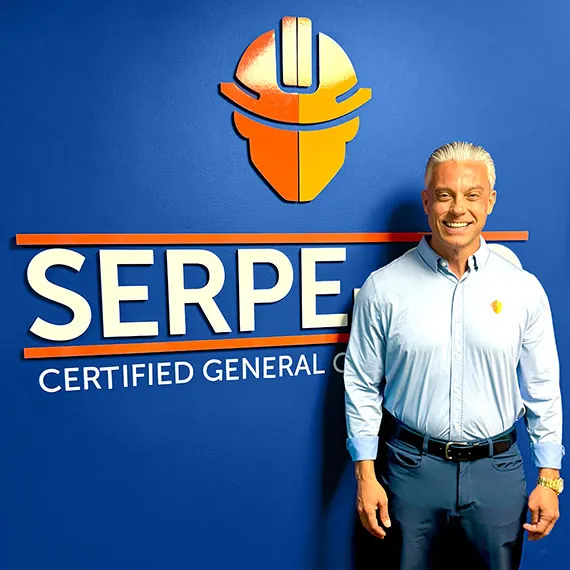
Reviewed by Brett Serpe, MBA, GC, CEO of SERPE-CO · Florida Certified General Contractor CGC #1523974
Prepared by the SERPE-CO project team, with more than 20 years in concrete restoration. Last reviewed November 2026.
Local conditions
Why concrete breaks down early on Miami-Dade buildings
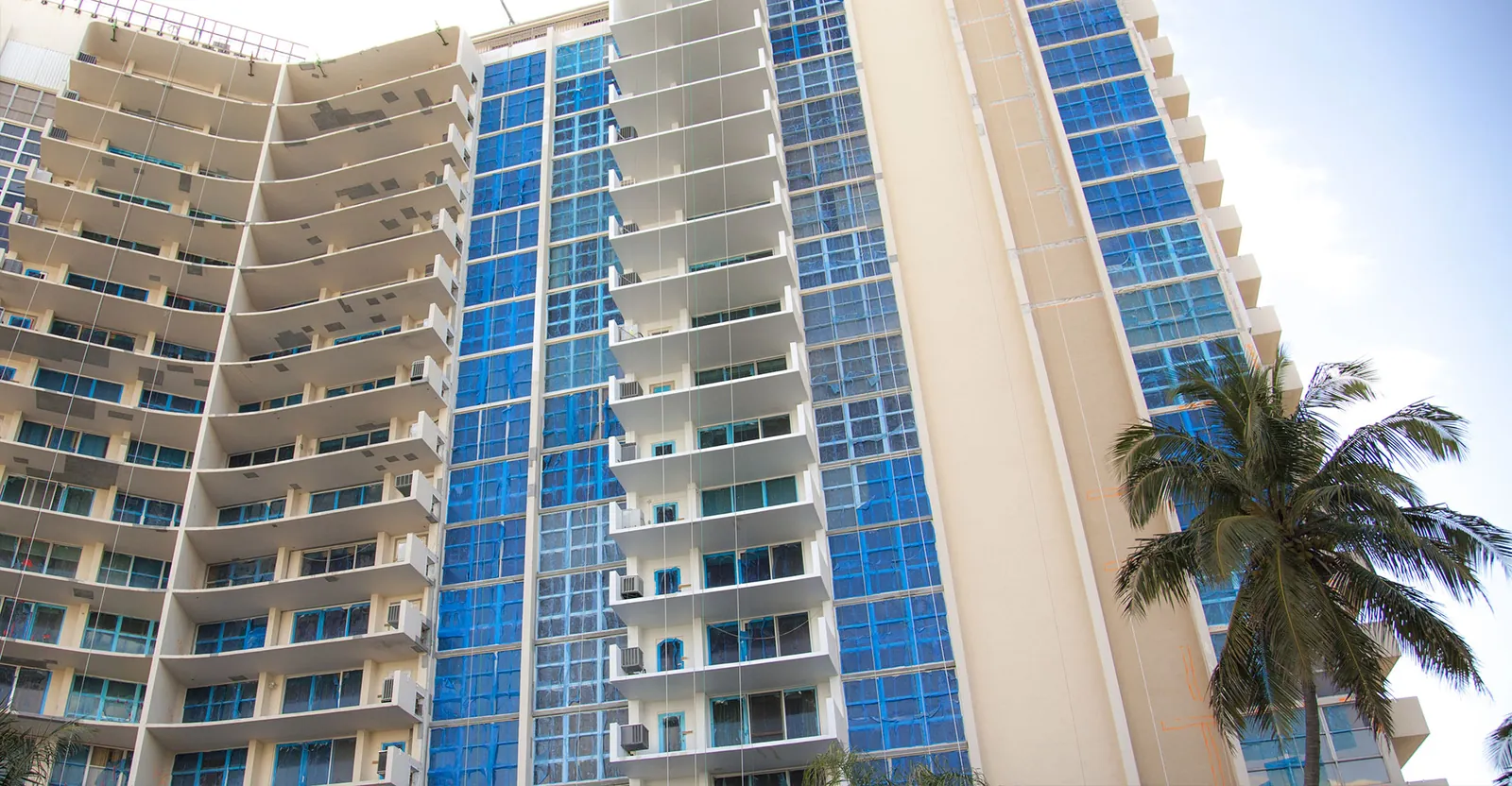
Miami-Dade has two very different coastal settings, and both are hard on concrete. The barrier islands of Miami Beach, Surfside, Bal Harbour, Sunny Isles Beach and Key Biscayne put oceanfront towers in direct salt spray, with Biscayne Bay or the Intracoastal Waterway close behind them. On the mainland, the condominium and office towers of Brickell, Edgewater and downtown Miami face the bay and take humid, salt-laden air every day. Many of these buildings went up decades ago, when the concrete cover over the steel was thinner and mixes were more porous than engineers specify today.
The county's recertification program brings this damage into view on a fixed schedule. Under Section 8-11(f) of the Code of Miami-Dade County, most buildings are recertified at 30 years and every 10 years after that, and condominium and cooperative buildings three stories or taller within three miles of the coastline start at 25 years. A Florida-registered engineer or architect prepares the structural report, and that report usually lists the concrete repairs. On a building already through several cycles, older patches that have come loose have to be removed along with the new damage around them.
Buildings that need this work
Which Miami-Dade buildings need structural concrete repair
Oceanfront condominiums and hotels on the barrier islands carry the heaviest concrete repair in Miami-Dade. From Sunny Isles Beach south through Bal Harbour, Surfside and the length of Miami Beach, and out on Key Biscayne, towers sit in daily salt spray with Biscayne Bay or the Intracoastal Waterway behind them. Typical findings are spalled columns at ground-level parking, corroded slab edges on the ocean side, cracked stair landings and damaged roof slabs under mechanical equipment. Bayfront towers on the mainland show the same patterns on the elevation facing the water.
The mainland adds other building types. Brickell, Edgewater and downtown Miami have office and residential towers on concrete podiums, many of them with garages and amenity decks that need repair from above and below. Aventura and North Miami Beach have mid-rise and high-rise condominiums along the Intracoastal, often with pool decks and seawall-side columns that stay damp. Inland, Coral Gables, Doral and Homestead have offices, retail centers, warehouses and low-rise communities with open walkways, where rainwater rather than salt slowly corrodes the steel at slab edges and stair landings.
The work
Concrete restoration in Miami-Dade County: what the job covers
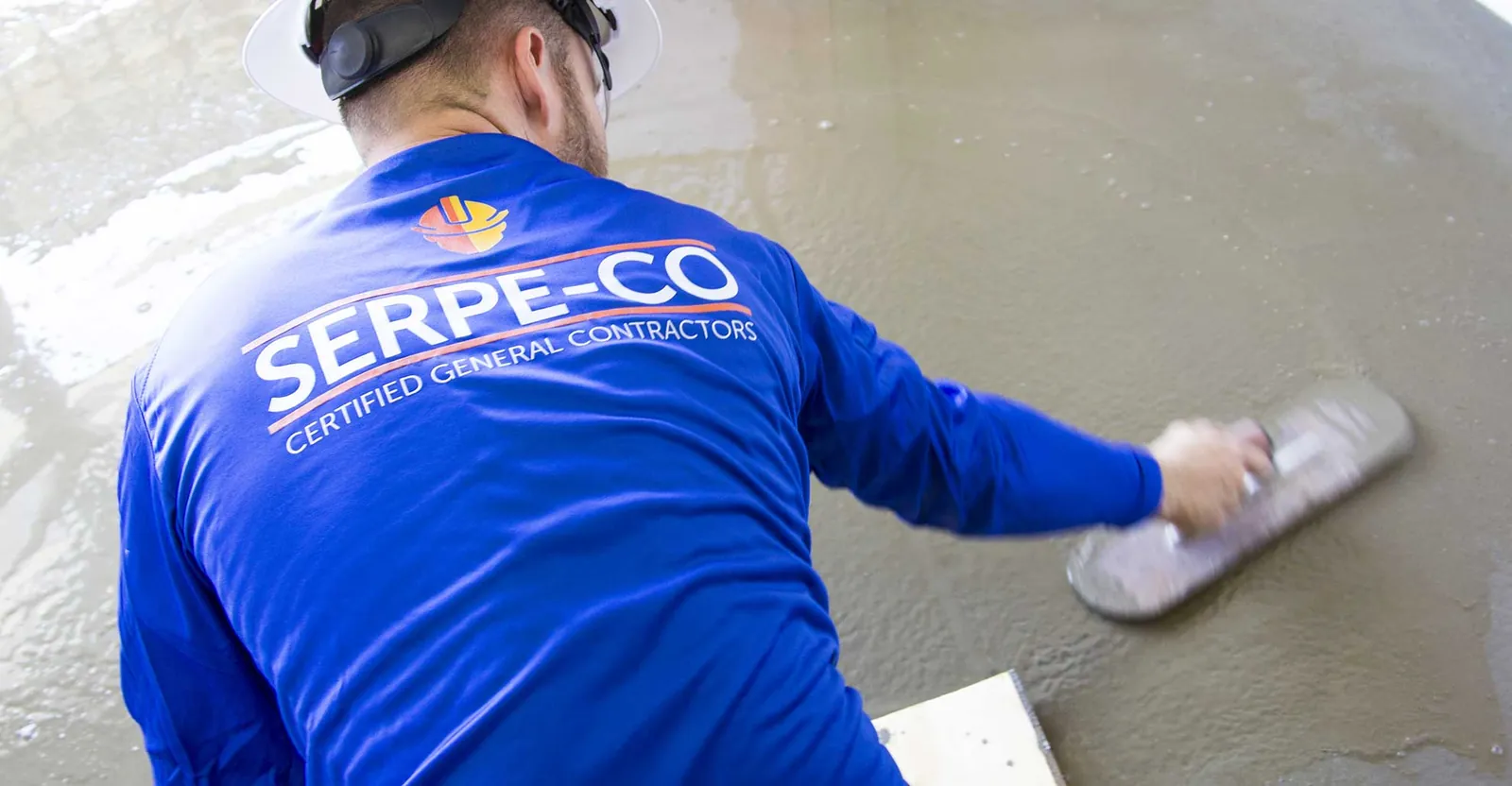
- 01Repair of spalled or delaminated slabs, beams, columns and walls
- 02Rebar cleaned, coated, spliced or replaced
- 03Epoxy injection for structural crack repair
- 04Overhead, hand-placed and form-and-pour repair mortars
- 05Temporary shoring while repairs are underway
- 06Protective coatings, sealers and corrosion-inhibiting treatments
Our approach
How we rebuild concrete on occupied Miami-Dade buildings
Every area is sounded before demolition. Crews tap the surface, mark the hollow zones and record them so the engineer can confirm the quantities. Removal is done with light chipping hammers that protect the concrete that is still sound, and the reinforcing is exposed around its full circumference so no rust is left behind the new material. Bars that have lost more section than the engineer allows are supplemented with new steel. Shoring is installed before any load-bearing slab, beam or column is opened, and the engineer reviews the exposed steel before each placement.
Residents and tenants stay in the building in almost every case, so the work is phased by elevation, by stack or by floor. Walkways, entrances and pool areas below are covered and barricaded, slurry and dust are contained at every drop, and the loudest work happens inside the hours the association and the municipality permit. Safety is of the utmost importance on our sites, and we can never work too safely. A photo log and quantity sheet is kept for each repair location, ready for the association's records and the permit closeout.
SERPE-CO brings more than 20 years in the field to every job. Read about our full concrete restoration service or browse all our work in Miami-Dade County.
Planning ahead
Planning a concrete repair project with a Miami-Dade board
A concrete project in Miami-Dade usually starts with the recertification report and the engineer's signed and sealed repair documents, which the municipal building department needs before it issues a permit. The county's guidance for design professionals is clear that repairs should not start before the reports are submitted and the permit is in hand. Quantities in the report are estimates, because damage hidden behind paint, tile or stucco only appears once sounding and chipping begin, so boards should hold a contingency for areas that turn out larger than expected.
Time and weather shape the calendar. When repairs are needed and a permit is active, the design professional can ask the building official for an extension of up to 180 days to finish them, supported by an affidavit that the building is safe to occupy. The South Florida rainy season, from mid-May to mid-October, interrupts pours with afternoon storms, and hurricane season runs from June 1 to November 30. Swing stages and loose materials have to be secured whenever a storm approaches, which costs working days each time.
How we run a job
Site walk first, closed permit last.
- 01
Meet on site
Each job starts on site, walking the property and its conditions with your manager, board or engineer.
- 02
Follow the engineer's scope
The engineer writes the scope. We price it line by line, plan access and lay out each phase to build it.
- 03
Put safety first
We can never work too safely: shoring, swing stages, barricades and notices go up first.
- 04
Build the repairs
Crews work through the repairs in order, stopping for inspections wherever the engineer calls for them.
- 05
Finish and document
Final inspections, a closed permit and a full record of the work for the association.
Cities served
Concrete Restoration throughout Miami-Dade County
Summary
What Miami-Dade boards and owners should remember
- 01
Barrier island towers from Sunny Isles Beach to Miami Beach and Key Biscayne carry the heaviest concrete damage in Miami-Dade.
- 02
Most Miami-Dade buildings are recertified at 30 years, with coastal condominiums of three or more stories starting at 25 years.
- 03
County guidance says repairs should not start until recertification reports are submitted and a permit has been obtained.
- 04
Repair quantities on a Miami-Dade building are confirmed by the engineer during the work, so boards should plan a contingency.
Questions
Concrete Restoration in Miami-Dade: questions we hear
What are the warning signs that a Miami Beach building needs concrete repair?
Rust stains coming through the paint, cracks that follow a straight line where a bar runs, pieces of concrete on balconies or the ground below and a dull, hollow sound when the surface is tapped are the usual signs. A licensed engineer confirms how far the damage reaches and writes the repair details. If a report already exists, send it over and we will walk the property with you.
Do concrete repairs in Miami-Dade need a building permit?
Structural concrete repairs are permitted by the building department of the municipality where the property sits, or by the county for unincorporated areas, using signed and sealed documents from the engineer of record. We prepare the permit application, schedule the required inspections and coordinate the engineer's field visits at each stage of the repair.
Why do earlier patches keep failing on Sunny Isles Beach and Bal Harbour towers?
Patches fail when the rusted steel was not fully exposed and cleaned, when the new material never bonded, or when salt-contaminated concrete was left beside the repair. The patch and the surrounding concrete then set up a corrosion cell at the edge. Full exposure of the steel, corrosion protection and a waterproof coating over the finished repair are what break that cycle.
Can residents stay in a Surfside condominium while concrete repairs are under way?
Usually, yes. The engineer decides whether the building can remain occupied, and the county's extension process relies on an affidavit from the design professional that it can. Work is phased by stack or elevation, shoring supports the structure where concrete is opened, and walkways below are protected. Residents lose use of the area under repair, not their homes.
How are extra repair quantities handled on a Miami-Dade concrete project?
Each phase starts with sounding to mark the real extent of damage. The engineer reviews and measures the marked areas and approves the quantity before removal goes further. On concrete restoration in Miami-Dade County every added location is photographed and measured, giving the board a clear record of the extra work and who approved it.
Do inland buildings in Doral or Coral Gables get concrete damage without ocean salt?
Yes, more slowly. Standing rainwater on open walkways, balconies and landings works its way into the concrete, and with time the concrete loses the alkalinity that protects the steel. Cracks let water reach the bars directly. Inland properties see this most at walkway edges, stair landings and column bases.
Laws and rules cited
- Miami-Dade County: Building Recertification (Milestone) Inspections, Code of Miami-Dade County Section 8-11(f)
- Miami-Dade County Product Control: Notice of Acceptance for building envelope products
- Florida Statute 553.899: mandatory structural inspections for condominium and cooperative buildings
- Florida Statute 718.112: structural integrity reserve studies
Treat this page as general information only, not legal or engineering advice. Licensed engineers and architects perform the inspections, and the building official decides which dates apply to your property. SERPE-CO's role is to carry out the repairs.
Working with an engineer?
Holding drawings, specifications or a complete set of bid documents?
Structural engineers, property engineers and board members send SERPE-CO much of our restoration, pool and roofing work. Once a scope has been drawn and specified, our team prices what the documents show, raises questions where something is unclear, and lays out each line so boards can weigh the bids on equal terms.
Request an estimate
Let's plan your restoration.
Tell us where the building is and what you are seeing. We set up a visit to the property, then send a written proposal, or tell you an engineer needs to write the scope first.
- More than 20 years in the field
- St. Lucie, Martin, Palm Beach, Broward and Miami-Dade
- Family-owned Certified General Contractor
Rather call?(954) 718-3094