Broward County, Florida
Commercial Waterproofing in Broward County
Track down where water enters, then seal the envelope so the building stays dry.
In short
Who handles commercial waterproofing in Broward?
SERPE-CO provides commercial waterproofing in Broward County for condo associations, hotels, office buildings and retail properties. We trace each leak back to its source, repair the concrete underneath, and install the coating, membrane, sealant or expansion joint that fits the surface, on areas such as rooftop amenity decks, catwalks, planters, facades and elevator pits.
Free milestone planner
Is a milestone inspection coming due on your building?
Enter the year your building got its certificate of occupancy and how many stories it has. The planner estimates your deadline under Florida law, then you can send it to SERPE-CO for a second look.
Add the year and story count for an estimated due date.
Want a second look at your timeline? Send your building details and SERPE-CO will follow up about the inspection, likely repairs and how to plan for them.
About this estimate
This is a planning estimate drawn from the statewide rule in Florida Statute 553.899. Your local building department sets the real deadline and may call for the first inspection at 25 years instead. Broward County also has its own Building Safety Inspection Program. Check your date with your building official and engineer, or contact SERPE-CO and we will help you sort it out.
Waterproofing · Broward
Commercial waterproofing in Broward County is about stopping sideways rain, ocean spray and rising groundwater at concrete buildings that face all three. SERPE-CO follows each leak back to where it starts and installs the right system for that surface: liquid or sheet membranes on decks and planters, new sealants and expansion joints on facades, and below-grade systems for elevator pits and foundation walls sitting in groundwater.
Every concrete repair depends on waterproofing. Rebuild a balcony or garage slab and it will rust out again if water finds its old way in. So we treat leak tracing, concrete repair and waterproofing as a single scope. Paint counts too, since on the coast it is the building's outer waterproofing layer. Each membrane is matched to its use: foot traffic, cars, pavers or soil.
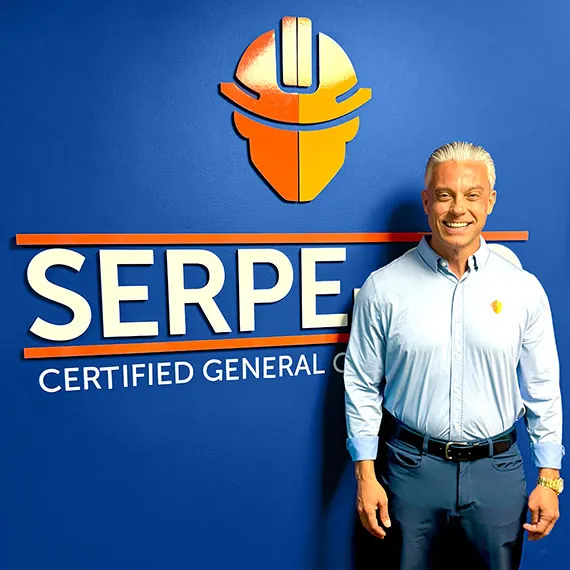
Reviewed by Brett Serpe, MBA, GC, CEO of SERPE-CO · Florida Certified General Contractor CGC #1523974
Prepared by the SERPE-CO project team, with more than 20 years in concrete restoration. Last reviewed November 2026.
Local conditions
How water finds its way into Broward buildings
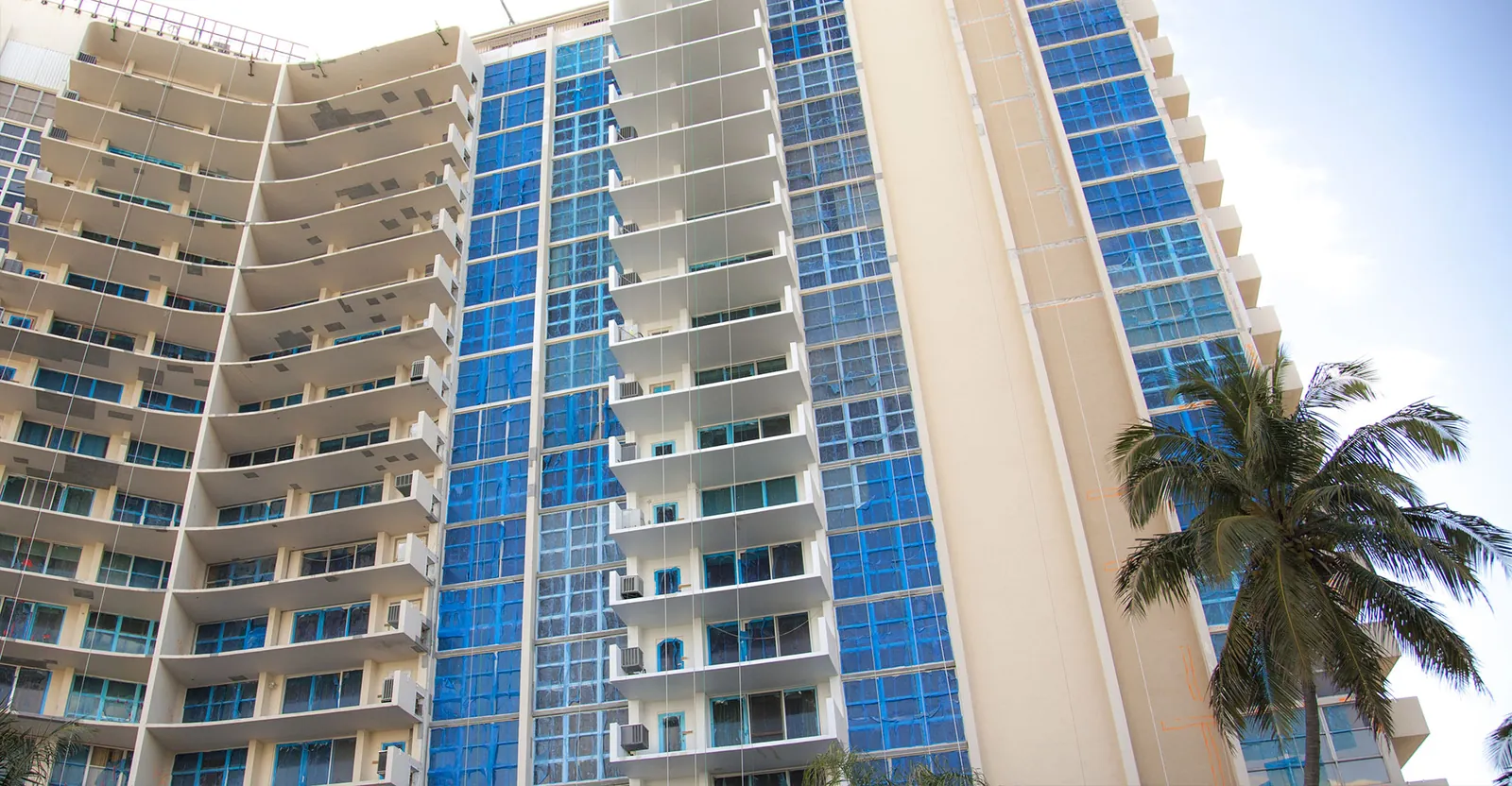
On beachfront towers in Hollywood, Pompano Beach and Fort Lauderdale, water usually gets in through balcony slabs and thresholds, around windows and sliding doors, through facade cracks and at joints where two different materials meet. Storms here push rain sideways. A sealant joint that looks fine from the street can be split or pulled loose on the weather side, and water that gets in on one floor may show up two floors lower.
Inland of the beach, buildings on the Intracoastal and the canals of Fort Lauderdale and Dania Beach sit over a high water table. Elevator pits, garages below grade and the bottoms of perimeter walls can take on water from underneath, most of all during seasonal high tides. Amenity decks with pools and planters built over parking or occupied space are the other usual cause of leaks that drag on for years.
Buildings that need this work
Where each type of Broward building tends to leak
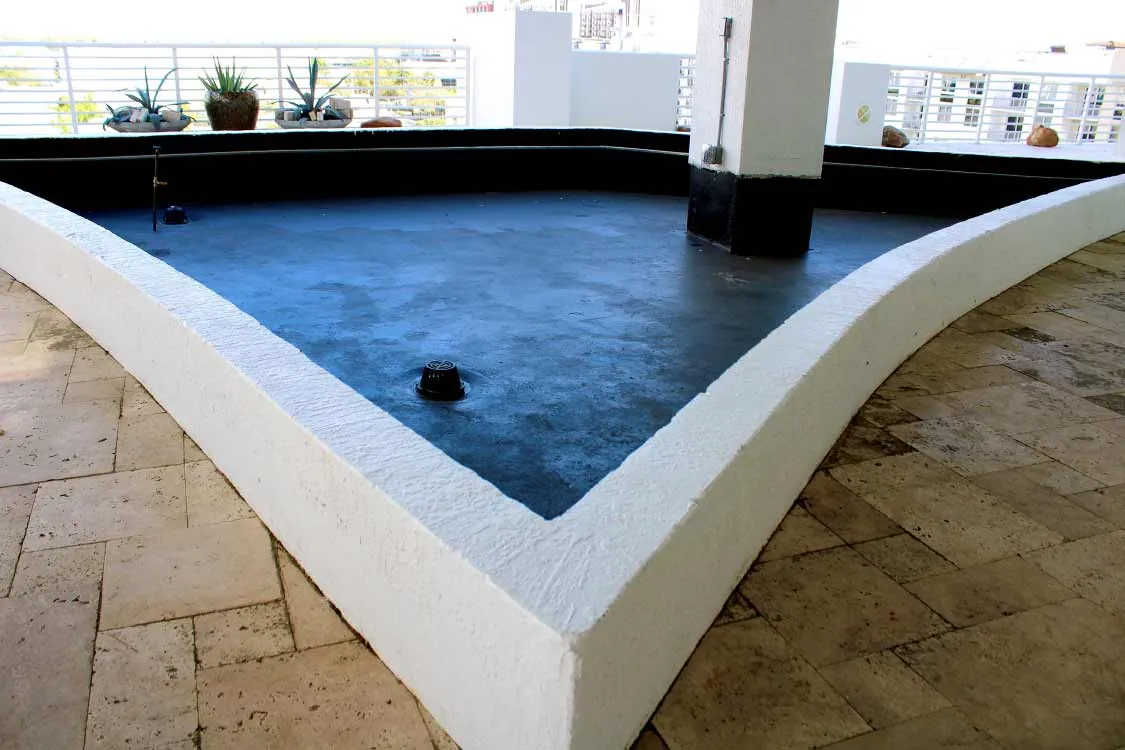
Many of the newer mid-rises along Federal Highway and in downtown Fort Lauderdale, apartment and mixed-use alike, put the pool and amenity deck on top of the garage or over shops. On those Broward buildings, leaks usually show up at drains, planter walls and door thresholds, and at the joint between the deck and the tower. Office buildings along Cypress Creek and in Plantation leak more often around windows, at panel joints and at rooftop equipment curbs, where years of strong sun have dried and hardened the sealant.
Inland condo communities with open catwalks have a leak problem all their own. In Margate, Lauderhill, Sunrise and Tamarac, walkway slabs were often finished as plain painted concrete, so rain gets in at cracks and around railing posts and drips onto the walkway beneath. Beachfront hotels in Hollywood and Fort Lauderdale contend with showers, kitchens and pool decks sitting over occupied rooms. Retail centers along State Road 7 and University Drive tend to leak at canopies, parapets and the heads of storefronts.
The work
Commercial waterproofing in Broward County: what the job covers
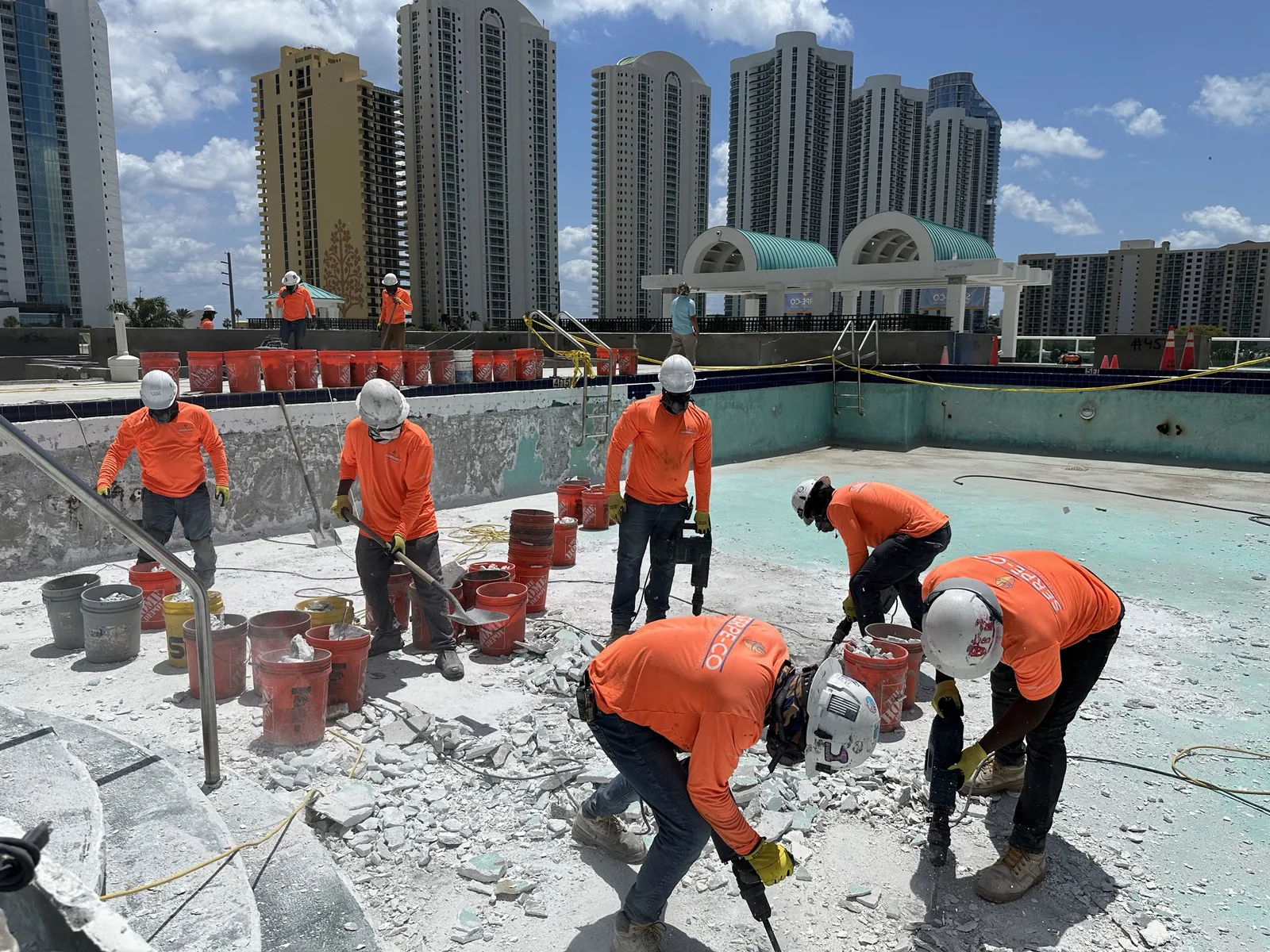
- 01Water testing to trace leaks
- 02Sheet and liquid-applied membrane systems
- 03Pool deck, plaza and balcony waterproofing
- 04Below-grade and planter waterproofing
- 05New sealants and expansion joints
- 06Door and window perimeter sealant
Our approach
Tracking down leaks with residents at home
We start by gathering the leak history from management and owners. Next comes a survey of the suspect area and controlled water testing, working up from the lowest place water could enter. Moisture readings, and sometimes opening a small piece of finish, confirm the route. Only after that do we recommend a repair, so the board does not fund a full recoat when one failed joint is the real problem.
SERPE-CO phases the installation so units and common areas stay open. Sealants and facade repairs are done from swing stages one elevation at a time. Deck membranes go down in sections, and edges get temporary protection if rain comes before a section is done. Prep, thickness and cure follow the manufacturer's requirements for each system, and we flood test wherever the detail calls for it.
SERPE-CO brings more than 20 years in the field to every job. Read about our full waterproofing service or browse all our work in Broward County.
Planning ahead
How we plan and time waterproofing in Broward
Good waterproofing in Broward starts with finding the actual cause, not guessing at it. When a leak has reached structural concrete, the engineer working for the owner specifies the concrete repair along with the system placed over it, and the work is permitted by the city building department. If the job is only a membrane replacement, the building official confirms which permit applies. Ask the bidders which manufacturer's system they propose, what prep and thickness it needs, and whether the manufacturer inspects the install before it issues a warranty.
Membranes and sealants have to go on dry surfaces, so timing counts. South Florida's rainy season lasts from mid-May to mid-October, which makes late fall through spring the easier window for exposed decks and catwalks in Broward, while covered and below-grade waterproofing can go ahead any month. Florida requires condo buildings with three or more habitable stories to complete a structural integrity reserve study at least once every 10 years, and waterproofing is one of the components it has to cover, giving boards a basis to fund renewal on a cycle.
How we run a job
Site walk first, closed permit last.
- 01
Meet on site
Each job starts on site, walking the property and its conditions with your manager, board or engineer.
- 02
Follow the engineer's scope
The engineer writes the scope. We price it line by line, plan access and lay out each phase to build it.
- 03
Put safety first
We can never work too safely: shoring, swing stages, barricades and notices go up first.
- 04
Build the repairs
Crews work through the repairs in order, stopping for inspections wherever the engineer calls for them.
- 05
Finish and document
Final inspections, a closed permit and a full record of the work for the association.
Cities served
Waterproofing throughout Broward County
Summary
What Broward boards and owners should remember
- 01
On downtown Fort Lauderdale mid-rises, amenity decks built over garages leak most at drains, door thresholds and planter walls.
- 02
Inland Broward catwalks that were only ever painted take on rain wherever cracks or railing posts break the surface.
- 03
Exposed Broward decks are easiest to waterproof from late fall to spring, before the rains of mid-May to mid-October return.
- 04
Waterproofing is a listed component of Florida's structural integrity reserve study, which lets Broward boards plan its renewal on a set cycle.
Questions
Waterproofing in Broward: questions we hear
Our Fort Lauderdale building leaks only in storms. Why?
Rain driven by strong wind gets into spots ordinary rain never touches: under sills, over sliding door tracks and into cracks on sheltered walls. When a leak shows up only with wind from one direction, check that side of the building first, at its windows, balcony doors and wall joints, not the roof.
What is the white powder on our Broward County garage concrete?
The powder is called efflorescence. As water moves through concrete it dissolves salts, then leaves them behind on the surface when it dries. The deposit itself does no harm, but it tells you water is passing through that slab or wall. Find the source above or behind it and waterproof it before the steel starts to rust.
Can we waterproof the planters over our Hollywood garage without tearing them out?
Not in a way that lasts. The membrane is buried under soil, the drainage layer and usually the planter walls. A lasting repair means pulling soil and plants, fixing the concrete, putting down fresh root-resistant waterproofing with good drainage, checking any electrical, and replanting. SERPE-CO coordinates the order with the landscaper.
Is it worth waterproofing the catwalks at a Sunrise or Tamarac condo?
Usually, yes. Bare or painted concrete on a catwalk soaks up water through every crack. With the post bases and slab edges fixed, we apply a slip-resistant pedestrian coating that seals the concrete against rain and leaves residents an even surface to walk on. Crews coat it section by section so everyone can still get to their door.
Is a permit needed for waterproofing work in Broward County?
That depends on the scope and on the city. Waterproofing done within a structural repair falls under the repair permit and follows the engineer's drawings. On a project of standalone commercial waterproofing in Broward County, the building official in the property's city confirms whether a permit is needed. SERPE-CO checks before starting and files the application whenever one is required.
How do you test a new membrane on a Fort Lauderdale amenity deck?
If the detail permits, we flood test the finished membrane. The drains get plugged, the area holds a shallow layer of water for a set time, and the space below is checked for any leak. Testing happens before pavers, planters or topping go back on, since a leak found later means tearing those finishes out a second time.
Laws and rules cited
- Broward County Board of Rules and Appeals Policy 05-05: Building Safety Inspection Program
- Florida Statute 553.899: mandatory structural inspections for condominium and cooperative buildings
- Florida Statute 718.112: structural integrity reserve studies
Treat this page as general information only, not legal or engineering advice. Licensed engineers and architects perform the inspections, and the building official decides which dates apply to your property. SERPE-CO's role is to carry out the repairs.
Working with an engineer?
Holding drawings, specifications or a complete set of bid documents?
Structural engineers, property engineers and board members send SERPE-CO much of our restoration, pool and roofing work. Once a scope has been drawn and specified, our team prices what the documents show, raises questions where something is unclear, and lays out each line so boards can weigh the bids on equal terms.
Request an estimate
Let's plan your restoration.
Tell us where the building is and what you are seeing. We set up a visit to the property, then send a written proposal, or tell you an engineer needs to write the scope first.
- More than 20 years in the field
- St. Lucie, Martin, Palm Beach, Broward and Miami-Dade
- Family-owned Certified General Contractor
Rather call?(954) 718-3094