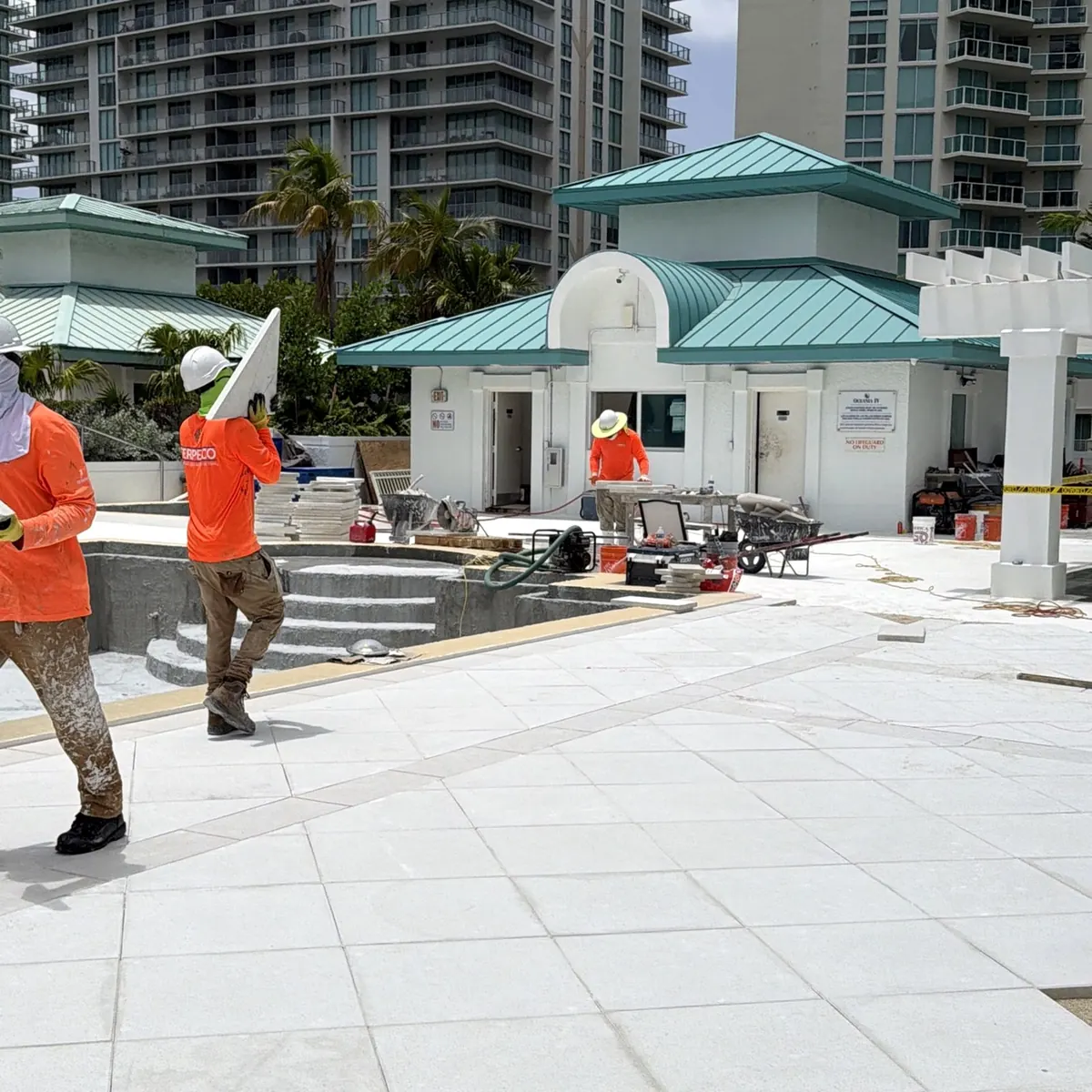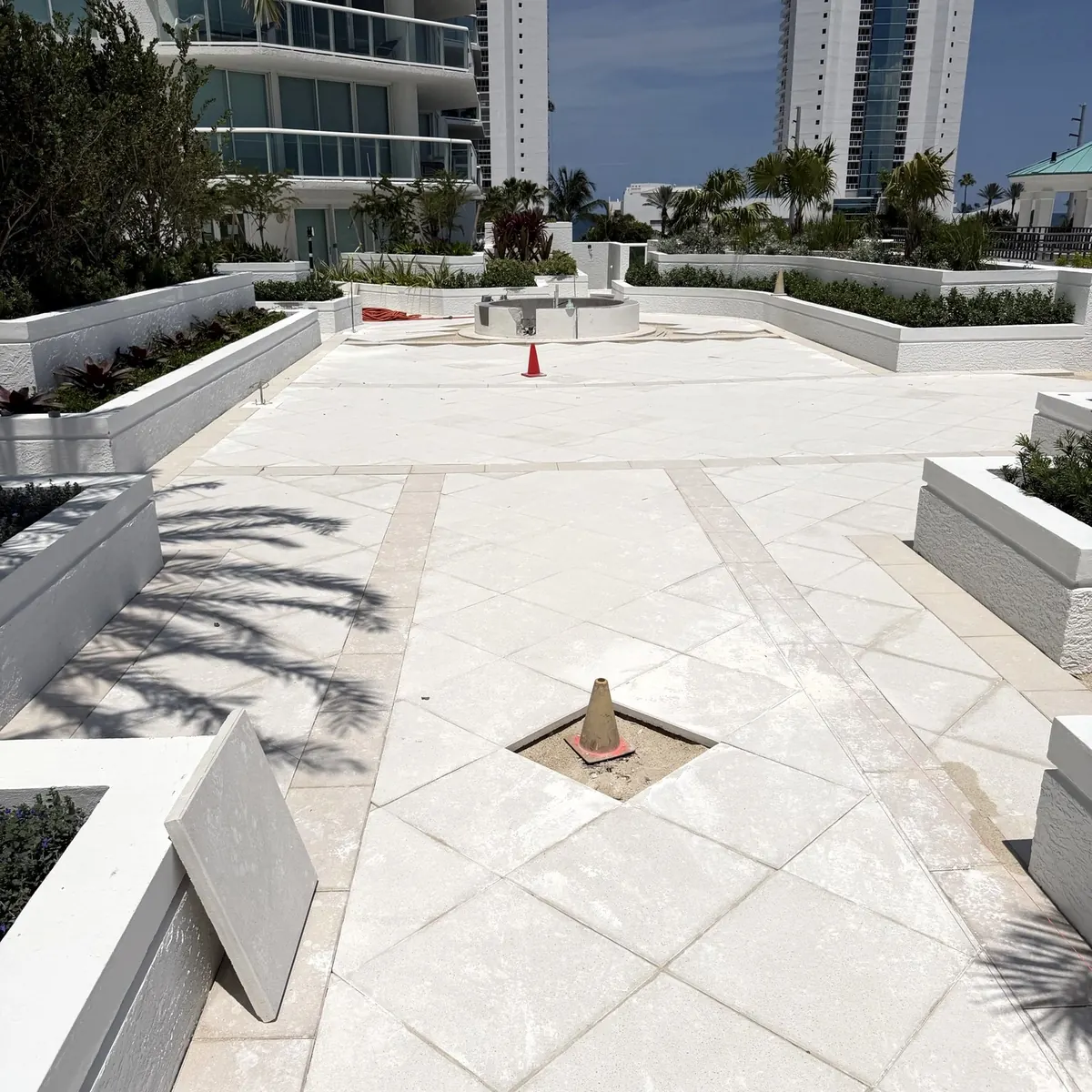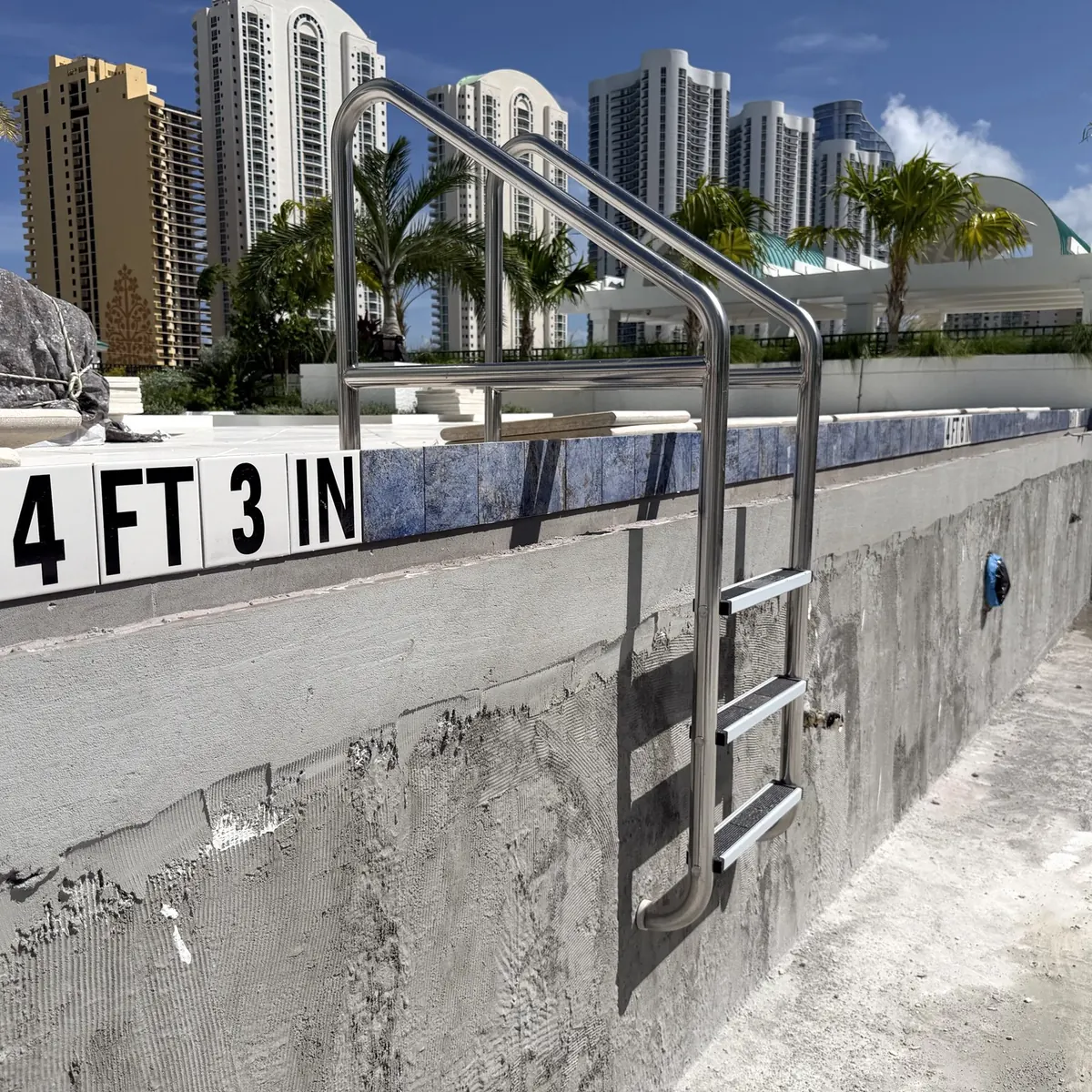
A pool deck coating does more than make the deck look fresh. On a condominium it protects the concrete from water, pool chemicals and the Florida sun, gives residents a slip-resistant surface and, on elevated decks, often serves as the waterproofing over the garage or rooms below. When the coating fails, water finds the concrete and the reinforcing steel inside it.
SERPE-CO is a Pompano Beach Certified General Contractor that repairs and recoats condominium pool decks, pools and planters. The owner's engineer or architect specifies the system and the scope. We price that scope, prepare the surface and install the coating. Below are six things boards should know before the next recoat.
1. Common pool deck coating systems
Most condo pool decks in South Florida use one of a few families of coatings. Each has strengths, and the right one depends on the deck, what sits below it and how the deck is used:
- Acrylic texture coatings. Common on decks over grade. Cool to the touch, textured for grip and easy to refresh.
- Cementitious overlays. Thin, trowel or spray-applied toppings that level and resurface worn concrete before a finish coat.
- Waterproofing membranes with a wear surface. Used on elevated decks over occupied space, where the coating must stop water as well as resist wear.
- Pavers over a membrane. Not a coating, but a common alternative. Our post on pool deck pavers explains that assembly.
2. How a pool deck coating fails
Failures tend to show up in the same ways. Watch for peeling or flaking, blisters, cracks that telegraph through the coating, color fading in heavy sun, slick worn paths and hollow-sounding areas underneath. Rust stains or bulges usually mean the problem has moved into the concrete itself, and our post on rust stains on concrete explains why that matters.
Hollow sounds are a key warning. Engineers use sounding, described in standards such as ASTM D4580, to map delaminated concrete before any recoat. Coating over delaminated concrete wastes the coating.
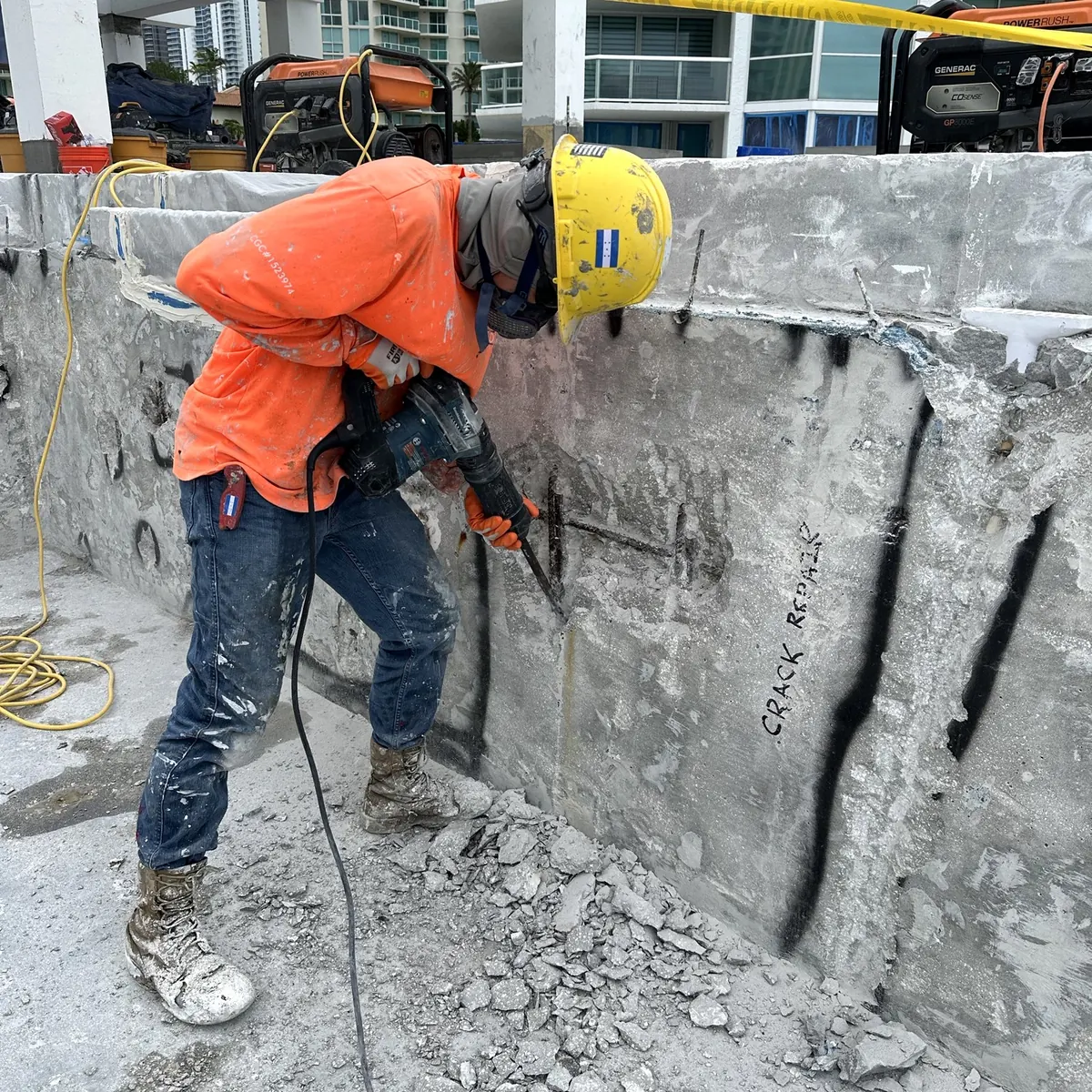
3. Surface preparation decides the result
A pool deck coating is only as strong as its bond to the concrete. Old coatings that are failing have to come off. Cracks are routed and repaired, spalls are rebuilt, and the surface is cleaned and profiled to the manufacturer's requirements. Expansion and control joints are cleaned out and resealed with the right sealant so the deck can move without cracking the coating.
Skipping preparation is the most common reason a fresh coating peels within a season or two. Specifications usually reference the coating maker's instructions and industry guidance from groups such as the International Concrete Repair Institute.
4. Elevated decks need waterproofing first
On a deck over a garage, lobby or units, the coating system must keep water out of the slab. That means the engineer's specification will call for a membrane system and careful detailing at walls, curbs, drains, railings, light poles and the pool coping. Leaks at those edges reach the slab below and start corrosion there. Our waterproofing concrete post covers membranes in more depth.
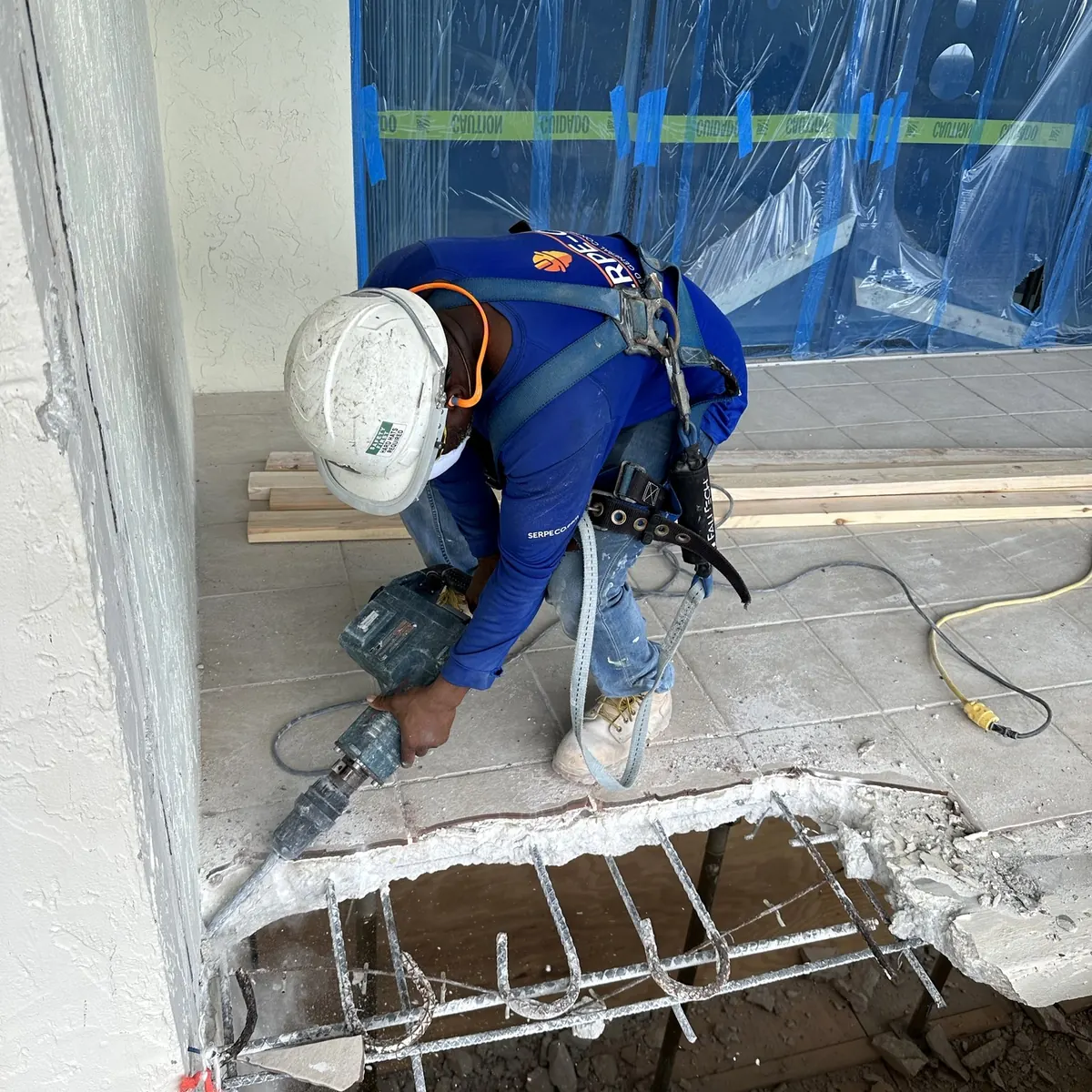
Concrete repairs come before the coating. If the engineer finds deteriorated concrete, the crew removes it, treats or replaces the reinforcing steel and rebuilds the section before any coating goes down.
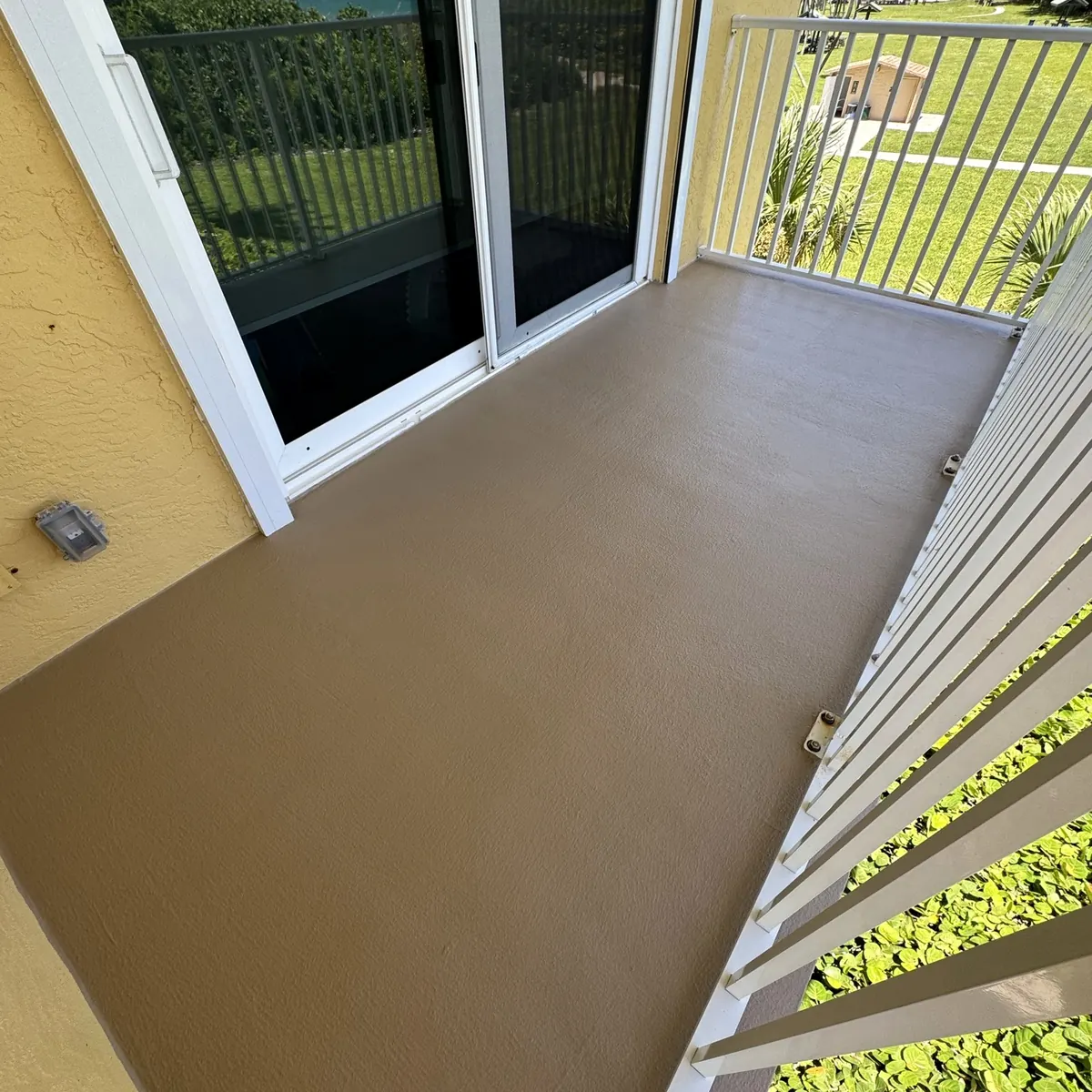
5. Slip resistance and comfort
Pool decks are wet, barefoot surfaces. A textured finish or a broadcast aggregate gives grip, and lighter colors stay cooler in the afternoon. Ask about the texture in the specification and see a sample panel on site before the full deck is coated. Residents and the board can walk on it, wet it and approve it first.
Texture affects cleaning too. Heavier textures grip better but hold more dirt. The right balance depends on how the deck is used and how often it is cleaned.
6. Recoat cycles and the reserve plan
Coatings wear out on a cycle that depends on sun, traffic, chemicals and how well drains and joints are maintained. Plan the recoat in the reserve study rather than waiting for peeling. Waterproofing is one of the components a structural integrity reserve study must cover, and our post on the structural integrity reserve study explains how that funding works.
Keeping the pool open where possible
Coating work is weather-sensitive. Rain, heavy dew and high heat all affect cure times, so schedules include weather days. Large decks can sometimes be coated in sections so part of the amenity stays open, though the pool itself may close while work near the coping is done. Announce the schedule early, and post updates when weather moves the dates.
Residents can help the new pool deck coating last. Keep furniture with protective feet, avoid dragging heavy items and report damage early. Small repairs made quickly prevent water from getting under the coating.
A short maintenance list
- Rinse the deck regularly to remove salt, sand and pool chemicals.
- Keep drains clear and check them after storms.
- Inspect sealant joints yearly and replace failed sections.
- Touch up worn traffic paths before they reach the base coat.
- Photograph the deck each year so changes are easy to spot.
How SERPE-CO can help
SERPE-CO prices and builds the engineer's pool deck scope, from concrete repairs and joints to a new pool deck coating, across Broward, Palm Beach and Miami-Dade. See our commercial pools and pool decks service and Palm Beach County pool resurfacing, then contact us or call (954) 718-3094.
CEO and co-founder of SERPE-CO, a family-owned Florida Certified General Contractor (CGC #1523974). In concrete restoration since 2005 and a contributor to the Florida Community Association Journal. This article is general information, not engineering or legal advice.