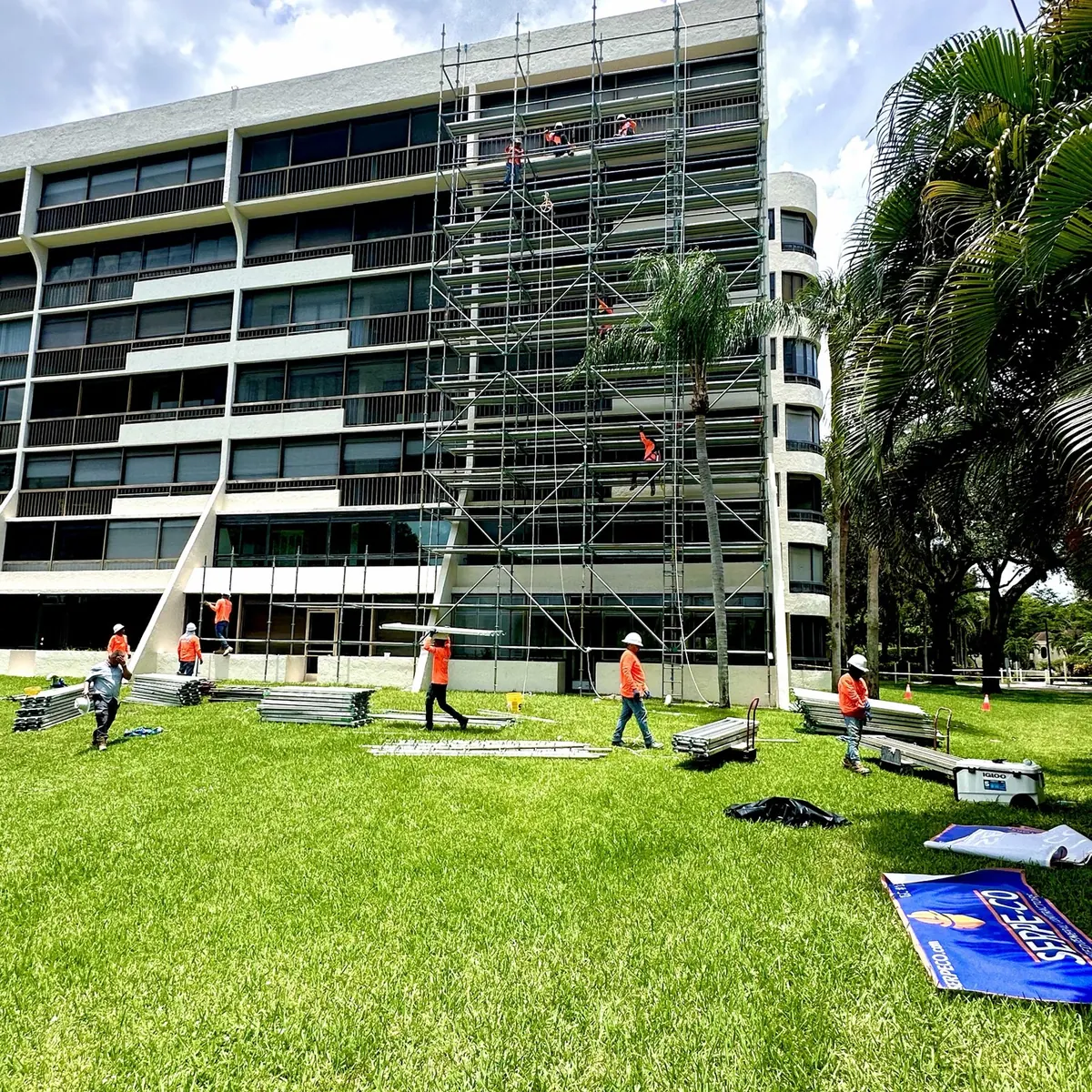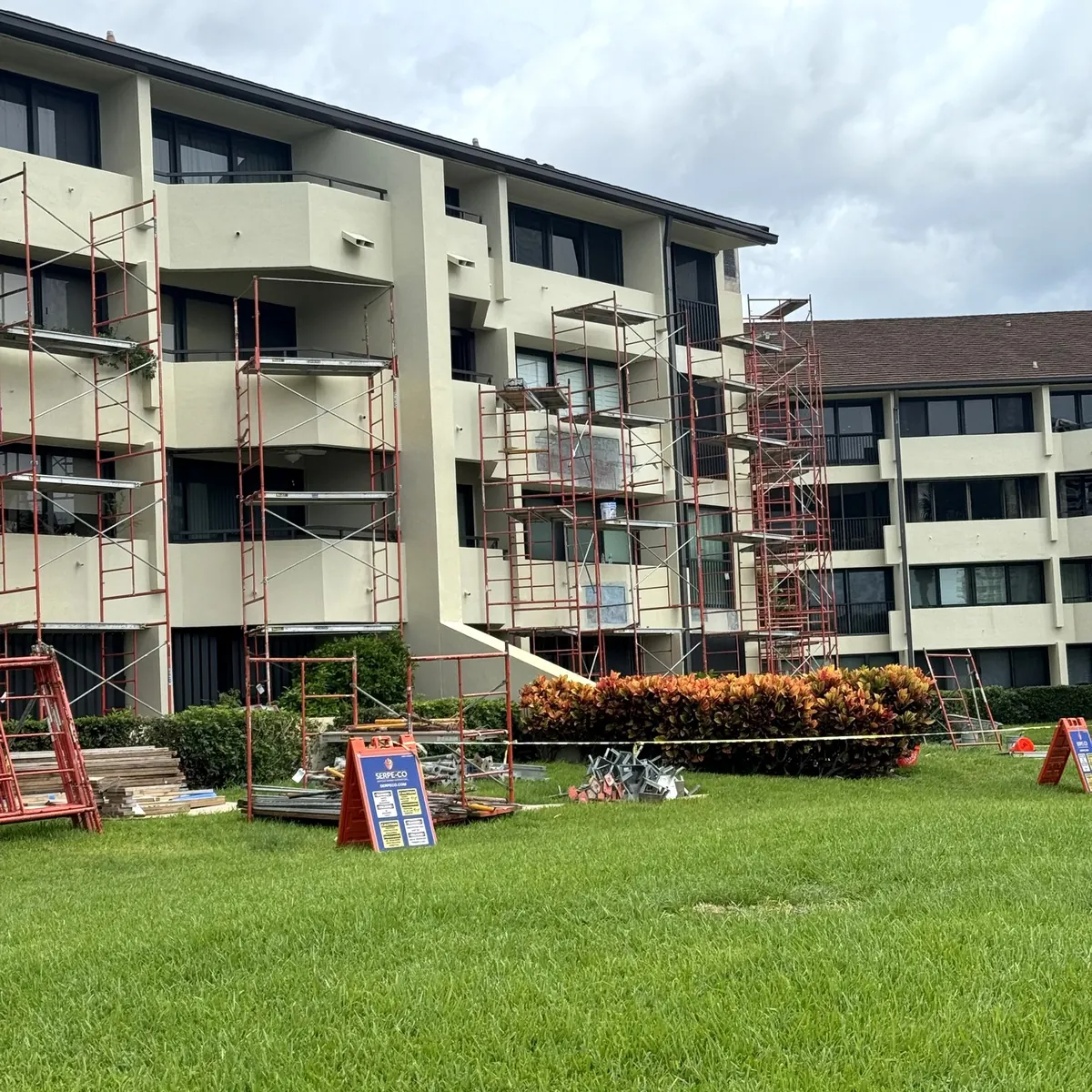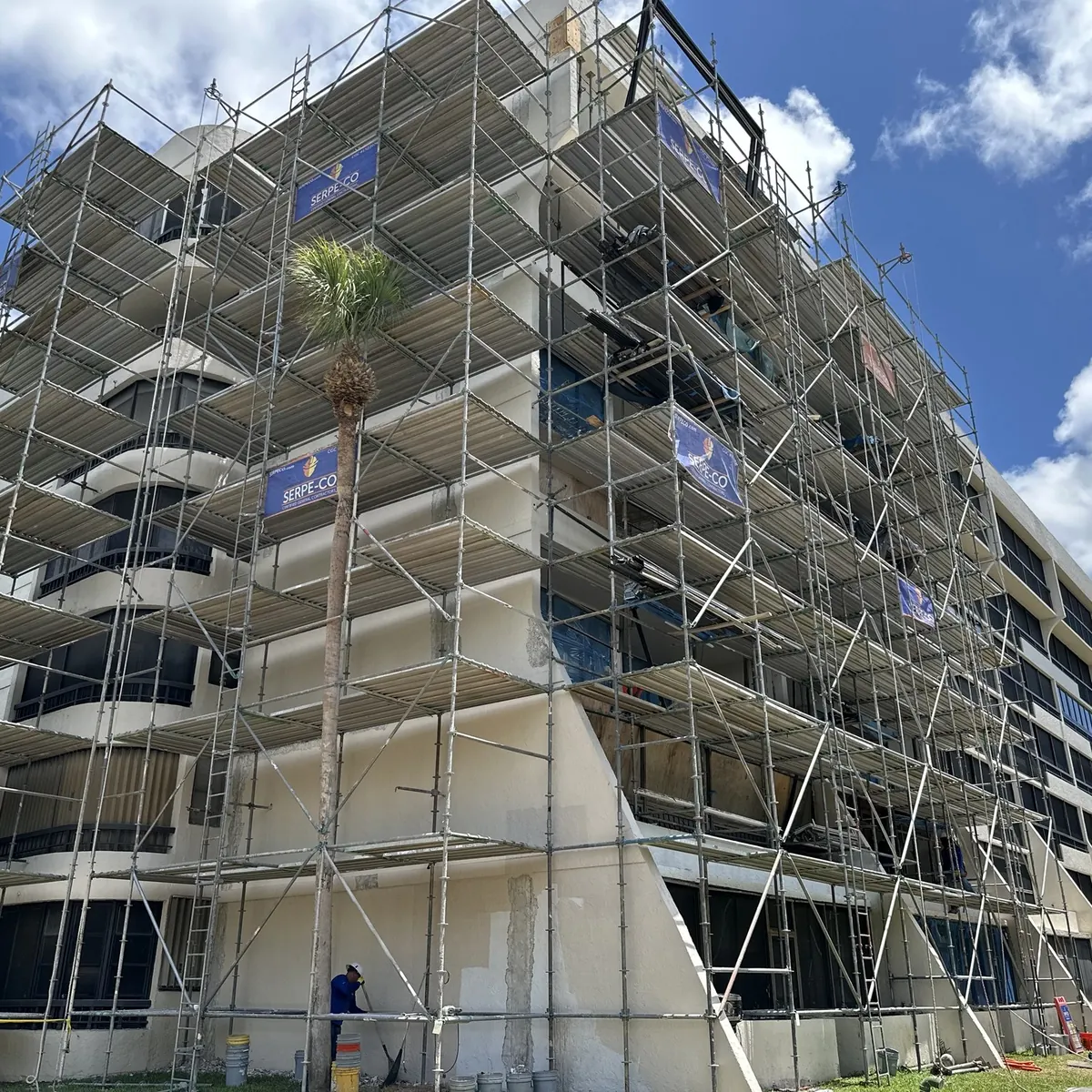
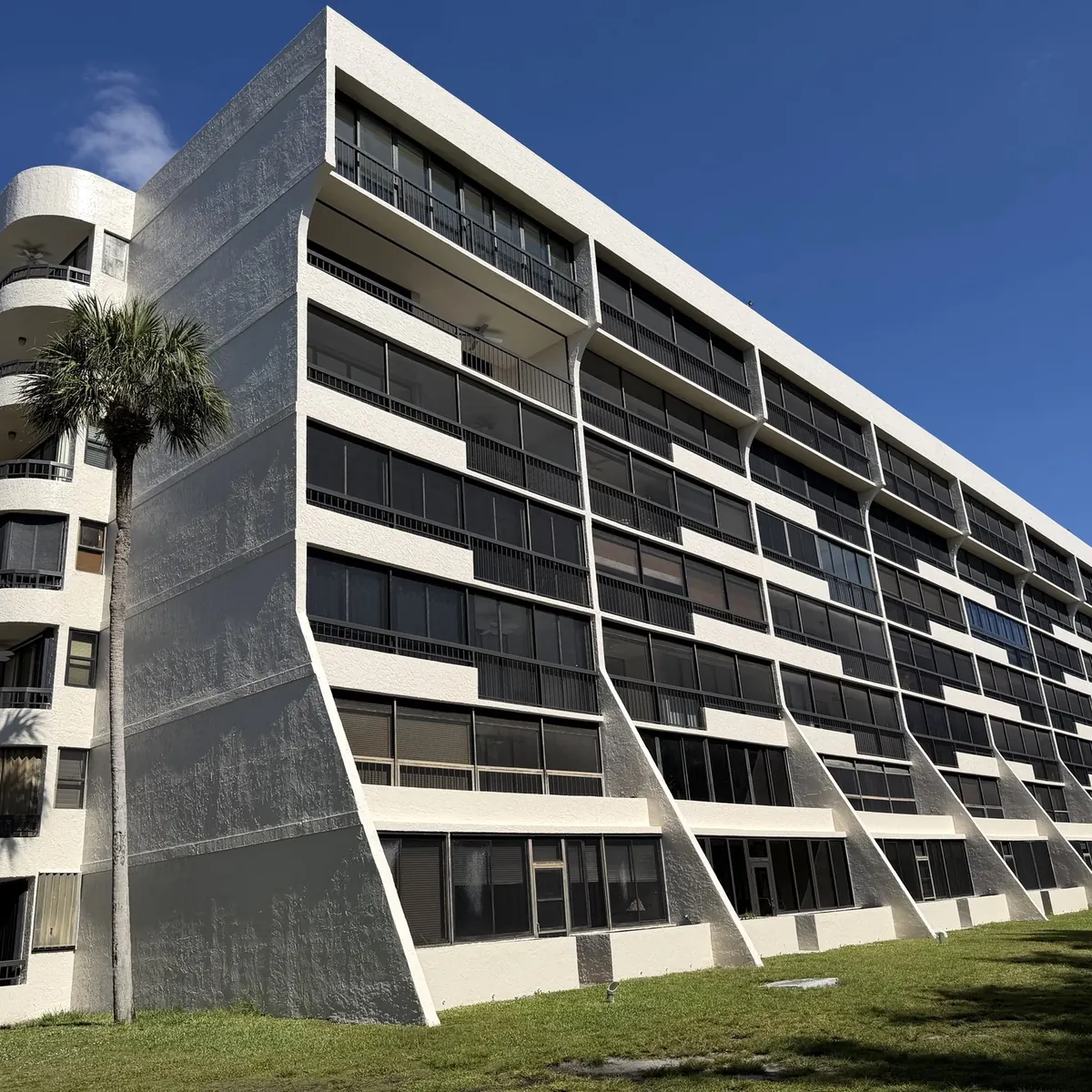
Elastomeric paint is the thick, rubbery coating found on many Florida condominiums. It stretches as the building moves and bridges hairline cracks that ordinary paint would let open. On a coastal tower facing wind-driven rain, that flexibility matters. The paint is part of the building's waterproofing, which is why we tell boards that paint is the waterproofing layer, not just the color.
SERPE-CO is a Certified General Contractor in Pompano Beach that repairs, waterproofs and paints low, mid and high-rise buildings. The owner's engineer or architect specifies the repairs and coating system. We price that scope and build it. Here are seven things boards should know.
1. What makes elastomeric paint different
Standard exterior paints form a thin, fairly rigid film. Elastomeric coatings are applied much thicker and stay flexible, so they can stretch and recover as concrete and stucco expand and contract with heat. That lets them bridge fine cracks and resist water better than a thin coat. Manufacturers publish the required film thickness, and the specification should call it out.
2. Repairs come before paint
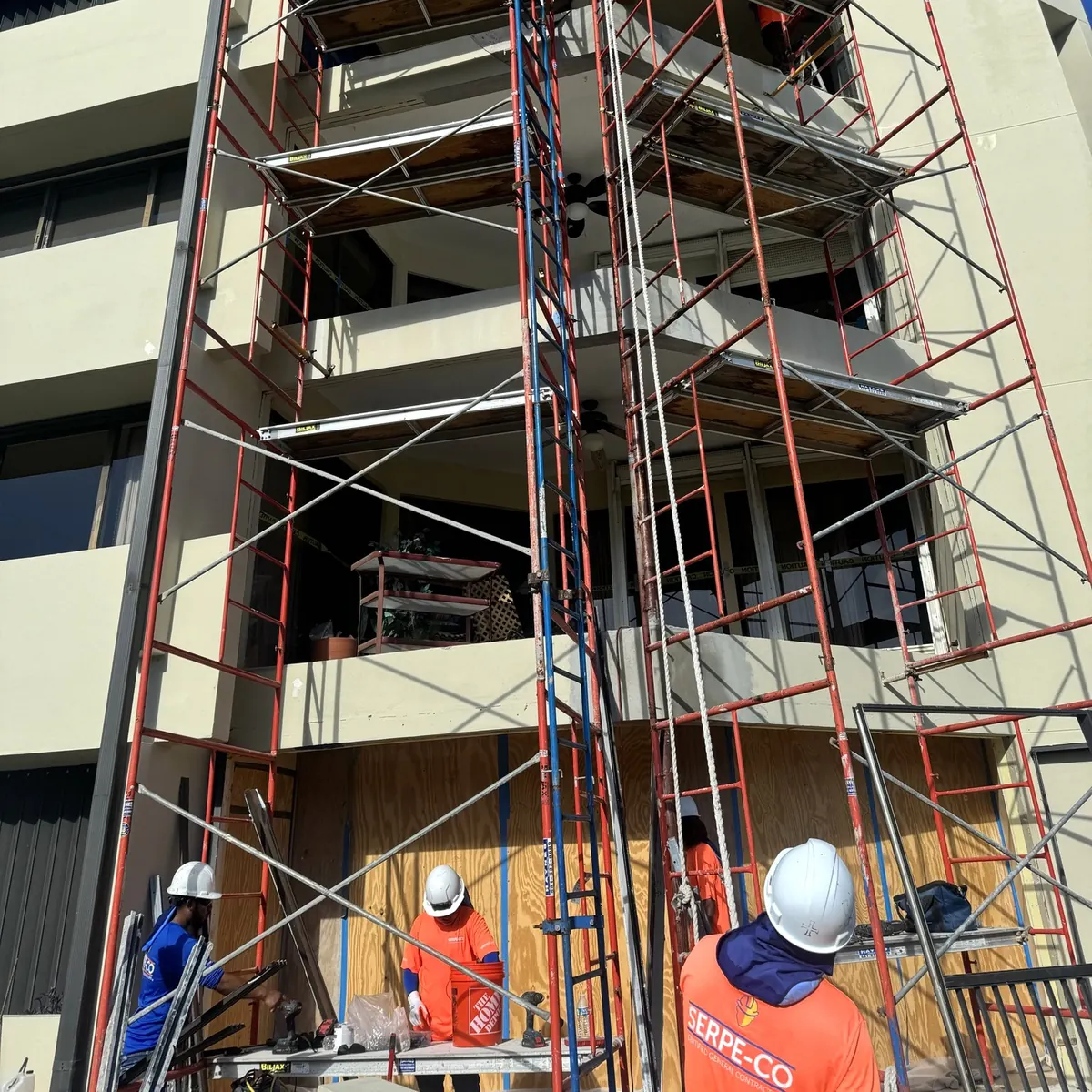
Paint cannot fix cracked stucco, spalling concrete or failed sealant joints. Those must be repaired first, or the new coating will crack, blister or stain within a season. A typical sequence is concrete and stucco repairs, crack treatment, sealant replacement at windows and joints, surface cleaning, primer and then the elastomeric paint. Our posts on stucco repair and window caulking explain those steps.
3. Elastomeric paint and trapped moisture
Thick, low-permeability coatings can trap moisture if water gets behind them. That is why surface preparation and moisture checks matter, and why the system must match the substrate. Your design professional and the coating manufacturer decide whether a fully elastomeric system or a different coating suits each wall. Blisters on an existing coating are often a sign of water behind it.
4. Color schemes without guesswork
Boards often worry about choosing colors for a large building. We prepare color overlays of the building using Benjamin Moore and Sherwin-Williams palettes so owners can see the scheme before the first coat. Lighter colors reflect more heat, and accent colors at balconies or bands can refresh a dated look without changing the whole building.
5. Repaint cycles on the coast
On the coast, plan to repaint roughly every 7 to 10 years. Sun, salt and wind-driven rain wear coatings faster than inland. Waterproofing and exterior painting are components a structural integrity reserve study must cover under Florida Statute 718.112, so the repaint should be funded on a schedule, not left until the walls look tired. Our SIRS post covers that planning.
6. Access drives the schedule
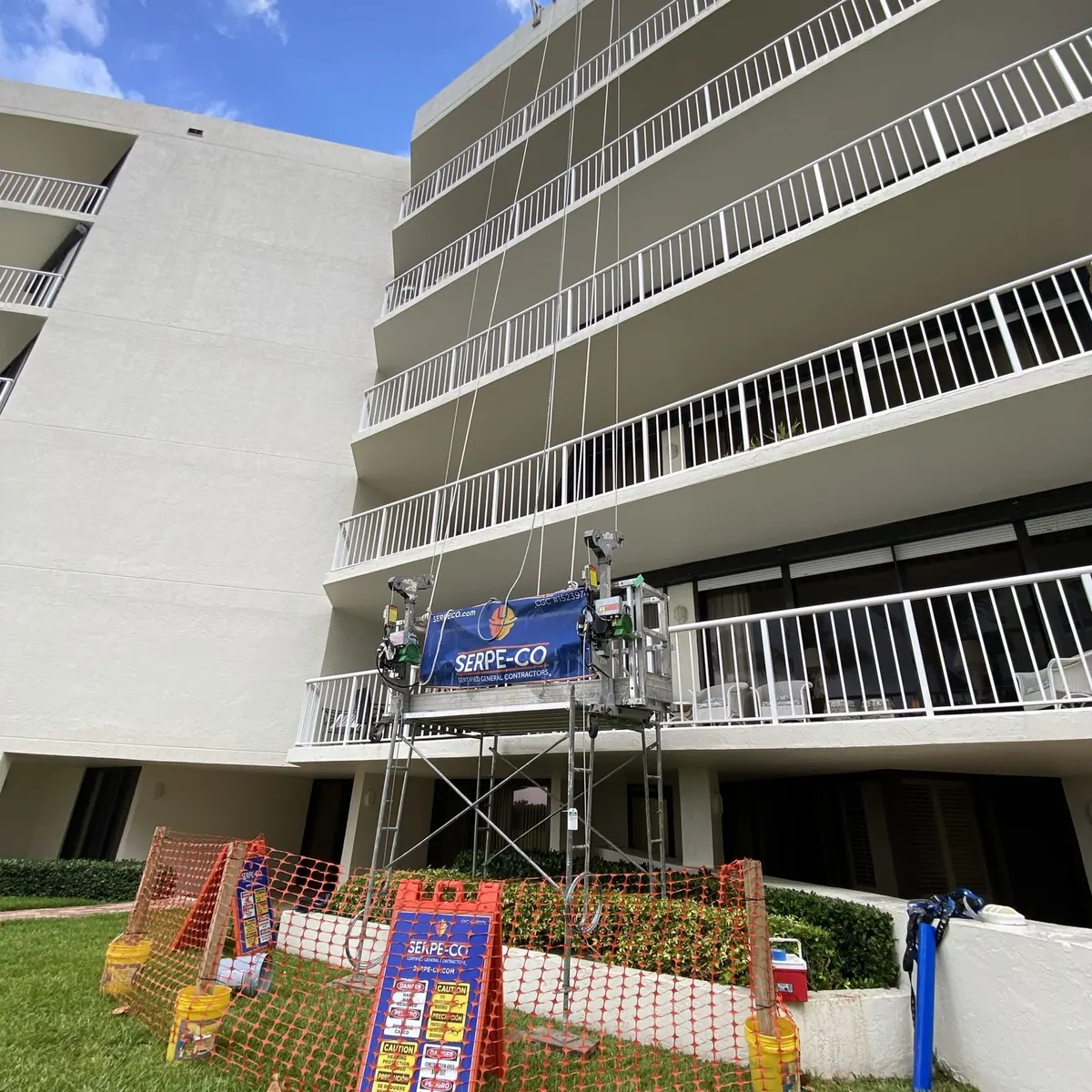
Painting a tower means working at height. Swing stages, scaffolding or lifts each suit different buildings and shapes. Many projects combine painting with concrete repairs on the same access, which saves rigging and disruption. Our swing stage post compares the options.
Residents need notice before each drop or elevation, because balconies, windows and cars below may need to be cleared or protected. A posted schedule and clear notices keep the project moving.
7. What a good painting specification includes
- Repair scope by the engineer for concrete, stucco and cracks.
- Cleaning method and surface preparation standard.
- Primer and elastomeric paint products, colors and film thickness.
- Sealant replacement at windows, doors and control joints.
- Protection of windows, railings, landscaping and cars.
- Inspection points and the manufacturer's warranty requirements.
Industry groups such as the International Concrete Repair Institute publish guidance that design professionals often reference for the repair steps that come before coating.
Signs your coating is due
Look for chalking, faded color, cracks reopening through the paint, peeling at balcony edges, blisters and rust stains. Stains running from balcony slabs or railings usually mean water has reached the steel, which turns a paint job into a concrete repair. Our rust stains post explains what those streaks mean.
Questions boards ask about the coating
Owners often ask whether a thicker coating means a longer life. Thickness matters, but only at the level the manufacturer specifies. Too thin, and the coating cannot bridge cracks. Too thick in one pass, and it may not cure properly. Applicators measure wet film thickness as they work so the finished coat matches the specification.
Boards also ask about warranties. Manufacturer warranties usually depend on approved surface preparation, approved products and documented inspections. Ask which warranty the specification requires and what records the contractor must provide at the end of the job.
Finally, owners ask whether balconies are painted too. Balcony floors usually get a different system, often a waterproof coating, while the soffits and edges are painted with the walls. Our balcony waterproofing post explains floor coatings.
How SERPE-CO can help
SERPE-CO prices and builds the engineer's repair scope and applies the specified elastomeric paint system on condos across Broward, Palm Beach and Miami-Dade. See our stucco and painting service and Broward County stucco repair and painting, then contact us or call (954) 718-3094.
CEO and co-founder of SERPE-CO, a family-owned Florida Certified General Contractor (CGC #1523974). In concrete restoration since 2005 and a contributor to the Florida Community Association Journal. This article is general information, not engineering or legal advice.