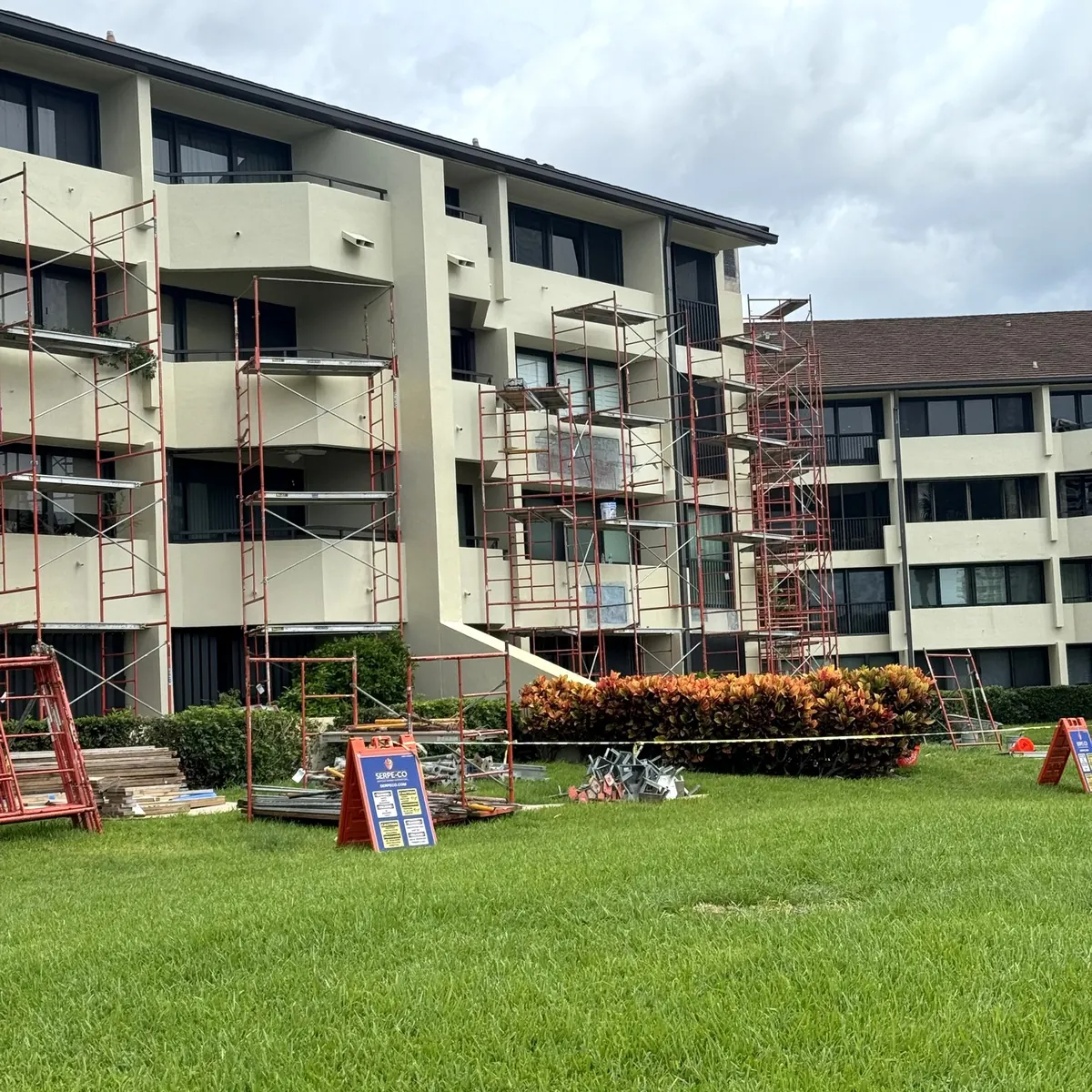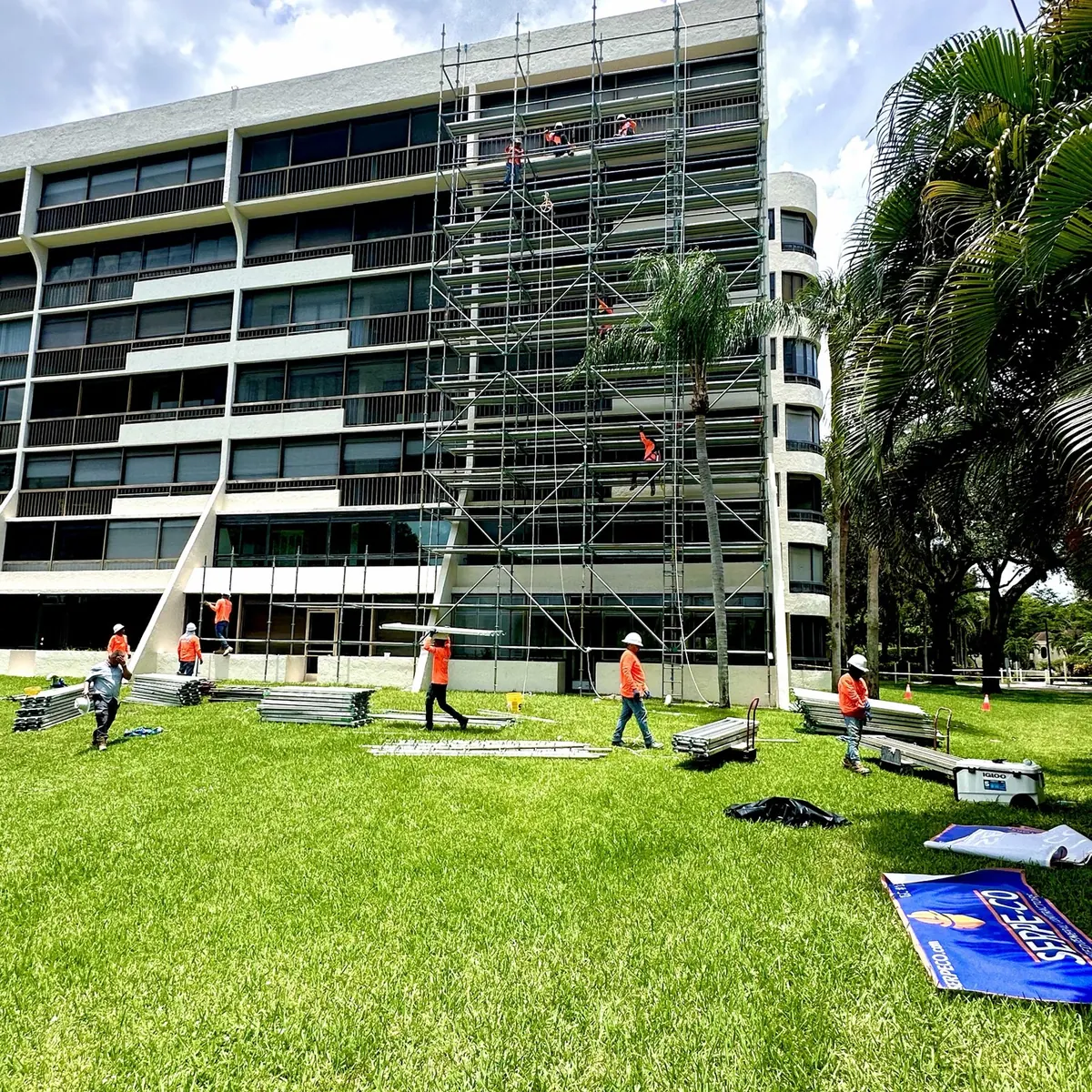
On a South Florida condominium, the stucco is more than a finish. Together with the paint over it, the stucco skin is the first line of defense between salt air, wind-driven rain and the concrete and block behind it. Stucco repair done before every repaint keeps water out of the wall, protects the structure and gives the new coating a sound surface to hold onto. This post covers what stucco damage looks like on mid and high-rise buildings, how the repair works, and how it fits into painting and waterproofing cycles.
Why stucco repair matters on coastal condos
Most mid and high-rise condominiums along the coast have a cement plaster finish over concrete or concrete block. The finish is hard and durable, but it is not flexible. Buildings move with heat, wind and settlement, and over years that movement opens cracks. Sun breaks down the paint film, and once the paint stops shedding water, rain finds every crack.
Water behind stucco causes two problems. The stucco itself can lose its bond and pull away from the wall. More seriously, water that reaches embedded steel at slab edges, columns and balconies starts the corrosion cycle that leads to spalling concrete. Brett Serpe described those early warnings, from rust stains to hollow-sounding areas, in his Florida Community Association Journal article Catch It Before the Crack. A crack that looks cosmetic today can be the entry point for a structural repair later.
Common signs your building needs stucco repair
Board members and managers can spot many problems from the ground or a balcony. Watch for:
- Hairline and map cracking across wall panels, often fine and spread in a web pattern.
- Larger cracks at window and door corners, floor lines and where different materials meet.
- Hollow or drummy areas that sound different when tapped, a sign the stucco has delaminated from the wall.
- Bulges, blisters and loose pieces, especially below balconies and around railings.
- Rust stains or streaks running down from cracks, which can point to corroding steel inside.
- Chalking, peeling or faded paint that no longer sheds water.
- Water stains inside units near windows or exterior walls after storms.
Rust is the sign to take most seriously. Our post on rust stains on concrete explains what they can mean and why a licensed engineer should evaluate them. When stucco cracks follow the line of a slab edge or column, the problem may be in the concrete, not the finish, and the stucco repair has to wait until the concrete underneath is repaired.
How stucco repair works on a mid or high-rise
Every building is different, and the scope should follow what the engineer, architect or coating manufacturer specifies for your walls. The general sequence on most condo exteriors looks like this:
- Map the elevations. Each drop or bay is sounded and cracks and hollow areas are marked, so repair quantities are recorded against the scope before removal starts.
- Remove loose and delaminated stucco. Damaged material is cut back to sound, well-bonded stucco or to the substrate.
- Repair the substrate. Any concrete damage found behind the stucco is repaired first, to the engineer's details, before new plaster goes on.
- Treat cracks. Cracks are routed and filled or bridged with materials suited to their size and whether they still move.
- Apply new stucco. Patches are built up in coats and textured to blend with the surrounding wall.
- Cure, prime and coat. New stucco is allowed to cure for the time the coating manufacturer requires before primer and finish coats go on.
For cement plaster work, the industry reference most specifications point to is ASTM C926, the standard specification for application of portland cement-based plaster. Your design professional will set the details for your building, and the crew builds to them.
Repair before repaint, every time
Paint is the waterproofing layer on a stucco building, and on the coast it typically needs renewing roughly every 7 to 10 years. A new coat over cracked or hollow stucco looks good for a season, but the cracks telegraph back through and the loose areas keep failing underneath. The board pays for access twice: once to paint, and again to fix what the paint covered.
Doing the stucco repair in the same mobilization as the repaint is the efficient order. The scaffolding or swing stages are already up, the crew is already sounding walls, and the new coating goes over a sound surface. Color overlays with Benjamin Moore and Sherwin-Williams let the board see the finished scheme on a photo of the building before the first coat is rolled.
The same cycle connects to reserves. Florida Statute 718.112(2)(g) lists waterproofing and exterior painting among the items a condominium's structural integrity reserve study must cover. A planned stucco and paint cycle is easier to reserve for than an emergency, and our post on special assessment planning for condo boards covers how boards fund larger repair projects.
Waterproofing details that go with stucco repair
Stucco and paint protect the flat wall. Most leaks start at the edges and openings, so a sound stucco repair program also addresses:
- Window and door perimeters, where failed sealant lets water in behind the frame.
- Expansion and control joints, which need flexible sealant to handle building movement.
- Balcony slab edges and railing posts, where water collects and reaches steel.
- Penetrations such as light fixtures, vents and conduits.
- Roof parapets and copings, where water can enter at the top of the wall.
These details belong in the same scope as the wall work. Our waterproofing services page covers sealants, coatings and membranes for condominium buildings.
Swing stages or scaffolding
Access is one of the biggest planning decisions on a mid or high-rise exterior, and the right answer depends on the building and the scope.
Swing stages
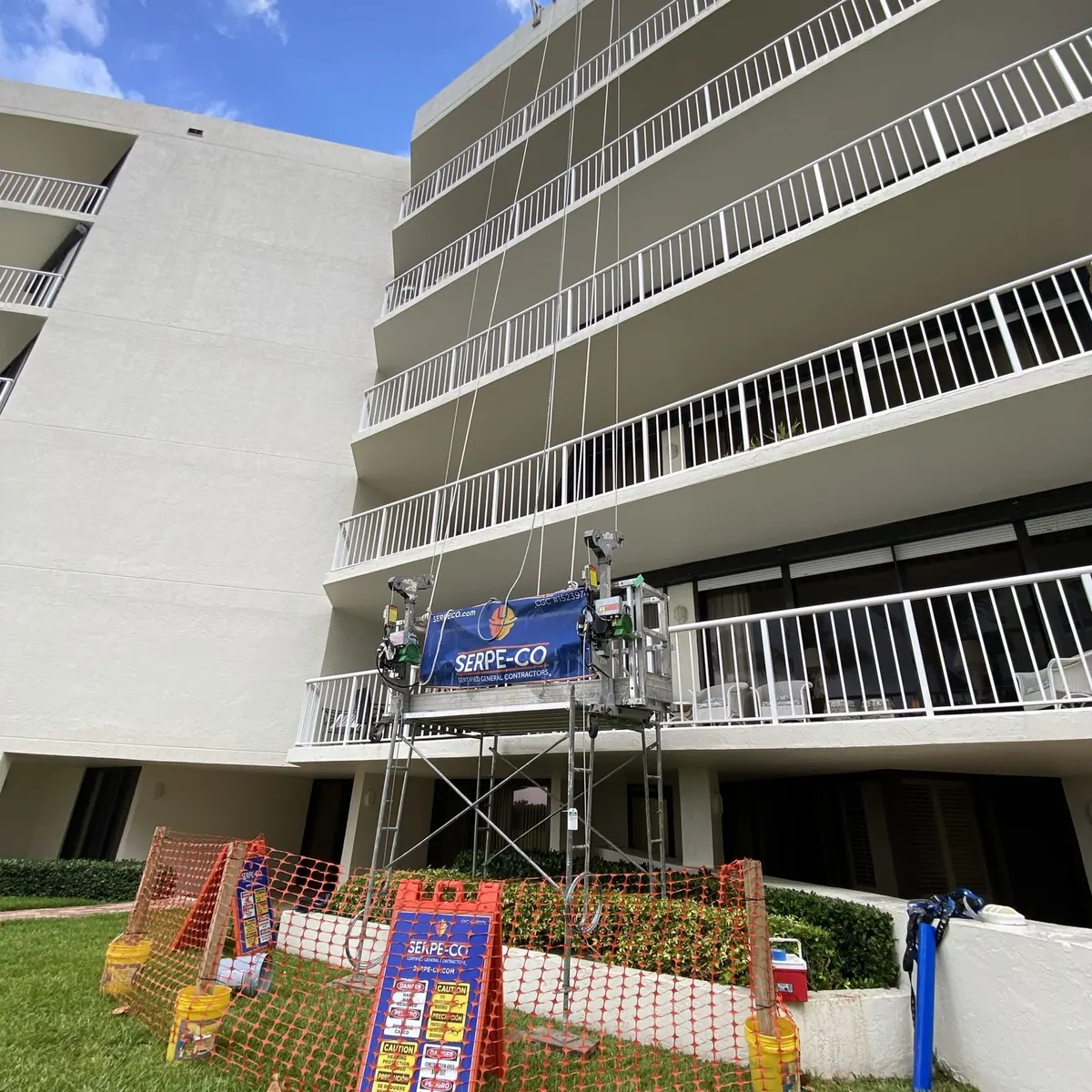
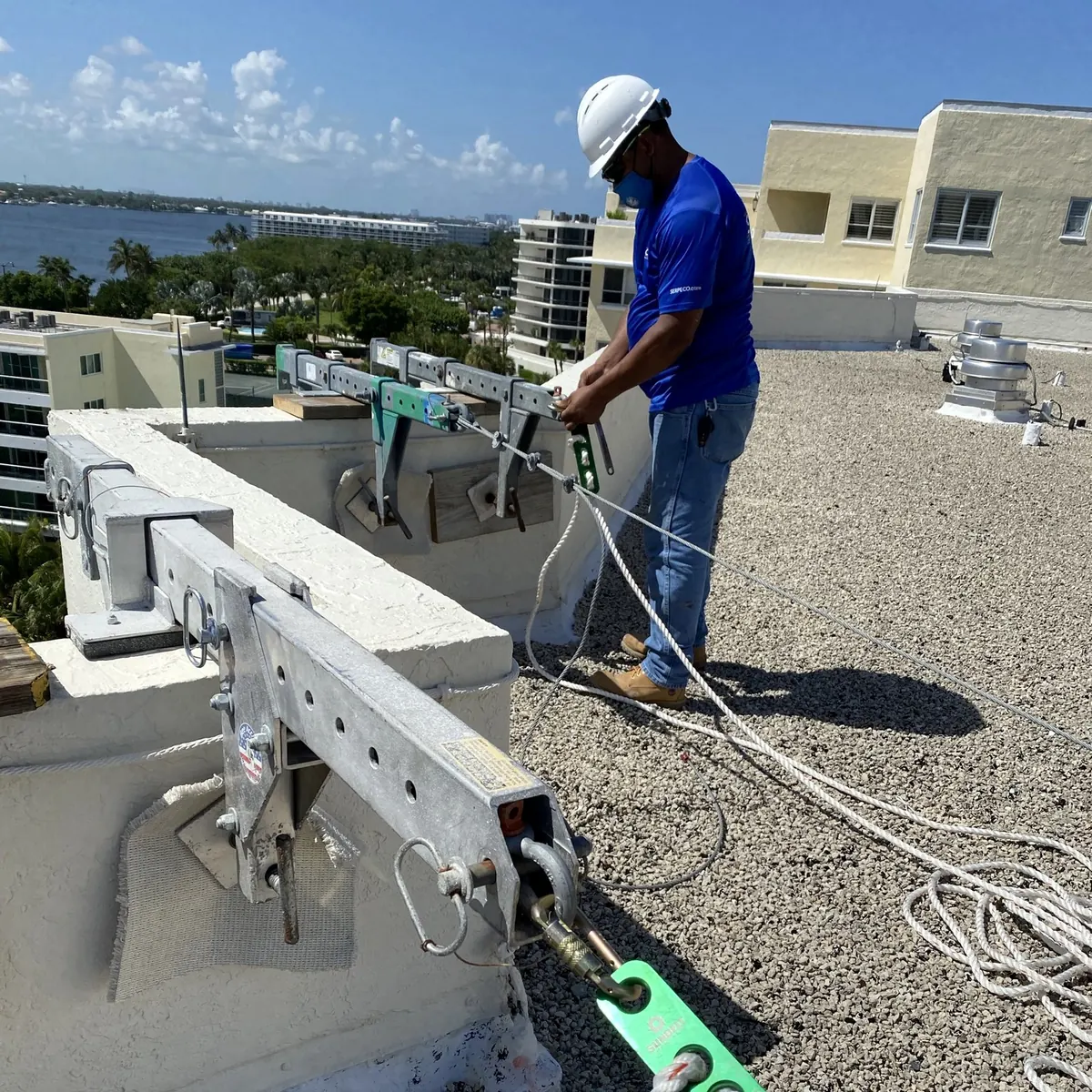
Swing stages are platforms suspended from roof rigging that move up and down a single drop of the building. They suit tall towers with long, regular elevations where the work is spread across the face. Condominiums such as the 2770 Building had column and balcony repairs carried out from swing stages rigged on the oceanfront roof. Stages leave the ground and balconies below mostly clear, which helps residents.
Frame scaffolding
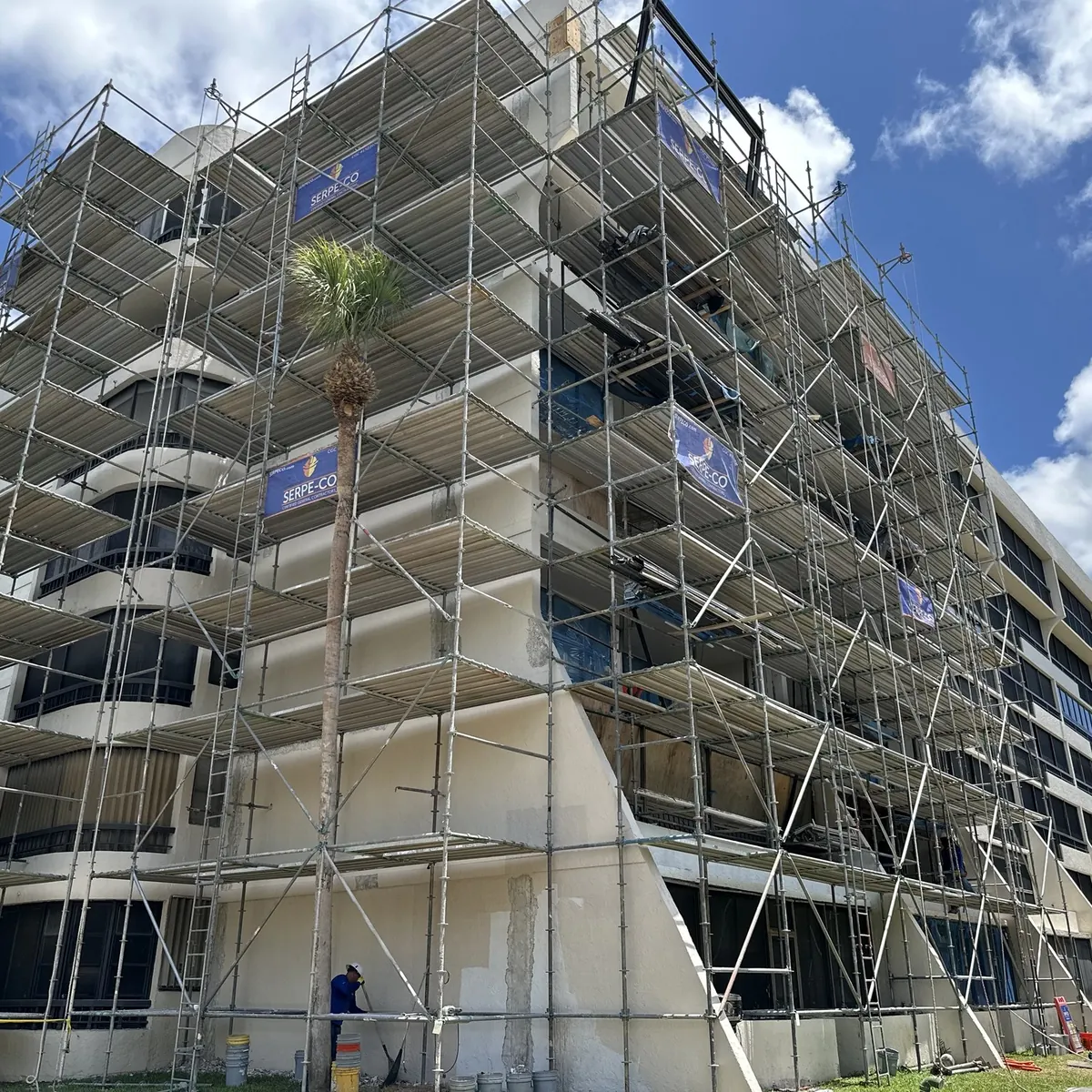
Frame scaffolding is built up from the ground and gives crews a stable, continuous work surface. It suits mid-rise buildings, heavy concrete work, slab replacement and elevations with many balconies or offsets. At condominiums such as The Glens, full scaffolding on the elevation supported balcony slab replacement work.
Many projects use both: stages for the tall flat faces and scaffolding where concrete repairs are heavier. Either way, the work zone below is fenced and signed, because safety is of the utmost importance on an occupied building.
What residents should expect during exterior work
Exterior projects happen around people's homes, so communication matters as much as the crew schedule. Residents usually need to clear balconies of furniture, plants and grills before their stack is worked. Windows and sliding doors on the active elevation are covered or protected while stucco is cut out, patched and coated, and noise from grinding and chipping is part of the early phase on each drop.
Good projects keep residents informed with a posted schedule by elevation, notice before a stage or scaffold reaches their floor, and a single contact for questions. Pool decks, entrances and parking near the work zone may close in sections while overhead work is under way. Managers who share that plan early tend to field far fewer complaints once the stages are moving.
Phasing the stucco repair by elevation also lets the board see finished results on one side of the building before the crew moves on, which makes color and texture decisions easier to confirm with owners.
Planning a stucco repair project with your board
A few steps help the project run smoothly from bid to final coat:
- Have the engineer or architect review cracks and rust staining so structural items are separated from finish repairs.
- Ask bidders to price stucco repair by a clear unit or allowance and to explain how quantities will be verified once walls are sounded.
- Coordinate the work with any milestone inspection repairs so the building is only rigged once. Our milestone inspection guide explains the deadlines.
- Give residents notice before each drop or elevation, since access to balconies and windows will be limited while crews are outside.
How SERPE-CO can help
SERPE-CO is a family-owned Florida Certified General Contractor (CGC #1523974) in Pompano Beach with more than 20 years in the field, and our first company started in paint restoration. We handle stucco repair and painting on low, mid and high-rise buildings, working closely with your association and engineer, from Miami-Dade to Palm Beach County. To plan your next exterior cycle, contact our team or call (954) 718-3094.

CEO and co-founder of SERPE-CO, a family-owned Florida Certified General Contractor (CGC #1523974). In concrete restoration since 2005 and a contributor to the Florida Community Association Journal. This article is general information, not engineering or legal advice.