Palm Beach County, Florida
Commercial Waterproofing in Palm Beach County
Track down where water enters, then seal the envelope so the building stays dry.
In short
Who handles commercial waterproofing in Palm Beach?
SERPE-CO provides commercial waterproofing in Palm Beach County to associations, hotels, clubs and commercial owners as a building envelope contractor. The first step is tracking down where water gets in. Then our crews install what stops it: deck coatings, membranes beneath pavers and planters, new sealants and expansion joints, and below-grade systems, tied in with any concrete repair the leak has made necessary.
Free milestone planner
Is a milestone inspection coming due on your building?
Enter the year your building got its certificate of occupancy and how many stories it has. The planner estimates your deadline under Florida law, then you can send it to SERPE-CO for a second look.
Add the year and story count for an estimated due date.
Want a second look at your timeline? Send your building details and SERPE-CO will follow up about the inspection, likely repairs and how to plan for them.
About this estimate
This is a planning estimate drawn from the statewide rule in Florida Statute 553.899. Your local building department sets the real deadline and may call for the first inspection at 25 years instead. Broward County also has its own Building Safety Inspection Program. Check your date with your building official and engineer, or contact SERPE-CO and we will help you sort it out.
Waterproofing · Palm Beach
Commercial waterproofing in Palm Beach County has to stop rain, salt spray and groundwater on condominiums, hotels and commercial buildings. SERPE-CO tracks each leak to its source, then installs the right system: traffic and walking deck coatings, membranes under pavers and planters, new sealants and expansion joints, sealing around window and door frames, and below-grade work.
Diagnosis comes before any repair. Water seldom appears where it gets in. A leak travels along a slab, a beam or a wall cavity until it finds a way out. We trace the route by surveying, taking moisture readings and running controlled water tests before recommending anything. A good diagnosis often shrinks the job to one joint, threshold or piece of membrane rather than a whole side of the building.
Reviewed by Brett Serpe, MBA, GC, CEO of SERPE-CO · Florida Certified General Contractor CGC #1523974
Prepared by the SERPE-CO project team, with more than 20 years in concrete restoration. Last reviewed November 2026.
Local conditions
Where water gets into buildings here
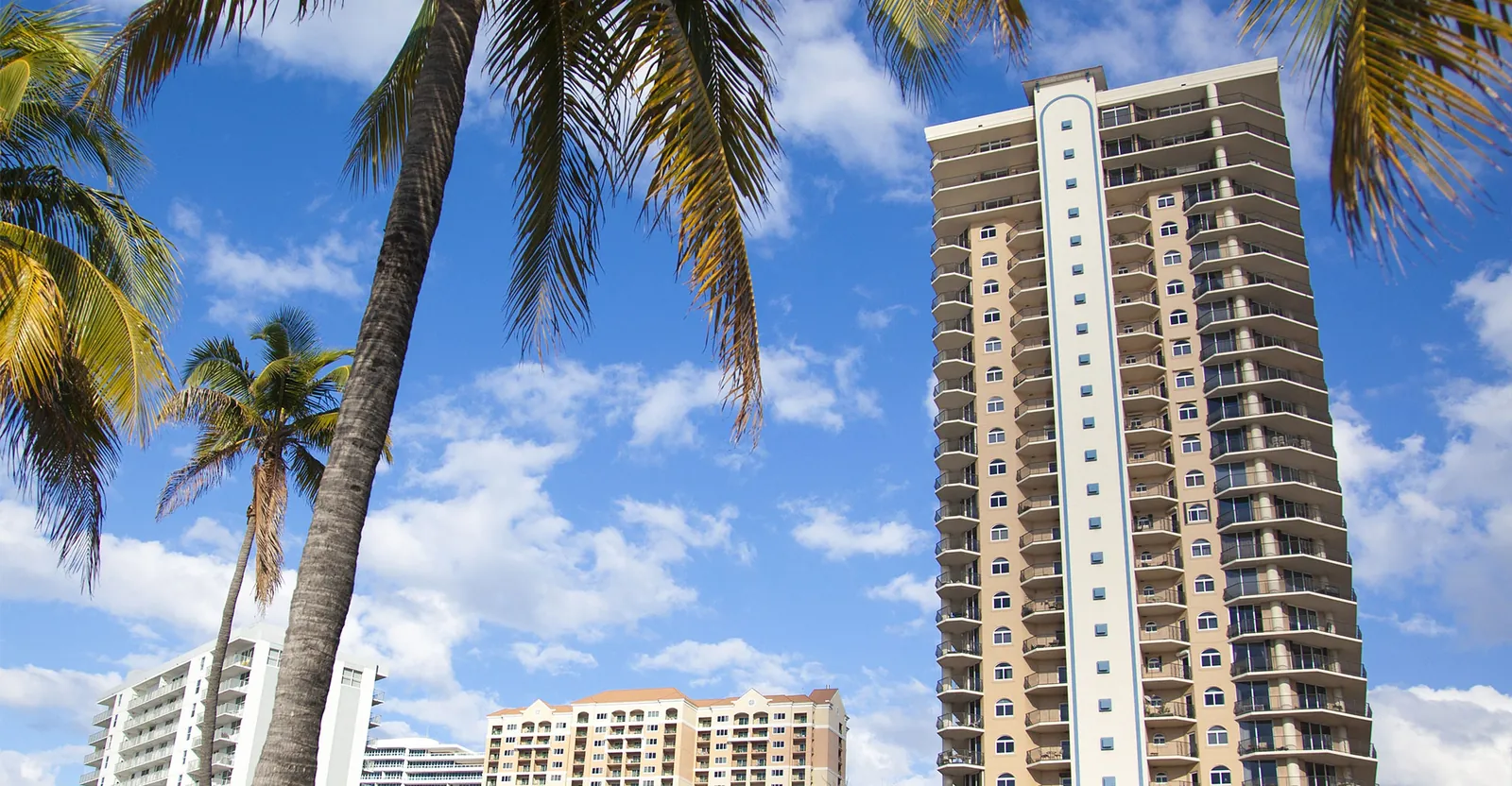
Between Jupiter and Boca Raton, oceanfront buildings face an onshore wind most of the year. Rain hits the east side at an angle, and it gets in at sliding door sills, window frames, the joint where a balcony meets the wall and cracks in the stucco. On Singer Island, in North Palm Beach and elsewhere along the Intracoastal and the Lake Worth Lagoon, buildings also take weather from the west when summer storms roll off the mainland.
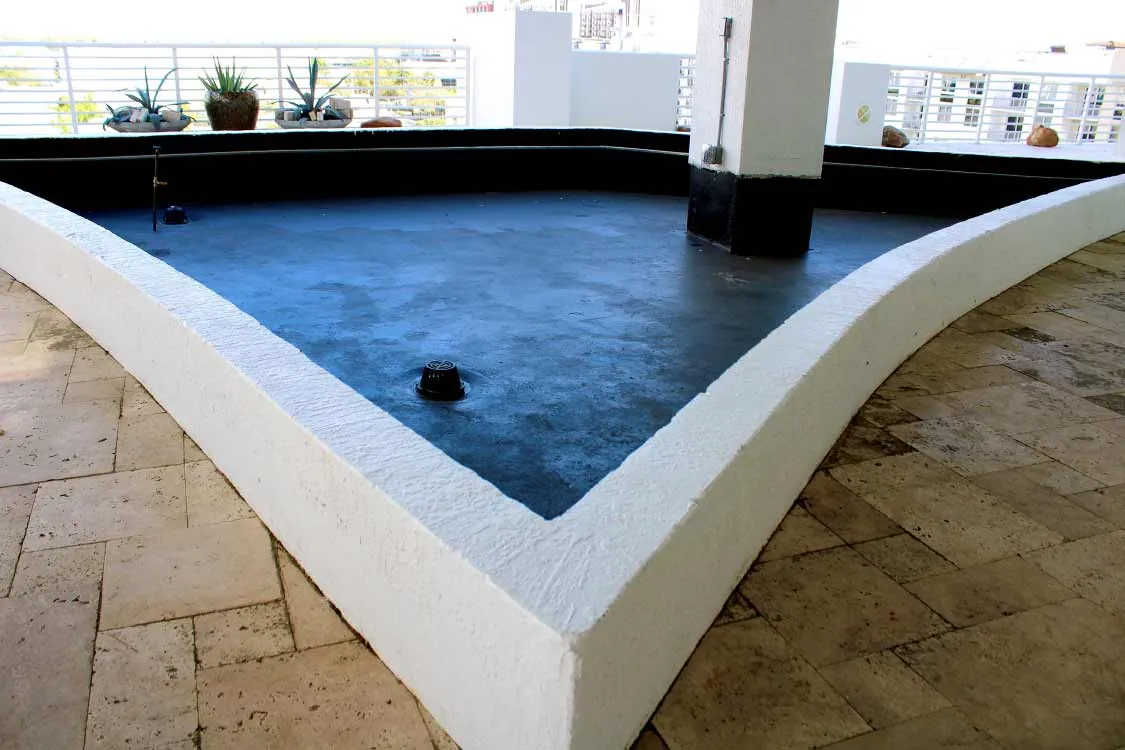
Amenity decks cause the rest. Condominiums, clubs and hotels in Boca Raton, Palm Beach Gardens and Palm Beach often have pools, terraces and planted plazas built over a garage or living space. The membrane sits under pavers, stone and soil, and irrigation keeps it wet. Once it wears out, water shows up in the rooms below, and fixing it means lifting everything on top, planters included.
Buildings that need this work
Buildings and spots where leaks are most often reported
Office and residential buildings on Flagler Drive in West Palm Beach look straight across open water at the Lake Worth Lagoon. Leaks there usually show at the edges of curtain wall and storefront, at expansion joints where the tower meets the podium, and at terraces built over shops or parking. Along A1A in Delray Beach, Highland Beach and Boca Raton, water most often gets in at rooftop elevator penthouses and mechanical rooms, at parapet caps and at the joint between a balcony slab and the wall of the unit underneath.
Close to the water, the spaces below grade cause the most worry. On the barrier island and beside the Intracoastal, basement parking, electrical vaults and elevator pits are close to the water table, and seepage at wall joints and slab penetrations gets worse with high tides and hard rain. Warehouses and marine buildings by the Riviera Beach port tend to leak where roof meets wall and at dock doors. In Palm Beach and Palm Beach Gardens, hotels and clubs have kitchens, spas and locker rooms above occupied floors.
The work
Commercial waterproofing in Palm Beach County: what the job covers
- 01Water testing to trace leaks
- 02Sheet and liquid-applied membrane systems
- 03Pool deck, plaza and balcony waterproofing
- 04Below-grade and planter waterproofing
- 05New sealants and expansion joints
- 06Door and window perimeter sealant
Our approach
Finding the leak with the property open
We test in steps from the bottom up, so each possible entry point is either proven or eliminated. Photos of every result go to the board or owner, so the reason for each repair is clear. When a membrane is buried, a small test opening tells us its condition before anyone plans a bigger tear-out.
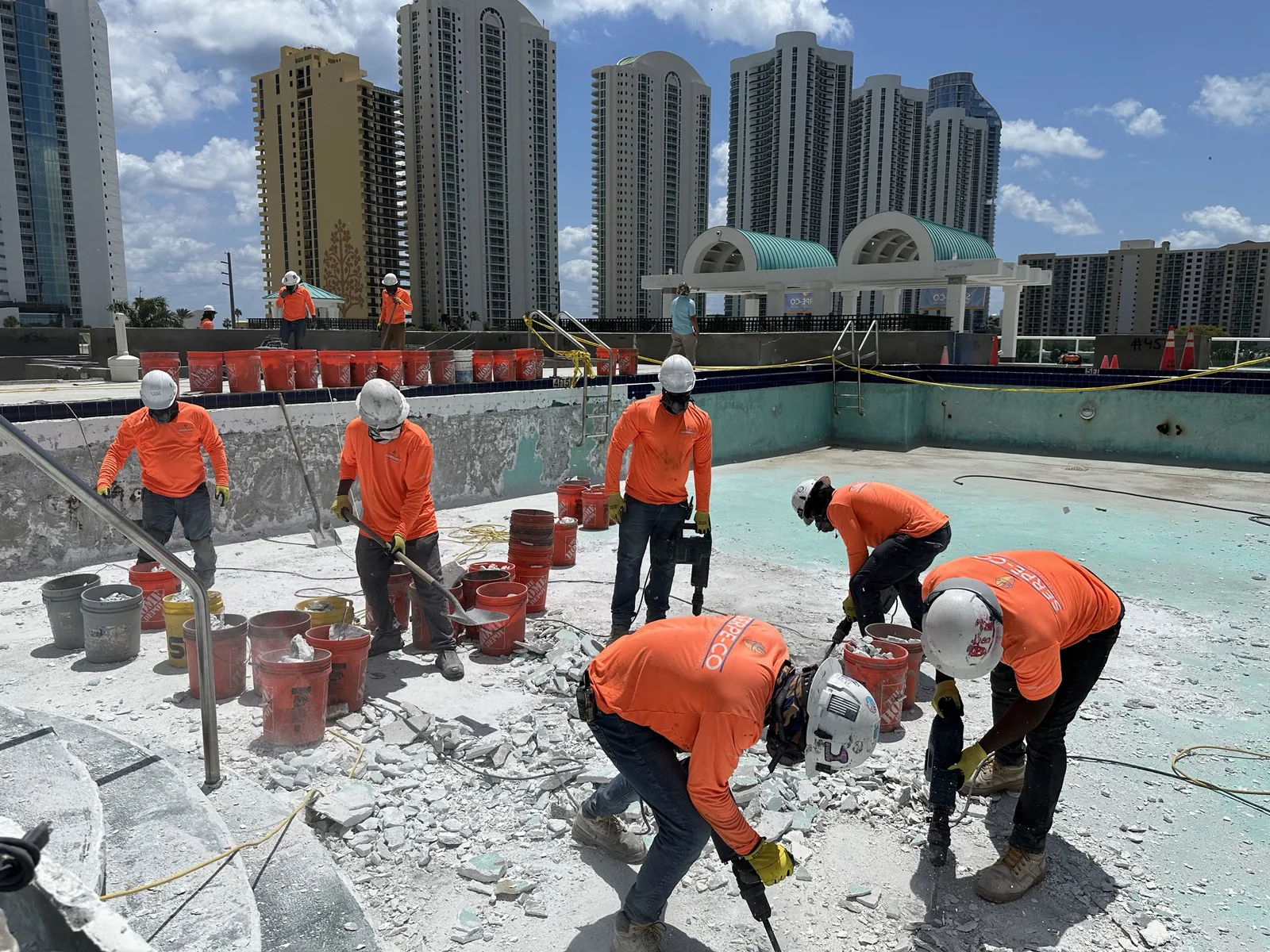
Our schedule is built to keep disruption low. Facade sealant is replaced one drop at a time from a lift or swing stage. Plaza and terrace work is split up so part of the amenity stays usable, and sound pavers and finishes are saved and reset. At clubs and hotels we plan around events and the winter season, so deck work generally happens in summer and early fall.
SERPE-CO brings more than 20 years in the field to every job. Read about our full waterproofing service or browse all our work in Palm Beach County.
Planning ahead
Planning leak repairs around reports, permits and summer rain
Start by sorting maintenance from capital work. Managers can often plan sealant replacement, deck recoating and spot leak repairs from a survey the contractor provides. An engineer or building envelope consultant should write the specification for plaza membranes, below-grade systems and anything tied to structural repair, and the building department decides if a permit is required. For condominiums with three or more habitable stories, the structural integrity reserve study must cover waterproofing, so its replacement should sit in the reserve schedule.
The timing is awkward for owners. Most leaks show up in the wet months, roughly mid-May through mid-October, which is also the worst stretch for putting down membranes and sealants that need a dry surface. A sensible approach is to investigate and water test in summer while water is still coming in, patch it temporarily, then install the permanent system once the weather dries out. Those months overlap the winter season, so the manager sorts out resident notices, amenity closures and any limits the association puts on work hours ahead of time.
How we run a job
Site walk first, closed permit last.
- 01
Meet on site
Each job starts on site, walking the property and its conditions with your manager, board or engineer.
- 02
Follow the engineer's scope
The engineer writes the scope. We price it line by line, plan access and lay out each phase to build it.
- 03
Put safety first
We can never work too safely: shoring, swing stages, barricades and notices go up first.
- 04
Build the repairs
Crews work through the repairs in order, stopping for inspections wherever the engineer calls for them.
- 05
Finish and document
Final inspections, a closed permit and a full record of the work for the association.
Cities served
Waterproofing throughout Palm Beach County
Summary
What Palm Beach boards and owners should remember
- 01
Lagoon-facing buildings on Flagler Drive in West Palm Beach often leak at storefront edges and at the joint where tower meets podium.
- 02
On the Palm Beach County barrier island, basements, vaults and elevator pits sit near the water table, and seepage rises with high tides and heavy rain.
- 03
Palm Beach County condominiums with three or more habitable stories must include waterproofing when they do their structural integrity reserve study.
- 04
In Palm Beach County, investigate leaks during the summer rainy season and install the permanent repair in the drier months after.
Questions
Waterproofing in Palm Beach: questions we hear
What makes sliding door sills leak at oceanfront condos in Palm Beach County?
Wind drives rain up the track and over it, salt and dirt plug the weep holes, and the seal where the frame meets the balcony slab wears out. When the balcony also pitches toward the door, water sits right at the sill. A lasting repair corrects the slope, the membrane connection and the perimeter sealant at the same time.
How long before a Boca Raton or Delray Beach building needs new joint sealant?
Sealant life depends on the product, the joint design and the exposure. Sun and movement wear it out fastest on south and west sides. Once sealant is hard, cracked, split through the center or loose along one edge, water gets past it, and it should be cut out and replaced.
Can a Palm Beach terrace over occupied space be waterproofed in stages?
Yes. We split the deck at natural breaks like drains and expansion joints, then open, repair, waterproof, test and close each section before moving on. Temporary edge details keep the open side watertight between phases. Part of the terrace stays in use, and less of it sits exposed to rain.
Does a building in Boca Raton or West Palm Beach need a permit for waterproofing work?
The scope decides. Recoating and routine sealant replacement are often handled as maintenance, while new plaza membranes, roof tie-ins and work paired with structural repair usually need a permit. Every building department rules for its own area, so SERPE-CO checks the requirement with the city or town before anything is scheduled.
What will stop water from getting into a basement garage or elevator pit in Highland Beach or Palm Beach?
Finding the source comes first: a crack, a wall joint, a pipe penetration or the seam where wall meets slab. Active leaks are often stopped with a water-activated resin injected into the path. Recurring or widespread seepage should go to an engineer, since it can point to corrosion inside the wall.
During a bigger restoration in Juno Beach or Jupiter, when does waterproofing happen?
Waterproofing comes after the concrete repair and before tile, pavers or paint go back on. On a combined job, commercial waterproofing in Palm Beach County is timed so each membrane ties into sound concrete, new sealant joints and door thresholds, and every area gets a water test before it is covered.
Laws and rules cited
- Palm Beach County Building Division: mandatory milestone inspections
- City of Boca Raton: Building Recertification Inspection Program
- Florida Statute 553.899: mandatory structural inspections for condominium and cooperative buildings
- Florida Statute 718.112: structural integrity reserve studies
Treat this page as general information only, not legal or engineering advice. Licensed engineers and architects perform the inspections, and the building official decides which dates apply to your property. SERPE-CO's role is to carry out the repairs.
Working with an engineer?
Holding drawings, specifications or a complete set of bid documents?
Structural engineers, property engineers and board members send SERPE-CO much of our restoration, pool and roofing work. Once a scope has been drawn and specified, our team prices what the documents show, raises questions where something is unclear, and lays out each line so boards can weigh the bids on equal terms.
Request an estimate
Let's plan your restoration.
Tell us where the building is and what you are seeing. We set up a visit to the property, then send a written proposal, or tell you an engineer needs to write the scope first.
- More than 20 years in the field
- St. Lucie, Martin, Palm Beach, Broward and Miami-Dade
- Family-owned Certified General Contractor
Rather call?(954) 718-3094