St. Lucie County, Florida
Commercial Waterproofing in St. Lucie County
Track down where water enters, then seal the envelope so the building stays dry.
In short
Who handles commercial waterproofing in St. Lucie?
SERPE-CO performs commercial waterproofing in St. Lucie County for condominium associations, property managers and commercial owners. The work covers tracing leaks to the source, resealing windows and joints, installing balcony, walkway and deck membranes, relining planters, filling cracks by injection and coating the walls, with any water-damaged concrete or stucco rebuilt beforehand and each product applied as specified.
Free milestone planner
Is a milestone inspection coming due on your building?
Enter the year your building got its certificate of occupancy and how many stories it has. The planner estimates your deadline under Florida law, then you can send it to SERPE-CO for a second look.
Add the year and story count for an estimated due date.
Want a second look at your timeline? Send your building details and SERPE-CO will follow up about the inspection, likely repairs and how to plan for them.
About this estimate
This is a planning estimate drawn from the statewide rule in Florida Statute 553.899. Your local building department sets the real deadline and may call for the first inspection at 25 years instead. Broward County also has its own Building Safety Inspection Program. Check your date with your building official and engineer, or contact SERPE-CO and we will help you sort it out.
Waterproofing · St. Lucie
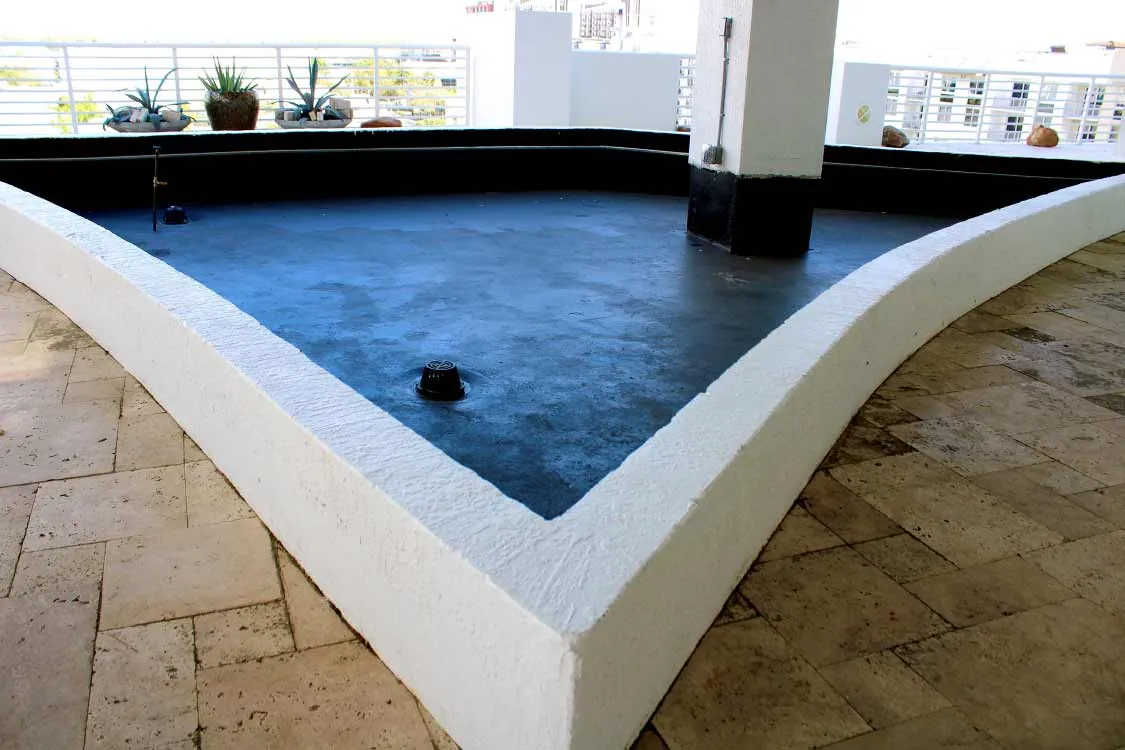
Commercial waterproofing in St. Lucie County protects condominiums, offices, medical buildings and shops from the rain, salt air and humidity that come off the Atlantic and the Indian River Lagoon. SERPE-CO replaces worn sealant at windows, doors and joints, installs membranes on balconies, walkways and decks over living space, relines planters, waterproofs pool decks, fills cracks by injection and coats exterior walls. Each of those layers keeps water away from the reinforcing steel, which is where leaks turn into the spalling and cracking that later need concrete repair.
A leak is diagnosed before a product is chosen. Water that stains a bedroom ceiling may have entered at a balcony threshold two floors up or at a joint around the corner, so our crews trace the path with the association's engineer or consultant and run water tests on balconies, planters and window openings where needed. Once the source is confirmed, the repair follows the specified system. Paint belongs in the plan too: a well-bonded coat of paint over patched stucco and concrete is the outermost waterproofing layer, and SERPE-CO's rule of thumb on the coast is a repaint roughly every 7 to 10 years.
Reviewed by Brett Serpe, MBA, GC, CEO of SERPE-CO · Florida Certified General Contractor CGC #1523974
Prepared by the SERPE-CO project team, with more than 20 years in concrete restoration. Last reviewed November 2026.
Local conditions
Why water finds its way into St. Lucie buildings
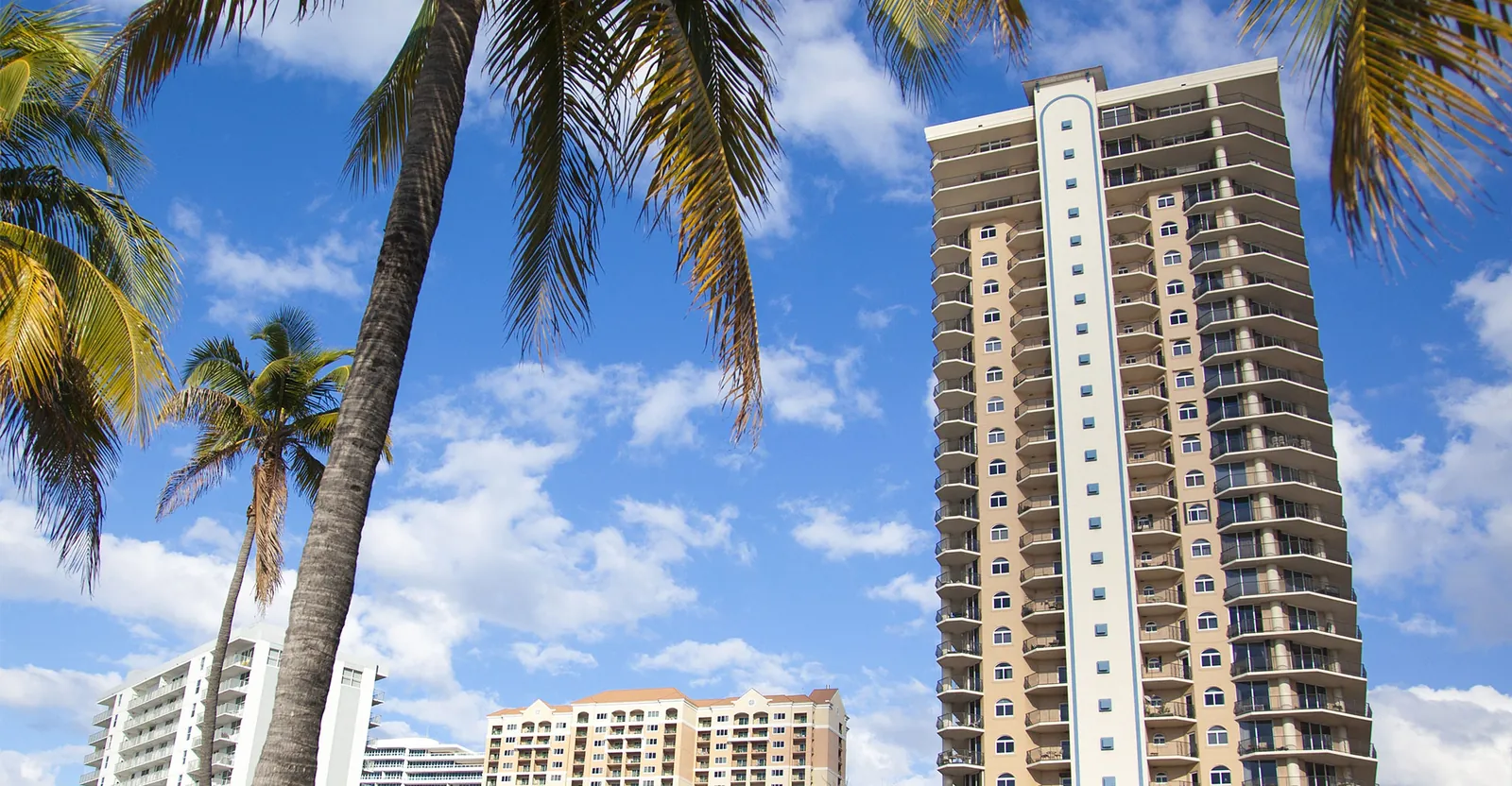
Weather on the Treasure Coast tests every joint. Summer afternoon storms and tropical systems drive rain sideways against the walls, and gaps that look tight in dry weather let water in under that pressure. The hurricane season, June 1 through November 30, brings the worst of it, and strong sun the rest of the year bakes sealants and coatings until they harden, crack and pull away. Salt carried on the wind speeds up that aging, especially on the east-facing walls of buildings close to the beach.
The setting changes the weak points. Oceanfront condominiums on Hutchinson Island leak at balcony doors, window perimeters and railing posts set into the slab. Fort Pierce buildings near the inlet and the lagoon take brackish air on older stucco and flat roofs. In Port St. Lucie, where most buildings sit inland, the usual trouble spots are parapets, roof-to-wall joints, storefront glazing and the joints between wall panels on offices and shopping centers along US 1 and in St. Lucie West.
Buildings that need this work
St. Lucie buildings and where they leak
On Hutchinson Island, the ocean side of a building takes most of the punishment. Sliding doors, window frames and the sealant along balcony edges dry out and split under salt and sun, and the stacked balconies of a mid-rise mean a leak on one level can show up two units down. Roof edges, rooftop equipment curbs and the joints where stair towers meet the main building are other frequent sources. Because part of the island is in Fort Pierce and part in unincorporated St. Lucie County, owners confirm which office has their address before permitting.
Mainland Fort Pierce has a mix of older masonry and stucco buildings near the historic downtown waterfront, where cracked stucco, failing flat roofs and window perimeters let water into the walls. Port St. Lucie offices, medical buildings and shopping centers more often leak at storefronts, parapets, rooftop penetrations and panel joints. In St. Lucie Village and along the lagoon, salt and humidity age sealants faster than owners expect, and planters and decks over garages or ground floors need membranes that keep water from reaching the space below.
The work
Commercial waterproofing in St. Lucie County: what the job covers
- 01Water testing to trace leaks
- 02Sheet and liquid-applied membrane systems
- 03Pool deck, plaza and balcony waterproofing
- 04Below-grade and planter waterproofing
- 05New sealants and expansion joints
- 06Door and window perimeter sealant
Our approach
How SERPE-CO tracks down and closes leaks
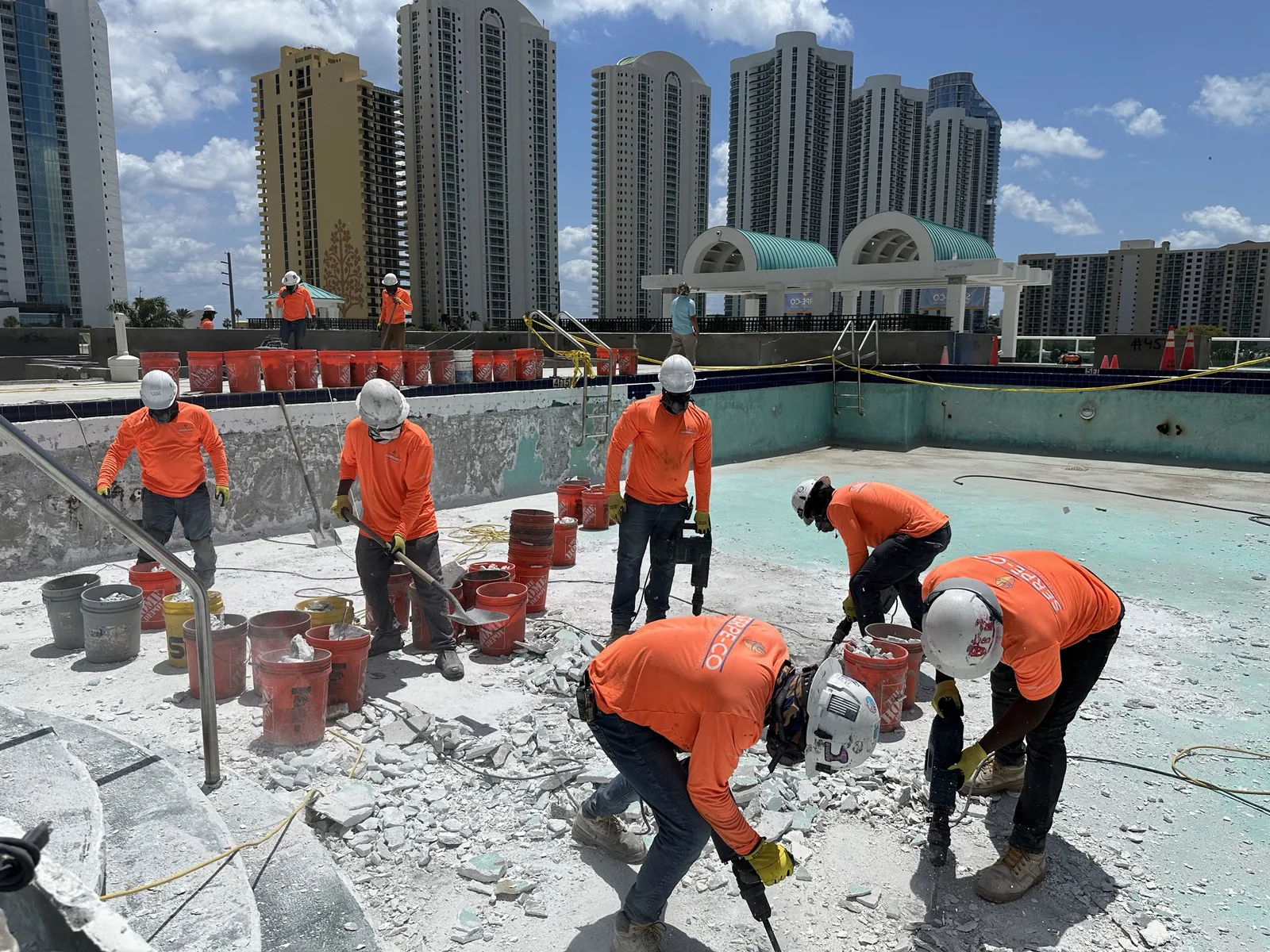
The work starts inside, where the damage shows, and moves outward. Our crew looks at the stain or wet drywall, checks the exterior above and around it, and, when the source is unclear, runs a controlled water test on one suspect area at a time. The engineer's or consultant's written scope then targets the cause: cutting out and resealing joints, replacing a balcony membrane, relining a planter or routing and sealing wall cracks. Wet or damaged concrete and stucco are repaired first so the new waterproofing goes on a sound, dry surface.
Membranes, sealants and coatings are installed the way the manufacturer and the specification require, with cleaning, primer, reinforcement at corners and edges, and the full cure between coats. Most of these products need a dry substrate, so application is planned for mornings and dry spells and kept clear of incoming afternoon storms. When an area is finished, we water-test it where a test is meaningful and give the association a written record of the systems installed and their locations on the building.
SERPE-CO brings more than 20 years in the field to every job. Read about our full waterproofing service or browse all our work in St. Lucie County.
Planning ahead
Planning waterproofing work in St. Lucie County
A sound waterproofing project begins with a clear diagnosis. Boards should expect leak tracing, water testing where it helps, and a written scope from the engineer or consultant that names the cause before anyone picks a membrane. If an engineer's report also lists concrete or stucco damage, that work belongs in the same contract, since new waterproofing over unsound material will not last. Systems are chosen by the engineer or consultant, and the building department for the address, whether St. Lucie County, Port St. Lucie or Fort Pierce, permits work that affects the structure or the envelope.
Florida product approval matters for envelope components such as windows, doors and some roofing and wall systems, and the building official reviews those approvals with the permit. Weather sets the pace for everything else. Sealants and coatings need clean, dry surfaces and their full cure time, so work areas are sized to be finished and protected in a single day. During hurricane season, loose materials and open deck areas get tied down ahead of a forecast storm, and the schedule allows for lost days.
How we run a job
Site walk first, closed permit last.
- 01
Meet on site
Each job starts on site, walking the property and its conditions with your manager, board or engineer.
- 02
Follow the engineer's scope
The engineer writes the scope. We price it line by line, plan access and lay out each phase to build it.
- 03
Put safety first
We can never work too safely: shoring, swing stages, barricades and notices go up first.
- 04
Build the repairs
Crews work through the repairs in order, stopping for inspections wherever the engineer calls for them.
- 05
Finish and document
Final inspections, a closed permit and a full record of the work for the association.
Cities served
Waterproofing throughout St. Lucie County
- Hutchinson Island
- Fort Pierce
- Port St. Lucie
- St. Lucie Village
Summary
What St. Lucie boards and owners should remember
- 01
Wind-driven rain on Hutchinson Island gets past door and window seals that hold in ordinary showers.
- 02
Older stucco and flat roofs near the Fort Pierce waterfront are common entry points for water.
- 03
Concrete or stucco damage in an engineer's report should be fixed before new waterproofing is applied.
- 04
St. Lucie waterproofing crews size each day's area so it is sealed and protected before afternoon storms.
Questions
Waterproofing in St. Lucie: questions we hear
Why do balcony doors leak on our Hutchinson Island building during storms but not in normal rain?
Wind-driven rain pushes water against the door frame and threshold with much more force than a steady shower. If the sealant around the frame has hardened, or the balcony membrane does not turn up and tie into the threshold, water gets past under that pressure. The fix usually involves resealing the frame and repairing or replacing the membrane at the door.
Is waterproofing part of a milestone repair project in Fort Pierce?
Often, yes. When the engineer finds concrete damage caused by water, the repair drawings usually call for sealing or coating the area so the steel stays dry afterward. Bundling the waterproofing into the same project avoids reopening the area later. The engineer decides what the milestone scope includes, and the City of Fort Pierce reviews the permit.
Can we waterproof the walkways on a Port St. Lucie office building while tenants are open?
In most cases, yes. Walkways are done in short sections with marked detours, and products are chosen with cure times that let each section reopen quickly. Work near entrances is scheduled for early hours or weekends when the property manager prefers. Our crews pick the coating with the engineer for grip underfoot and wear, and for how well it seals the slab.
How is a leak traced in a Fort Pierce condominium?
We start where the water shows inside, then check the exterior above and around it for failed sealant, cracks or open thresholds. If the source is still unclear, we run controlled water tests on one area at a time until the leak reappears. Commercial waterproofing in St. Lucie County works best when the repair is written to that confirmed source.
Does resealing windows on a Port St. Lucie building need a permit?
Routine sealant replacement is often treated as maintenance, while membranes over occupied space, window replacement or repairs tied to an engineer's report are generally permitted. The City of Port St. Lucie Building Department makes the call for properties in the city, and we confirm before work begins.
Do we have to remove the plants to waterproof a planter on our St. Lucie pool deck?
In nearly every case, yes. The waterproof liner sits under the soil against the planter walls, so plants and soil come out, the drainage and any lighting or irrigation are corrected, and the planter is relined. Once the membrane passes a water test, the soil and plants go back in.
Laws and rules cited
- St. Lucie County: Milestone Inspections for unincorporated St. Lucie County
- City of Port St. Lucie Building Department: Milestone Inspections
- City of Fort Pierce Building Department: Condo Milestone Inspections
- Florida Statute 553.899: mandatory structural inspections for condominium and cooperative buildings
- Florida Statute 718.112: structural integrity reserve studies
Treat this page as general information only, not legal or engineering advice. Licensed engineers and architects perform the inspections, and the building official decides which dates apply to your property. SERPE-CO's role is to carry out the repairs.
Working with an engineer?
Holding drawings, specifications or a complete set of bid documents?
Structural engineers, property engineers and board members send SERPE-CO much of our restoration, pool and roofing work. Once a scope has been drawn and specified, our team prices what the documents show, raises questions where something is unclear, and lays out each line so boards can weigh the bids on equal terms.
Request an estimate
Let's plan your restoration.
Tell us where the building is and what you are seeing. We set up a visit to the property, then send a written proposal, or tell you an engineer needs to write the scope first.
- More than 20 years in the field
- St. Lucie, Martin, Palm Beach, Broward and Miami-Dade
- Family-owned Certified General Contractor
Rather call?(954) 718-3094