St. Lucie County, Florida
Commercial Roofing in St. Lucie County
Low-slope roofs repaired, recoated or replaced per the consultant's spec, once the deck below is sound.
In short
Who handles commercial roofing in St. Lucie?
SERPE-CO, a family-owned general contractor (CGC #1523974) based in Pompano Beach and in the field for more than 20 years, travels north to provide commercial roofing in St. Lucie County for condo boards, property managers and commercial owners. The work covers leak repair, restoration coatings, full reroofing of low-slope systems, tapered insulation to correct drainage and concrete repairs to the deck, parapets and curbs, using roof systems that carry a Florida product approval.
Free milestone planner
Is a milestone inspection coming due on your building?
Enter the year your building got its certificate of occupancy and how many stories it has. The planner estimates your deadline under Florida law, then you can send it to SERPE-CO for a second look.
Add the year and story count for an estimated due date.
Want a second look at your timeline? Send your building details and SERPE-CO will follow up about the inspection, likely repairs and how to plan for them.
About this estimate
This is a planning estimate drawn from the statewide rule in Florida Statute 553.899. Your local building department sets the real deadline and may call for the first inspection at 25 years instead. Broward County also has its own Building Safety Inspection Program. Check your date with your building official and engineer, or contact SERPE-CO and we will help you sort it out.
Commercial Roofing · St. Lucie
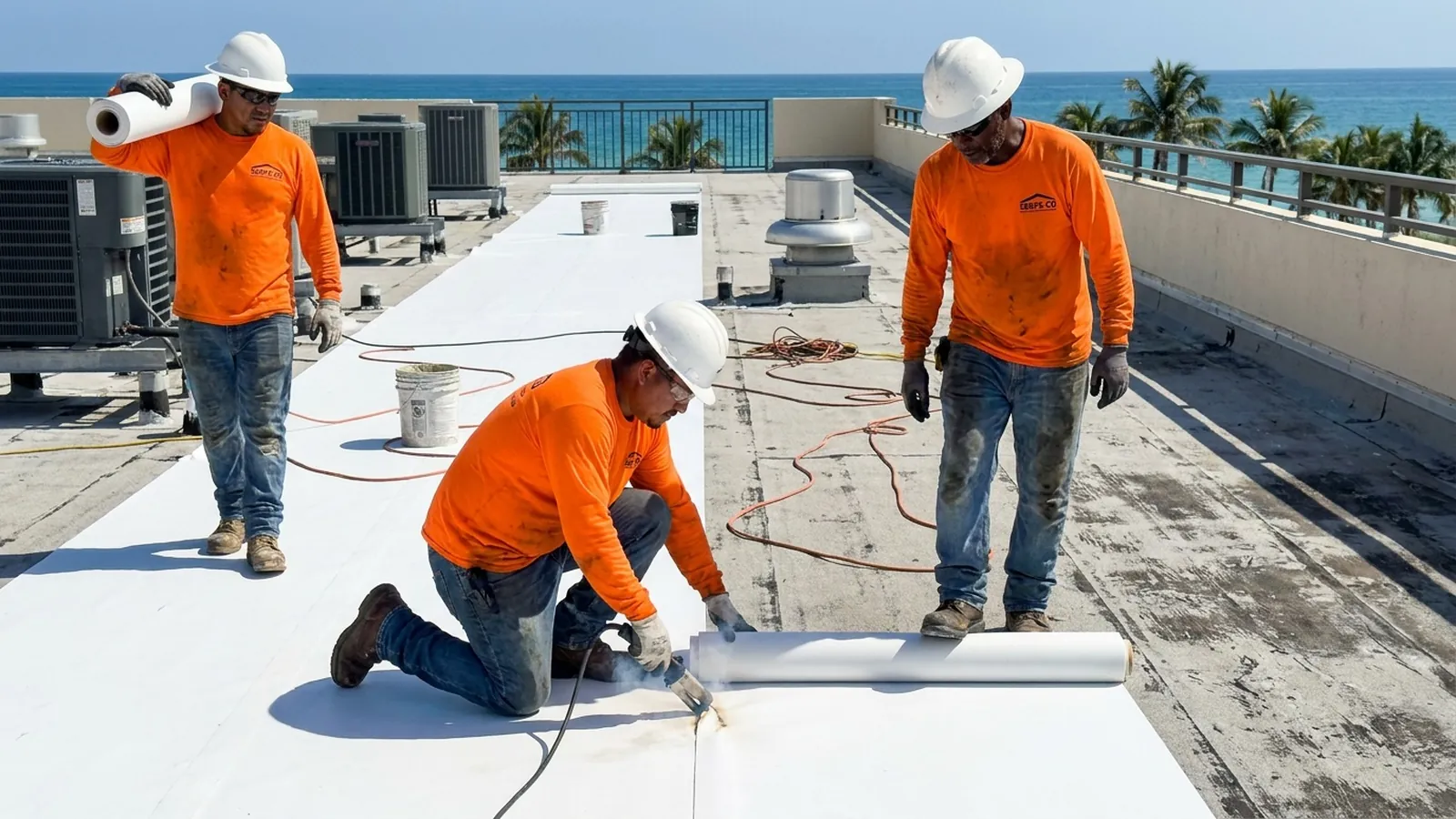
Commercial roofing in St. Lucie County takes in the flat roofs of oceanfront condominiums along A1A on Hutchinson Island, older commercial blocks in downtown Fort Pierce, and the shopping plazas, offices and medical buildings that line US 1, Port St. Lucie Boulevard, St. Lucie West and Tradition. SERPE-CO travels up the coast from Pompano Beach to fix leaks at drains, flashings and rooftop penetrations, to coat membranes that are still bonded and sound, and to tear off failed roofs and replace them with new single-ply, modified bitumen or built-up membranes. Because so many of these buildings are concrete, our crews also repair the roof deck, parapet walls and equipment curbs before a new membrane goes on.
On most jobs the design comes from someone else. The association or owner hires a roof consultant, architect or engineer, who walks the roof, cuts test samples or runs a moisture survey, and writes the specification and bid set. SERPE-CO prices those documents as written, submits shop drawings and product approvals to the consultant, and builds the roof the design describes. When a property manager calls us first about a leak, we photograph the roof, record what we find and tell the board plainly when a consultant should look at it before anyone prices a replacement.
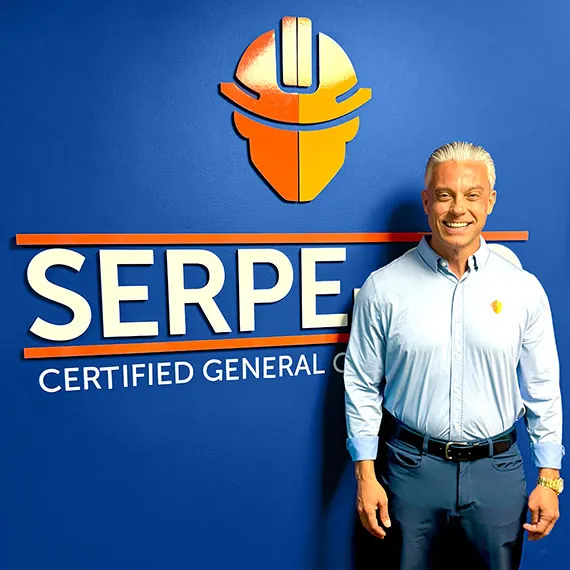
Reviewed by Brett Serpe, MBA, GC, CEO of SERPE-CO · Florida Certified General Contractor CGC #1523974
Prepared by the SERPE-CO project team, with more than 20 years in concrete restoration. Last reviewed November 2026.
Local conditions
Roofing outside the High-Velocity Hurricane Zone
The Florida Building Code confines its High-Velocity Hurricane Zone to Miami-Dade and Broward, leaving St. Lucie County outside it. Roofs in St. Lucie are permitted on the strength of a Florida product approval, issued through the statewide system of the Florida Building Commission, showing that the assembly resists the design wind pressures calculated for that particular building. The permit comes from the City of Port St. Lucie, the City of Fort Pierce or the Town of St. Lucie Village inside those limits, and from St. Lucie County Building and Code Regulation in unincorporated areas. For oceanfront towers, some engineers still choose products that also carry the stricter Miami-Dade and Broward approvals.
Exposure is the other half of the picture. Towers on Hutchinson Island face the open Atlantic on one side and the Indian River Lagoon on the other, so coping, metal flashing, exhaust fans and equipment stands rust quickly, and water follows the rust into the deck. Near the Fort Pierce Inlet and the port, older masonry buildings downtown have parapets and roof drains that have been patched many times over. Inland in Port St. Lucie, wide plaza and office roofs fail more often from ponding water, worn seams and the many rooftop units that serve individual tenants.
Buildings that need this work
St. Lucie properties and the roofs on top of them
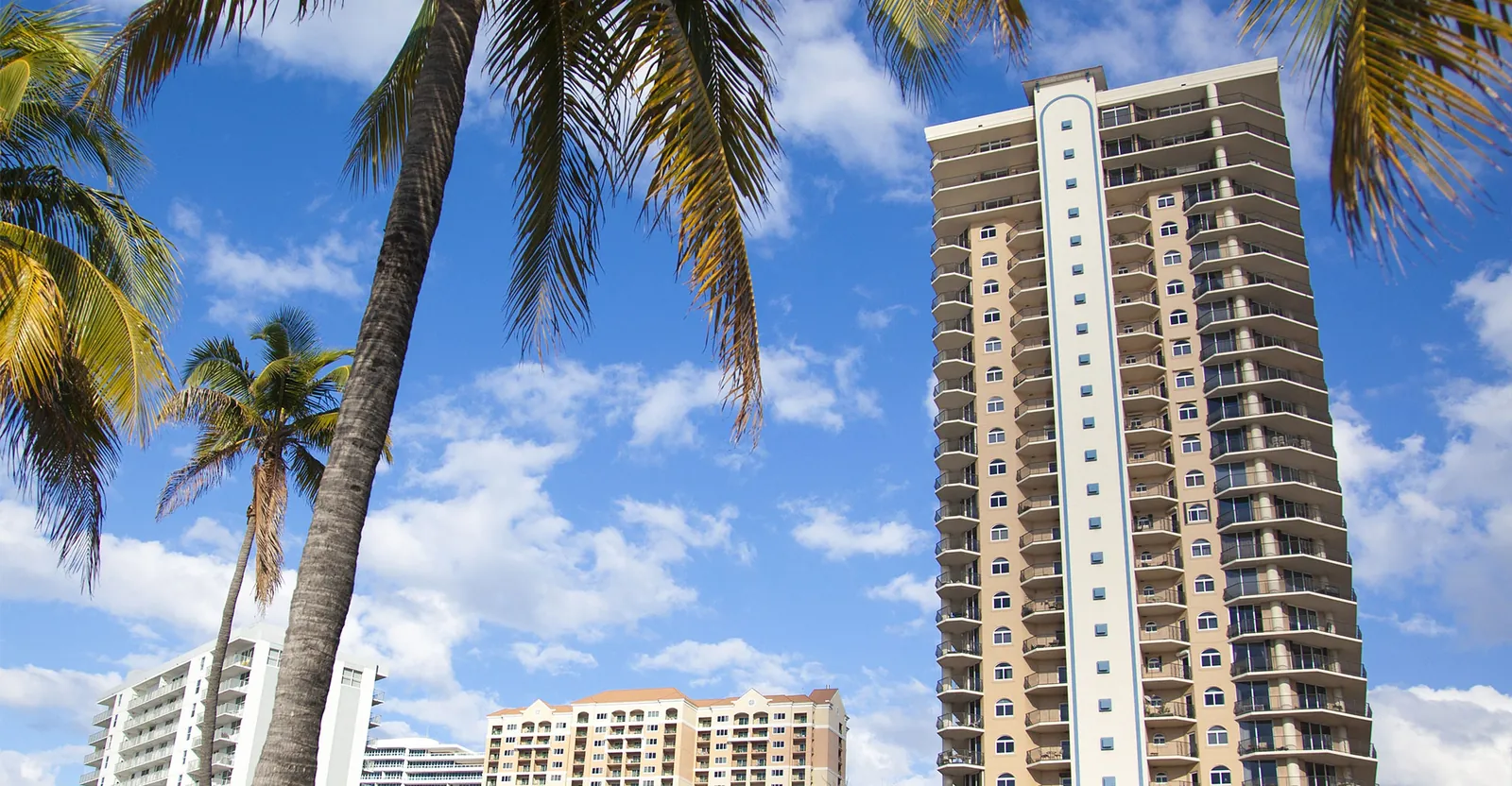
Hutchinson Island has the county's tallest roofs. Oceanfront condominiums along A1A carry elevator machine rooms, cooling equipment, generators and davits on compact roof decks, and every penetration is a place for salt-driven rain to get in. Material reaches those roofs by crane or hoist, so access and weather decide the pace. Across the Indian River Lagoon, downtown Fort Pierce mixes historic masonry buildings with newer waterfront construction, and St. Lucie Village has smaller buildings near the lagoon where wind off the water is constant.
Port St. Lucie holds most of the roof area in the county. Shopping centers, office parks and medical buildings along US 1, Port St. Lucie Boulevard, St. Lucie West and Tradition have long roofs ringed by parapets, often with a separate air conditioning unit per tenant, and low-rise condominium and rental communities have many separate buildings that are often reroofed in phases. Commercial buildings near I-95 and Florida's Turnpike tend to have broad flat roofs, where how well water drains and how the seams hold up decide how long the roof lasts.
The work
Commercial roofing in St. Lucie County: what the job covers
- 01Test cuts and leak tracing for the roof consultant
- 02Targeted repairs at drains, scuppers, flashings and penetrations
- 03Full tear-off and new modified bitumen, TPO, PVC or built-up roofs
- 04Coatings that restore sound existing membranes
- 05Crickets, tapered insulation and improved drainage
- 06Roof deck spall repair and rebuilt parapets, coping and curbs
Our approach
Keeping a St. Lucie building dry during a reroof
Tear-off over occupied space is planned in pieces. Each day the crew opens only the area it can insulate, cover and make watertight before quitting time, because summer storms on the Treasure Coast build quickly in the afternoon. Crane and hoist days are booked ahead, the drop zone below is fenced, and doors and walkways near the lift are covered or rerouted. Licensed mechanical subcontractors disconnect and reset air conditioning units and fans at set points in the sequence, and residents or tenants get written notice before the loud work and the crane days.
Removing the old roof exposes the deck. Our crews sound the slab, parapets and curbs, mark cracks and hollow areas for the engineer and repair them before insulation goes down. Tapered insulation and crickets follow the consultant's drainage layout, and drains, scuppers and coping are flashed to the approved details. The consultant observes the work as it goes, the building department inspects it, and the job closes with a final inspection and a file of the approvals used.
SERPE-CO brings more than 20 years in the field to every job. Read about our full commercial roofing service or browse all our work in St. Lucie County.
Planning ahead
Planning a reroof with a St. Lucie board or owner
Permits come from the city or town where the building stands, or from St. Lucie County Building and Code Regulation for unincorporated property. Each component of the roof system needs a Florida product approval suited to the design pressures for that building. Section 706.1.1 of the Florida Building Code, Existing Building, sets a 25 percent limit: past that share of a roof or roof section within 12 months, the entire section has to be brought to the code now in effect. Florida Statute 553.844(5) narrows this for roofs that went on under the 2007 edition or a newer one, so only the portion being worked on has to comply.
Rooftop equipment gets its own list. Air conditioning units, fans, conduit, antennas and any solar arrays are recorded before tear-off, and licensed trades disconnect and reset them on schedule. Hurricane season runs June 1 to November 30, and loose material on the roof is tied down or brought down whenever a storm is forecast. In Fort Pierce, a building in a Special Flood Hazard Area also falls under the FEMA 50 percent rule, so a large repair package should be reviewed against it early.
How we run a job
Site walk first, closed permit last.
- 01
Meet on site
Each job starts on site, walking the property and its conditions with your manager, board or engineer.
- 02
Follow the engineer's scope
The engineer writes the scope. We price it line by line, plan access and lay out each phase to build it.
- 03
Put safety first
We can never work too safely: shoring, swing stages, barricades and notices go up first.
- 04
Build the repairs
Crews work through the repairs in order, stopping for inspections wherever the engineer calls for them.
- 05
Finish and document
Final inspections, a closed permit and a full record of the work for the association.
Cities served
Commercial Roofing throughout St. Lucie County
- Fort Pierce
- St. Lucie Village
- Hutchinson Island
- Port St. Lucie
Summary
What St. Lucie boards and owners should remember
- 01
St. Lucie County is outside the High-Velocity Hurricane Zone, so each roof here carries a Florida product approval matched to its design pressures.
- 02
Hutchinson Island towers tend to leak at equipment curbs, flashings and coping, where salt air corrodes the metal first.
- 03
Port St. Lucie, Fort Pierce, St. Lucie Village and the county each issue roofing permits inside their own limits.
- 04
Under F.S. 553.844(5), roofs installed under the 2007 code or later need only the repaired area brought up to current code.
Questions
Commercial Roofing in St. Lucie: questions we hear
Does a St. Lucie County roof need Miami-Dade approved products?
Not under the code. Only Miami-Dade and Broward fall inside the High-Velocity Hurricane Zone. Roof systems in St. Lucie County need a Florida product approval that meets the wind pressures the building was designed for. Some engineers specify products with the stricter approval anyway on oceanfront buildings. The building official reviews whatever approvals are listed with the permit.
Which office permits a reroof on Hutchinson Island?
Depending on the address, the City of Fort Pierce or St. Lucie County, and the southern part of the island lies in Martin County. Confirm which office has your address before the permit application is prepared. We file with that office and schedule its inspections.
Can a plaza roof in Port St. Lucie be coated instead of replaced?
Sometimes. A coating can extend a membrane that is still well adhered over insulation that has stayed mostly dry. A moisture survey or test cuts tell the consultant whether that holds. Where insulation is soaked over large areas, coating traps the water, and new roofing in those sections is the better answer. The coating itself needs a product approval.
Who prepares the reroof specification for a Hutchinson Island condominium?
In most cases the association retains a roof consultant, engineer or architect. The consultant surveys the roof, takes cores or a moisture scan, picks a system with a current Florida product approval and writes the drawings and bid documents. Contractors bid that same scope, and the consultant watches the installation on behalf of the board.
Does a small roof repair in Port St. Lucie need a permit?
Reroofing and most roof repairs are permitted, and the approved products are listed on the application. Whether a minor patch needs a permit is the building official's call. For commercial roofing in St. Lucie County we confirm with the city, the town or the county which permit is needed and pull it before the crew starts.
Why do fasteners and edge metal matter on a roof near the Fort Pierce Inlet?
Salt air attacks metal, and a roof holds only as well as its attachment. The product approval for each system names the fasteners and spacing to be used, and following it is part of meeting the approval. Corroded coping, edge metal and fasteners are often where a coastal roof starts to come apart.
Laws and rules cited
- St. Lucie County: Milestone Inspections for unincorporated St. Lucie County
- City of Port St. Lucie Building Department: Milestone Inspections
- City of Fort Pierce Building Department: Condo Milestone Inspections
- Florida Statute 553.899: mandatory structural inspections for condominium and cooperative buildings
- Florida Statute 718.112: structural integrity reserve studies
Treat this page as general information only, not legal or engineering advice. Licensed engineers and architects perform the inspections, and the building official decides which dates apply to your property. SERPE-CO's role is to carry out the repairs.
Working with an engineer?
Holding drawings, specifications or a complete set of bid documents?
Structural engineers, property engineers and board members send SERPE-CO much of our restoration, pool and roofing work. Once a scope has been drawn and specified, our team prices what the documents show, raises questions where something is unclear, and lays out each line so boards can weigh the bids on equal terms.
Request an estimate
Let's plan your restoration.
Tell us where the building is and what you are seeing. We set up a visit to the property, then send a written proposal, or tell you an engineer needs to write the scope first.
- More than 20 years in the field
- St. Lucie, Martin, Palm Beach, Broward and Miami-Dade
- Family-owned Certified General Contractor
Rather call?(954) 718-3094