Pool deck pavers are a favorite on South Florida condominiums. They stay cooler underfoot than many coatings, they hide small stains and they can be lifted for repairs. On a condominium, though, the pavers are often the top layer of a much more important assembly. Many pool decks sit on a structural slab over parking, storage or living space, and the waterproofing under the stone protects everything below.
SERPE-CO is a Certified General Contractor in Pompano Beach that rebuilds condo pool decks, planters and pools. Engineers and architects design the deck assembly and write the scope. We price that scope and build it. Here are the questions boards ask most often, answered from the job site.
1. What is under your pool deck pavers?
Before choosing a new stone, find out what the deck sits on. A deck on grade, over soil, is mostly a drainage and settlement question. An elevated deck over a garage or an occupied floor is a structural and waterproofing question first. The engineer's drawings and any past repair permits will show the assembly: structural slab, waterproofing membrane, protection layer, drainage, setting bed and the pavers on top.
Leaks into the garage below, rust stains on the garage ceiling or hollow-sounding areas in the slab are signs the layers under the pavers are failing. Our post on concrete delamination explains what hollow-sounding concrete means.
2. Why pavers come up during structural repairs
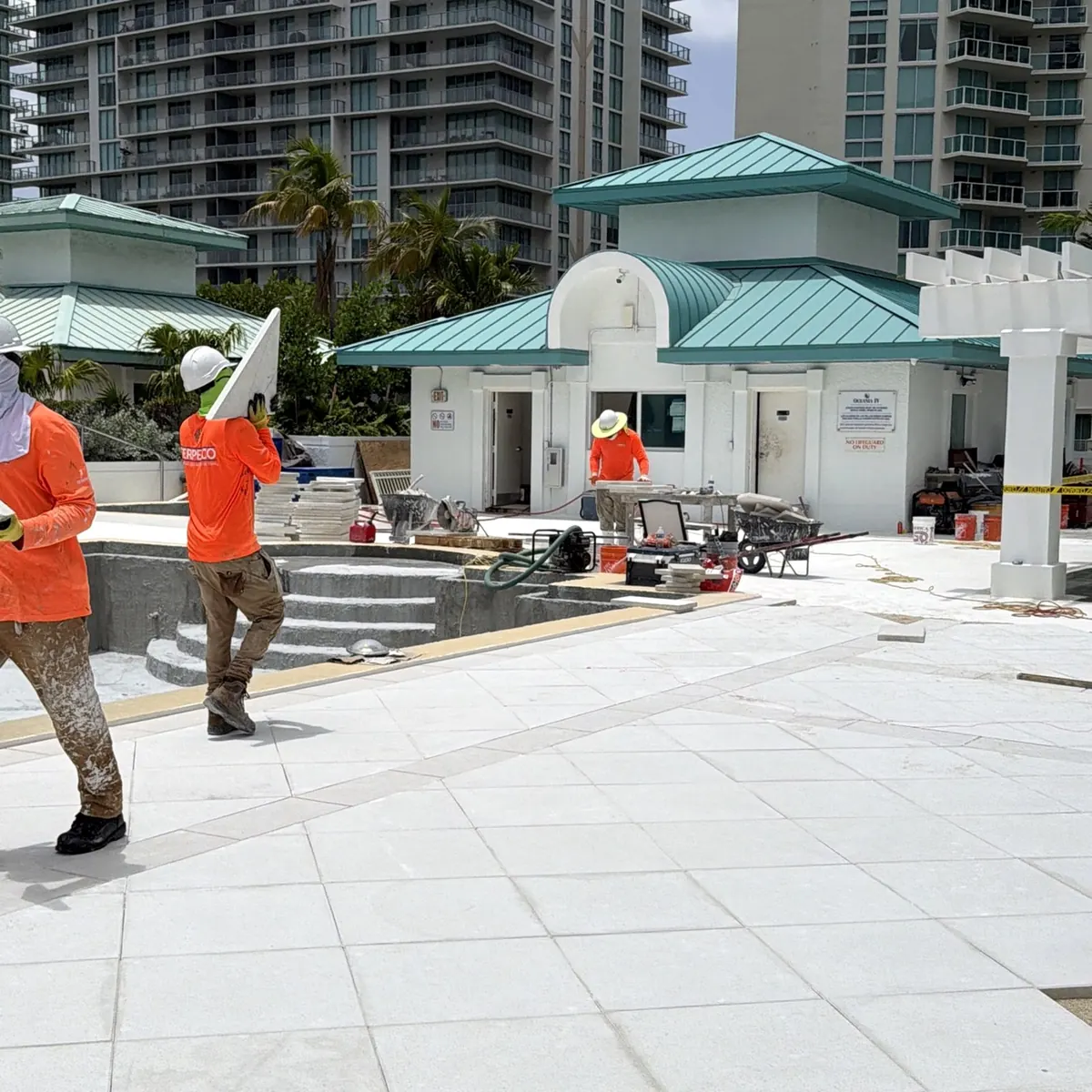
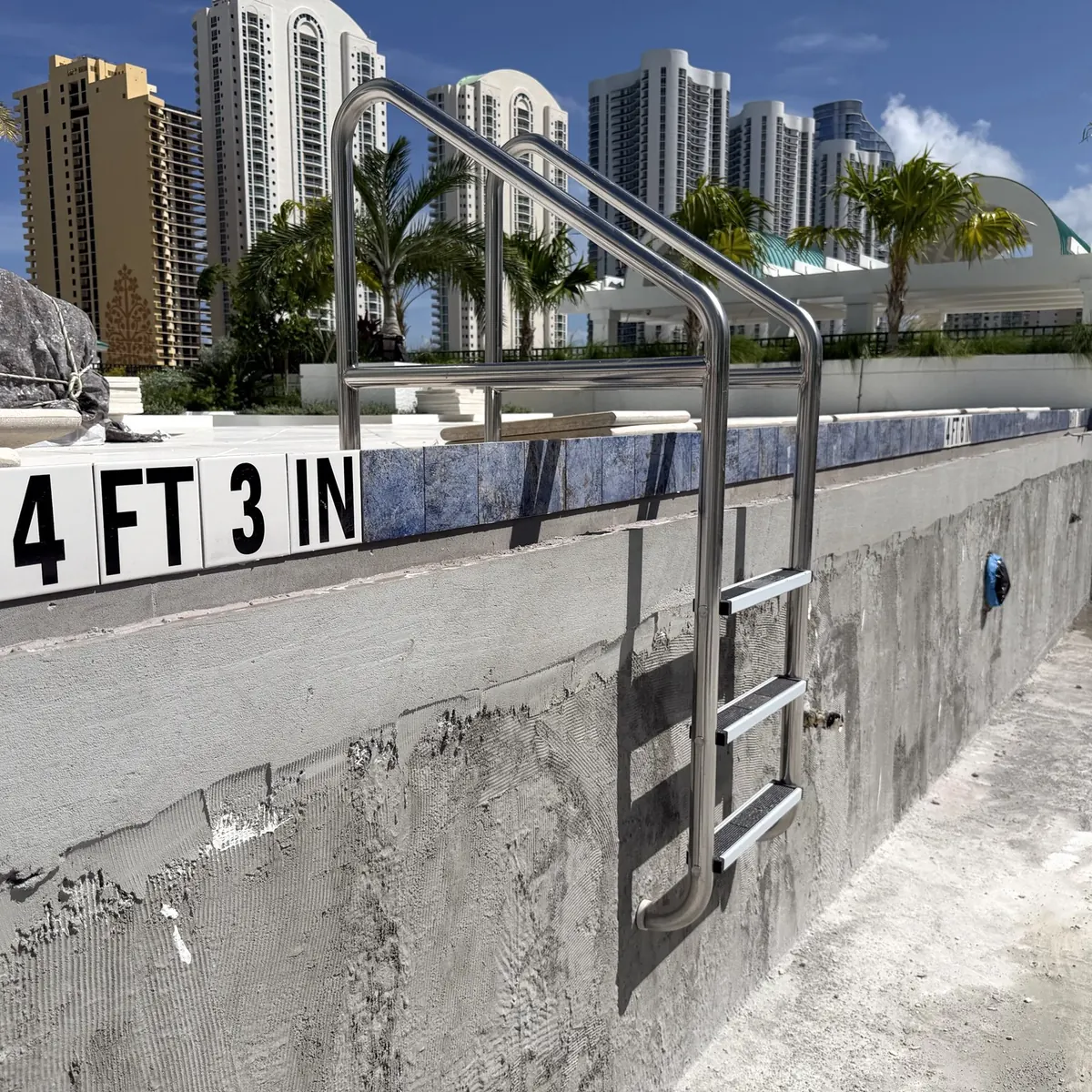
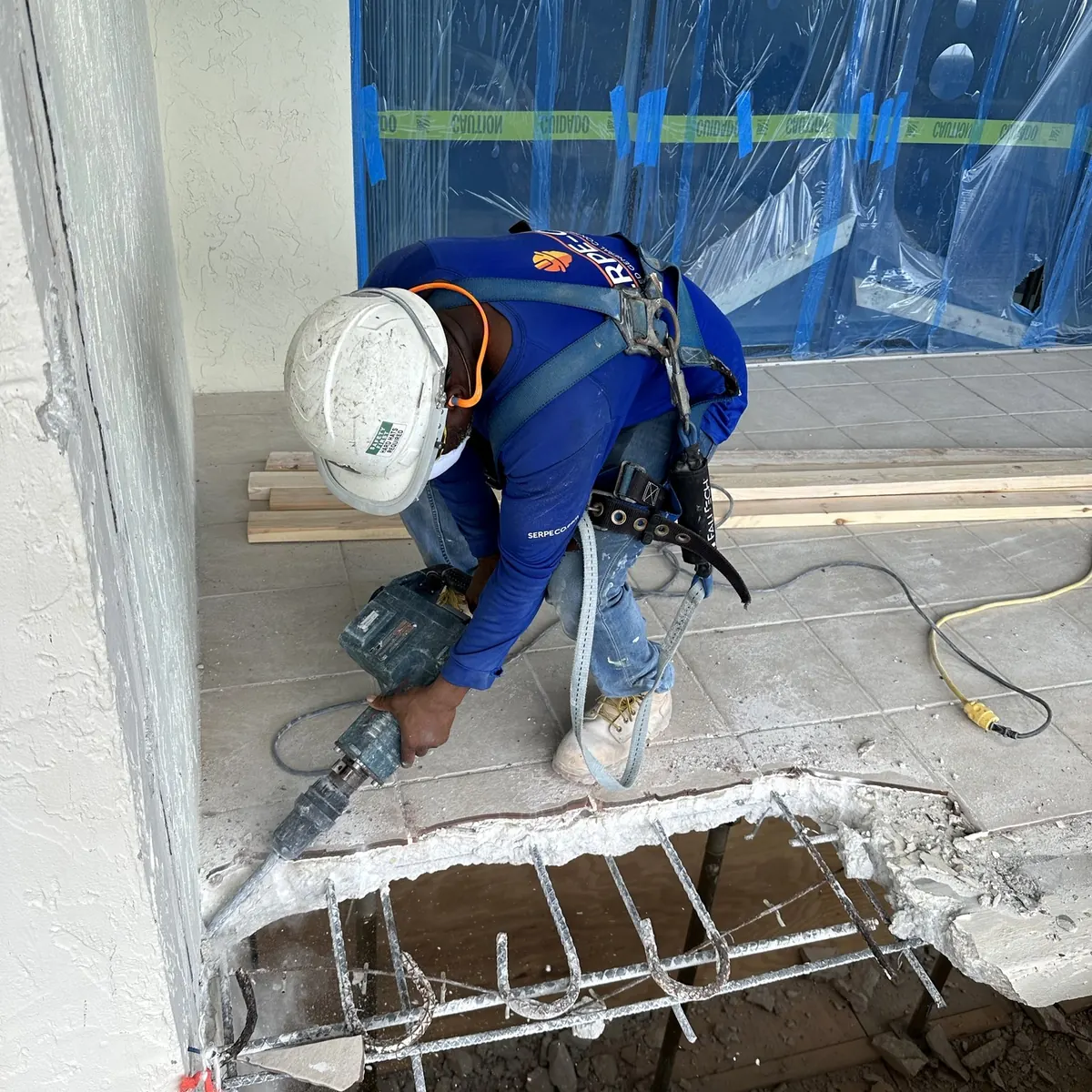
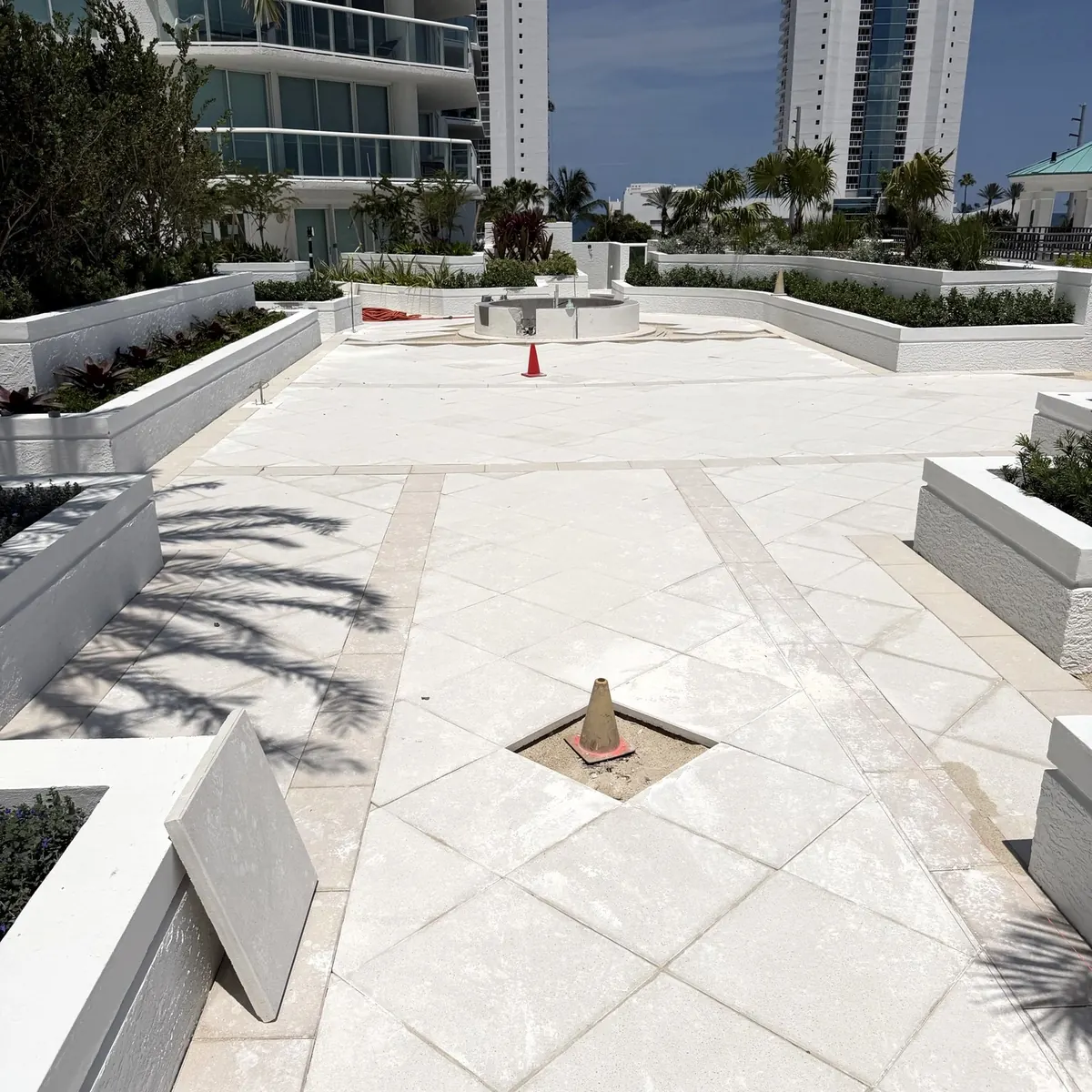
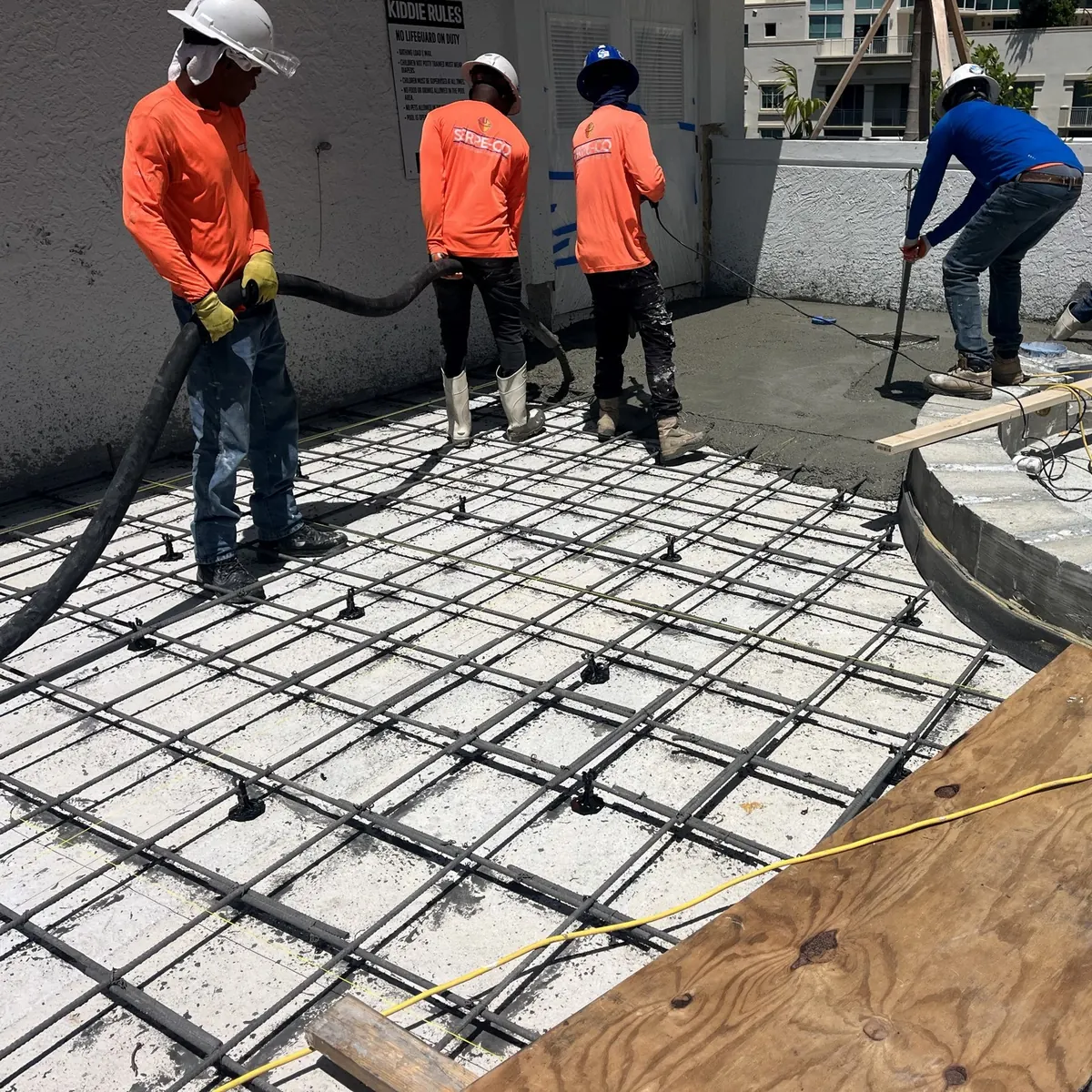
When an engineer calls for concrete repairs on an elevated pool deck, the pavers and setting bed usually come off so the slab can be surveyed and repaired. On the Oceania IV project in Sunny Isles Beach, the rooftop pool deck was opened, the concrete and reinforcing rebuilt and a new paver deck installed. You can see that sequence on our projects page.
Boards sometimes hope to save the old pavers. Some can be cleaned and reused if they come up intact and match the new design, but many crack during removal or no longer match. The engineer and the board decide, and the scope spells it out.
3. Waterproofing is the real roof
On an elevated deck, pool deck pavers are not the waterproofing. Water passes through paver joints, so the membrane under them does the real work. The membrane has to turn up at walls and curbs, seal around drains and penetrations and tie into the pool shell and planters. Details at those edges are where most leaks start.
Planters on the deck deserve special attention. Soil holds water against walls for months, and roots search out any gap. We waterproof planters as part of pool deck projects for that reason. Our post on waterproofing concrete covers membranes and coatings in more detail.
4. Drainage keeps the system dry
Water that gets through the joints must reach a drain quickly. A drainage layer or mat under the setting bed, a sloped structural slab and clean drains keep water moving. Standing water under pavers feeds algae, loosens the bed and works its way into any membrane flaw.
Ask the engineer how the new deck drains, and plan regular drain cleaning in the maintenance calendar. Clogged drains cause more paver deck failures than the pavers themselves.
5. Pavers or a coating?
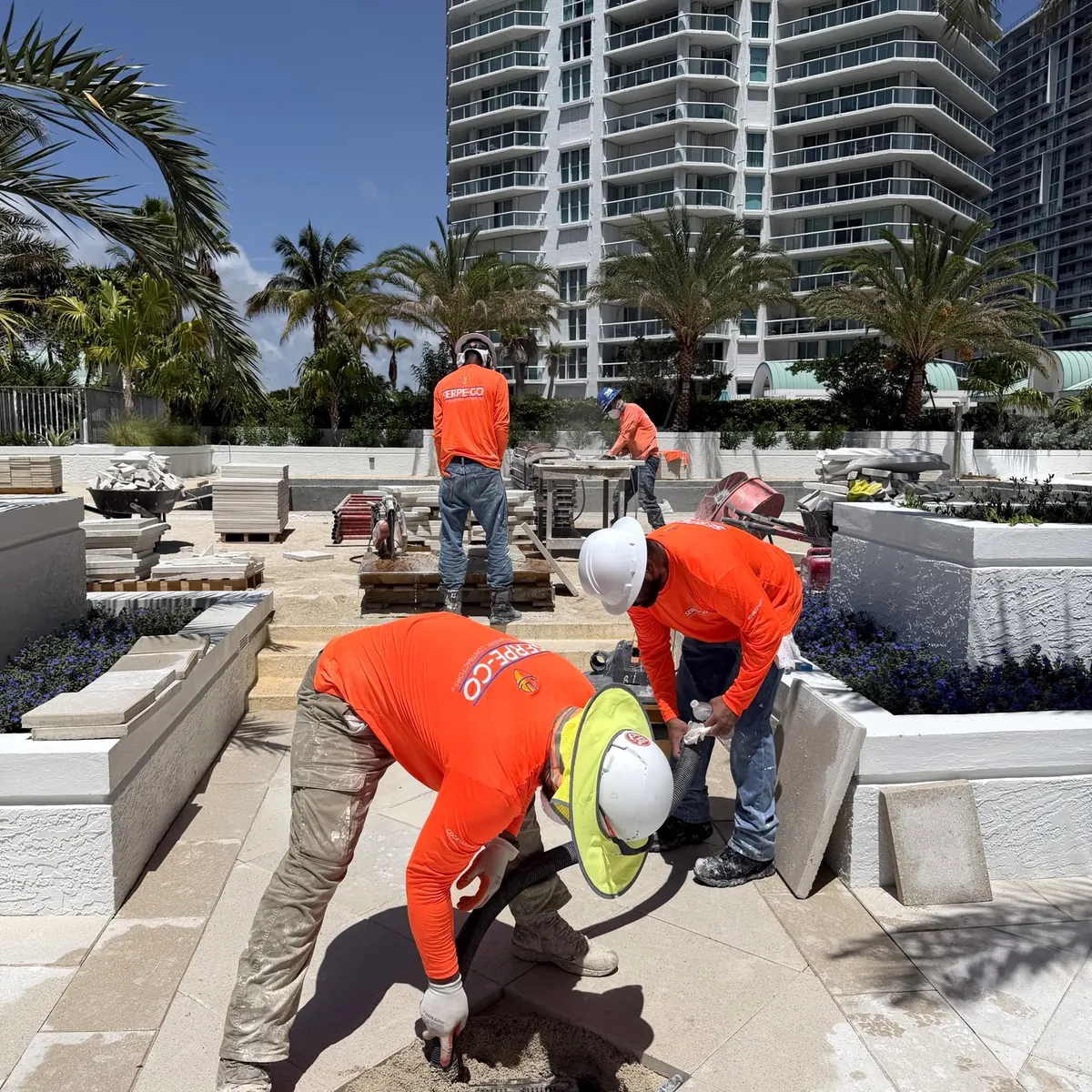
Pavers and coatings each have a place. A coating is thinner and lighter, and it can be the waterproofing on some decks. Pool deck pavers add weight, need an assembly under them and cost more to install on an elevated slab, but they are easier to lift for future repairs and give a stone look owners like. The engineer confirms whether the structure can carry the added load.
Our post on pool deck coating compares coating systems, and the earlier post on pool deck resurfacing covers the full range of options.
6. Phasing so residents keep a pool
Pool decks are the amenity owners notice most. Large decks can sometimes be phased so part of the deck stays open, but structural work around the pool shell often closes the pool for a period. Plan the work outside the busiest season when you can, and tell owners the schedule early. A clear plan with dates earns patience.
Safety comes first on any phased deck. Barricades, signage and protected paths keep residents away from open slabs, saws and material deliveries. On rooftop decks, crane or hoist days for materials are scheduled and announced in advance.
7. Maintenance after the new deck
- Clean drains on a schedule, especially before and during the rainy season.
- Keep joint sand or joint material topped up so pavers stay locked in place.
- Watch for rocking pavers, settlement or staining at the edges, and report them early.
- Inspect sealants at walls, curbs and pool coping once a year.
- Note the deck's membrane and pavers in the reserve study so their replacement is funded.
Pool deck components appear in reserve planning because waterproofing is one of the structural integrity reserve study items under Florida Statute 718.112. Our post on the structural integrity reserve study explains how that works.
Choosing pavers that suit the coast
Color and texture matter on an exposed deck. Lighter colors stay cooler in the afternoon sun, and a textured surface gives better grip around a pool. Salt air and pool chemicals are hard on some stones and sealers, so ask the supplier and the design professional which products hold up on oceanfront decks. Plan for spare pavers from the same batch, stored on site, so future repairs match.
The industry's repair standards are worth knowing too. The International Concrete Repair Institute publishes guidance on concrete surface preparation and repair that engineers often reference in their specifications for the slab work under the pavers.
How SERPE-CO can help
SERPE-CO prices and builds the engineer's pool deck scope, including concrete repair, waterproofing, planters and new pool deck pavers. See our commercial pools and pool decks service and our Broward County pool resurfacing page, then contact us or call (954) 718-3094.
CEO and co-founder of SERPE-CO, a family-owned Florida Certified General Contractor (CGC #1523974). In concrete restoration since 2005 and a contributor to the Florida Community Association Journal. This article is general information, not engineering or legal advice.