Concrete Restoration
Concrete Restoration & Structural Repair
Spalled concrete and rusted rebar, fixed exactly as your engineer specifies.
In short
What is concrete restoration?
Concrete restoration means repairing reinforced concrete that has cracked, spalled or separated into layers, most often because the rebar inside has started to rust. A crew cuts out the unsound concrete, cleans, coats or supplements the steel, then rebuilds the member to its original shape. Engineers usually call for it after finding loose or hollow concrete, rust stains or bare bar on balconies, beams, columns or slabs.
Free milestone planner
Is a milestone inspection coming due on your building?
Enter the year your building got its certificate of occupancy and how many stories it has. The planner estimates your deadline under Florida law, then you can send it to SERPE-CO for a second look.
Add the year and story count for an estimated due date.
Want a second look at your timeline? Send your building details and SERPE-CO will follow up about the inspection, likely repairs and how to plan for them.
About this estimate
This is a planning estimate drawn from the statewide rule in Florida Statute 553.899. Your local building department sets the real deadline and may call for the first inspection at 25 years instead. Broward County also has its own Building Safety Inspection Program. Check your date with your building official and engineer, or contact SERPE-CO and we will help you sort it out.
Concrete Restoration
Along the coast, salt works into concrete and reaches the reinforcing steel. Once that steel rusts it swells, and the slab cracks apart from within. Our crews cut out unsound concrete, clean or replace the bars, protect them from further corrosion and rebuild each section to carry its load as designed.
With more than 20 years in the field, SERPE-CO handles concrete restoration work from St. Lucie to Miami-Dade for condominium associations, property managers and owners of commercial buildings.
Reviewed by Brett Serpe, MBA, GC, CEO of SERPE-CO · Florida Certified General Contractor CGC #1523974
Prepared by the SERPE-CO project team, with more than 20 years in concrete restoration. Last reviewed November 2026.
Why it happens
What coastal air does to concrete and steel
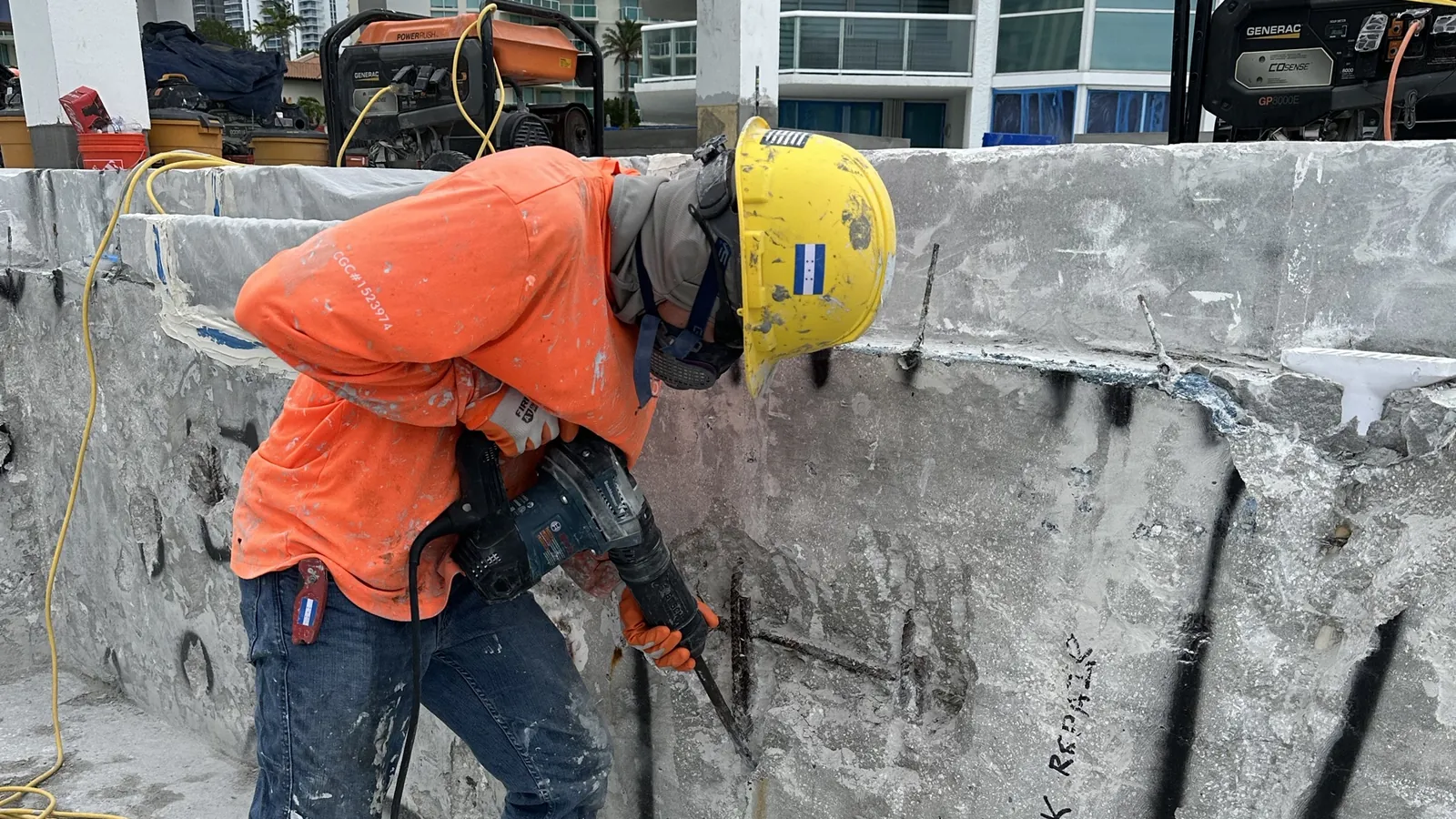
Good concrete protects its reinforcing bar in two ways. The dense paste keeps moisture and oxygen away, and the high pH of the cement coats the steel in a thin protective film. Chlorides break that film down. On the coast, salt rides in on the breeze, settles on the building, dissolves in rain and morning dew, and works inward through pores and hairline cracks. Once enough salt reaches the bar, rust begins, often while the surface still looks fine.
Carbonation reaches the same place by a slower road. Carbon dioxide reacts with the cement and gradually lowers its pH, and where cover over the bar is shallow, that front can reach the steel within the working life of the building. Rust takes up far more room than the metal it replaces, so it pushes outward. The concrete splits along a plane just under the surface, called delamination, and later breaks loose as a spall. Each new crack shortens the trip for water and salt.
The work
Concrete Restoration: what the job covers
- 01Repair of spalled or delaminated slabs, beams, columns and walls
- 02Rebar cleaned, coated, spliced or replaced
- 03Epoxy injection for structural crack repair
- 04Overhead, hand-placed and form-and-pour repair mortars
- 05Temporary shoring while repairs are underway
- 06Protective coatings, sealers and corrosion-inhibiting treatments
How we do it
How our crews repair a spall, from sounding to sealer
Every repair starts by sounding the concrete. Our crew taps it with a hammer or drags a chain over it, listening for the hollow tone of separated concrete. We mark and measure those areas so quantities can be confirmed with the engineer. Shoring goes in before anyone opens a member that carries load. A shallow sawcut then outlines each repair, so the patch ends in a crisp, square edge rather than a thin feathered rim that would crack off later.
Within that line, damaged concrete comes out with light chipping hammers until the crew hits sound material. The bar gets undercut, meaning the concrete behind it is removed too, so the new material wraps the steel on every side. Steel is brushed or blasted to bright metal, then checked by the engineer for lost section. Bar that has thinned too far gets new steel lapped or spliced in beside it. Exposed reinforcing then receives the specified corrosion inhibitor, and where the engineer calls for sacrificial anodes, the crew ties them on.
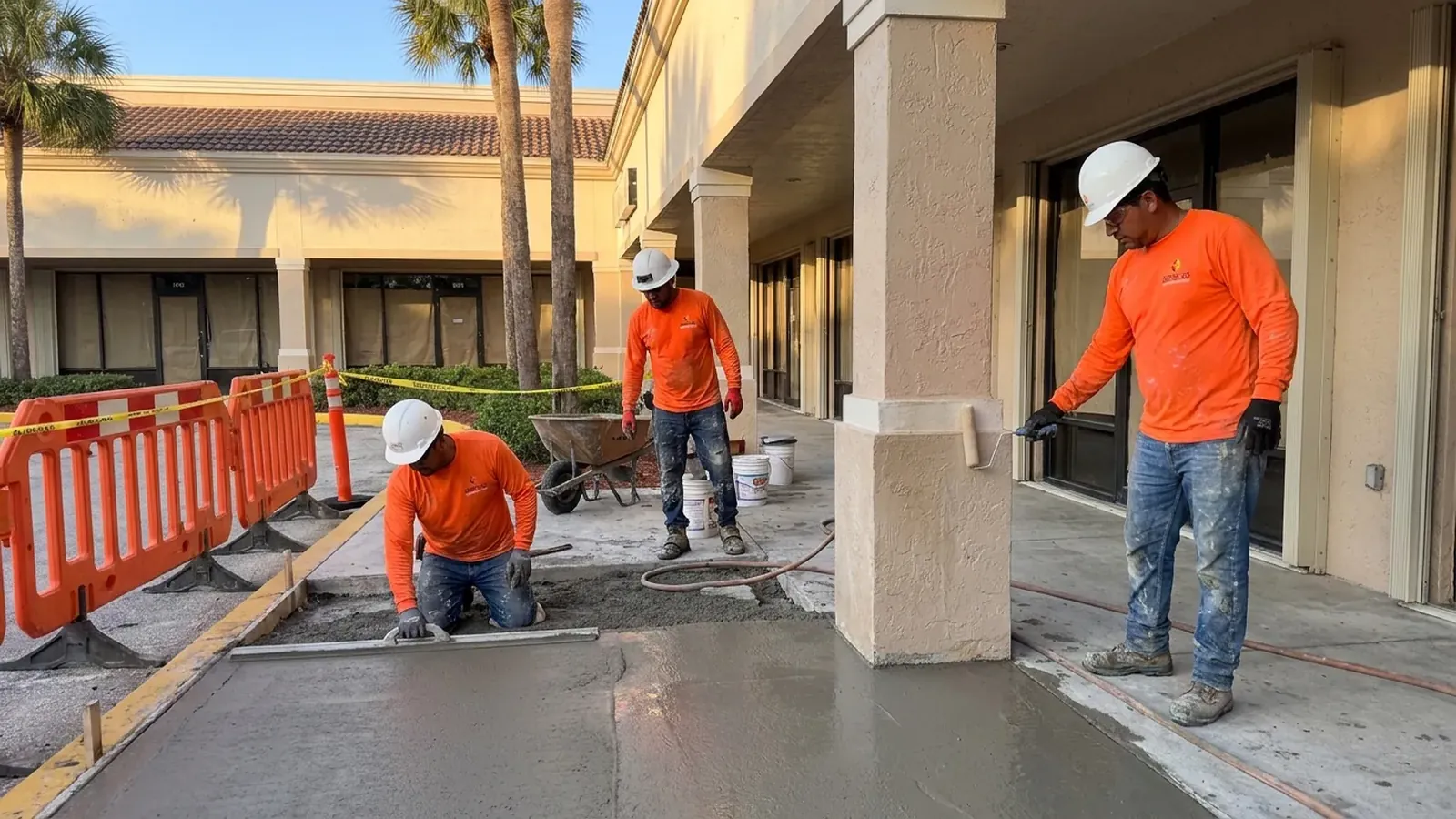
Next, the cavity is cleaned and either dampened or primed with bonding agent, as the product data sheet directs, and then rebuilt. Thin repairs on walls and ceilings are usually troweled in by hand, in lifts, with polymer-modified mortar. Larger or deeper sections are formed and poured so the material packs tightly around the steel. The engineer typically checks the prepared steel before anything new goes in. After the specified cure, the crew sounds the patch again and protects it with a sealer, coating or membrane.
Materials we use
How the repair material gets chosen: hand-placed mortars, formed pours and steel protection
Most repair products for reinforced concrete belong to a handful of groups. For shallow patches on walls and ceilings, crews usually trowel on a polymer-modified cement mortar in layers, because it is light and grips well overhead. Deeper sections are formed up and filled with a flowable repair concrete, either poured or pumped, sometimes with pea gravel added to the mortar. Every product data sheet lists the thinnest and thickest layer allowed, and ignoring those limits is one of the usual reasons patches crack.
Strength is only part of the engineer's decision. Matching the existing concrete counts just as much, since a patch that is much stiffer than its surroundings, or one that shrinks while drying, will usually crack or pull loose around its edge. The engineer looks for low shrinkage, comparable stiffness and comparable movement with heat. Protecting the steel is a separate line in the specification and can include coatings on the bar, zinc anodes set at the patch edges, migrating inhibitors and a silane sealer over the finished work.
Built to hold up
Why some concrete repairs keep performing while others fail within years
When a patch fails early, the cause is usually the prep work rather than the mortar. Lasting repairs start with a sawcut perimeter, removal down to sound concrete, steel cleaned on every side and a cavity that is wet through but has no puddled water when the mortar goes in. Concrete bruised by oversized breakers, dust left in the hole or edges feathered to nothing tend to turn hollow within a few years. Curing deserves the same care, because mortar that dries quickly in South Florida sun and wind shrinks and cracks.
A solid proposal for spall and crack repair names each product and its manufacturer, points to the engineer's details and explains how repair quantities get measured and confirmed. Boards should ask where the work pauses so the engineer can look at exposed steel or a prepared cavity before anything is closed up. While the work is underway, expect every repair location to be marked and numbered, photographed before it is filled and sounded once finished. Material warranties come from the manufacturer on its own terms.
How we run a job
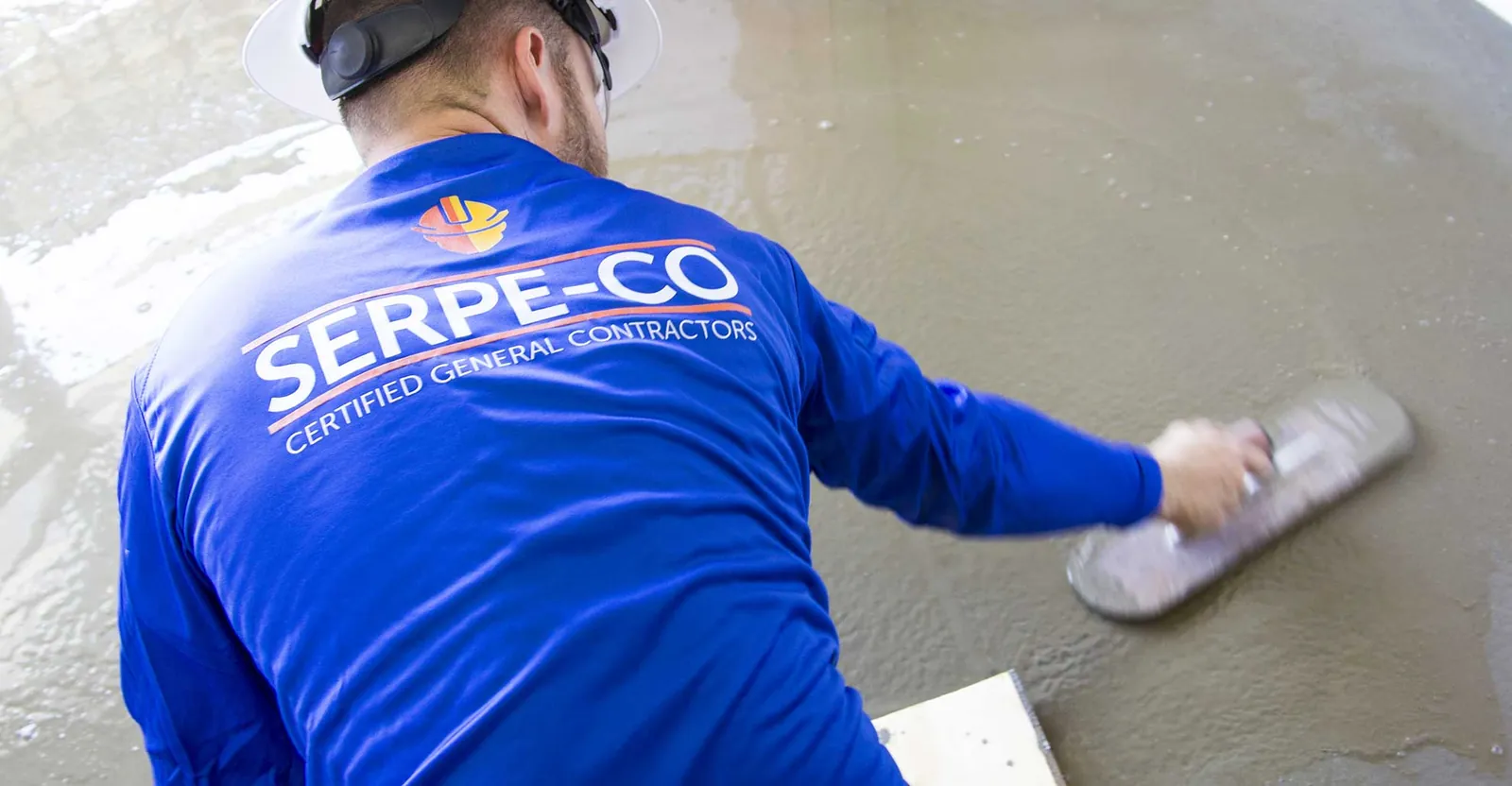
Scheduled around the residents and staff who use the building.
- 01
Meet on site
Each job starts on site, walking the property and its conditions with your manager, board or engineer.
- 02
Follow the engineer's scope
The engineer writes the scope. We price it line by line, plan access and lay out each phase to build it.
- 03
Put safety first
We can never work too safely: shoring, swing stages, barricades and notices go up first.
- 04
Build the repairs
Crews work through the repairs in order, stopping for inspections wherever the engineer calls for them.
- 05
Finish and document
Final inspections, a closed permit and a full record of the work for the association.
Counties we cover
Concrete Restoration, county by county
Summary
Concrete Restoration: what to remember
- 01
Good concrete restoration is decided by surface preparation long before anyone mixes the repair mortar.
- 02
Repair materials are picked by the engineer of record to match the existing concrete, not because they post the highest strength number.
- 03
Zinc anodes embedded at the patch perimeter, plus a surface sealer, slow the fresh corrosion that starts in salty concrete nearby.
- 04
Numbered locations, photos and engineer sign-offs leave the association with a record it can check repair by repair.
Glossary
Words that show up in an engineer's report
- Delamination
- A hidden split inside concrete, running roughly parallel to its face, usually caused by rusting steel. Tapping the area produces a hollow sound.
- Section loss
- How much of a rebar's original thickness has rusted away. Engineers measure section loss to decide whether a bar needs new steel added beside it.
- Galvanic anode
- A small zinc puck wired to the rebar inside a patch. Because the zinc corrodes first, it sacrifices itself and shields the steel around the edge of the repair.
- Concrete cover
- The depth of concrete protecting the outermost rebar. Where cover is thin, salt and carbonation reach the steel sooner and corrosion starts earlier.
- Halo effect
- Fresh rust that starts in older concrete just past a new patch, because steel inside and outside the repair now sits in different chemistry.
Questions
Concrete Restoration: questions boards ask
Why does South Florida concrete spall so often?
Moist, salty air slowly soaks into concrete until it reaches the steel inside. Rust takes up several times more room than the original metal, so the bar pushes outward, cracks the surrounding concrete and pops it loose. Buildings closest to the ocean see this happen fastest.
Will you build from our engineer's repair drawings?
Yes. Every structural repair follows the engineer of record's details. Associations that have not hired an engineer yet can ask us where to start, and once one is on board we coordinate the scope with them directly.
How long should a concrete repair hold?
Done right, with good prep, a solid bond and protection on top, a repair can hold for decades. What surrounds it decides how long. If water keeps reaching the slab, or salt-loaded concrete is left beside the patch, rust can restart at its edge. Keeping the surface dry and keeping up sealants and coatings is what protects the repair over the years.
Which cracks can be injected, and which need to be cut out?
Cracks from shrinkage or a single movement, with solid concrete on each side, can often be sealed or bonded back together with epoxy injection. When a crack follows the line of a reinforcing bar, the steel underneath is usually rusting, and injection will not fix that. At each location, the engineer makes the call on which repair is right.
How does a structural concrete repair differ from a cosmetic one?
Structural repairs restore members that carry weight, such as beams, columns and slabs, and they involve the reinforcing steel. That work follows the engineer's details and needs whatever permit and inspections the building official requires. Cosmetic repairs fix surface flaws that have no effect on capacity. Deciding which is which belongs to the engineer, not the contractor.
Why do new cracks show up beside a fairly recent concrete patch?
The concrete surrounding a patch often still holds chlorides. After the cavity is filled with fresh, highly alkaline mortar, the steel just outside the repair can become the next place corrosion takes hold, something engineers call the halo effect. Cutting back beyond the full length of rusted bar and setting zinc anodes around the edge are the standard defenses.
Do owners need to leave during the work?
Rarely. Residents stay home while crews move through the building by elevation or stack. Each balcony is closed only during its own repair, and owners hear from us before anything affects them. The board and manager approve the sequence and access plan first.
Will you coordinate with our engineer?
Always. SERPE-CO works closely with associations and professional engineers, building every structural repair to the engineer of record's specification and lining up their inspections as the job goes. No engineer yet? We can help you take the first step.
Industry standards and guides
- International Concrete Repair Institute (ICRI): repair guidelines for concrete
- American Concrete Institute (ACI): codes and guides for concrete construction and repair
- Florida Building Code
On every project, our repair methods and materials follow the engineer's specification, the product maker's requirements and the current building code. Treat this page as general information, not engineering advice.
Other services we provide
Working with an engineer?
Holding drawings, specifications or a complete set of bid documents?
Structural engineers, property engineers and board members send SERPE-CO much of our restoration, pool and roofing work. Once a scope has been drawn and specified, our team prices what the documents show, raises questions where something is unclear, and lays out each line so boards can weigh the bids on equal terms.
Request an estimate
Let's plan your restoration.
Tell us where the building is and what you are seeing. We set up a visit to the property, then send a written proposal, or tell you an engineer needs to write the scope first.
- More than 20 years in the field
- St. Lucie, Martin, Palm Beach, Broward and Miami-Dade
- Family-owned Certified General Contractor
Rather call?(954) 718-3094