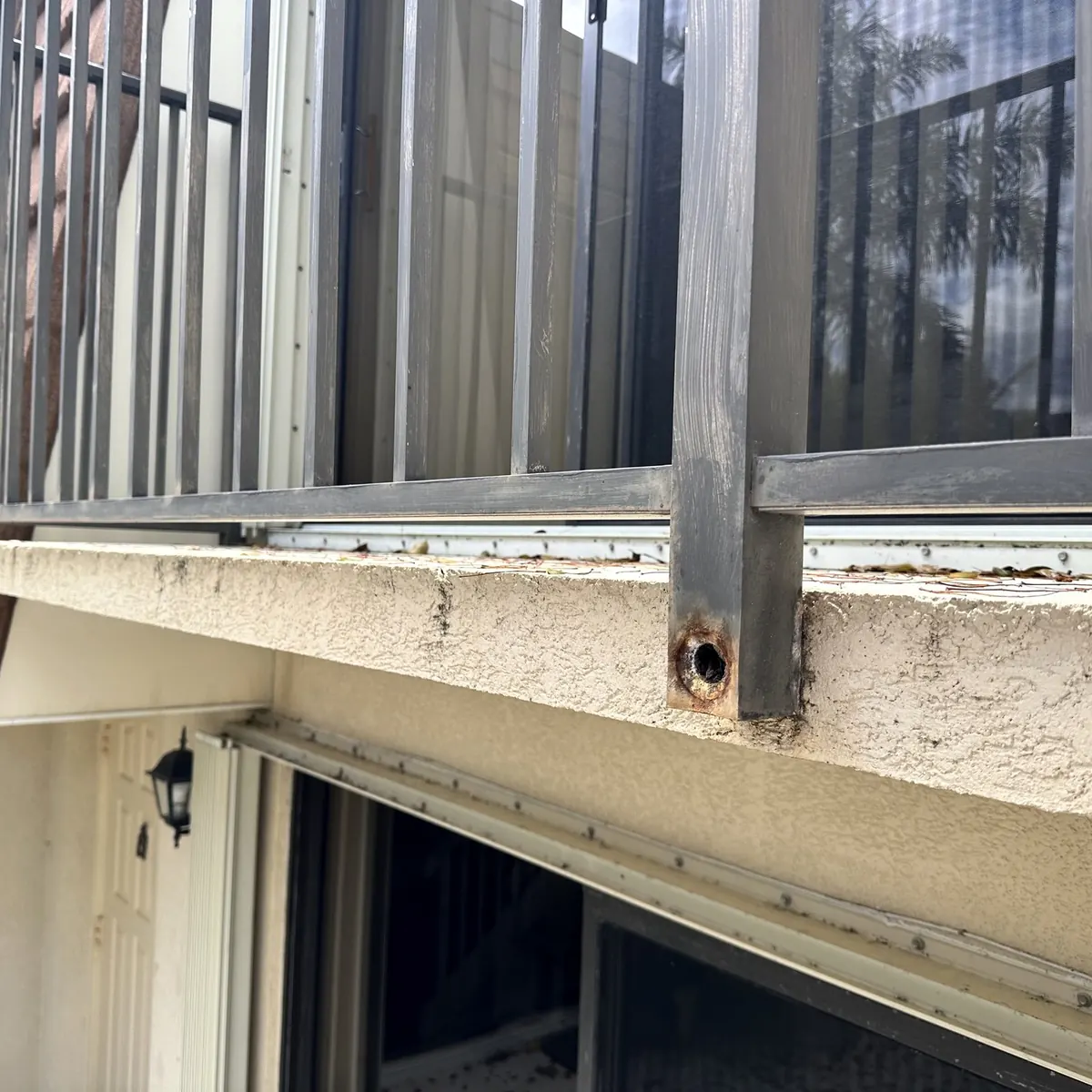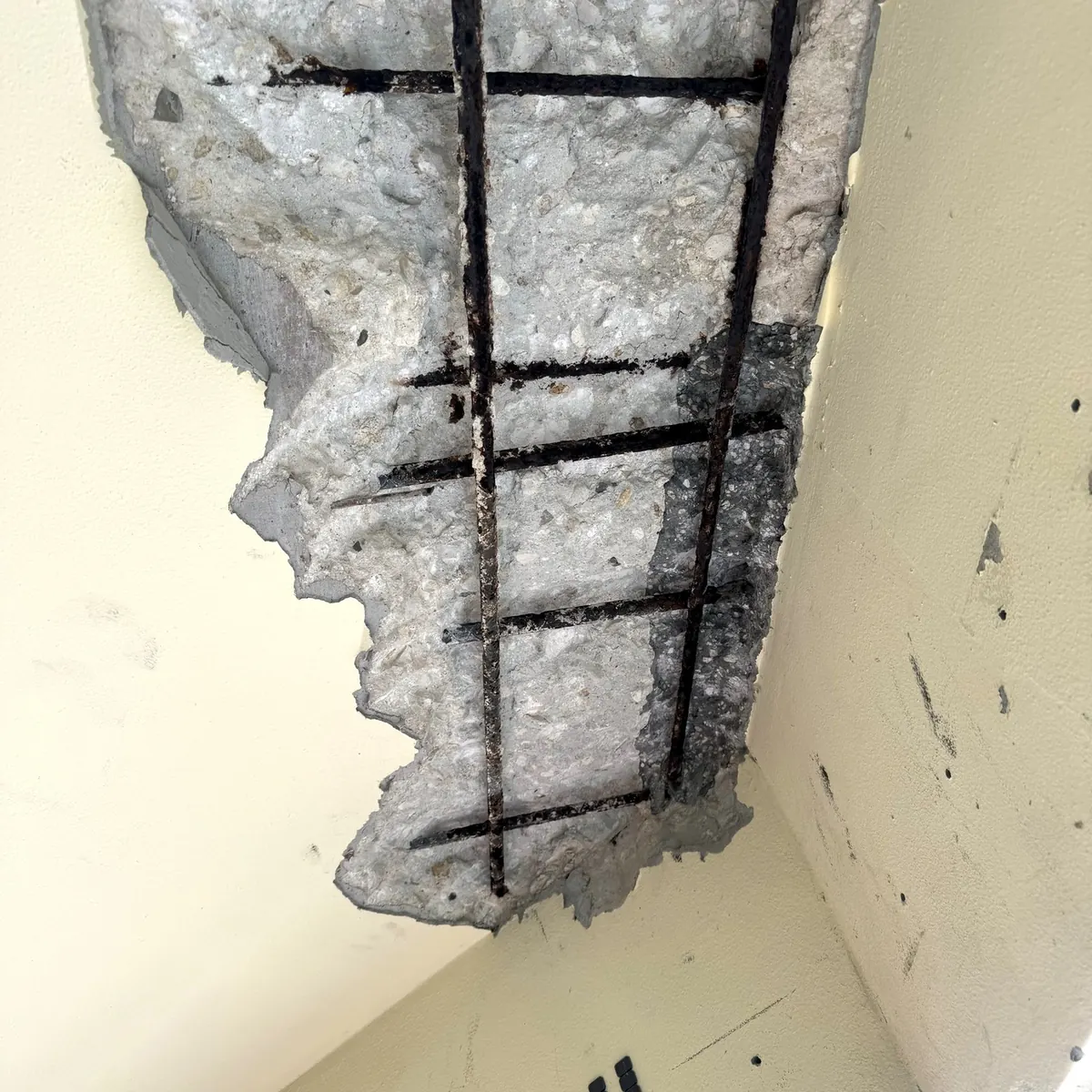
Concrete delamination is damage you usually hear before you see. A section of balcony, walkway or garage ceiling looks fine, but when someone taps it, the sound comes back dull and hollow instead of a sharp ring. That hollow note means a layer of concrete has split away from the concrete behind it, most often at the level of the reinforcing steel.
For condo boards and property managers in South Florida, delamination sits in the middle of a familiar chain. Water and salt reach the rebar, the steel corrodes and swells, the concrete separates, and eventually pieces fall. Understanding the hollow stage helps a board act while the repair is still contained.
What concrete delamination means
Delamination is a separation inside the concrete, running roughly parallel to the surface. The top layer is still in place, so nothing looks broken yet, but it is no longer bonded to the material underneath. Think of it as a crack lying on its side.
On condo buildings the most common cause is corrosion of the reinforcing steel. Rust takes up more space than the original bar, and that expansion pushes outward until the concrete over the steel lets go along a plane. On the coast, chlorides from salt air and wind-driven rain speed the process up. Our post on rust stains on concrete explains the earlier warning signs that often show up first.
Delamination can also happen where a topping, overlay or finish loses its bond to the slab below. Pool finishes are a familiar case: when a pool is resurfaced, the delaminated finish is removed down to sound substrate before the new plaster or finish goes on.
Why hollow concrete matters on a condo
A delaminated area has lost its connection to the rest of the slab. Over time, water, temperature swings and vibration loosen it further, and the next stage is spalling, where pieces break off. On a balcony soffit, a garage ceiling or a high-rise elevation, a falling piece of concrete is a safety hazard for residents, guests and vehicles below.
Concrete delamination also tends to be larger than the visible damage. Brett Serpe, CEO and President of SERPE-CO, described exactly that in his FCAP article, featured on our press page: an engineer's evaluation of a condo found hollow-sounding concrete in several places that still looked solid on the surface. Spot patching what you can see often misses what you can only hear.
Our post on spalling concrete covers the stage that follows when delamination is left alone.
Where concrete delamination shows up
Any reinforced concrete exposed to water can delaminate, but a few areas on Florida condos come up again and again:
- Balcony slabs. Slab edges, soffits and the concrete around railing post pockets take the most water.
- Parking garages. Decks see water and salt carried in by cars, and the ceilings below often show the damage first.
- Walkways and catwalks. Open-air corridors get rain on the top surface and humidity underneath.
- Columns and beams. Corners and edges with less concrete cover over the steel are common trouble spots.
- Pool decks and planters. Constant moisture and drainage problems keep the slab wet.
How engineers find delamination with sounding
Because hollow concrete often looks normal, finding it takes more than a visual walk. Licensed engineers use sounding: tapping the surface with a hammer or rod, or dragging a chain across a deck, and listening for the change from a clear ring to a dull or hollow sound. ASTM International publishes a standard practice for measuring delaminations by sounding, written for concrete bridge decks, and the same basic idea is widely used on other slabs.
A sounding survey usually marks the hollow areas right on the concrete with paint or chalk, then records them on drawings by location. Those maps become the starting point for the repair quantities in the engineer's specifications. When sounding is not enough, the engineer may add other testing to judge how far the problem reaches and why.
Inside a Florida milestone inspection, that testing has a defined place. Under Florida Statute 553.899, Phase 1 is a visual examination by a licensed engineer or architect. If Phase 1 finds signs of substantial structural deterioration, Phase 2 follows, and the inspector decides its scope, which can include destructive or nondestructive testing. Our milestone inspection guide walks through the timeline.
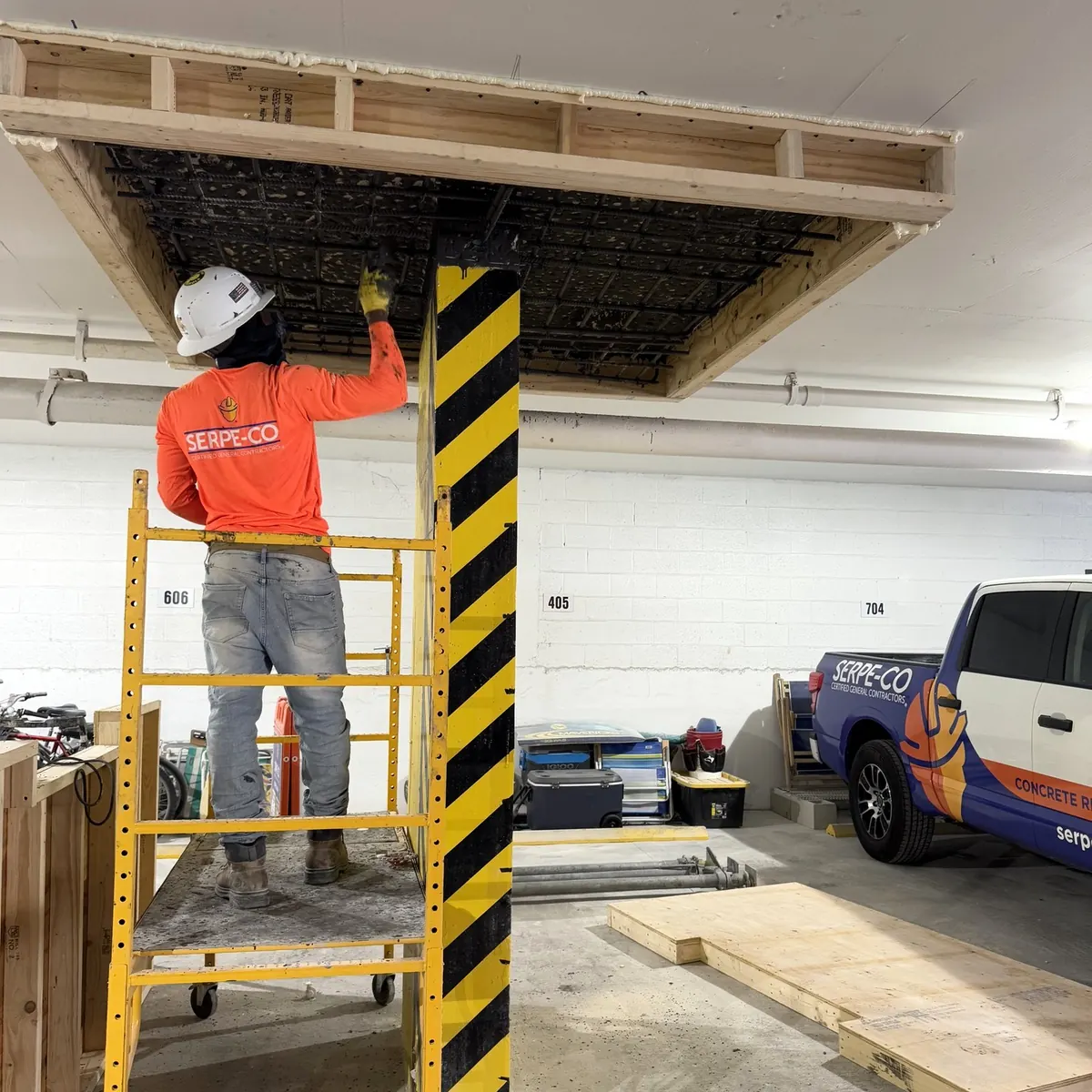
The concrete delamination repair sequence
Every building is different, and the engineer's drawings set the details. On most condo projects, though, the work follows a similar order:
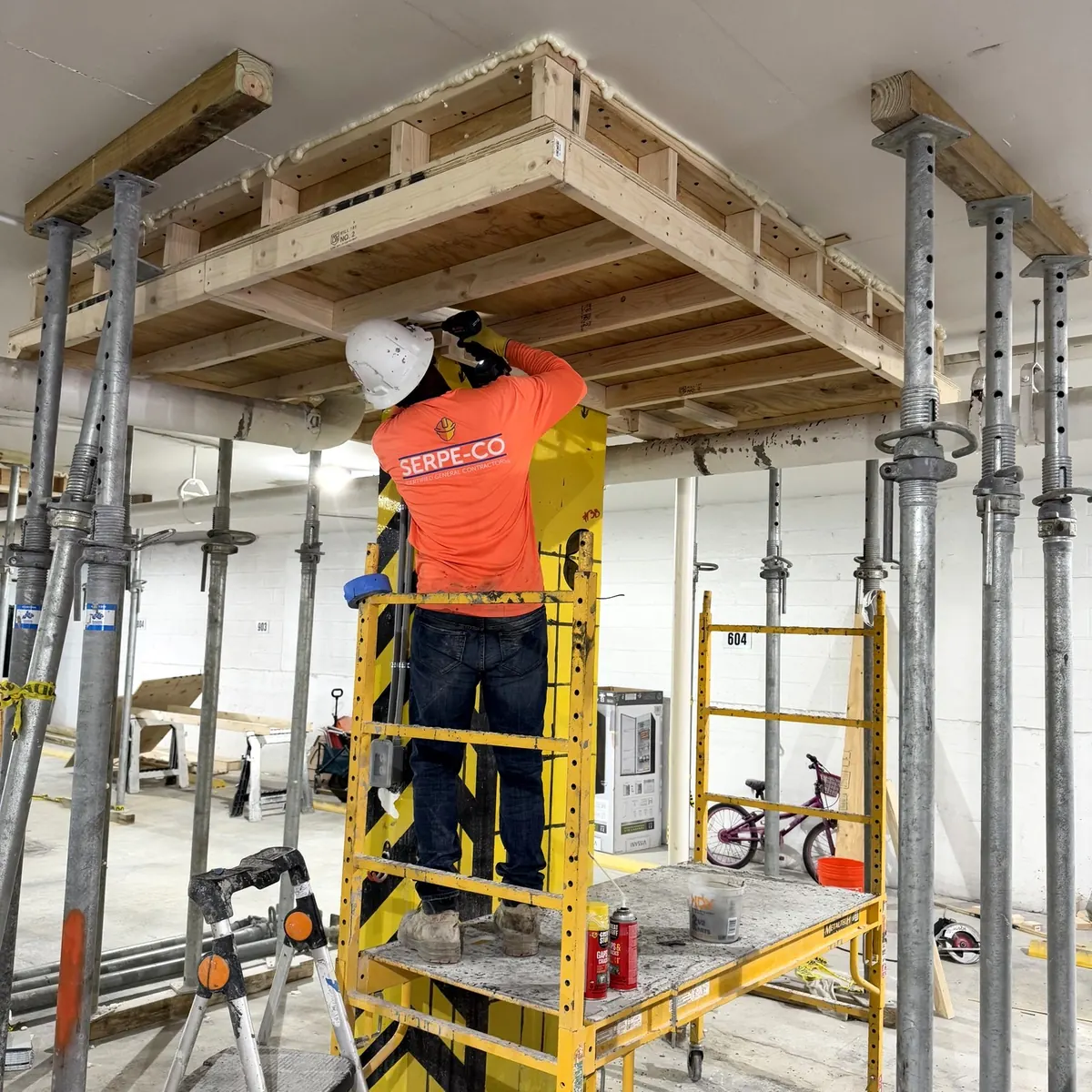
- Protect and shore. The contractor sets overhead protection, barricades and, where the engineer calls for it, temporary shoring before any concrete comes out.
- Mark and cut. Repair areas are laid out from the sounding survey, with the edges typically saw cut so the patch has clean, square boundaries.
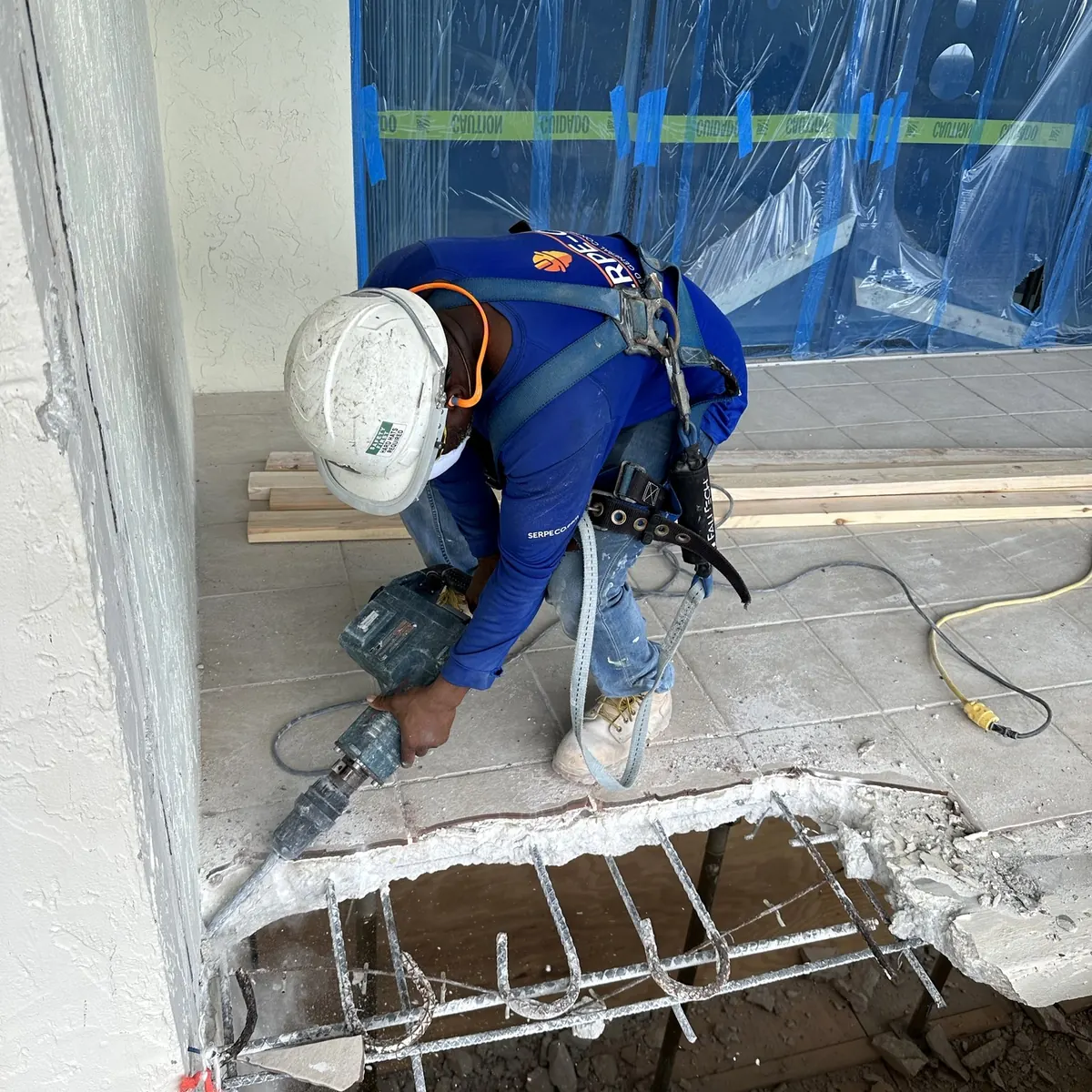
- Remove unsound concrete. Crews chip out the delaminated and deteriorated concrete, including behind the corroded steel, until they reach sound material.
- Clean and treat the steel. Rust is removed from the reinforcing bar. Bars that have lost too much section are supplemented or replaced as the engineer directs.
- Prepare and rebuild. The surface is cleaned and prepared, then rebuilt with repair mortar or concrete, either placed by hand or formed and poured.
- Cure and protect. The repair is cured properly, then sealed, coated or waterproofed so water does not return to the same steel.
The engineer typically observes the work along the way, especially once the concrete is open and the condition of the steel is visible. Quantities can change at that point, which is why good communication among the engineer, contractor, manager and board matters on these jobs.
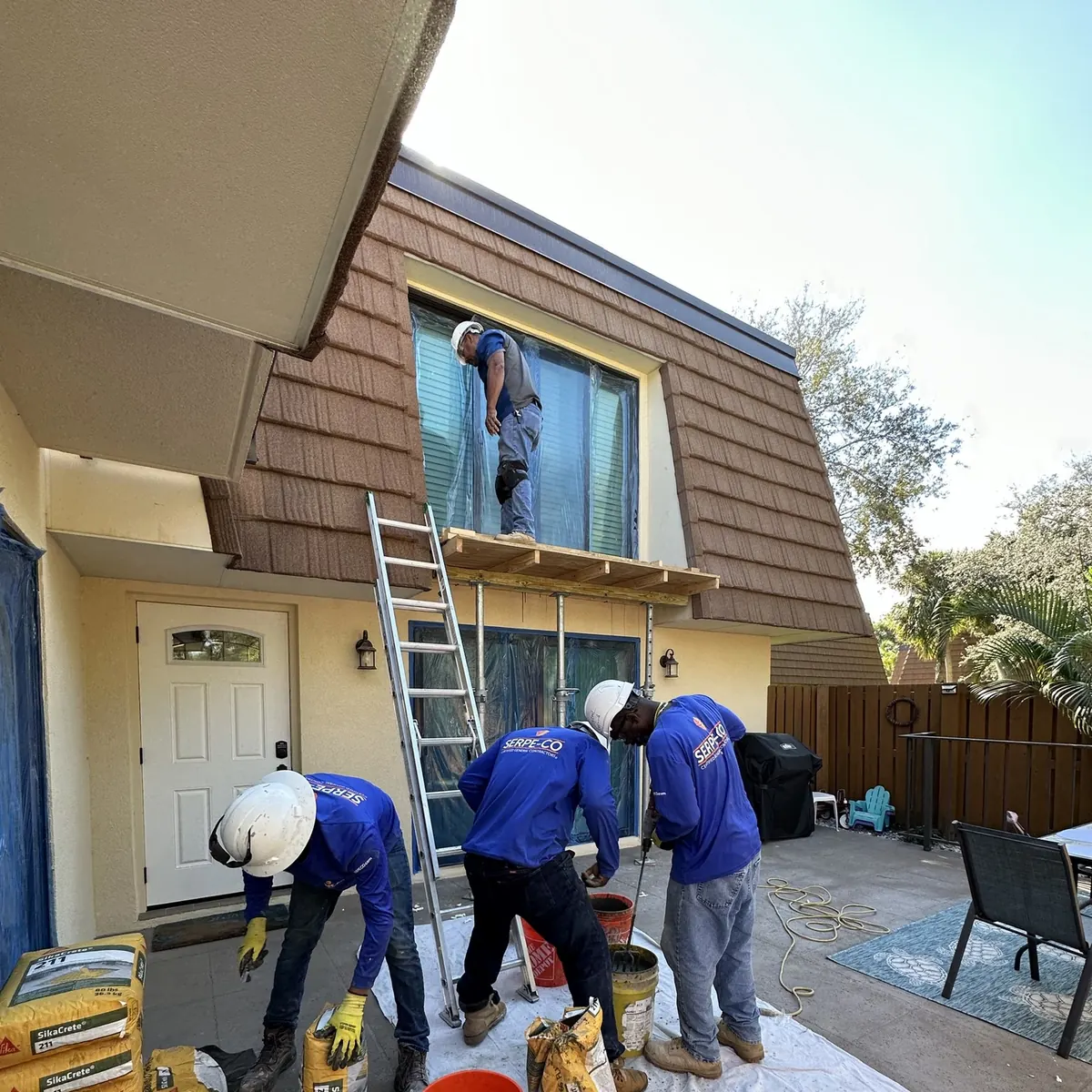
Delamination on slabs, balconies and garages
Balconies are where many residents first notice the problem. Repairs can range from partial depth patching at the slab edge to full slab replacement when the engineer determines the damage goes too deep, with railings removed and reset as part of the work. See our structural concrete repair work for the kinds of repairs involved.
Garages bring their own challenges. Overhead repairs on garage ceilings are worked from scaffolds or lifts, and decks are often finished with a traffic coating to keep water out of the slab. At condominiums such as Edgewater, garage repair was paired with a new traffic coating. Our parking garage restoration page and our post on traffic coating explain that side of the work.
Fix the water, not only the hollow spot
Patching delaminated concrete without stopping the water that caused it usually means the corrosion continues next to the repair. Lasting results come from treating the water path at the same time: sealants and expansion joints, waterproofing membranes and coatings, railing post pockets, and drainage that lets water leave the slab instead of sitting on it. Phasing the work by building stack or garage section helps keep units and parking available while that happens.
What boards can do about concrete delamination now
Boards do not need to wait for a milestone deadline to get ahead of hollow concrete. A few steps keep the decisions organized and the right people involved:
- Log resident reports. Note any complaint about hollow sounds, cracks, rust streaks or small pieces of concrete on the ground, with dates and locations.
- Ask for a sounding survey. When the engineer evaluates the building, ask that balconies, walkways and garage ceilings be sounded, not only viewed.
- Keep the maps. Sounding maps from past surveys show whether concrete delamination is spreading, which helps the engineer and the next contractor.
- Connect it to reserves. Share the findings with whoever prepares your structural integrity reserve study so repairs can be planned and funded.
Planning early tends to pay off. Concrete delamination found during a scheduled evaluation can be grouped into one organized project, with phasing, permits and resident notices worked out in advance. The same damage found after a piece falls usually means emergency shoring, closed areas and decisions made under pressure. Costs rise the longer it waits, and so does disruption.
Bidding is also easier with good documents. When the engineer's drawings show each repair area and the expected quantities, contractors can price the same scope, and the board can compare bids on equal terms. Under Statute 553.899, any contractor bidding on milestone repairs must disclose in writing any relationship with the firm that performed the inspection, so collect those disclosures with each bid.
How SERPE-CO can help
SERPE-CO is a family-owned Florida Certified General Contractor (CGC #1523974) based in Pompano Beach, with more than 20 years in the field. Licensed engineers and architects inspect and specify. We build the repairs, from balcony slabs to garage ceilings, and we work closely with associations, managers and engineers from St. Lucie County to Miami-Dade County, including concrete restoration in Miami-Dade County.
If your engineer has found concrete delamination on your building, or residents are reporting hollow-sounding concrete, contact SERPE-CO or call (954) 718-3094 to talk through the repair plan.

CEO and co-founder of SERPE-CO, a family-owned Florida Certified General Contractor (CGC #1523974). In concrete restoration since 2005 and a contributor to the Florida Community Association Journal. This article is general information, not engineering or legal advice.