Concrete cancer is the nickname for corrosion of the steel reinforcing inside a concrete building. Nothing about it is medical, but the name sticks for a reason: the damage starts small and out of sight, spreads from the inside, and is far easier to deal with when it is caught early.
For condo boards on the South Florida coast, rebar corrosion is not a rare event. Salt air, heavy rain and age give it everything it needs. Below we explain what is happening inside the concrete, how it spreads, why early repair keeps the scope smaller, and the practical steps a board can take now.
What is concrete cancer?
Most condominium structures are reinforced concrete. Steel bars, called rebar, are cast inside the concrete to carry tension, and the concrete around them carries compression. Fresh concrete is highly alkaline, and that alkalinity forms a thin protective layer on the steel that keeps it from rusting.
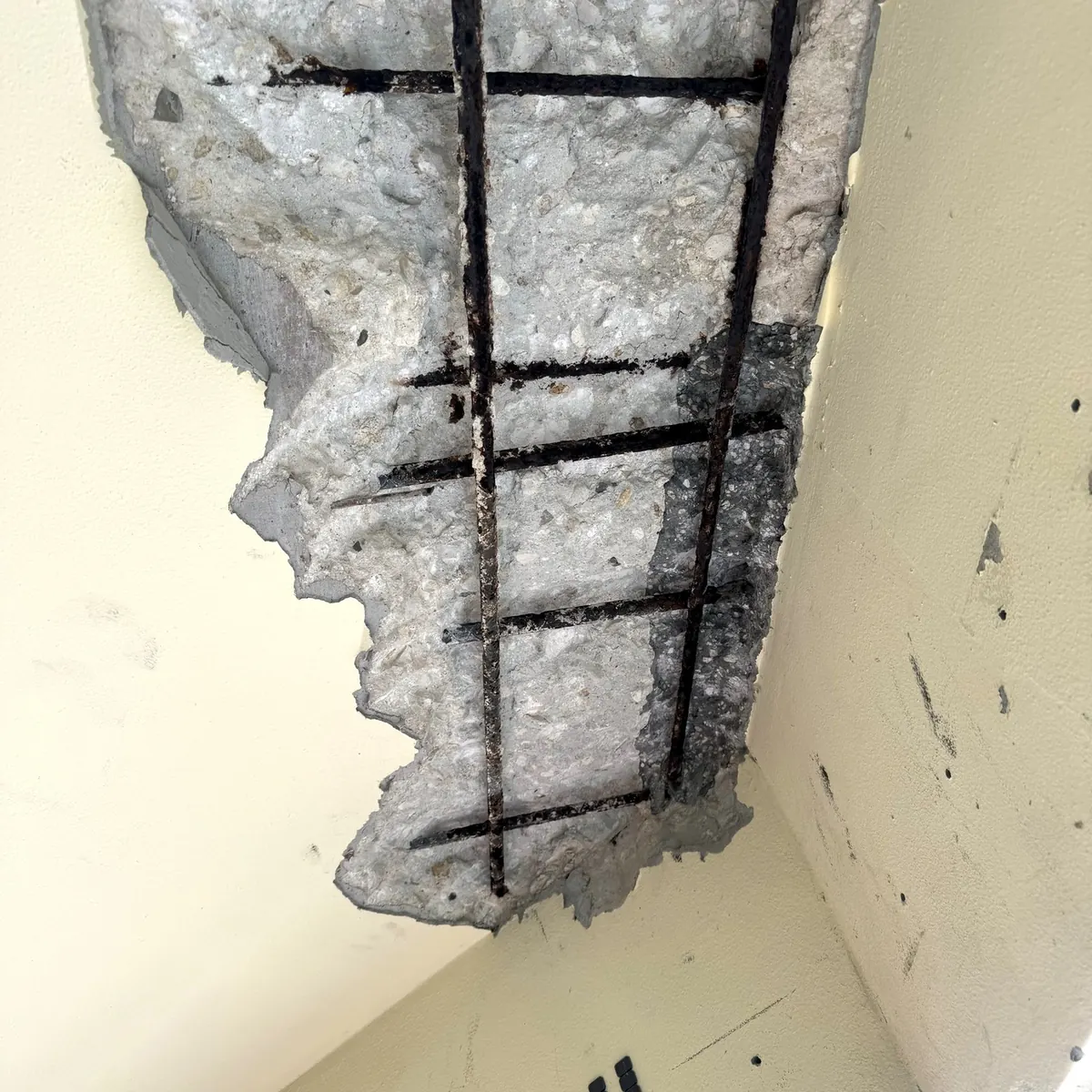
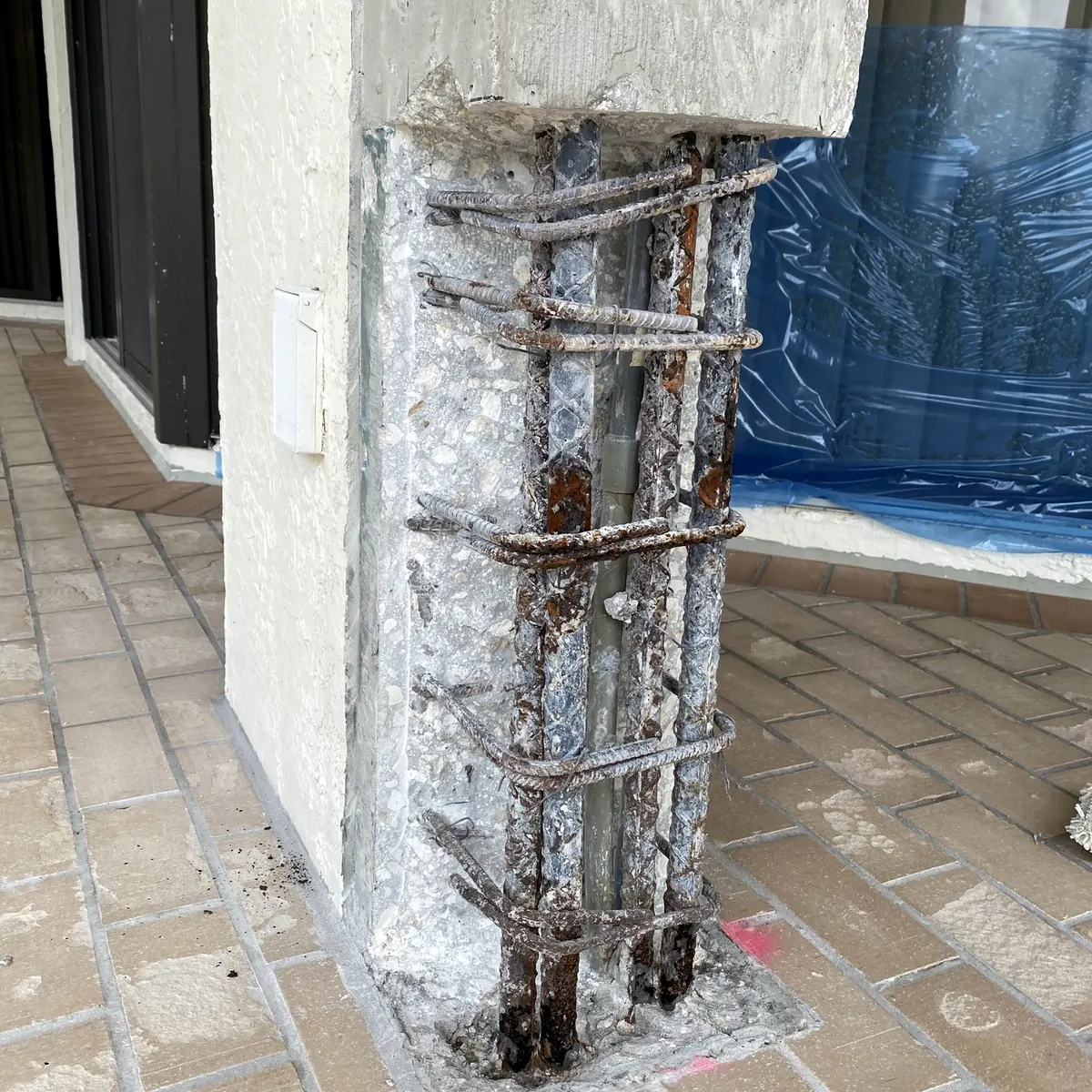
Corrosion begins when that protection breaks down. The steel starts to corrode, the rust expands, and the concrete around the bar cracks. Over time the cracks let in more water and salt, and the visible result is rust staining, hollow areas and, eventually, spalling concrete that breaks away from balconies, columns and ceilings.
Why salt air and chlorides drive concrete cancer in South Florida
Two things usually strip the steel of its protection. The first is chlorides. Salt carried in sea spray and humid coastal air settles on the building and works into the concrete with every rain. Once enough chloride reaches the steel, the protective layer fails even though the concrete is still alkaline.
The second is carbonation. Carbon dioxide in the air slowly reacts with the concrete and lowers its alkalinity, starting at the surface and moving inward. Where the concrete cover over the steel is thin, carbonation can reach the bar sooner.
The American Concrete Institute puts the risk plainly: there is a high risk of continuing corrosion when the chloride content at the steel exceeds 1% by weight of cement or the cement paste is carbonated (ACI 364.6T technical note). On a coastal tower, both conditions can develop over the life of the building.
How concrete cancer spreads
Rust takes up more room than the steel it replaces. As the bar corrodes, it presses outward on the surrounding concrete until a crack forms, usually running along the line of the bar. Water and salt now have a direct path to the steel, so corrosion speeds up and the crack grows. The cycle feeds itself.
Much of the damage stays hidden. Paint and stucco can hold cracked concrete in place for years, and the first sign at the surface is often a faint rust stain. By the time a piece falls, the corrosion behind it has usually been working for a long time. Our post on rust stains on concrete covers that early warning in more detail.
Poor repairs can also spread the problem. Rebar is electrically continuous, so the bar inside a new patch is connected to the bar still sitting in contaminated concrete next to it. ACI describes the ring or halo effect, where corrosion in areas next to a repair may be accelerated. Engineers account for that when they decide how far removal should go.
Where concrete cancer shows up first on condos
- Balcony slab edges and the soffits underneath them.
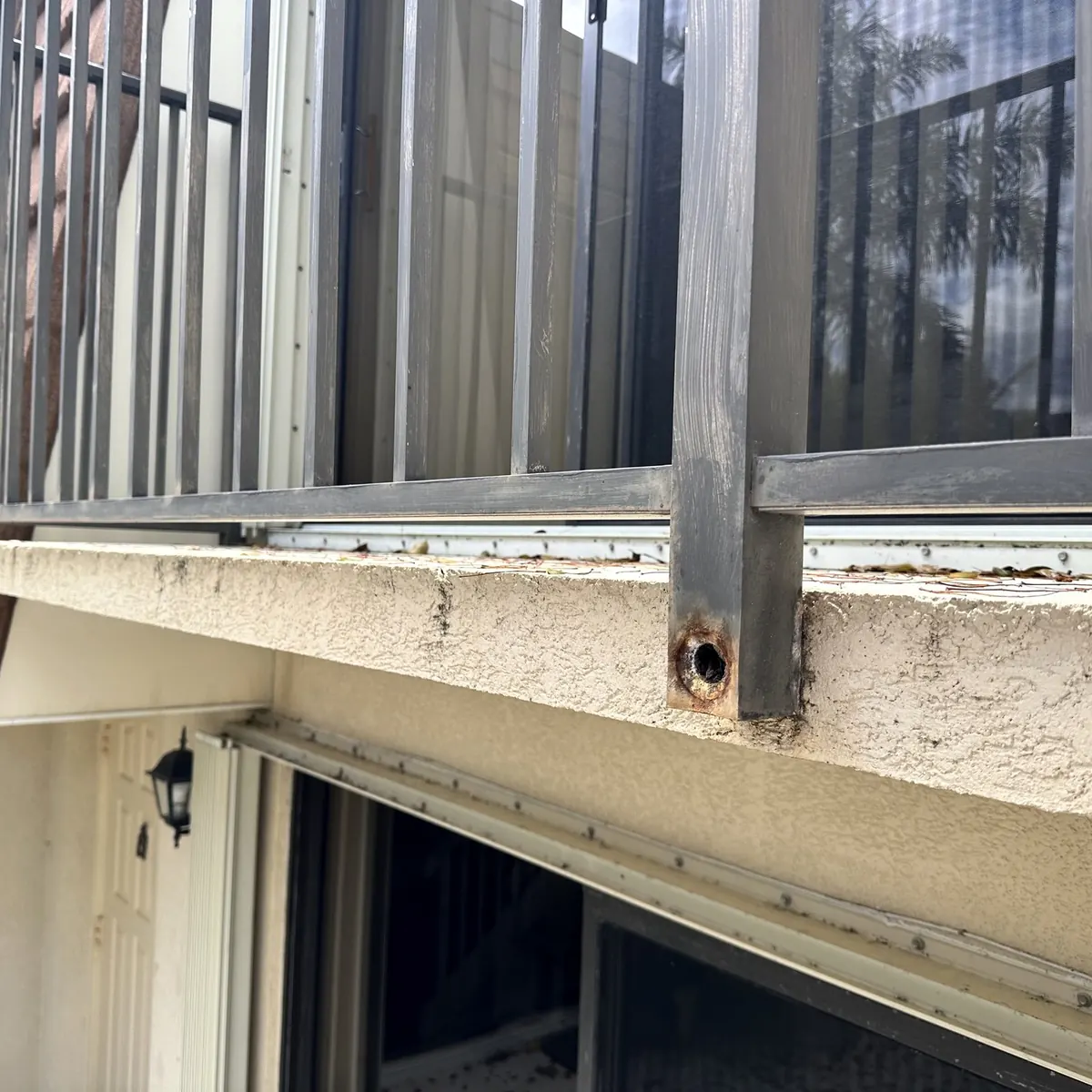
- Railing posts and the pockets they are set in.
- Columns and beams on exposed elevations, especially facing the ocean.
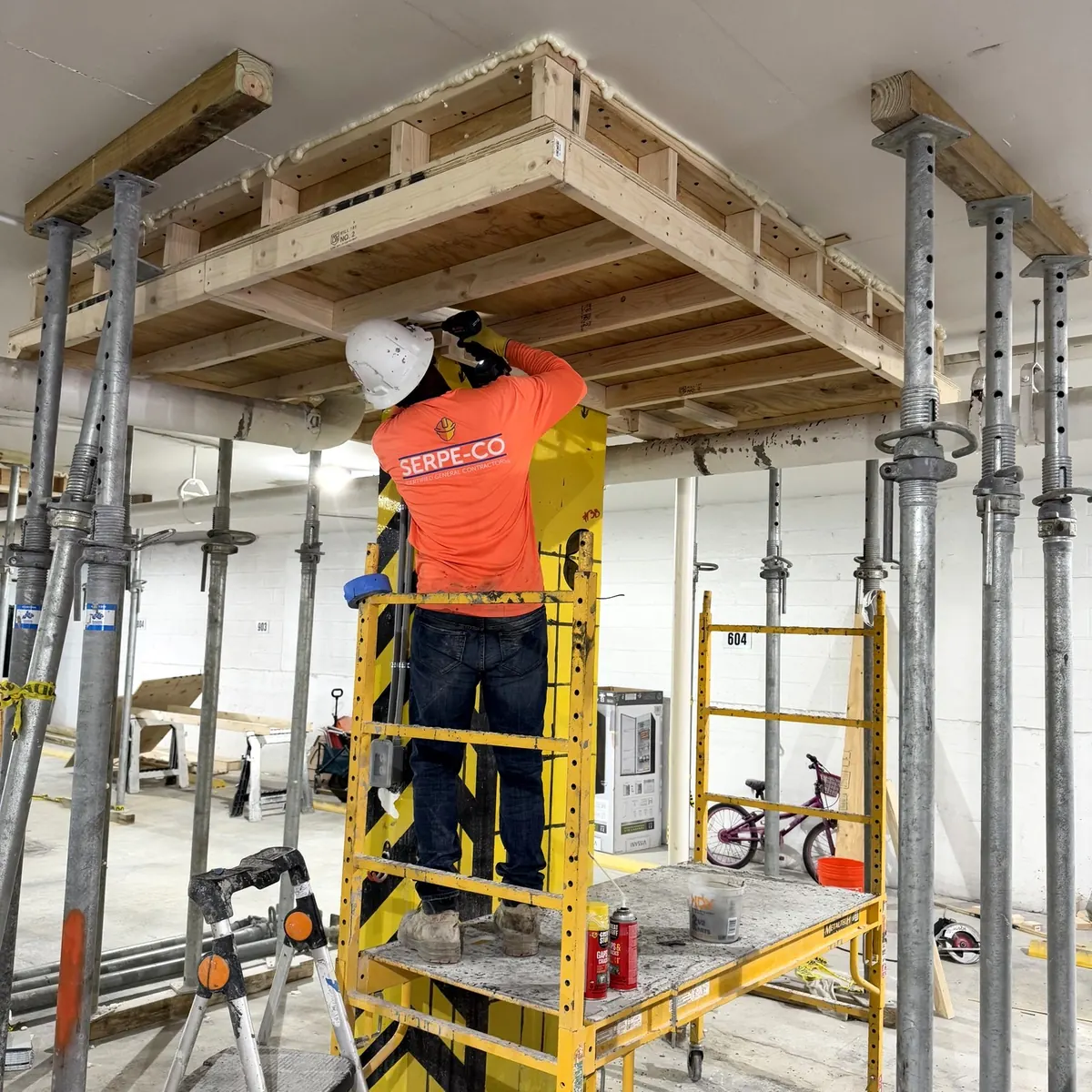
- Parking garage ceilings, beams and columns.
- Walkways, catwalks and stair landings.
- Pool decks and planters over occupied space.
Signs that concrete cancer has already started
Boards and managers do not need special equipment to notice the early clues. A walk around the property, a look up at balcony edges and a pass through the garage will often turn up one or more of these:
- Rust-colored streaks running down from slab edges, railing posts or cracks.
- Straight cracks along the edge of a slab or the corner of a column, often following the steel inside.
- Concrete that sounds hollow or dull when tapped.
- Paint or stucco that bubbles, bulges or flakes off in patches.
- Railings that feel loose at the base.
- Small pieces of concrete on the ground below balconies or on cars in the garage.
None of these signs tells you on its own how serious the damage is. That judgment belongs to the engineer. What they do tell you is that water is reaching the steel, and the sooner the engineer sees them, the smaller the repair is likely to be.
The role of paint and waterproofing
Coatings, sealants and paint are the first line of defense against rebar corrosion. On the coast, paint is part of the building's waterproofing layer, and we generally plan for repainting roughly every 7 to 10 years. Balcony and walkway coatings, expansion joints and window and door sealants all need the same attention, because every gap is a path for salt water to reach the reinforcing.
Why early repair of concrete cancer keeps costs down
We can't put a number on any building without the engineer's specifications, but the pattern is consistent: costs rise the longer it waits. A small area caught early may need limited concrete removal and cleaning of the steel. The same area left for years can need deeper removal, new reinforcing, shoring and a larger work zone.
Waiting also stretches the disruption. Bigger repairs mean longer balcony closures, more scaffolding or swing stage time, and more noise for residents. Catching corrosion early keeps each phase smaller and easier to schedule around the people who live there.
Early planning also helps the budget. Florida Statute 718.112 requires a structural integrity reserve study for condominium buildings of three or more habitable stories, covering items such as the structure, waterproofing and exterior painting (Florida Statute 718.112). Repairs that are known about early can be planned into the reserves rather than arriving as a surprise. Our article on special assessments for condos looks at the funding side.
What condo boards should do about concrete cancer
In his Florida Community Association Journal article, Catch It Before the Crack, Brett Serpe makes the case for acting on the early signs instead of waiting for falling concrete. In practice, that comes down to a few steps:
- Know your dates. Find the certificate of occupancy date for each building and confirm with the building official when the milestone inspection and any county recertification are due. Our milestone inspection guide lays out the state and county rules.
- Watch and record. Ask management to photograph rust stains, cracks, bubbling paint and loose railings, with locations, so the engineer has a history to work from.
- Bring in the engineer early. A licensed engineer or architect evaluates the building, sounds the concrete and determines what needs repair. Contractors, including SERPE-CO, do not make that call.
- Fix the water path. Sealants, expansion joints, waterproofing, coatings and drainage keep water away from the steel. Repairs that ignore them tend to come back.
- Bid from real documents. Have the engineer prepare drawings, specifications and a bid form so every contractor prices the same scope.
- Phase the work. Splitting the project by stack, elevation or garage level keeps the building usable and can spread the work over more than one budget year, as long as the engineer agrees and deadlines are met.
- Tell owners early. Share the engineer's findings and hold a meeting with the engineer present. Owners take hard news better when they hear it first from the board.
Our page for condo boards explains how we work alongside associations, managers and engineers through that process.
What a concrete cancer repair involves
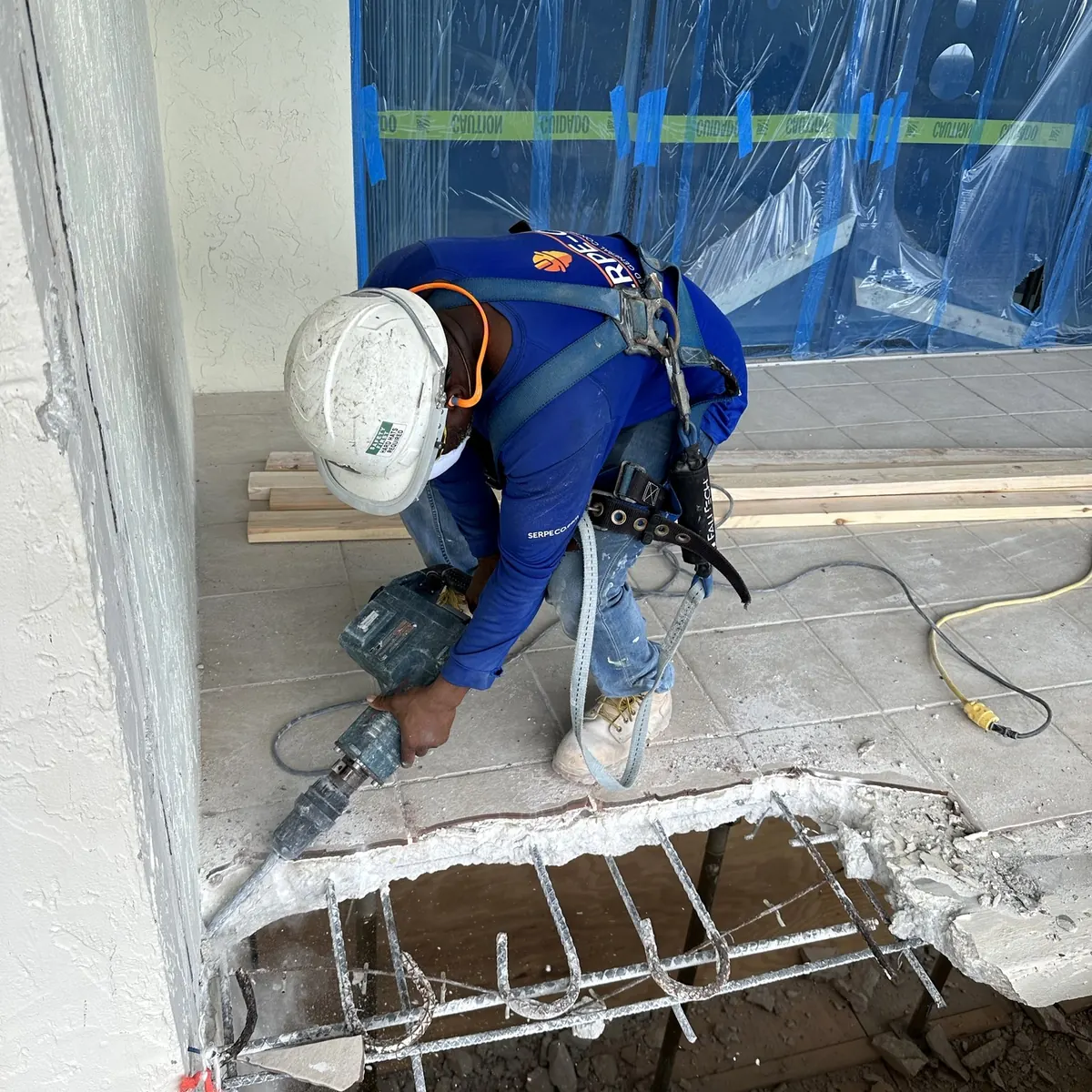
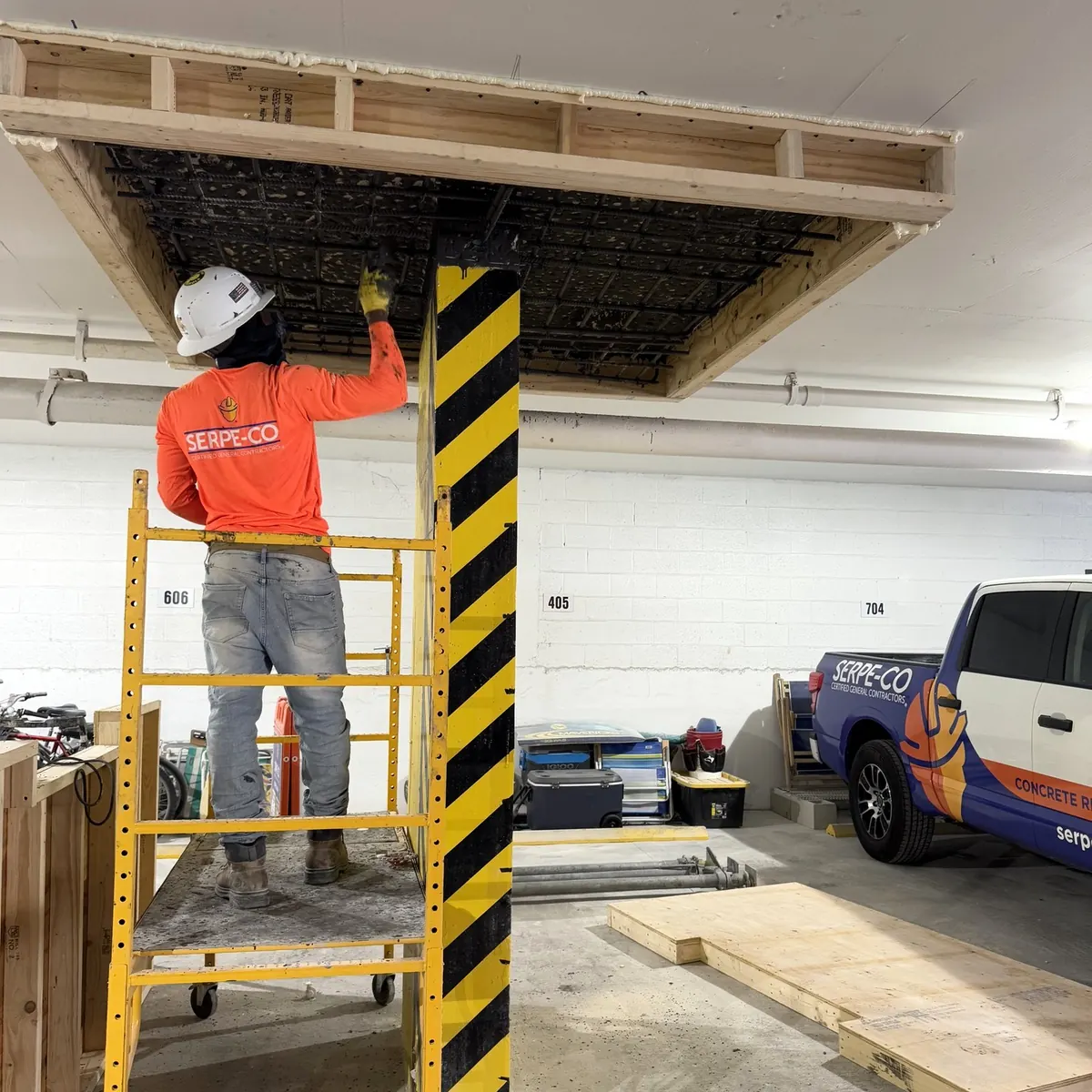
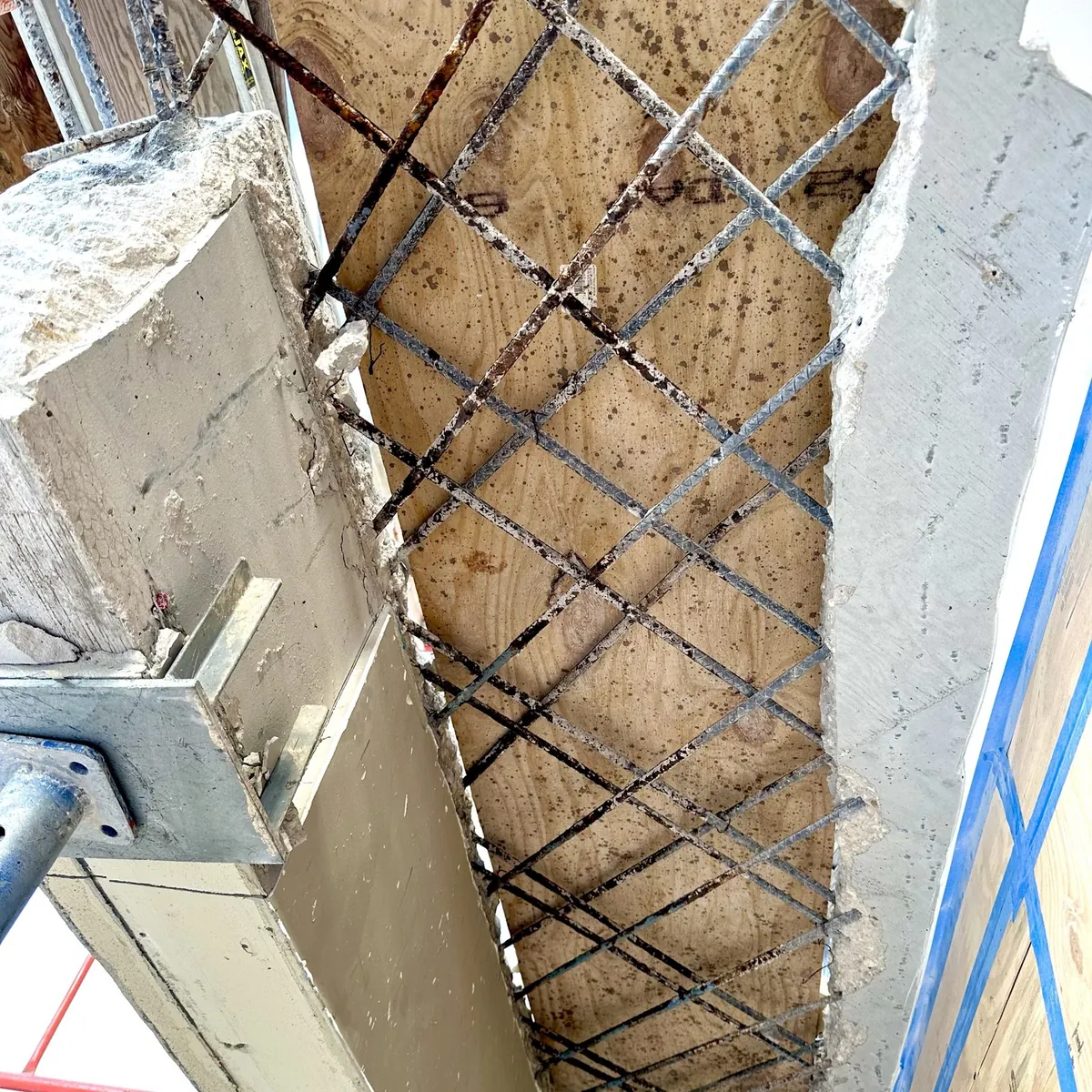
The engineer's specifications control every repair, but the sequence is familiar. The area is protected and shored where required, all unsound concrete is removed, and the corroded steel is exposed and cleaned until it is essentially free of corrosion products. Steel that has lost too much section is supplemented or replaced. The area is rebuilt with repair mortar or new formed concrete, then sealed, coated and painted so water stays out.
Our structural concrete crews have done this work on condominiums such as the 2770 Building, where columns were repaired from swing stages. Boards in Miami Beach, Sunny Isles Beach and across the county can see our local service on the Miami-Dade County concrete restoration page.
How SERPE-CO can help
SERPE-CO is a family-owned Florida Certified General Contractor, CGC #1523974, based in Pompano Beach and serving St. Lucie County to Miami-Dade County. Brett and Jason Serpe bring more than 20 years in the field, and our crews build the repairs your engineer specifies with safety and an organized schedule at the center of every job.
If you are seeing signs of concrete cancer on your building, get in touch with SERPE-CO or call (954) 718-3094. We can walk your board through the repair sequence and how the work could be phased.
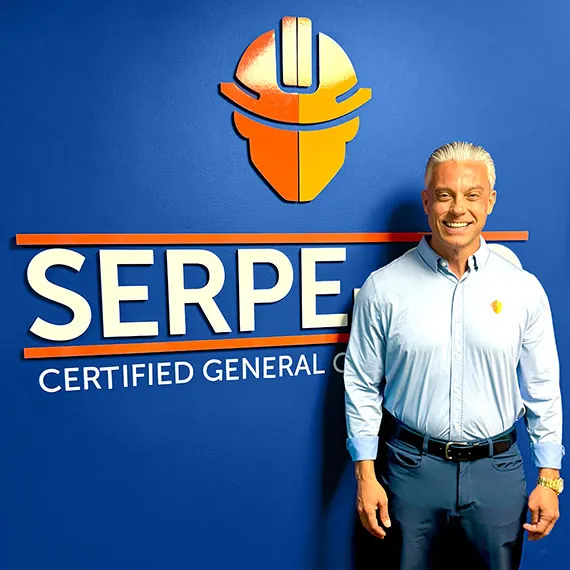
CEO and co-founder of SERPE-CO, a family-owned Florida Certified General Contractor (CGC #1523974). In concrete restoration since 2005 and a contributor to the Florida Community Association Journal. This article is general information, not engineering or legal advice.