Commercial Roofing
Commercial Roofing & Roof Replacement
Low-slope roofs repaired, recoated or replaced per the consultant's spec, once the deck below is sound.
In short
What is commercial roofing?
Commercial roofing means repairing, restoring or replacing the low-slope roofs found on condominiums, offices, retail centers and industrial buildings. The scope includes membrane, insulation, flashings, drains, metal edge and coping, and, where the building is concrete, the deck underneath. The usual reasons to call are leaks, standing water after storms, blisters, open seams, or a moisture survey that finds wet insulation under the membrane.
Free milestone planner
Is a milestone inspection coming due on your building?
Enter the year your building got its certificate of occupancy and how many stories it has. The planner estimates your deadline under Florida law, then you can send it to SERPE-CO for a second look.
Add the year and story count for an estimated due date.
Want a second look at your timeline? Send your building details and SERPE-CO will follow up about the inspection, likely repairs and how to plan for them.
About this estimate
This is a planning estimate drawn from the statewide rule in Florida Statute 553.899. Your local building department sets the real deadline and may call for the first inspection at 25 years instead. Broward County also has its own Building Safety Inspection Program. Check your date with your building official and engineer, or contact SERPE-CO and we will help you sort it out.
Commercial Roofing
A roof on a concrete building does two jobs: it keeps the weather out and it is the top slab of the structure. SERPE-CO handles commercial roofing repairs, restoration coatings and complete reroofs for condominiums, offices, shops and warehouses, and we fix any spalled deck concrete before a new membrane is installed.
With more than 20 years in the field, SERPE-CO handles commercial roofing work from St. Lucie to Miami-Dade for condominium associations, property managers and owners of commercial buildings.
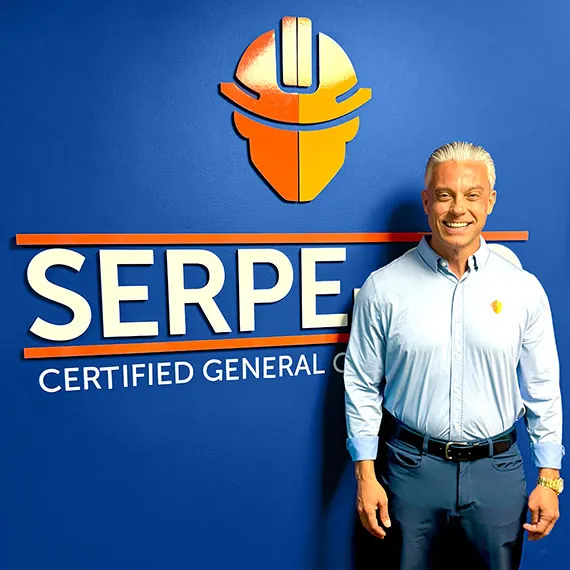
Reviewed by Brett Serpe, MBA, GC, CEO of SERPE-CO · Florida Certified General Contractor CGC #1523974
Prepared by the SERPE-CO project team, with more than 20 years in concrete restoration. Last reviewed November 2026.
Why it happens
What South Florida weather does to flat roofs
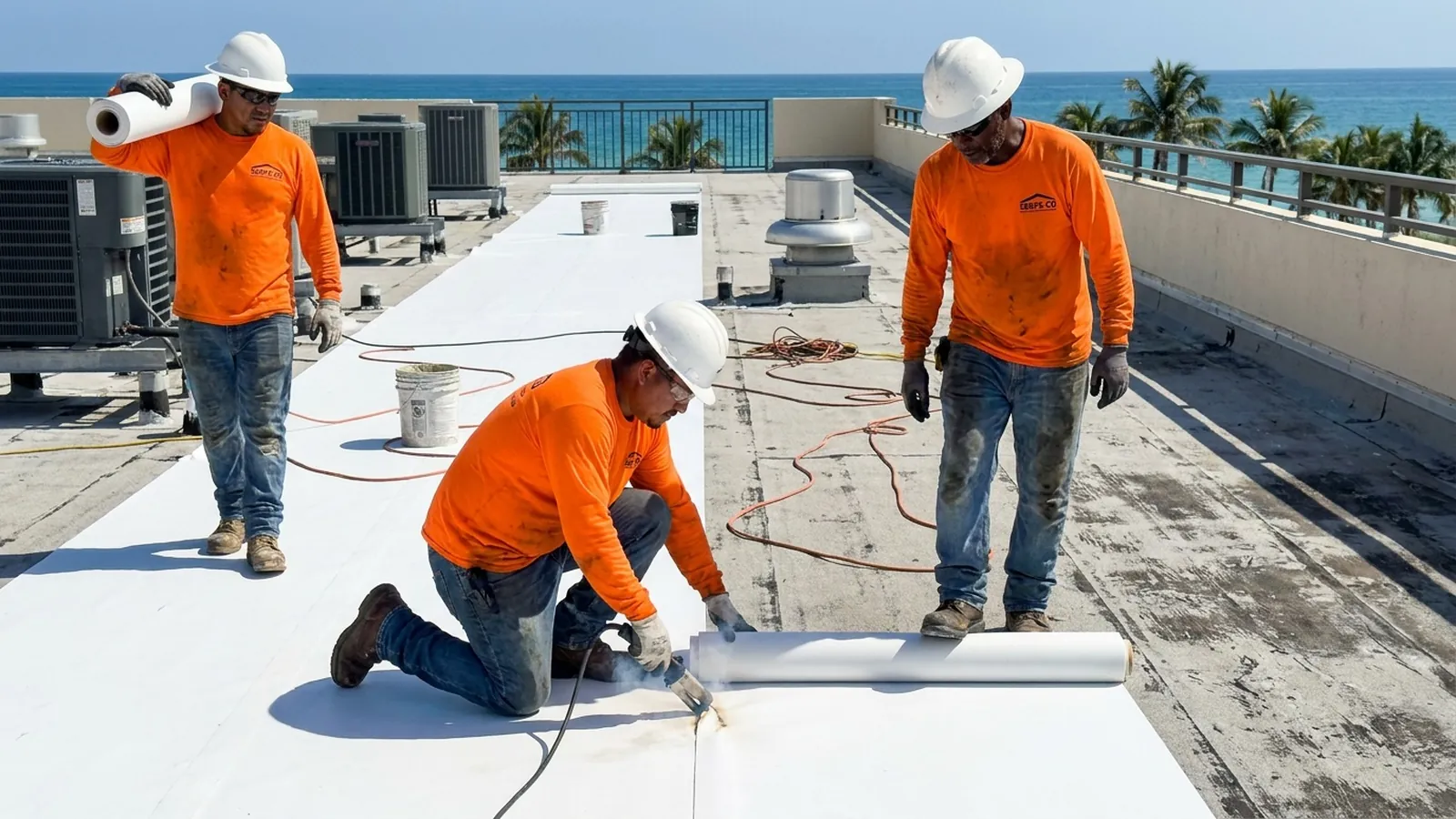
Flat and low-slope roofs here deal with strong sun, heavy rain and hurricane wind. Heat and ultraviolet light dry out asphalt membranes and erode the top of single-ply sheets, and the roof grows and shrinks every day, working at each seam and flashing. Ponded water in low spots ages the membrane faster and finds the smallest gap. Most leaks start at edges and openings: parapets, coping, curbs under rooftop units, drains, scuppers, and all the penetrations added to the roof over the years.
After water gets past the membrane, most of the harm happens out of view. Wet insulation loses its insulating value and can come loose from the deck, which lowers the resistance of the roof to wind uplift. On a concrete building, water soaks down to the structural roof slab and, in salt air, carries chloride to the steel. Cracked parapets and spalls in the roof deck turn up often once the old roof comes off, so replacing a roof on a concrete building is a structural project as much as a roofing one.
The work
Commercial Roofing: what the job covers
- 01Test cuts and leak tracing for the roof consultant
- 02Targeted repairs at drains, scuppers, flashings and penetrations
- 03Full tear-off and new modified bitumen, TPO, PVC or built-up roofs
- 04Coatings that restore sound existing membranes
- 05Crickets, tapered insulation and improved drainage
- 06Roof deck spall repair and rebuilt parapets, coping and curbs
How we do it
How we replace a roof while the building stays fully occupied
A reroof usually begins with paperwork from a roof consultant, architect or engineer. That package includes a condition survey, test cuts or moisture scans showing where insulation is wet, and a specification naming the system, how it attaches and the detail at each edge and opening. Our office reviews it, sends product approvals and data sheets for acceptance, pulls the permit and splits the roof into sections, so we never open more in a day than the crew can make watertight by evening.
The old roof comes off one section at a time, all the way to the deck. Where the deck is concrete, the crew sounds the bare slab and repairs any spalls or delaminations to the engineer's detail before covering them. Drains are cleaned out or replaced, and worn curbs, parapets and coping are rebuilt. Tapered insulation and crickets follow the layout from the consultant so water heads to drains and scuppers rather than sitting, and every layer is fastened the way the approved system calls for.
Next comes the membrane, flashed at parapets, curbs, penetrations and every place the roof meets a wall, then capped with new coping and metal edge. Building department inspections happen at the points the permit sets, and in Broward cities that includes in-progress membrane inspections. The consultant watches the details go in. Commercial roofing jobs wrap up with the final inspection, a punch list walked jointly with the consultant, and warranty paperwork from the manufacturer when the specification included one.
Materials we use
How a roof system gets chosen among modified bitumen, built-up, TPO, PVC and coatings
A handful of system families cover most low-slope roofs in South Florida. Modified bitumen, asphalt strengthened with polymers, goes down in two or more plies using heat, cold adhesive or self-adhered sheets, and handles foot traffic well. Built-up roofs stack felts and asphalt and remain one of the oldest low-slope approaches still installed. TPO and PVC, both single-ply thermoplastic membranes, have hot-air welded seams and a light surface that reflects heat. Each system goes on only the way its product approval permits.
Fluid-applied restoration coatings, including silicone, acrylic and urethane, are rolled or sprayed over an old membrane that remains sound and mostly dry, giving it a new weathering surface without tearing off. Many low-rise condominium and HOA buildings have sloped tile or metal roofs, each with its own product approval. Beneath any membrane, tapered insulation creates slope toward the drains and a cover board shields the insulation. The roof consultant picks the system by weighing the deck, wind uplift, drainage, foot traffic on the roof and where the owner wants the building to be in the years ahead.
Built to hold up
Where roofs fail first, and what a board should look for
The middle of a roof is seldom where it fails. Trouble starts at the edges and openings: parapet flashing cut too short, open coping joints, pitch pans around pipes, curbs under rooftop equipment, drains sitting higher than the roof around them, and the line where membrane meets stucco wall. A lasting roof also has to shed water. Tapered insulation and crickets that steer water to drains and scuppers, plus the overflow drainage the design requires, stop the ponding that wears a membrane out early.
Proposals should track the consultant's bid package item by item, naming the system and its product approval, the insulation and how it is attached, and deck repair quantities in units the consultant can check. Ask how much roof gets opened each day, how rooftop equipment is handled and how the building stays dry while the work is underway. On commercial roofing projects, plan for permit inspections, consultant field reports and photos of the deck before it is covered. The roofing manufacturer sets the terms of any warranty.
How we run a job
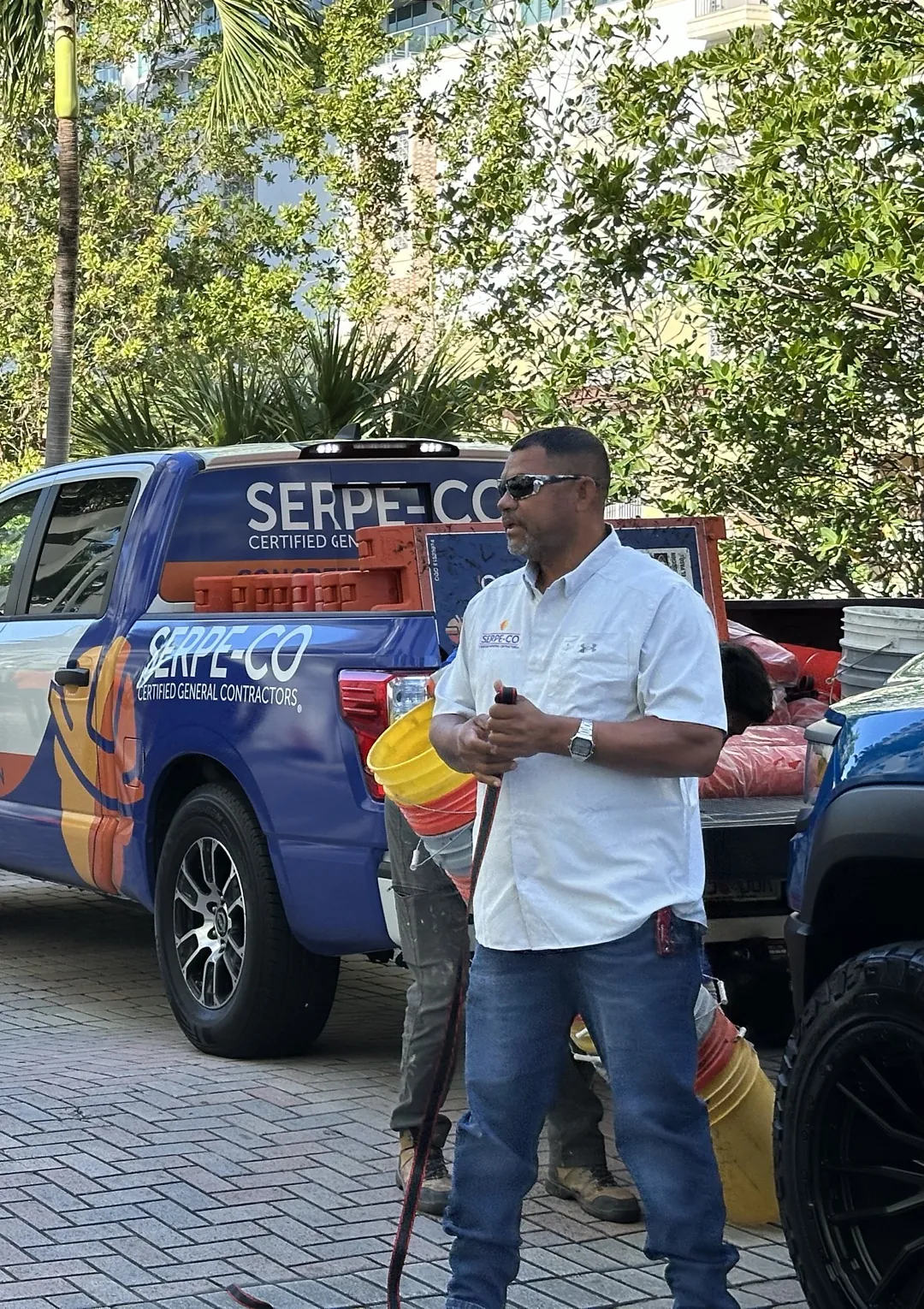
Scheduled around the residents and staff who use the building.
- 01
Meet on site
Each job starts on site, walking the property and its conditions with your manager, board or engineer.
- 02
Follow the engineer's scope
The engineer writes the scope. We price it line by line, plan access and lay out each phase to build it.
- 03
Put safety first
We can never work too safely: shoring, swing stages, barricades and notices go up first.
- 04
Build the repairs
Crews work through the repairs in order, stopping for inspections wherever the engineer calls for them.
- 05
Finish and document
Final inspections, a closed permit and a full record of the work for the association.
Counties we cover
Commercial Roofing, county by county
Summary
Commercial Roofing: what to remember
- 01
Leaks on low-slope roofs usually start at parapets, curbs, coping, penetrations, drains and scuppers, rarely in the open field of membrane.
- 02
On concrete buildings, deck spalls uncovered during tear-off get repaired to the engineer's detail before the new insulation and membrane go over them.
- 03
Broward County is inside the High-Velocity Hurricane Zone, so roofing there must meet the code's HVHZ rules and use products with Miami-Dade Notices of Acceptance.
- 04
Florida law requires the condominium structural integrity reserve study for any building three or more habitable stories tall to include the roof.
Glossary
Words that show up in an engineer's report
- Low-slope roof
- Often called a flat roof, a low-slope roof has just enough fall to move rain toward drains and scuppers and uses one continuous membrane, not tile or shingles.
- Tapered insulation
- Rigid boards produced in stepped thicknesses and arranged so the roof surface slopes toward its drains and scuppers, even when the deck below is flat.
- Cricket
- A low ridge of sloped insulation placed upslope of a curb or between drains that splits the flow of water around the obstacle so it cannot pond.
- Coping
- A metal or masonry cap over the top of a parapet. Coping sheds rain outward so it cannot run into the wall or behind the roof flashing.
- Notice of Acceptance
- A Miami-Dade County approval for a building product that passed testing under the High-Velocity Hurricane Zone sections of the Florida Building Code.
Questions
Commercial Roofing: questions boards ask
Will you build to our roof consultant's specification?
Yes. On condominiums and commercial buildings, a roof consultant, architect or engineer usually designs the reroof and puts together the drawings, specification and bid package. SERPE-CO prices and builds to those documents, sends product data and approvals in for review, and schedules the consultant's field visits until the roof is finished.
Can we repair our roof, not replace it?
In many cases, yes. A membrane that is still bonded over mostly dry insulation can often be kept in service longer with spot commercial roofing repairs or a restoration coating. Widespread wet insulation, a failing deck or a system at the end of its life points to replacement instead. Test cuts and the consultant's survey normally settle the question.
Can we put the new roof over the existing roof?
In some cases. A recover, meaning a new system laid over the existing roof, is something the Florida Building Code allows only in limited conditions, and whether it applies is the building official's call. Wet insulation, a deck in poor shape or an earlier recover already in place usually take it off the table. On most older condominium roofs, a complete tear-off is how the deck gets checked and repaired.
Will residents and tenants need to leave during a roof replacement?
In most cases, no. We open the roof in sections that can be sealed up each day, the mechanical trades disconnect and reset rooftop equipment with us, and hoisting, staging and deliveries are scheduled through management. Residents and tenants get notice ahead of any work that means noise, adhesive smell or air conditioning units being shut off briefly.
What is Florida's 25 percent roof rule?
The Florida Building Code required that once over 25 percent of a roof section was repaired, replaced or recovered in a 12-month period, the whole section be brought to current code. A 2022 state law carved out roofs that were built, repaired or replaced under the 2007 or later Florida Building Code: on those, only the area being worked on must meet current code. How the rule applies is up to the building official.
Does a condominium structural integrity reserve study include the roof?
Yes. Florida Statute 718.112(2)(g) requires a structural integrity reserve study for condominium buildings that are three or more habitable stories tall, and the roof is on its list of required items. A new study is due at least once every 10 years. A qualified professional prepares the study, not the roofing contractor, and its findings help the board decide when to plan for roof repair or replacement.
Do owners need to leave during the work?
Rarely. Residents stay home while crews move through the building by elevation or stack. Each balcony is closed only during its own repair, and owners hear from us before anything affects them. The board and manager approve the sequence and access plan first.
Will you coordinate with our engineer?
Always. SERPE-CO works closely with associations and professional engineers, building every structural repair to the engineer of record's specification and lining up their inspections as the job goes. No engineer yet? We can help you take the first step.
Industry standards and guides
- International Concrete Repair Institute (ICRI): repair guidelines for concrete
- American Concrete Institute (ACI): codes and guides for concrete construction and repair
- Florida Building Code
On every project, our repair methods and materials follow the engineer's specification, the product maker's requirements and the current building code. Treat this page as general information, not engineering advice.
Other services we provide
Working with an engineer?
Holding drawings, specifications or a complete set of bid documents?
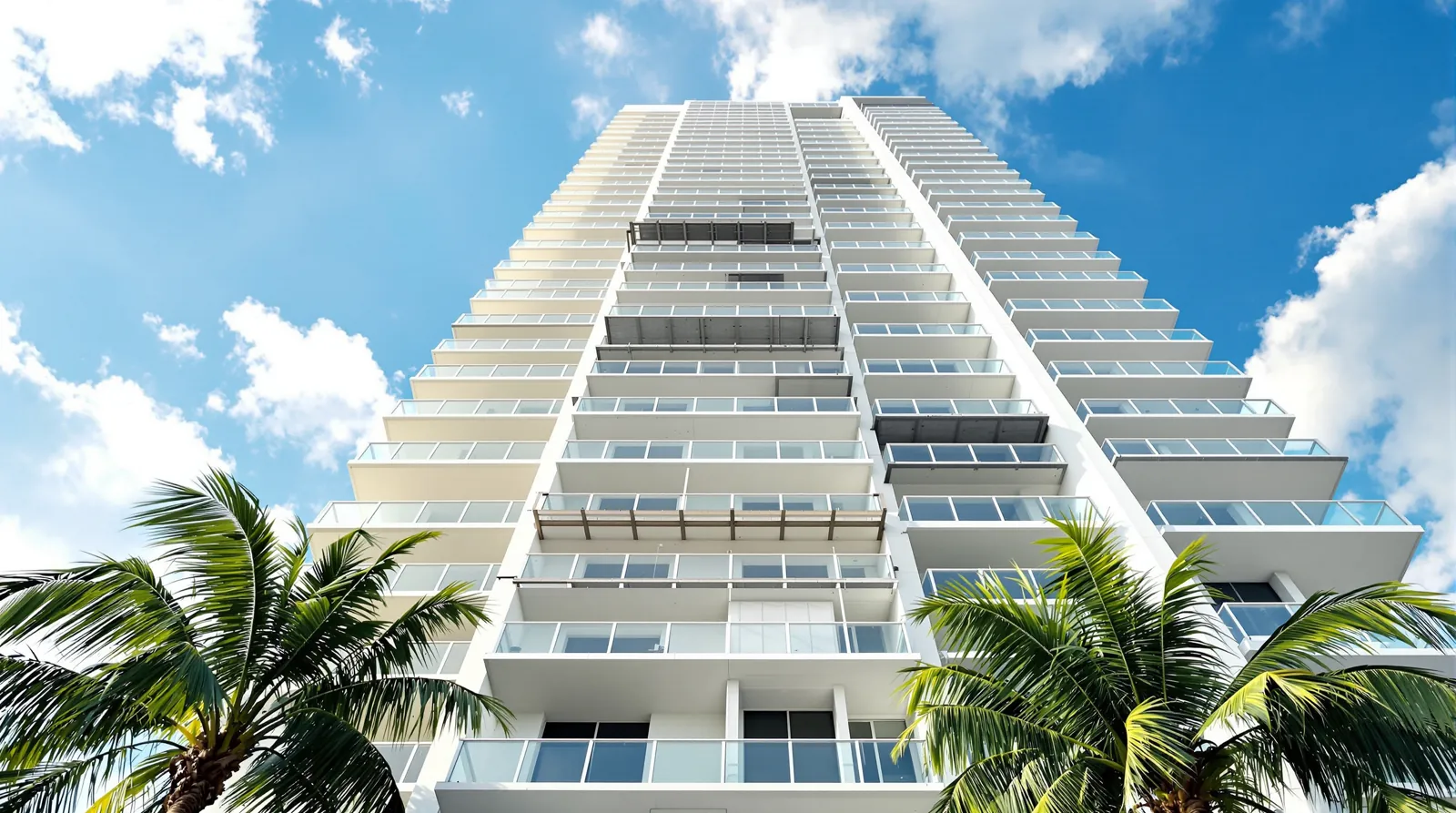
Structural engineers, property engineers and board members send SERPE-CO much of our restoration, pool and roofing work. Once a scope has been drawn and specified, our team prices what the documents show, raises questions where something is unclear, and lays out each line so boards can weigh the bids on equal terms.
Request an estimate
Let's plan your restoration.
Tell us where the building is and what you are seeing. We set up a visit to the property, then send a written proposal, or tell you an engineer needs to write the scope first.
- More than 20 years in the field
- St. Lucie, Martin, Palm Beach, Broward and Miami-Dade
- Family-owned Certified General Contractor
Rather call?(954) 718-3094