Miami-Dade County turf
Artificial Turf in Miami for Towers, Decks and Courtyards
From Brickell amenity decks to Little Havana courtyards, SERPE-CO installs artificial turf in Miami with the slab, membrane and drainage treated as the main job.
In short
Who installs artificial turf in Miami on condo amenity decks?
SERPE-CO, the Serpe family's Pompano Beach contracting firm (Certified General Contractor, CGC #1523974), installs artificial turf in Miami for condominium associations, property managers and commercial owners. Most Miami requests involve podium and rooftop amenity decks, pool surrounds and shaded courtyards. On any deck over a membrane or structural slab, the building's structural engineer or design professional confirms loads, drainage and hold-down, and our crews build to that design while residents keep using the building.
Where turf fits
Where artificial turf in Miami makes sense
Brickell holds most of Miami's residential high-rise stock, and many newer towers west of Brickell Avenue sit on multi-level garages topped by amenity decks. Those decks are where boards ask about artificial turf in Miami most often: a lawn panel beside the pool, a dog relief corner, a putting strip near the gym. Brickell Key adds island towers that catch bay wind on every side, which matters for anything laid on an upper level.
Downtown Miami and Edgewater follow the same pattern north along Biscayne Bay. Open plazas there often double as the roof of a garage, so a green area at street level may still be sitting on a structural slab with a membrane and occupied parking below. Midtown and Wynwood add mid-rise apartments on podium garages, where planters and turf strips soften large concrete amenity levels.
Inland and to the south the setting changes. Little Havana is mostly two- and three-story apartment buildings with small courtyards and side yards, the kind of ground-level space where grass thins out under trees and foot traffic. Coconut Grove has heavy tree cover and narrow streets, so shaded common areas at its mid-rise condominiums are a natural fit for synthetic grass on a compacted stone base.
Over the slab
Podium decks, roofs and the membrane underneath
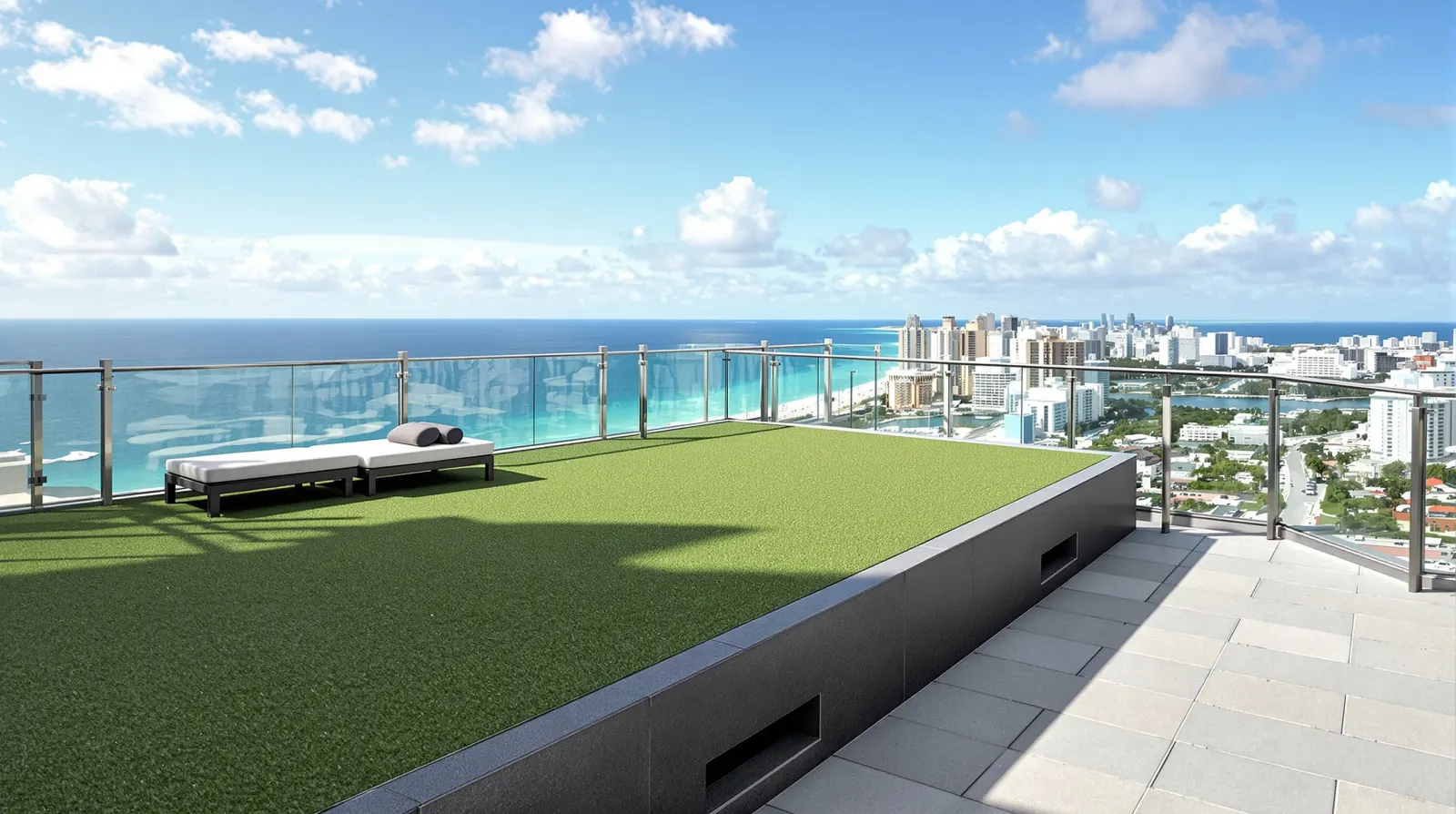
Most requests for artificial turf in Miami are not on soil at all. Turf on a podium or roof deck is a layer laid over a waterproofing membrane that keeps water out of garages, lobbies and units below. SERPE-CO spends most of its days on concrete restoration and waterproofing, so protecting that membrane, keeping drains open and leaving slopes intact is the part of the job our crews already know best.
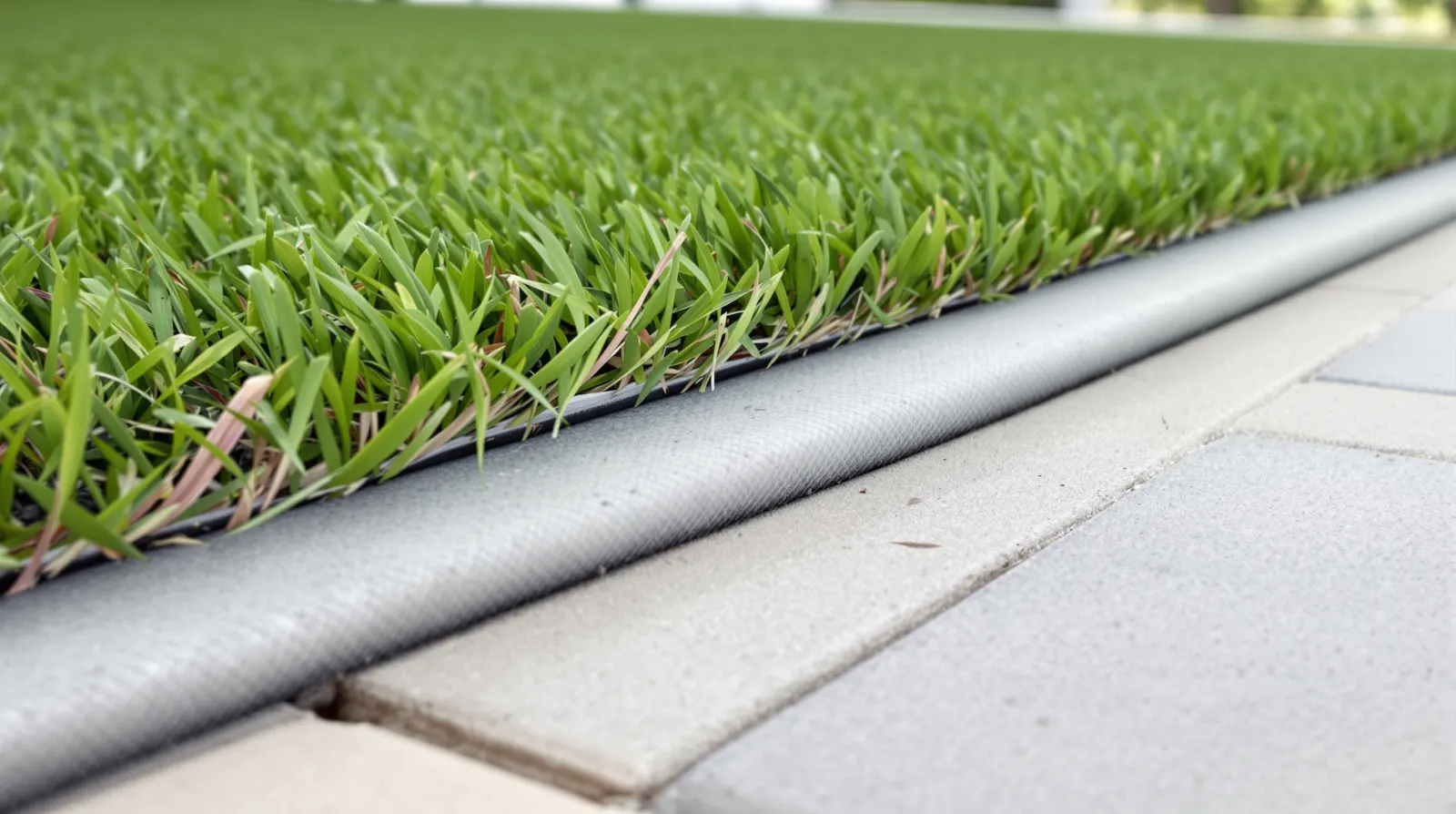
On every Miami deck over a membrane or structural slab, the association's structural engineer or design professional reviews the added weight, how water leaves the surface and how the turf is held in place. SERPE-CO does not do engineering. We review those documents, price them line by line and build to them, typically with a drainage mat or pad on the concrete, turf with perimeter edging, and clear access kept at every drain.
Miami-Dade County sits in the Florida Building Code High-Velocity Hurricane Zone, which carries stricter wind provisions than most of the state. For turf on a rooftop or an upper amenity level, that means extra attention to edges, seams and hold-down, and the design professional decides the method. Ground-level courtyards are simpler: we can visit, measure and send a written proposal covering stone, edge trim and turf.
Staging in Miami
How we stage and phase a Miami turf job
Staging a turf install in a Miami tower starts with the building manager's calendar. Turf comes in heavy rolls, and base stone and infill come in bags or bulk, so the freight elevator, loading dock and delivery windows have to be booked ahead. Downtown and Brickell streets leave little room to park a truck, which is why we plan small deliveries timed to the building's rules instead of one large drop.
Phasing keeps the amenity deck open for as long as possible. On a large pool level we can close one zone, protect the membrane and pavers around it, finish that section and reopen it before moving on. Residents get posted notices with dates, and we keep walking paths clear to elevators and stairs. Noisy steps such as cutting edging or compacting base are scheduled within the hours the association allows.
Ground-level work in Little Havana or Coconut Grove looks different. Courtyards there may be reached through a side gate or a narrow walkway, so wheelbarrows and small compaction equipment replace pallets and hoists. We protect the tree roots the landscape plan keeps, set edging along walks and buildings, and grade the stone base so rainwater leaves the area instead of pooling against walls.
Heat and water
Heat, shade and watering rules in Miami
Synthetic grass gets hot in full Miami sun. A 2025 UF/IFAS report found natural turf was consistently cooler than synthetic turf, often by more than 10°C (18°F), and a UNLV study measured synthetic surface peaks near 169°F. We say this plainly so boards can plan: shade sails or trees, lighter turf colors, cooling infills and a quick rinse before heavy use all help, and seating belongs in shade.
The South Florida Water Management District's year-round irrigation rule, Chapter 40E-24 of the Florida Administrative Code, has applied across the District since March 2010. Miami properties may water landscapes on two days a week in most places, three in some, and the midday stretch of 10 a.m. to 4 p.m. is off limits. A city or county ordinance may tighten that further, so a Miami board should check the current county and city schedule before counting on any savings.
Turf does not mean zero water or zero care. Pet areas need rinsing, leaves from the Coconut Grove canopy need blowing off, and infill settles and needs topping up after storms. Many Miami associations keep some living landscape as well; the UF/IFAS Florida-Friendly Landscaping program is a good source for planting that suits the climate, and turf can fill only the spots where grass keeps failing.
For boards
Planning steps for Miami boards and managers
Common areas at a Miami condominium are association property, so the board decides whether turf goes in, subject to its condo documents and whatever landscape standards the City of Miami applies. SERPE-CO does not give legal advice. Questions about what the declaration, bylaws or rules allow, or how owners must be notified, belong with the association's attorney before a contract is signed.
For homeowners' associations, Florida Statute 720.3075(4)(b) says HOA documents may not bar an owner from installing Florida-friendly landscaping, as defined in s. 373.185, on the owner's own land. The statute does not name artificial turf, and it does not govern common areas, which the board controls. Boards in Miami's single-family HOAs should ask counsel how the statute applies to their community.
Once the board is ready, starting artificial turf in Miami is simple. Send us photos, drawings and any engineer or architect documents for the deck. We walk the site with the manager, confirm access and phasing, and send a written proposal. On decks and roofs we build to the design professional's details; on ground-level areas the proposal covers excavation, base, edging, turf, infill and cleanup.
More turf areas
Turf areas we install in Miami-Dade County.
 Pool Decks
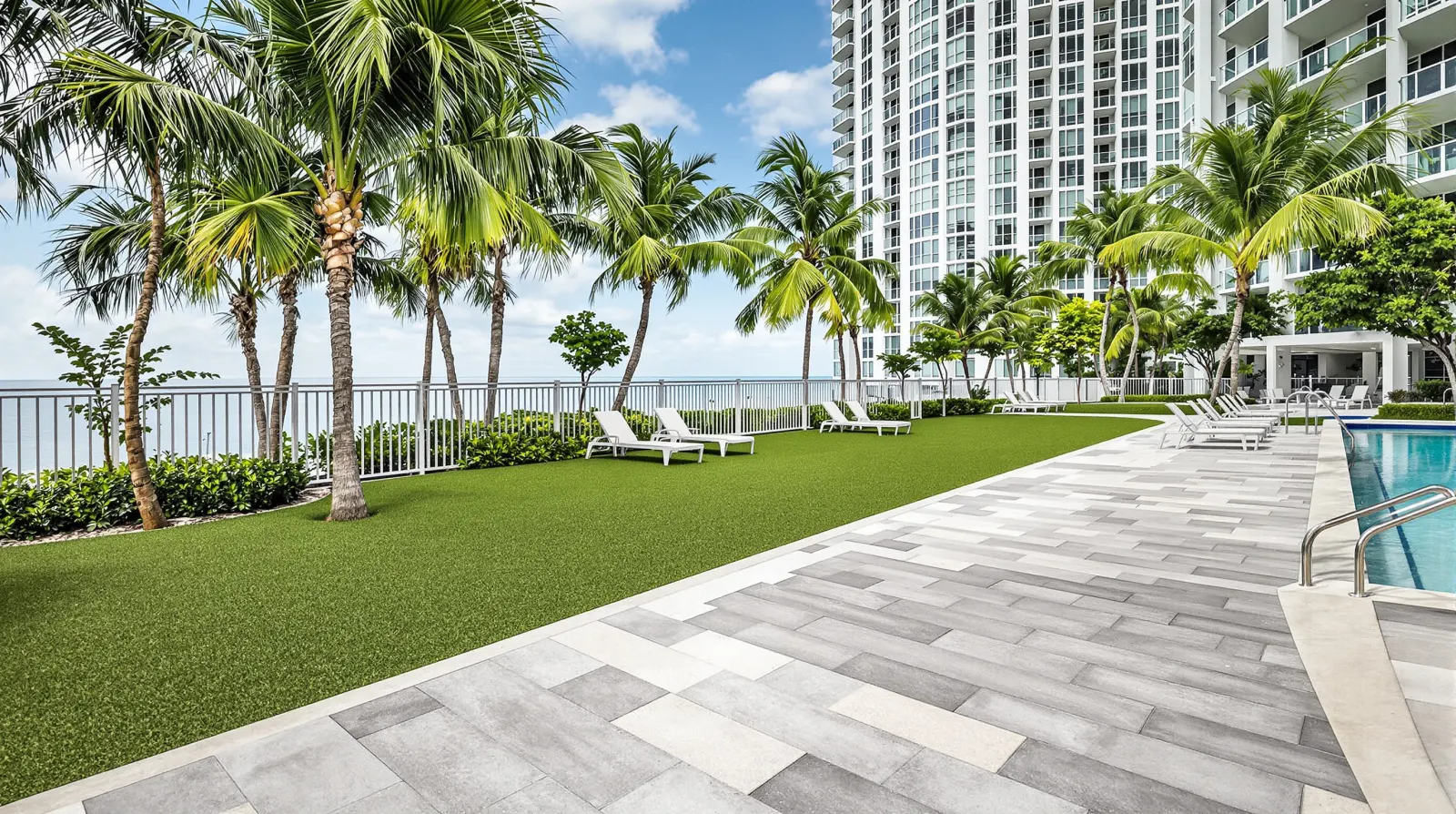
Turf beside the pool that drains fast and meets pavers and coping cleanly.
 Condo Common Areas
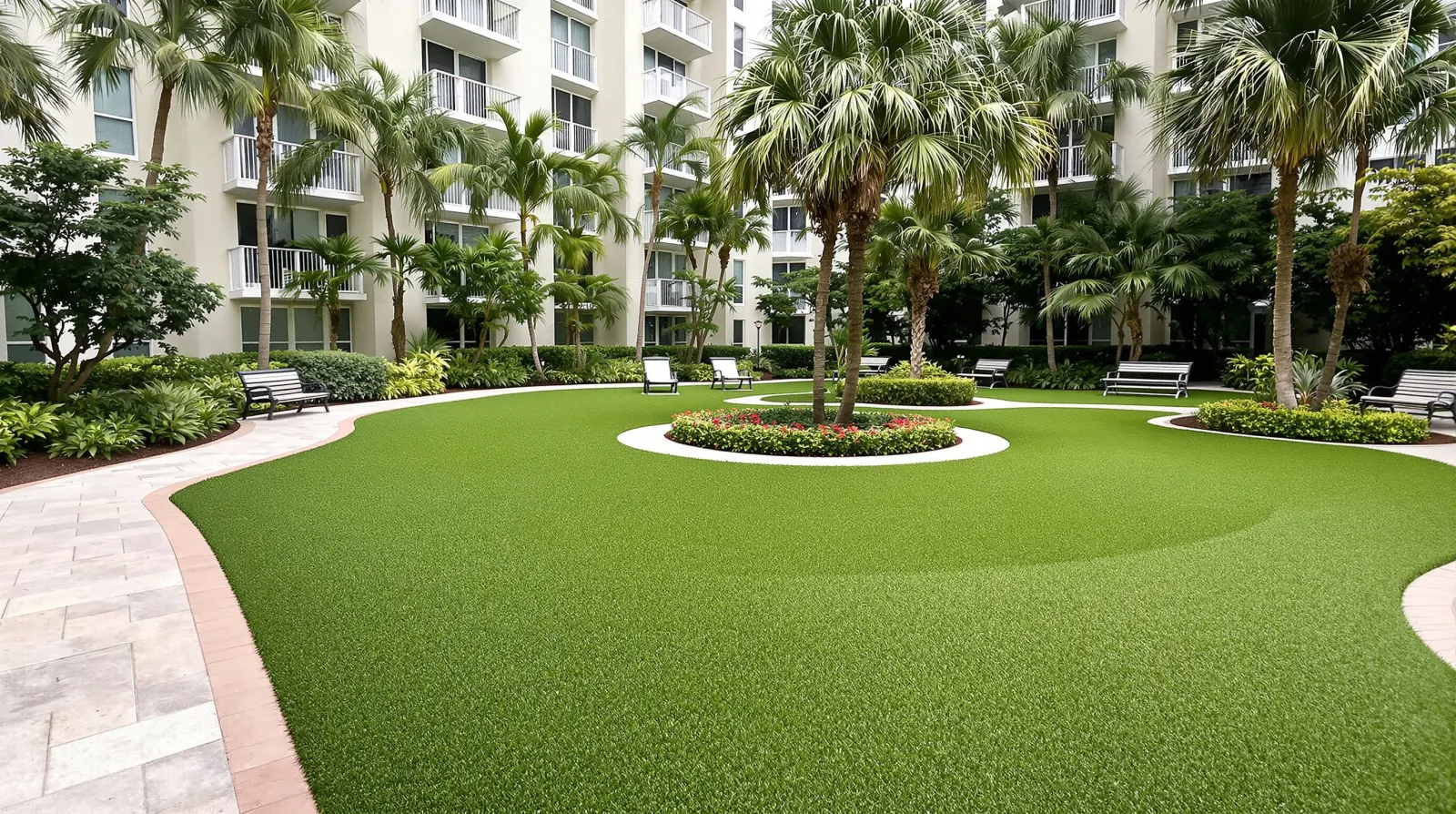
Courtyards, entries, medians and shady strips that stay green year-round.
Rooftops & Terraces
Green amenity decks and terraces that protect the waterproofing underneath.
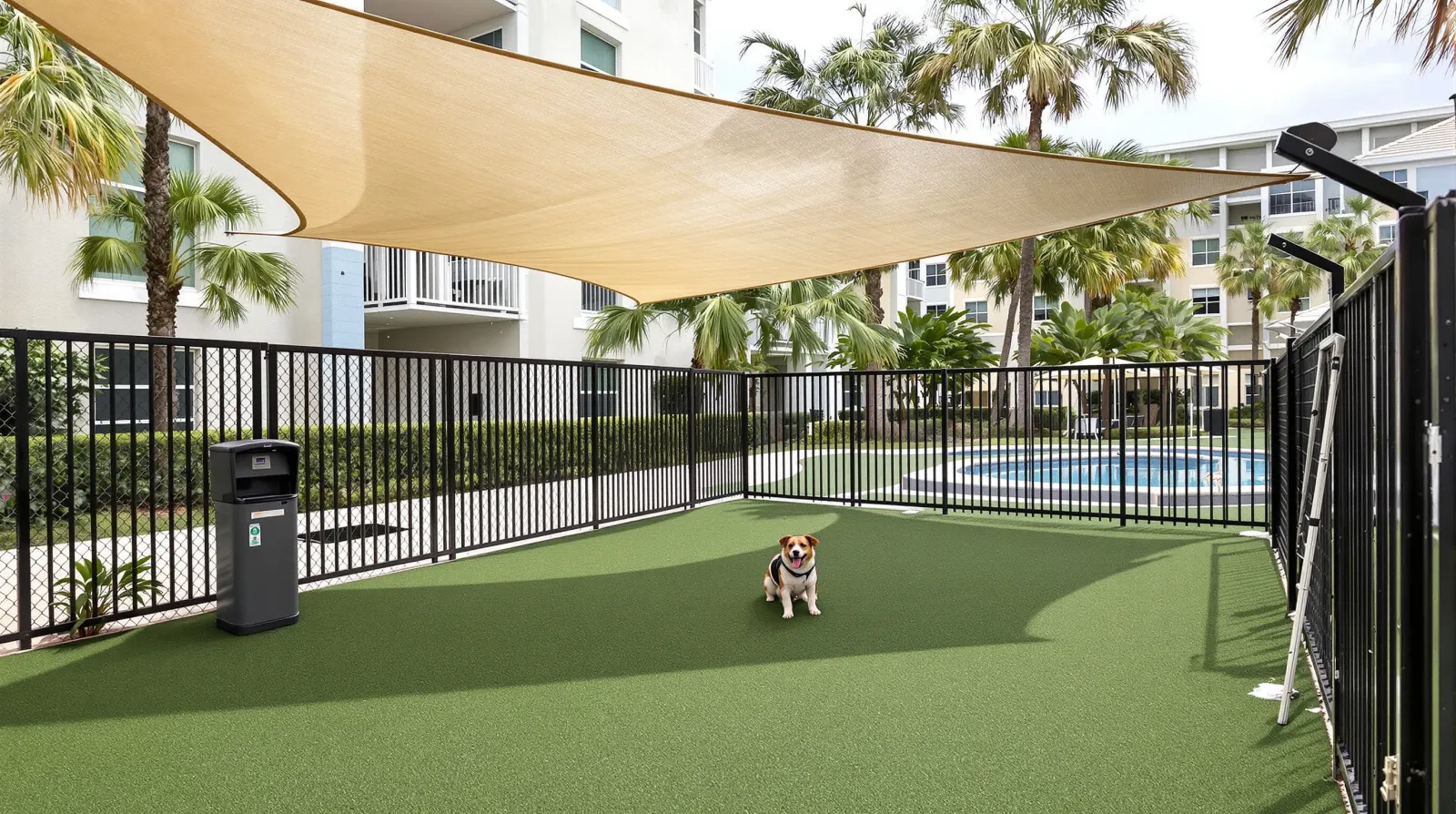 Dog Parks
Dog runs and pet relief areas built to drain, rinse clean and stay fresh.
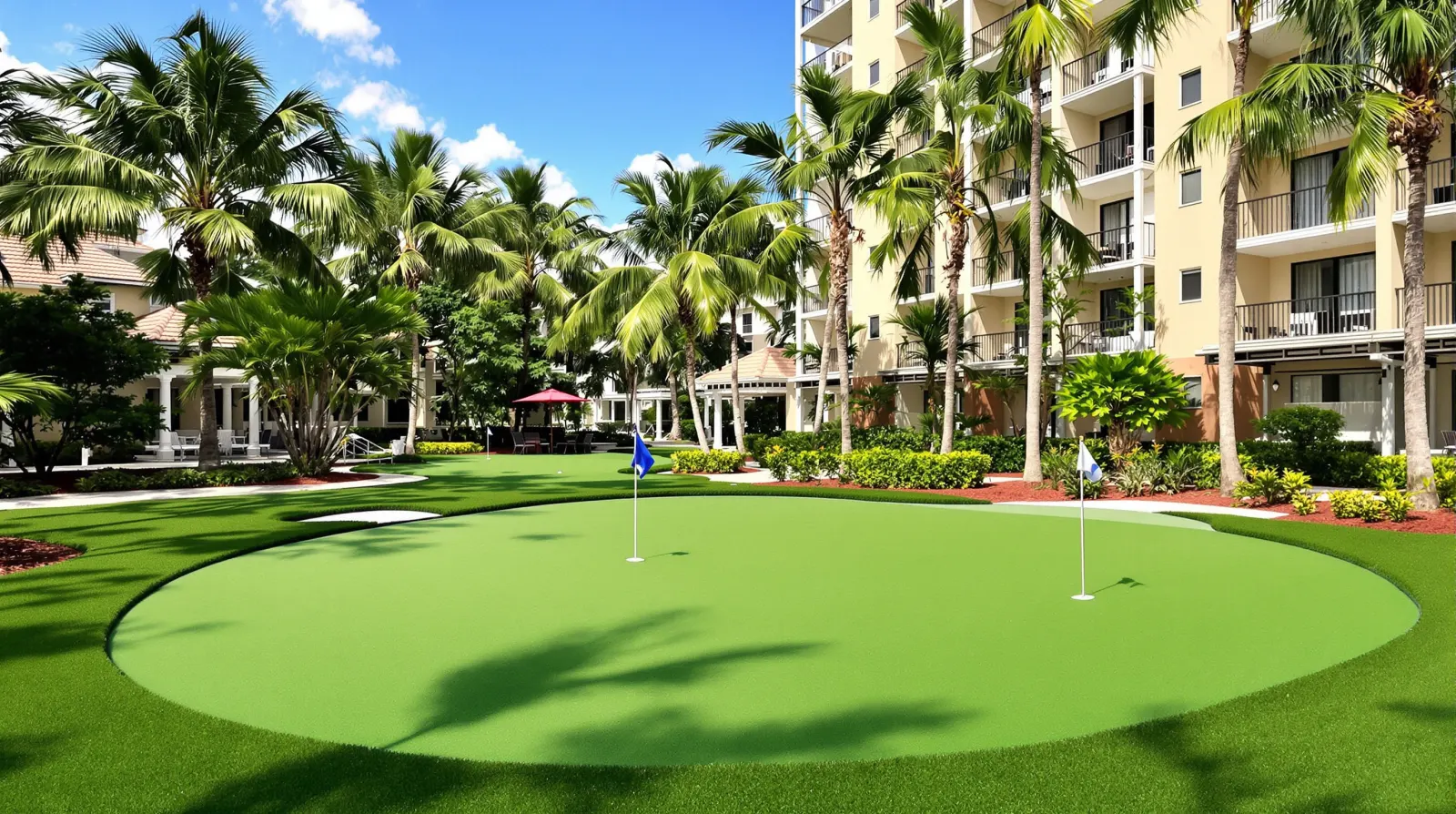 Putting Greens
Amenity putting greens with a shaped base, clean fringe and drainage that keeps up.
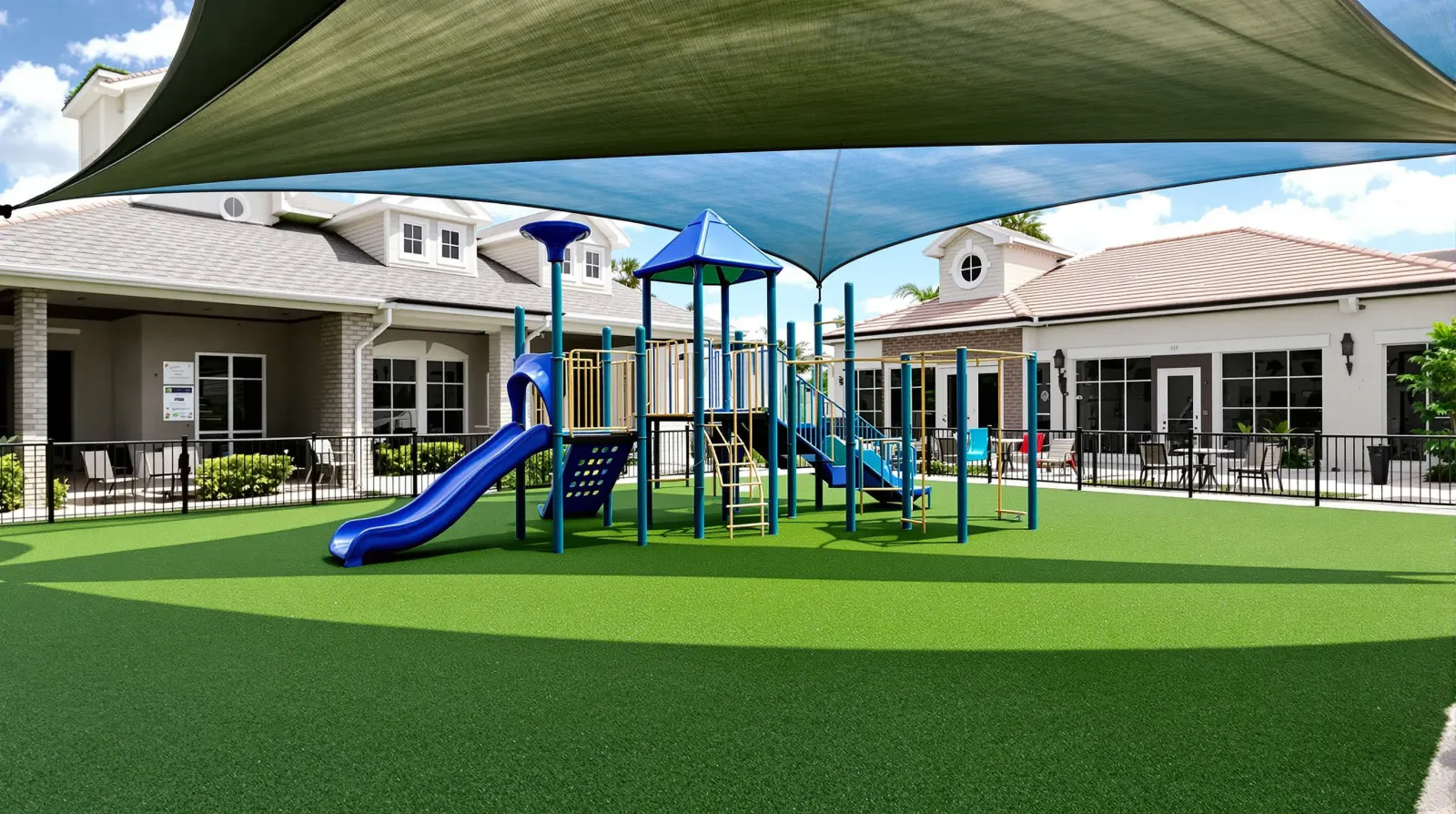 Playgrounds
Playground turf and shock pad matched to fall height, accessible and built to drain.
Artificial turf by city: Fort Lauderdale · Pompano Beach · Boca Raton · West Palm Beach · All turf services
Checklist
Checklist for artificial turf in Miami
- 01Confirm whether each area sits on soil, a garage roof or a structural deck
- 02Gather drawings and any membrane or roofing records for the deck
- 03Ask the structural engineer or design professional to review loads, drainage and hold-down
- 04Book the freight elevator, loading dock and delivery windows with management
- 05Plan shade and seating for areas in full afternoon sun
- 06Check the current local watering schedule and any city landscape requirements
- 07Have the association attorney review the governing documents
- 08Set a routine for brushing, rinsing pet areas and topping up infill
Related work
Concrete and waterproofing work that often goes with it.
Summary
Points to remember
- 01
Much of the artificial turf in Miami that boards ask about sits on podium and rooftop decks over membranes.
- 02
The design professional confirms loads, drainage and hold-down on decks; SERPE-CO builds to that design.
- 03
Miami-Dade is in the High-Velocity Hurricane Zone, so upper-level turf gets extra wind attention.
- 04
Turf runs hot in full sun, so shade, lighter colors and rinsing should be part of the plan.
- 05
Ground-level courtyards can be priced from a site visit with a written proposal.
Questions
Common questions.
Can turf go on a Brickell amenity deck above a garage?
Often, yes, but the building's structural engineer or design professional has to review it first. A deck over a garage carries a membrane, drains and a set load capacity. That professional confirms the added weight, the drainage path and the hold-down method, and SERPE-CO installs to those details while protecting the waterproofing underneath.
Does the High-Velocity Hurricane Zone affect rooftop turf in Miami?
Miami-Dade County falls inside the Florida Building Code High-Velocity Hurricane Zone, which has stricter wind provisions. For turf on a roof or upper deck, edges, seams and furniture placement get closer attention. The design professional sets the hold-down method, and our crews follow it. Ground-level turf in a courtyard is far less exposed.
How do you get turf rolls up to a high floor?
Delivery depends on the building. Usually rolls, stone and infill come up by freight elevator during the slots management assigns, with cab walls and floors protected. Where rolls are too long for the cab, we discuss options with management and the design professional before the job starts. Small, scheduled deliveries suit Brickell and Downtown streets better than one big drop.
Will turf help our Miami building with watering limits?
Turf needs no landscape irrigation, which can matter under the South Florida Water Management District rule that limits watering to two days a week in most areas and bars it during the 10 a.m. to 4 p.m. window. Some local rules go further. Pet areas and hot surfaces still need occasional rinsing, so turf lowers water use rather than ending it.
What should a Coconut Grove condo know about turf under trees?
Shaded areas under a heavy canopy are where natural grass often fails, so turf can work well there. Falling leaves and seed pods need regular blowing, and the base must drain so water does not sit against roots or walls. We set edging to protect the trees the landscape plan keeps, and send a written proposal after a site visit.
Sources and standards
- SFWMD year-round landscape irrigation rule (fact sheet)
- UF/IFAS: artificial turf and heat in humid states like Florida
- Florida Building Commission (Florida Building Code)
- UNLV: artificial turf may be too hot for summer use
Photos on this page show typical turf installations. Turf over a structural slab, a roof or a waterproofing membrane follows the building's design professional and the product maker's instructions. Treat this page as general information, not engineering or legal advice.
Request an estimate
Tell us about your turf project.
Tell us where the building is and what you are seeing. We set up a visit to the property, then send a written proposal, or tell you an engineer needs to write the scope first.
- More than 20 years in the field
- St. Lucie, Martin, Palm Beach, Broward and Miami-Dade
- Family-owned Certified General Contractor
Rather call?(954) 718-3094