Balcony Restoration
Balcony, Catwalk & Railing Restoration
Edges rebuilt, decks waterproofed, new railings set into sound concrete.
In short
What is balcony restoration?
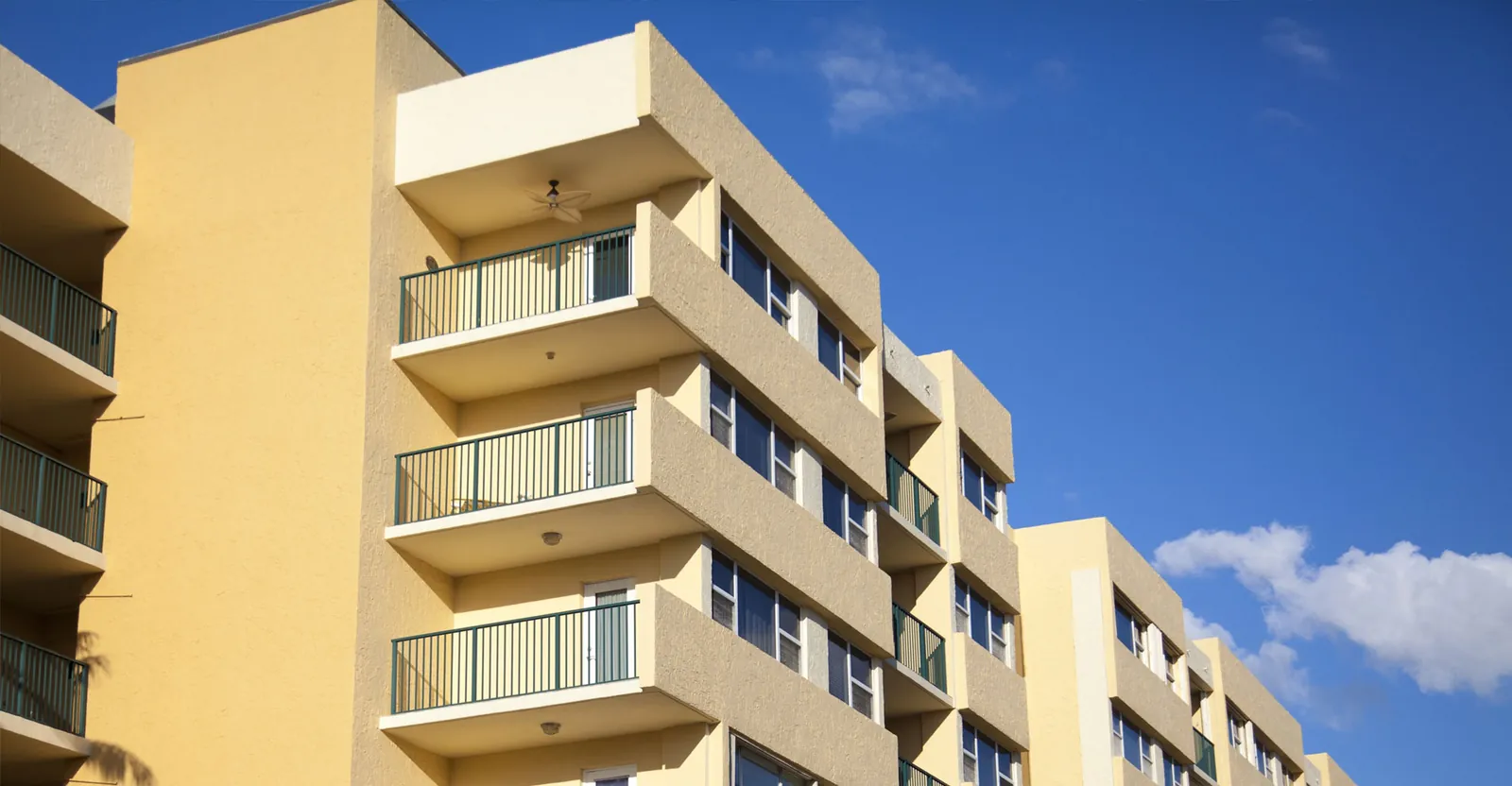
Balcony restoration covers structural repair of a balcony or catwalk slab and new protection for its edges, walking surface and railing. Engineers flag balconies when slab edges crack or spall, railing posts rust, water ponds or the deck coating wears through. Each of those lets water reach the rebar, which weakens a slab that is held up on one side only.
Free milestone planner
Is a milestone inspection coming due on your building?
Enter the year your building got its certificate of occupancy and how many stories it has. The planner estimates your deadline under Florida law, then you can send it to SERPE-CO for a second look.
Add the year and story count for an estimated due date.
Want a second look at your timeline? Send your building details and SERPE-CO will follow up about the inspection, likely repairs and how to plan for them.
About this estimate
This is a planning estimate drawn from the statewide rule in Florida Statute 553.899. Your local building department sets the real deadline and may call for the first inspection at 25 years instead. Broward County also has its own Building Safety Inspection Program. Check your date with your building official and engineer, or contact SERPE-CO and we will help you sort it out.
Balconies & Railings
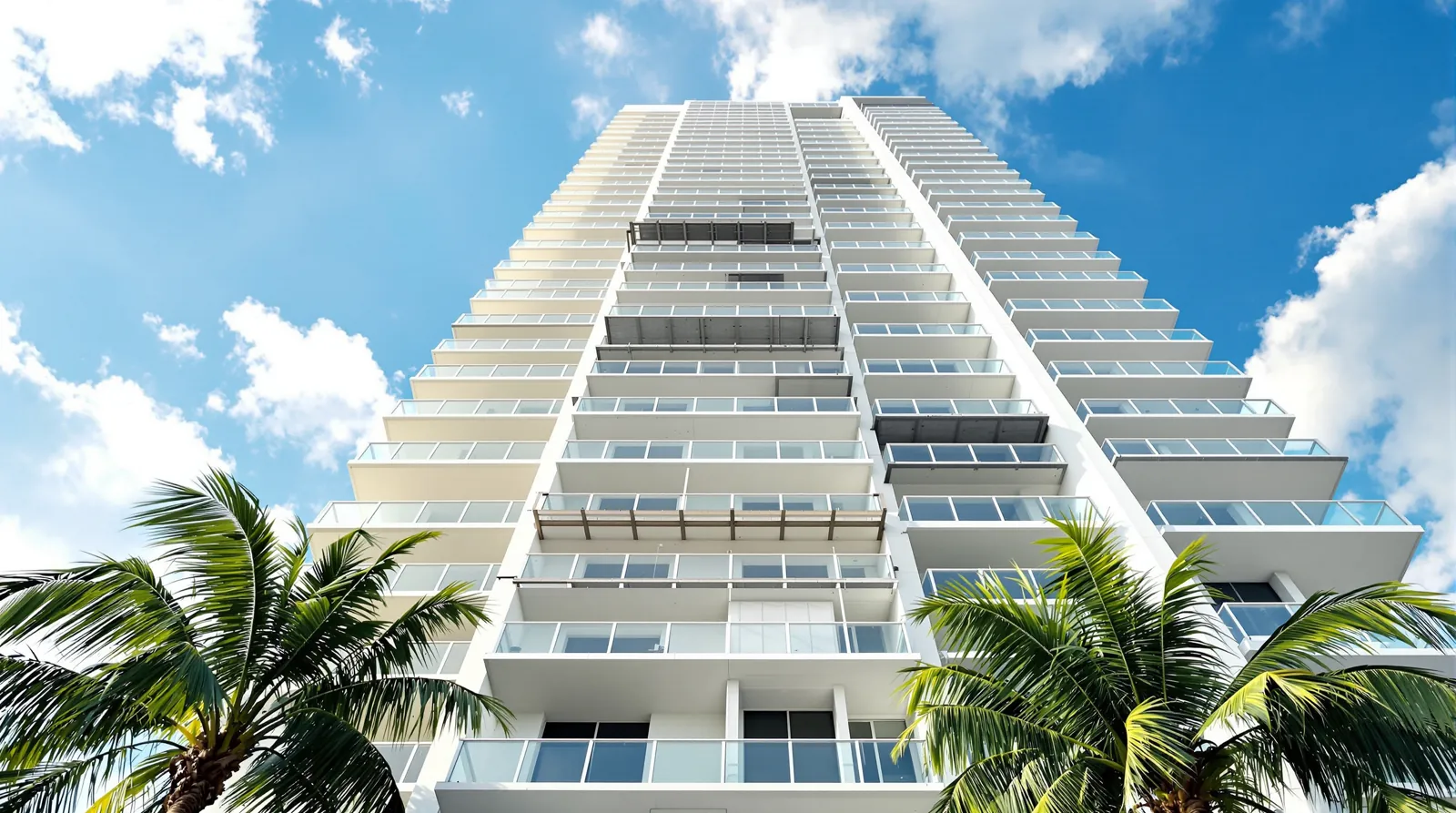
On a coastal high-rise, balconies and catwalks usually show wear before anything else, because they face rain, sun and salt every day. SERPE-CO repairs the slab, re-pitches it so water drains away from the building, adds a waterproof surface and installs railings built to current code.
With more than 20 years in the field, SERPE-CO handles balcony restoration work from St. Lucie to Miami-Dade for condominium associations, property managers and owners of commercial buildings.

Reviewed by Brett Serpe, MBA, GC, CEO of SERPE-CO · Florida Certified General Contractor CGC #1523974
Prepared by the SERPE-CO project team, with more than 20 years in concrete restoration. Last reviewed November 2026.
Why it happens
What makes a balcony wear out ahead of the building
Balconies take more weather than almost any other part of a building. Each is a thin slab hanging off the structure, wet from above, below and at the edge. A cantilever needs its main steel near the top, right where rain lands first. Many older South Florida balconies were poured close to level, so water collects at the sliding door instead of draining off. Tile and thinset on top trap that water against the concrete and hide the cracks forming underneath.
Railings are the second trouble spot. Where posts are set down into the slab, the pockets around them hold water, and the buried metal rusts, swells and breaks the slab edge apart. Salt spray brings more chloride every time the balcony gets wet. Owners usually notice the problem first as cracking along the edge, rust bleeding from the post bases, or stains and spalls overhead on the soffit, the underside of the slab that belongs to the unit upstairs.
The work
Balcony Restoration: what the job covers
- 01Repairs to balcony and catwalk edges and soffits
- 02Re-sloping for proper drainage
- 03Decorative deck coatings over waterproof membranes
- 04Picket, glass and aluminum railings fabricated and installed
- 05New railing anchors and rebuilt post pockets
- 06Stucco tie-ins and sliding door thresholds repaired
How we do it
Our balcony repair sequence, from tile removal to railings
Our crew sets up first: scaffold or a swing stage, covered walkways at the entrances below, and plastic over the sliding door to keep dust out of the unit. Tile and old coatings come off where the engineer calls for it, so the bare slab can be sounded. Hollow areas on the top, edge and soffit get marked. When a repair will cut deep into the cantilever, shoring goes underneath. Railings due for replacement are removed and the balcony is closed.
Slab edges are repaired the same way as any spall. The crew sawcuts the outline, chips back to sound concrete, cuts in behind the bar, cleans the steel and replaces any bar that has lost too much section. Old post pockets are chipped clean and filled solid. The edge is formed and poured back to its original shape, drip edge included. On a slab that sits flat, a bonded topping or repair mortar builds in slope away from the door, as far as the engineer and the threshold height allow.
After the repairs cure, the crew preps the surface and applies a membrane or deck coating, carried up the wall and the door threshold and finished at the edge the way the manufacturer's data sheet describes. New railings go in to the engineer's detail, usually surface-mounted, with anchors set in sound concrete and sealed tight so no pocket is left to collect water. At each stage the permit requires, the engineer inspects, and only then does the resident get the balcony back.
Materials we use
Deck coatings, membranes and railings: picking the right balcony system
Three liquid-applied families cover most balcony decks. Polyurethane coatings flex, span hairline cracks and remain the usual specification for open balconies. Fast-setting resins such as PMMA cure in a short window, useful when residents need their balcony back quickly, though they call for strong ventilation and crews trained on the product. Cementitious and acrylic-modified finishes look good and let moisture escape, but handle less movement. When tile goes back down, the membrane underneath has to be one the manufacturer approves for a bonded tile finish.
Picking a railing is a corrosion question as much as a style one. Coastal buildings lean toward aluminum pickets or glass panels, since aluminum does not rust and burst concrete the way embedded steel can. Anchors and fasteners are usually stainless, kept separate from the aluminum so the two metals do not corrode each other. Base plates mounted on the surface, or posts fixed to the slab edge, avoid open pockets that trap water. Post spacing, anchor type and embedment depth come from the engineer's drawings.
Built to hold up
Why some balcony repairs hold up, and what boards should check
Balcony repairs last when water drains off quickly. Pitch away from the sliding door, a drip groove at the slab edge and a membrane carried up the wall and under the threshold extend service life more than any single coating. The common early failures are coatings rolled over a damp or under-prepared slab, membranes ending before they reach the door track, and anchors for the railing drilled through new coating and left unsealed. Any one of those sends water straight back to the top layer of steel.
Proposals for balcony restoration should say how many balconies close at once and how each unit is protected. Ask for the coating system by product name, the number of coats and the film thickness, and who inspects the bare slab before it is covered. SERPE-CO plans the balcony sequence with the board and engineer so residents know their dates. Expect wet film readings, photos of any exposed rebar and a sign-off for each balcony. Manufacturers issue membrane warranties, usually tied to documented upkeep.
How we run a job
Scheduled around the residents and staff who use the building.
- 01
Meet on site
Each job starts on site, walking the property and its conditions with your manager, board or engineer.
- 02
Follow the engineer's scope
The engineer writes the scope. We price it line by line, plan access and lay out each phase to build it.
- 03
Put safety first
We can never work too safely: shoring, swing stages, barricades and notices go up first.
- 04
Build the repairs
Crews work through the repairs in order, stopping for inspections wherever the engineer calls for them.
- 05
Finish and document
Final inspections, a closed permit and a full record of the work for the association.
Counties we cover
Balcony Restoration, county by county
Summary
Balcony Restoration: what to remember
- 01
Pitch toward the drain, a drip groove and a membrane carried up at the door do more to protect a balcony slab than any coating.
- 02
Polyurethane is the everyday balcony membrane, and quick-curing PMMA fits balconies that need to reopen within a short window.
- 03
Aluminum railings on surface plates with stainless anchors skip the water-trapping post pockets that crack older slab edges.
- 04
Any anchor drilled through a new balcony coating must be sealed, or the fresh membrane will leak at that spot.
Glossary
Words that show up in an engineer's report
- Cantilever
- A slab that reaches past its support with nothing under the outer edge, so its main reinforcing runs close to the top surface.
- Soffit
- The underside of a balcony or walkway slab, seen as the ceiling of the balcony below. Stains and spalls usually appear there first.
- Drip edge
- A groove or small lip cut or formed beneath the outer edge of a slab, so rainwater drops off cleanly instead of tracking back under the soffit.
- Post pocket
- An opening cast or drilled into the slab to take a railing post. Older pockets trap water and rust the post from below.
- Wet film thickness
- How thick a liquid coating is right after it goes on, checked with a notched gauge to confirm enough material went down.
Questions
Balcony Restoration: questions boards ask
Do residents have to move out for balcony repairs?
Usually not. Owners stay in their units while we work through the building one stack or elevation at a time, and only the balconies under repair are closed. The board and manager approve the sequence and the access plan before the first crew arrives.
Do the existing railings need to go?
Not necessarily. Sound posts on a system that still meets code can often be re-anchored and refinished. Replacement makes more sense, and lasts longer, once the embedded posts have rusted or the railing falls short of today's height or load requirements.
Once the balcony is repaired, can we put tile back down?
Yes, as long as the association permits it and a tile-compatible waterproof membrane goes down first. Tile conceals cracks and keeps water sitting on the concrete, so many engineers and boards lean toward an exposed deck coating that can be checked and recoated. In most cases the decision comes down to the association's rules and what the engineer recommends.
What do rust stains on the balcony ceiling above us mean?
That ceiling is the underside of the upstairs balcony slab. Stains or spalls there mean water is getting through it, or the steel near its bottom face has started to rust. The usual cause is a worn surface or a cracked edge on the balcony above, so the repair generally covers the top, the edge and the underside together.
How do residents stay safe while a balcony railing is off?
While a balcony is under repair, its sliding door is locked or blocked so nobody can step out, and the unit gets a posted notice. Temporary guards go up at any open edge people can still reach. Nobody uses the balcony again until the new railing is anchored and inspected.
What upkeep does a restored balcony need?
Keep drains and scuppers clear, skip planters and outdoor rugs that trap moisture on the deck, and never drill into the slab or coating. Have the coating and perimeter sealant looked at from time to time, because a worn topcoat can usually be refreshed before the membrane under it suffers. Maintenance steps required by the manufacturer are listed in the warranty paperwork.
Do owners need to leave during the work?
Rarely. Residents stay home while crews move through the building by elevation or stack. Each balcony is closed only during its own repair, and owners hear from us before anything affects them. The board and manager approve the sequence and access plan first.
Will you coordinate with our engineer?
Always. SERPE-CO works closely with associations and professional engineers, building every structural repair to the engineer of record's specification and lining up their inspections as the job goes. No engineer yet? We can help you take the first step.
Industry standards and guides
- International Concrete Repair Institute (ICRI): repair guidelines for concrete
- American Concrete Institute (ACI): codes and guides for concrete construction and repair
- Florida Building Code
On every project, our repair methods and materials follow the engineer's specification, the product maker's requirements and the current building code. Treat this page as general information, not engineering advice.
Other services we provide
Working with an engineer?
Holding drawings, specifications or a complete set of bid documents?
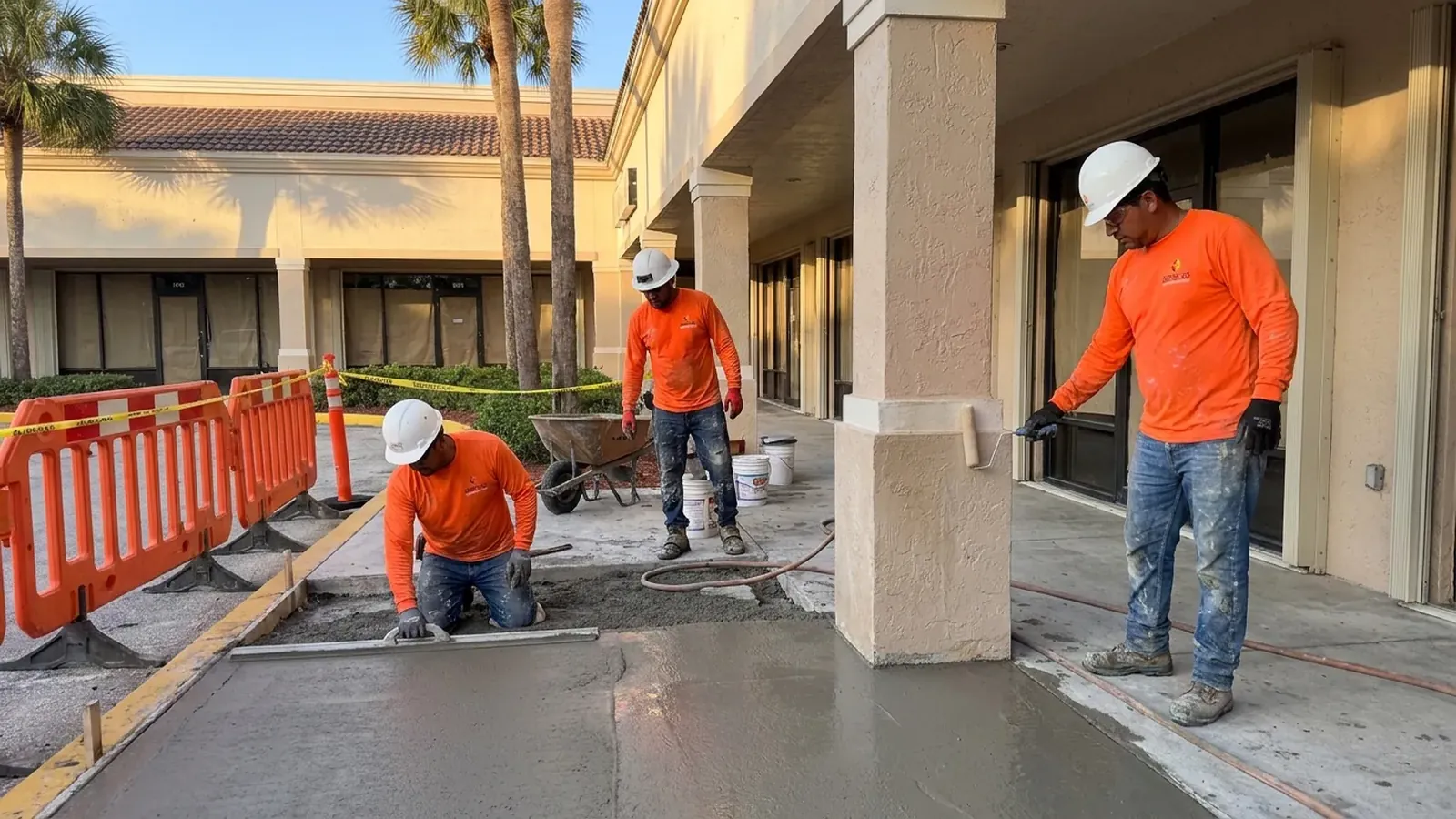
Structural engineers, property engineers and board members send SERPE-CO much of our restoration, pool and roofing work. Once a scope has been drawn and specified, our team prices what the documents show, raises questions where something is unclear, and lays out each line so boards can weigh the bids on equal terms.
Request an estimate
Let's plan your restoration.
Tell us where the building is and what you are seeing. We set up a visit to the property, then send a written proposal, or tell you an engineer needs to write the scope first.
- More than 20 years in the field
- St. Lucie, Martin, Palm Beach, Broward and Miami-Dade
- Family-owned Certified General Contractor
Rather call?(954) 718-3094