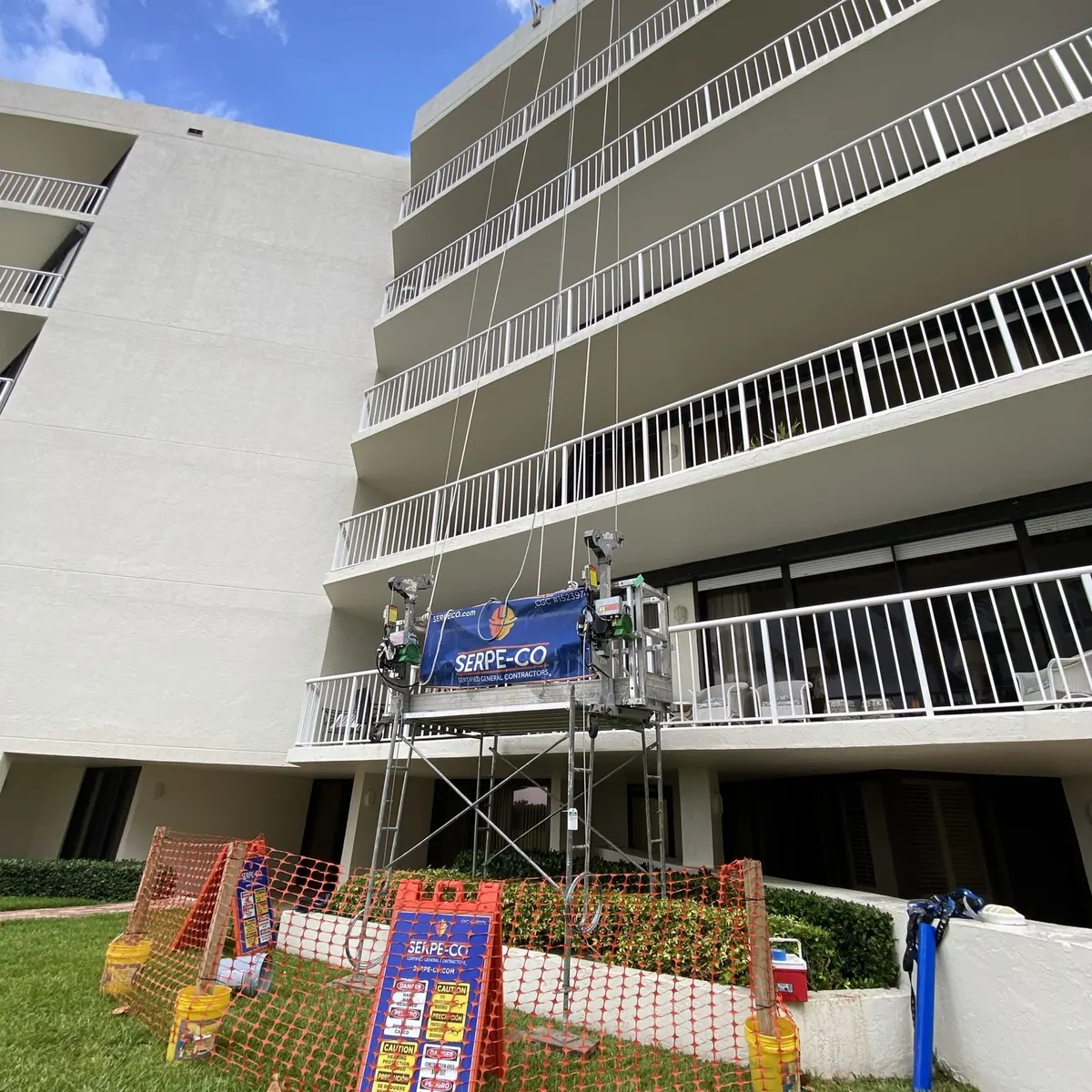
A swing stage is a suspended work platform that hangs from the roof on wire ropes and moves up and down the face of a building. On condominium towers, it is the most common way crews reach exterior walls, balconies and windows for concrete repairs, sealants and painting. Choosing the right access, whether a swing stage, scaffolding or lifts, shapes the schedule, the safety plan and what residents experience.
SERPE-CO is a Certified General Contractor in Pompano Beach that restores, waterproofs and paints buildings from low-rise to high-rise. We plan access, phasing and safety for the engineer's scope. Here is how the options compare.
How a swing stage works
Crews rig the roof first. Outriggers or roof anchors are set at the parapet, wire ropes are dropped to the ground and the stage, a platform with motors at each end, climbs the ropes. Each set of ropes covers one vertical strip of the building, called a drop. When a drop is finished, the stage is moved to the next one. Independent safety lines and fall protection for each worker are part of every setup.
Suspended scaffolds are governed by federal safety rules. OSHA 29 CFR 1926.451 sets general requirements for scaffolds, including suspension scaffolds, and the OSHA scaffolding page summarizes the hazards and protections.
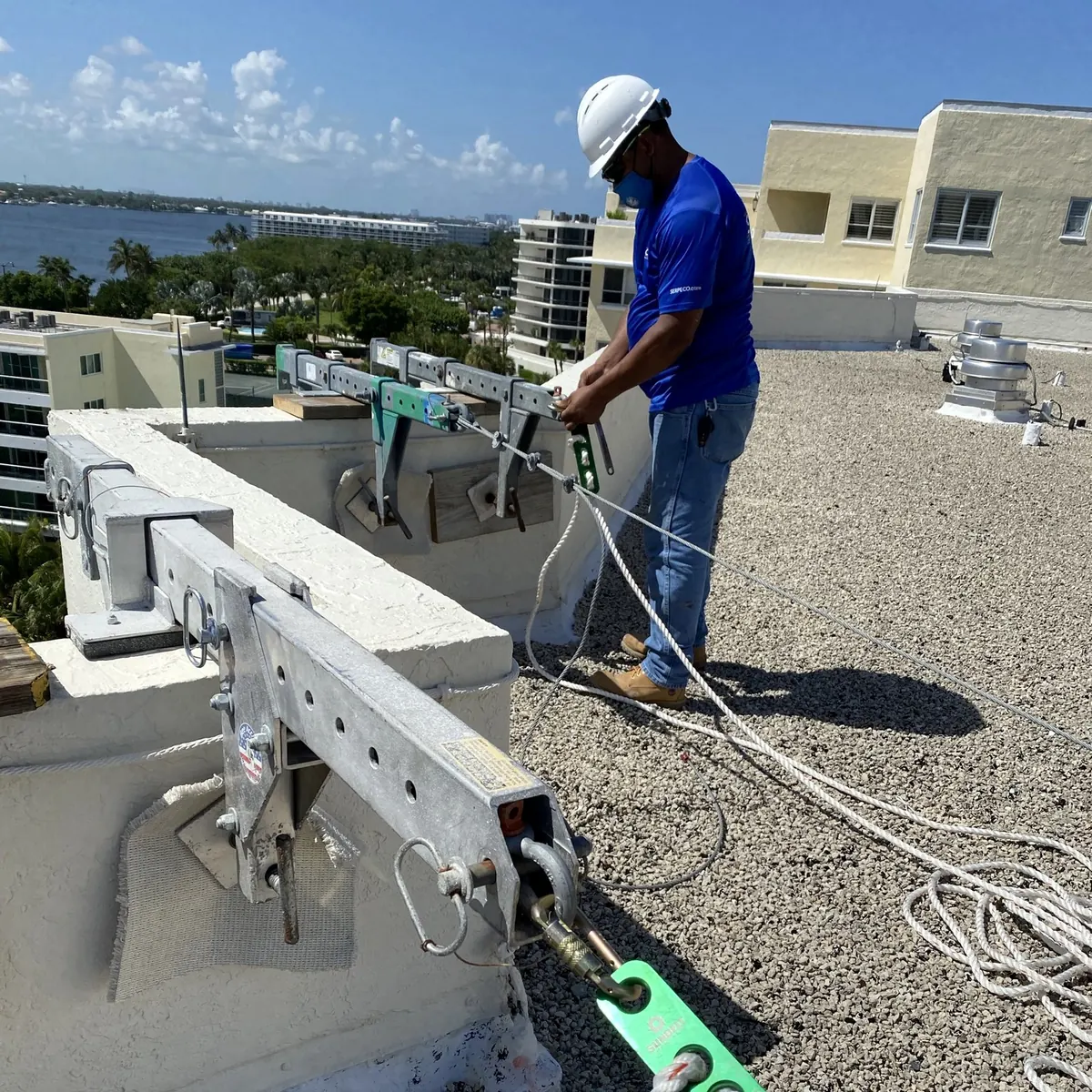
When a swing stage is the right choice
- Tall buildings with long, flat elevations.
- Painting, sealant replacement and lighter concrete repairs.
- Column and slab-edge repairs that can be built from the stage, as on condominiums such as the 2770 Building, where columns were repaired from swing stages.
- Sites where ground space is limited and scaffolding would block drives or entrances.
A suspended platform leaves the ground clear except for a barricaded drop zone at the base, which keeps lobbies, drives and parking working.
When scaffolding fits better
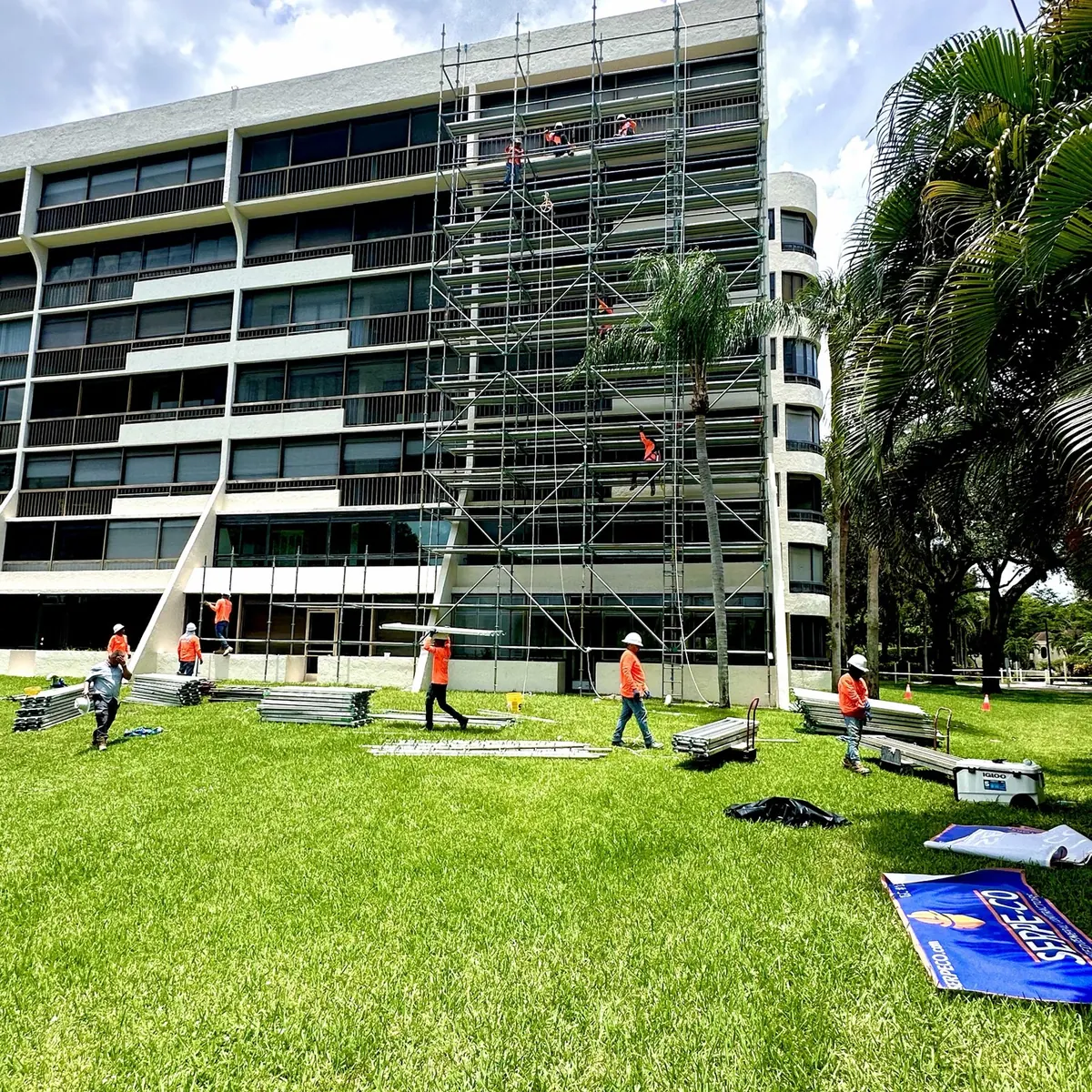
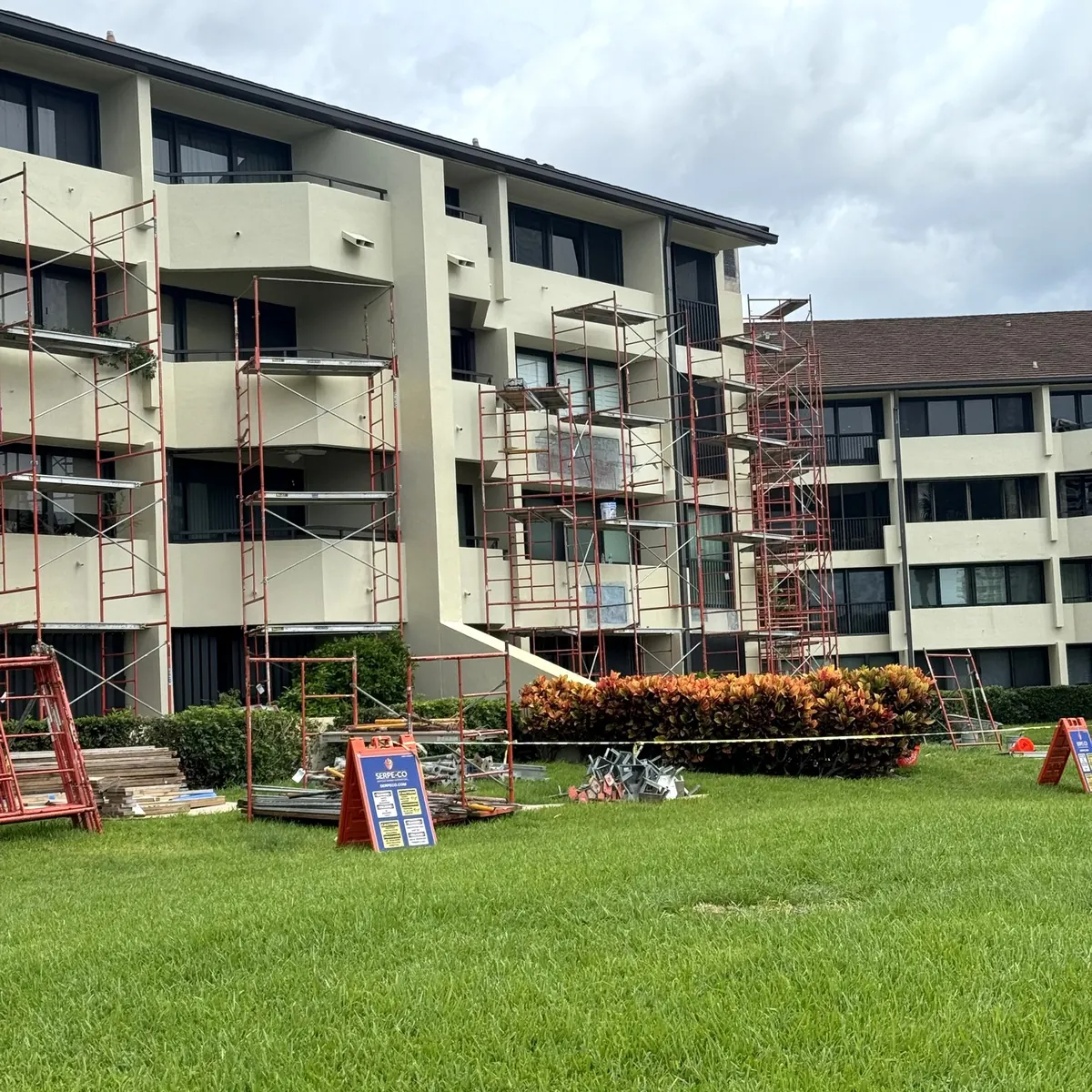
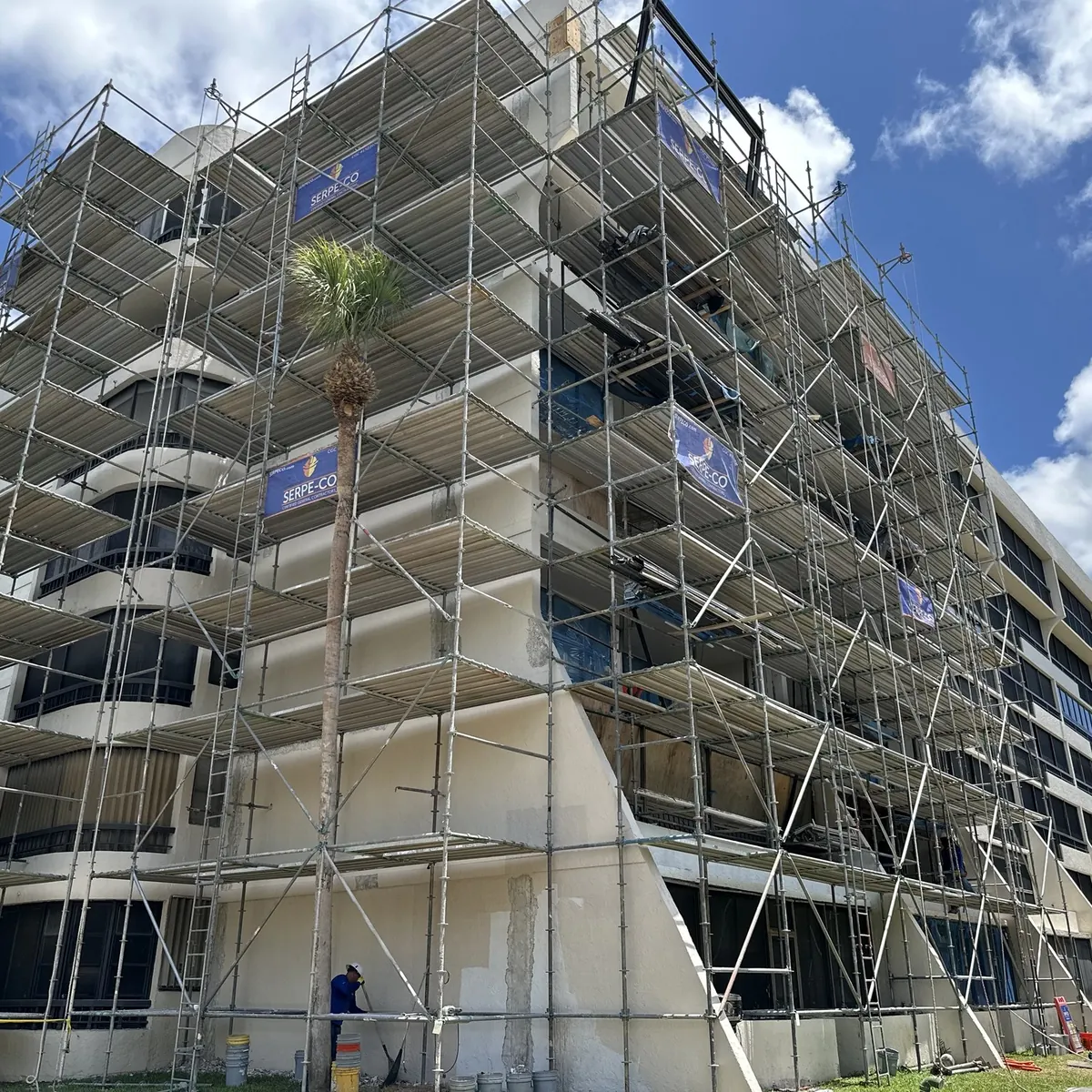
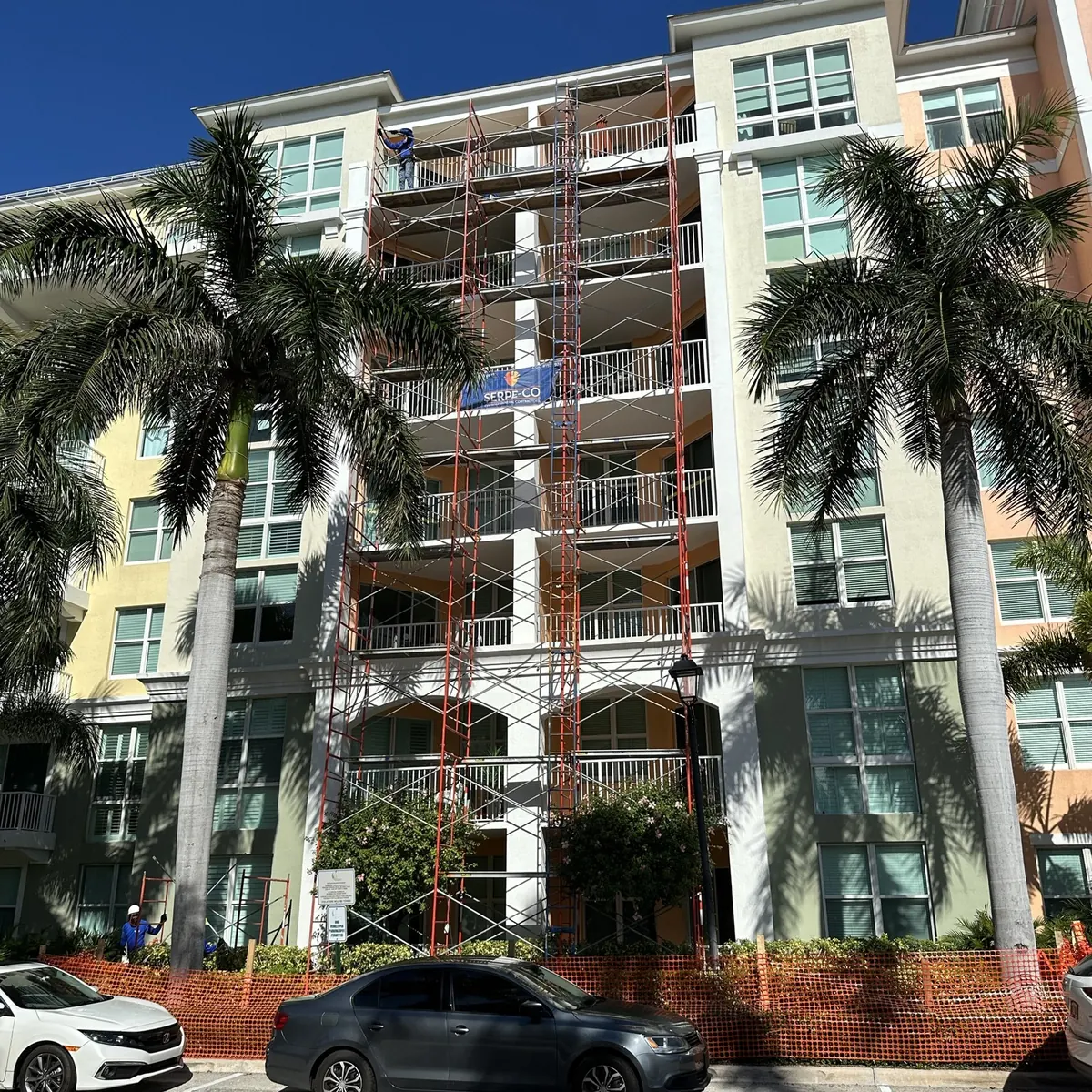
Frame scaffolding is built up from the ground and stays in place. It suits low and mid-rise buildings, heavy concrete repairs where crews need a stable platform and material storage, and complex shapes with many balconies and setbacks. On condominiums such as The Glens, a full scaffold supported balcony slab replacement.
Scaffolding takes longer to erect and blocks more of the site, but it gives crews continuous access to several floors at once.
Lifts and shoring
Boom lifts and scissor lifts work on low-rise buildings with firm, open ground. Shoring is a different tool entirely: temporary supports that carry loads while concrete is removed. Many projects combine access with shoring, for example a swing stage on the face and shoring under balconies. Our concrete shoring post explains that side.
What residents see during the work
- Notices before the stage reaches each stack of units.
- Barricades and signs at the base of each drop.
- Crews outside windows for a few days as the platform passes.
- Requests to keep balconies clear, close blinds and move cars from the drop zone.
- Roof access limited while rigging is in place.
A posted schedule by elevation and drop helps owners plan. Weather and wind pause suspended work, so schedules include weather days.
Combining work on one access setup
Rigging and scaffolding are a large share of any exterior project. Boards get the most from them by bundling work: concrete repairs, window caulking, elastomeric paint and railing work on the same drops. The engineer's scope sets the repairs, and the contractor sequences them so each area is finished before the stage moves on.
Questions to ask about access
- Which access method is planned for each elevation, and why?
- How will the roof be protected during rigging?
- Where are drop zones, and how are entrances kept open?
- How will residents be notified before each drop?
- What happens on windy or rainy days?
Protecting the roof and the building
Rigging puts weight and equipment on the roof, so the roof membrane needs protection under outriggers, counterweights and walkways. Permanent roof anchors, where the building has them, must be inspected and certified before use. After the project, the roof should be checked for damage before the rigging crew leaves. Ask how the contractor will protect the roof and document its condition before and after.
Below the work, windows, railings, landscaping and cars need protection from dust, debris and overspray. Drop cloths, window film and barricades are part of the plan. Clear communication with the property manager about deliveries, crane days and drop zones keeps the building running while the work moves across each elevation.
How SERPE-CO can help
SERPE-CO plans access, phasing and safety and builds the engineer's repair and painting scope from swing stages, scaffolding or lifts across Broward, Palm Beach and Miami-Dade. See our concrete restoration and stucco and painting services, or our work in Sunny Isles Beach, then contact us or call (954) 718-3094.
CEO and co-founder of SERPE-CO, a family-owned Florida Certified General Contractor (CGC #1523974). In concrete restoration since 2005 and a contributor to the Florida Community Association Journal. This article is general information, not engineering or legal advice.