Residents judge a pool deck by how it looks and feels underfoot. Boards and managers have to judge it by what sits underneath. On a South Florida condominium, pool deck resurfacing often means more than a new surface: on decks built over a garage, lobby or units, the deck is also a roof, and the waterproofing beneath the pavers or coating protects the structure below. Here is how to read the warning signs, choose a surface and plan the work so the amenity closes once. SERPE-CO is the contractor that builds the repairs; where the structure is involved, the association's licensed engineer evaluates it and specifies the work.
Why pool deck resurfacing matters more on a condominium
A community pool deck works hard all year. Strong sun, salt air, heavy summer rain, pool chemicals, lounge chairs and constant foot traffic wear finishes and open joints faster than in cooler climates. A deck that only looks tired today can be letting water into the concrete tomorrow.
Many coastal towers put the pool on a structural deck above the parking garage or on the roof itself. The pool shell, the slab under the deck and the beams that carry them are reinforced concrete living in a wet, salty setting. When the surface and membrane fail, chlorinated water reaches the steel, and a finish problem turns into a structural repair. Our post on concrete delamination explains how that damage hides under a surface that still looks solid.
Warning signs your pool deck needs attention
Most of these show up long before anyone calls the deck unsafe:
- Cracks in the surface, or coating that is peeling, blistering or wearing through
- Pavers that rock, sink or lift, leaving trip edges
- Water ponding in the same spots after every rain
- Open or hardened joints along the coping, planters and walls
- Drips, white mineral deposits or rust stains on the garage ceiling or beams below the deck
- A pool that loses more water than evaporation explains
- A pool finish that is rough, stained or delaminating, or loose tile at the waterline
Stains and drips in the space below deserve the fastest response, because they mean water is already reaching structural concrete. Our article on rust stains on concrete covers what those marks usually mean.
Elevated pool decks over occupied space
An elevated deck is built in layers. From the bottom up, there is usually the structural slab, a waterproofing membrane, a drainage or protection layer, and the wearing surface people walk on. Pavers, turf, planters and pool equipment all sit on top of that membrane.
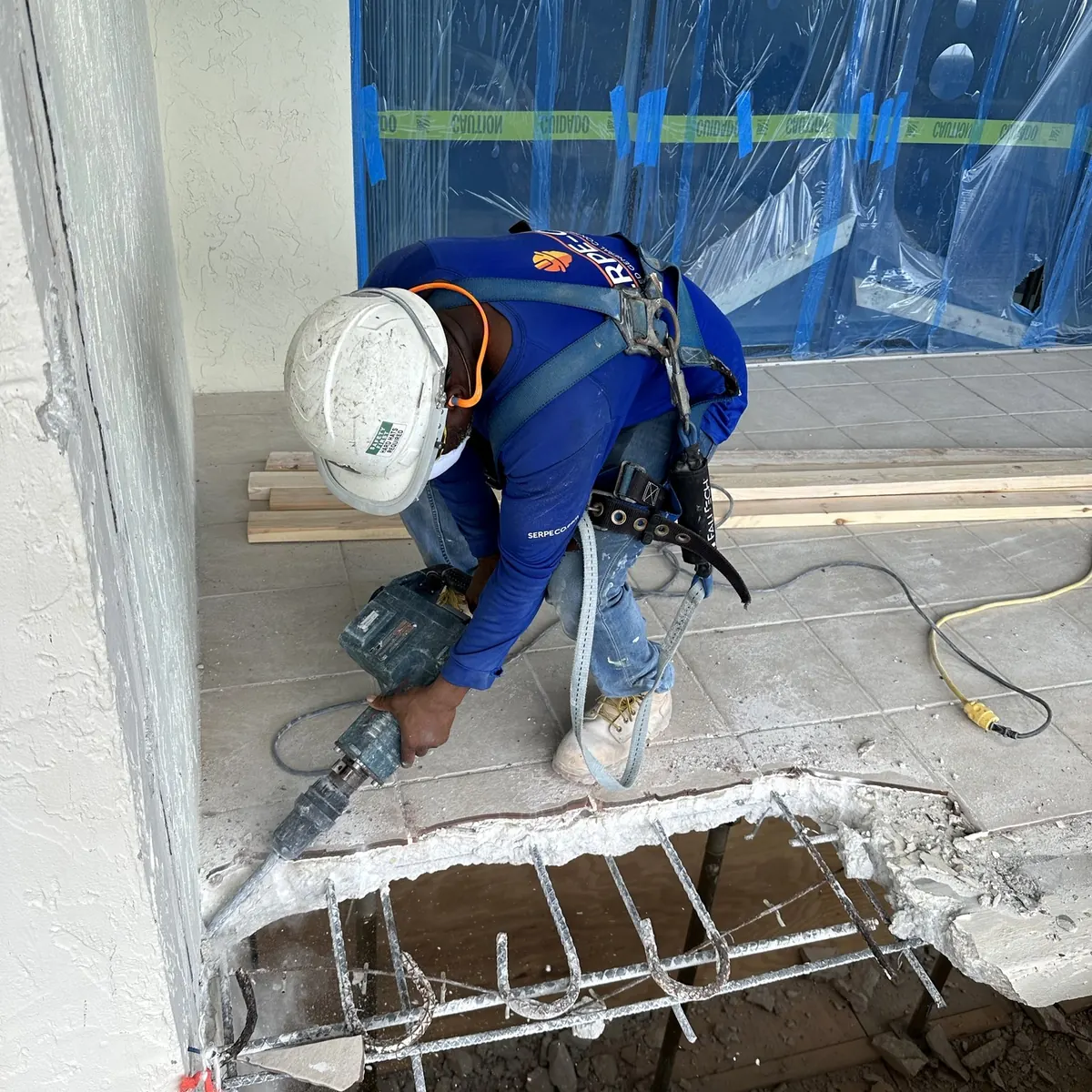
Resurfacing only the top layer over a failed membrane rarely solves a leak. When an engineer finds deterioration below, the right scope may mean removing the surface, repairing the concrete and steel, installing new waterproofing and then rebuilding the deck. Brett Serpe made the same point in his Florida Community Association Journal article, Catch It Before the Crack: fix the water path, not isolated patches.
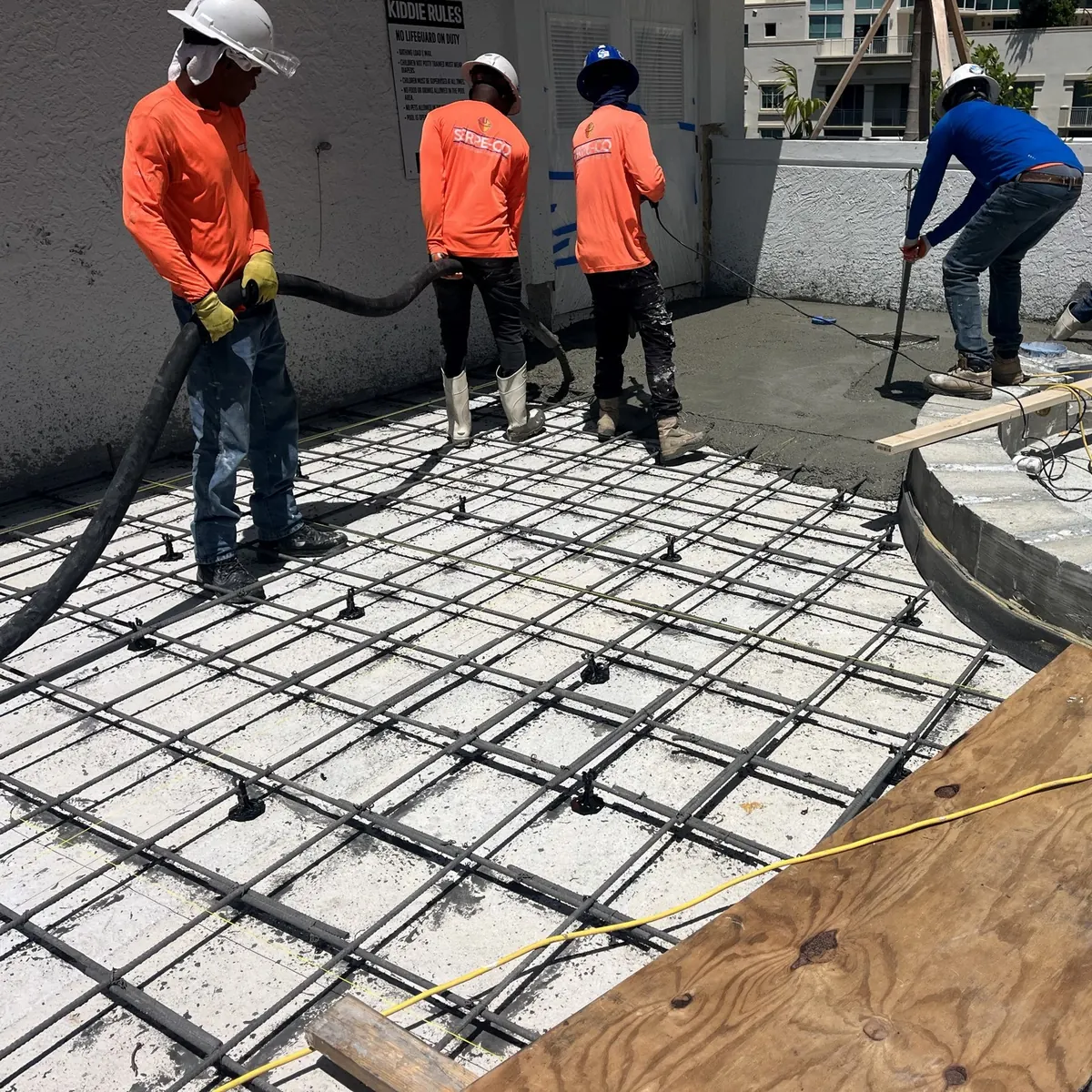
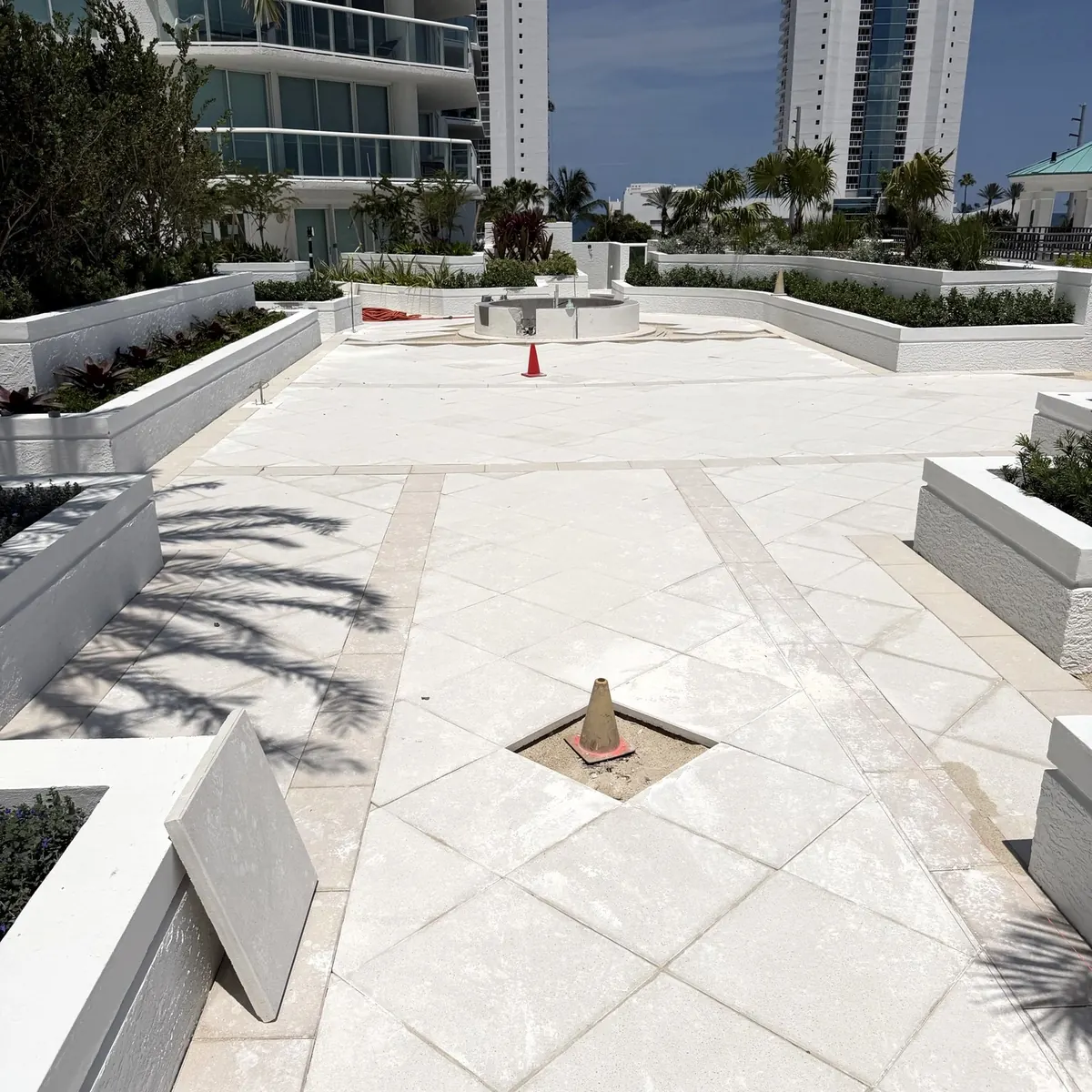
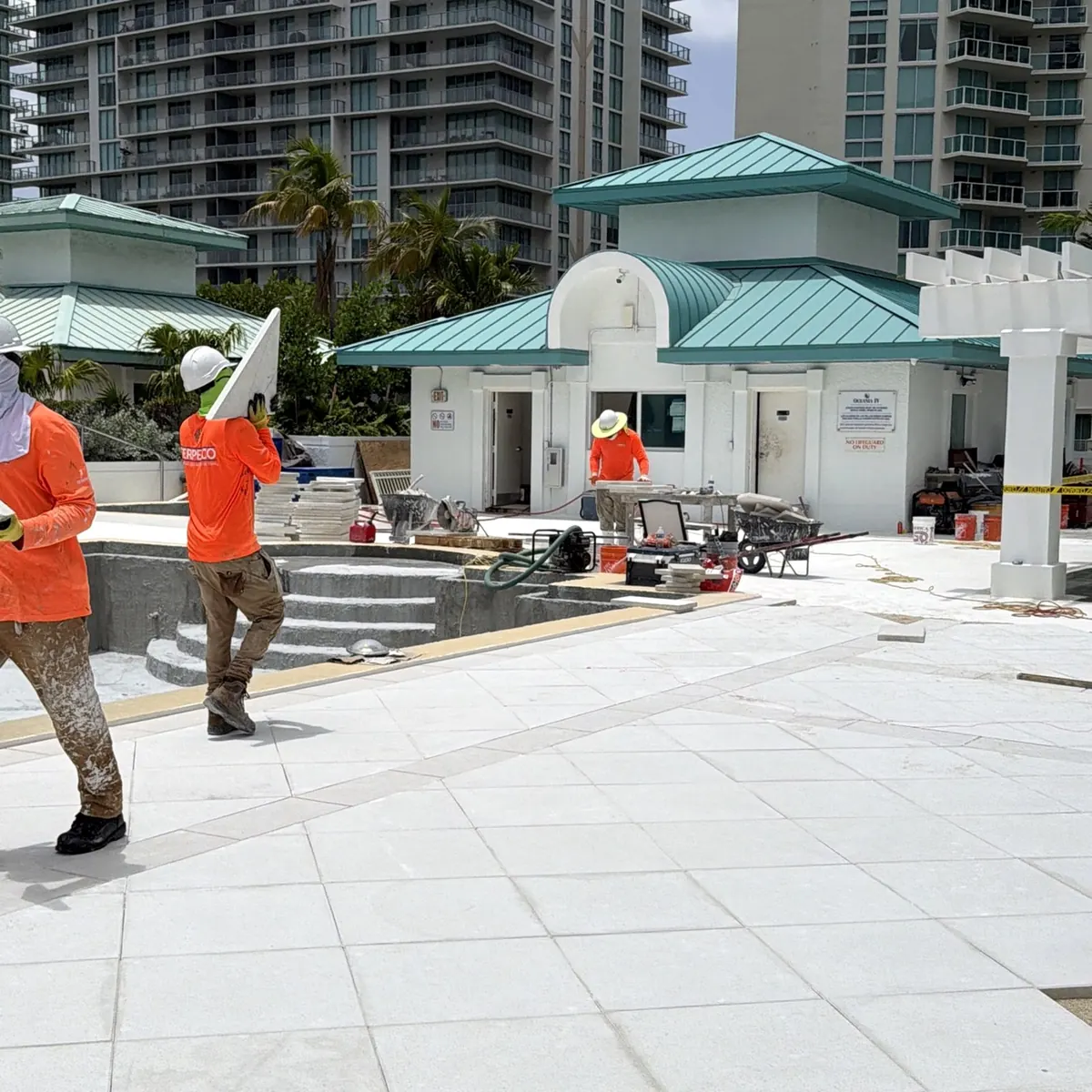
Condominiums such as Oceania IV in Sunny Isles Beach, where the pool sits on the roof of the tower, show how deep a deck project can go. On that job, the deck was taken down to the structure, rebuilt with new reinforcing and concrete, and finished with new pavers, turf and pool trim.
Deck work also often lines up with inspections. Pool decks and planters over garages regularly appear in milestone and county recertification reports, which our post on the 40-year recertification explains for Miami-Dade and Broward boards.
Pavers or coatings: choosing a pool deck resurfacing surface
The two most common choices on condo decks are pavers and applied coatings. Each has a place, and the engineer or architect may limit the options based on weight, height and drainage.
Pavers
Pavers are set over the waterproofing, either on a bedding layer or on pedestals. Their big advantage on an elevated deck is access: pavers can be lifted to reach the membrane or a drain and then put back. Broken or stained units can be swapped one at a time. Pavers add height and weight, so door thresholds, coping heights and the capacity of the structure all need checking first.
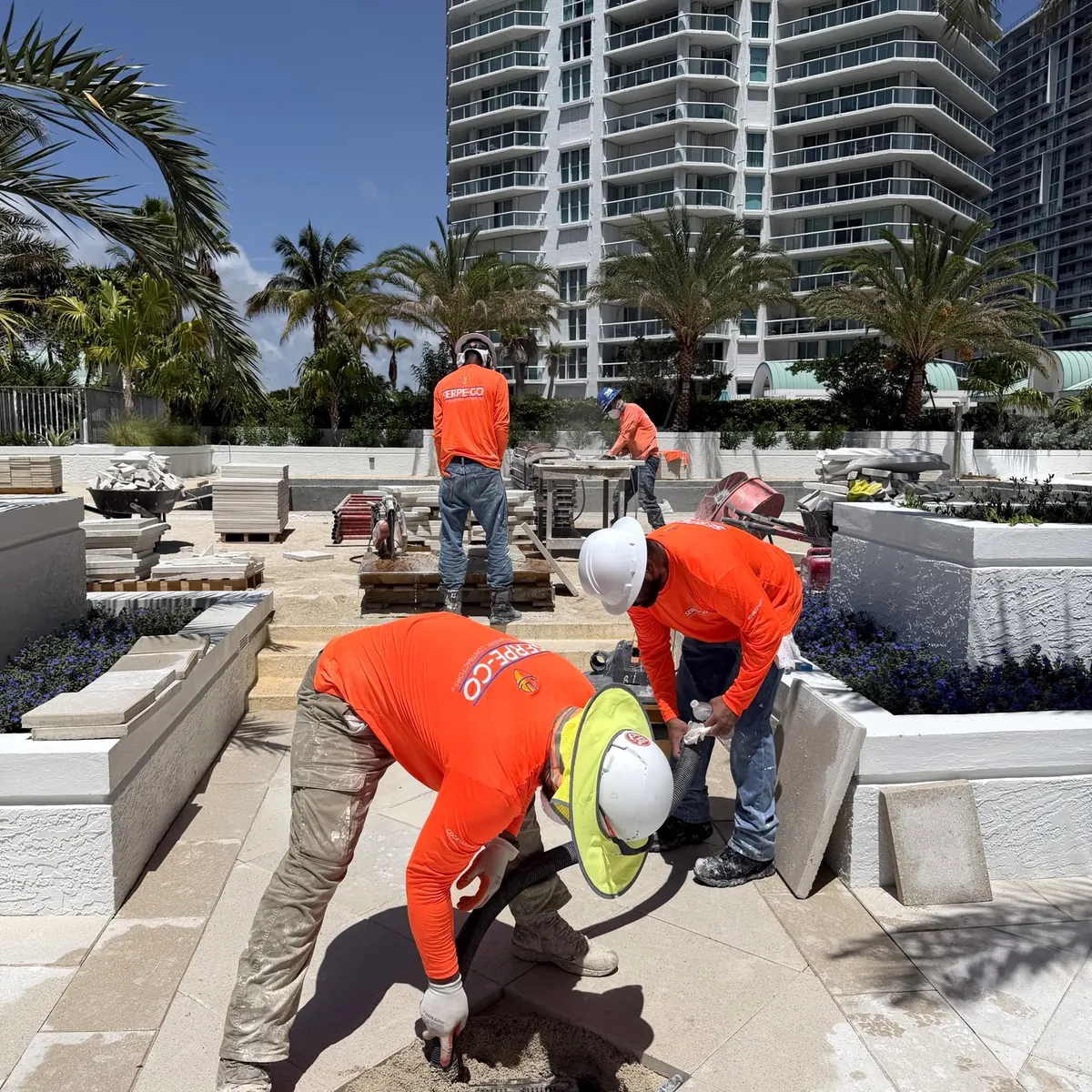
Coatings and overlays
Applied systems, such as cementitious overlays and textured deck coatings, bond to the concrete or to a membrane and add very little height. Many can be tinted and textured for grip. A coating is only as good as the slab under it, so cracks, spalls and hollow areas have to be repaired before it goes down, and the surface needs recoating on a regular cycle to keep its protection.
Questions the board should ask
- Does the engineer need to evaluate the slab or membrane first?
- How will the new surface meet door thresholds, drains and the pool coping?
- Can the membrane be reached later without tearing out the whole deck?
- How does each option handle heat, slip resistance and pool chemicals?
- What maintenance will the surface need, and how often?
Planters, joints and the details that leak
Leaks on pool decks seldom start in the middle of the field. They start where materials meet: planter walls, drains, expansion joints, railing posts, the joint between deck and coping, and the base of walls and columns. Planters hold wet soil against concrete all year, so on our pool deck projects the planters are waterproofed as part of the scope rather than left for later.
Joints deserve the same care. Sealant at the coping and expansion joints ages under sun and chlorine, and once it splits, water runs straight under the surface. Replacing those joints is part of any deck project worth doing. Our waterproofing services cover membranes, planters and joint work on occupied buildings.
Resurfacing the pool shell at the same time
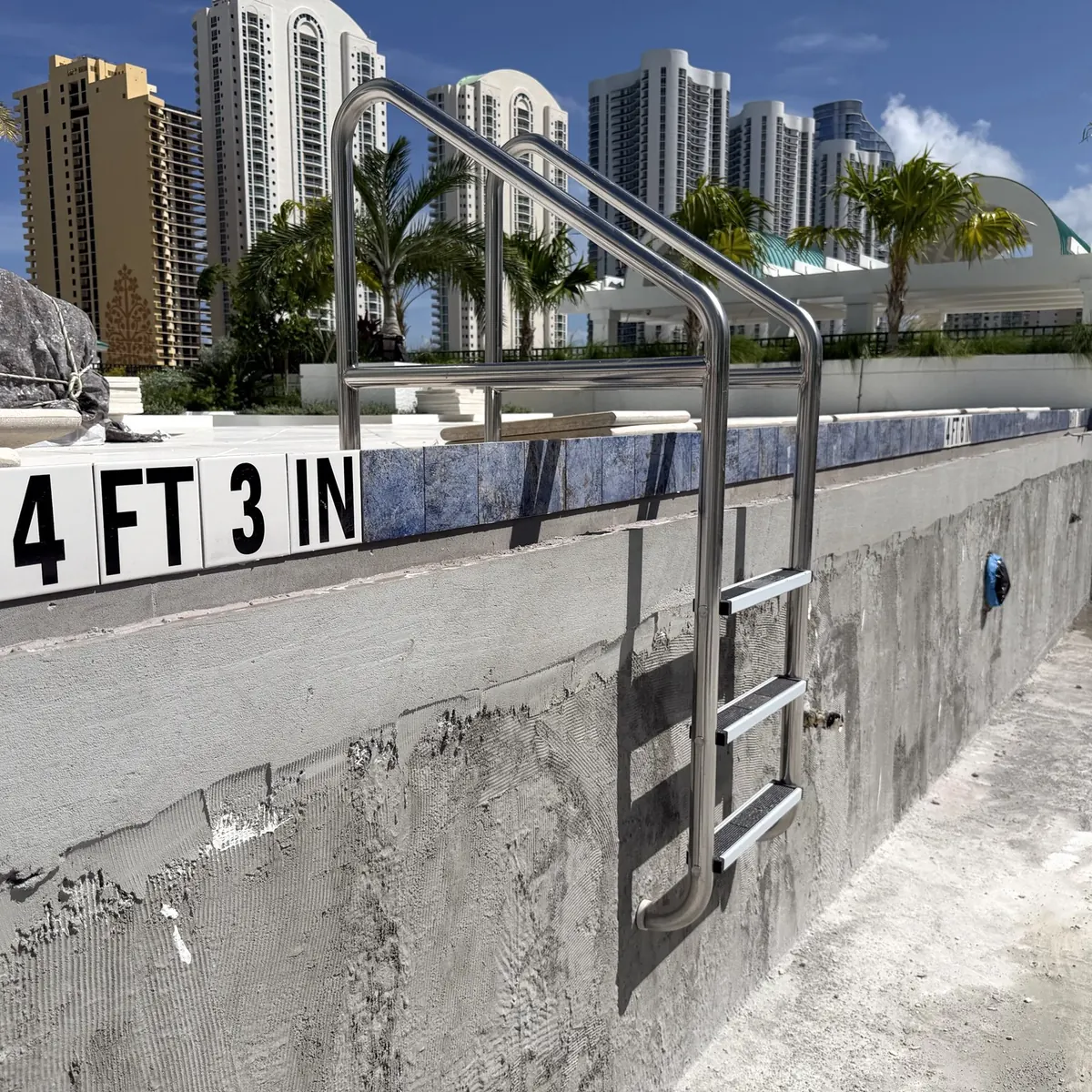
When the deck is being rebuilt, the pool is usually closed anyway, which makes it the natural time to resurface the shell. The pool is drained, and delaminated finish is removed down to the substrate. Cracks and hollow areas in the shell are repaired, tile, coping and joints are replaced where needed, and a new interior finish goes on, either plaster or a gem quartz finish such as Diamond Brite.
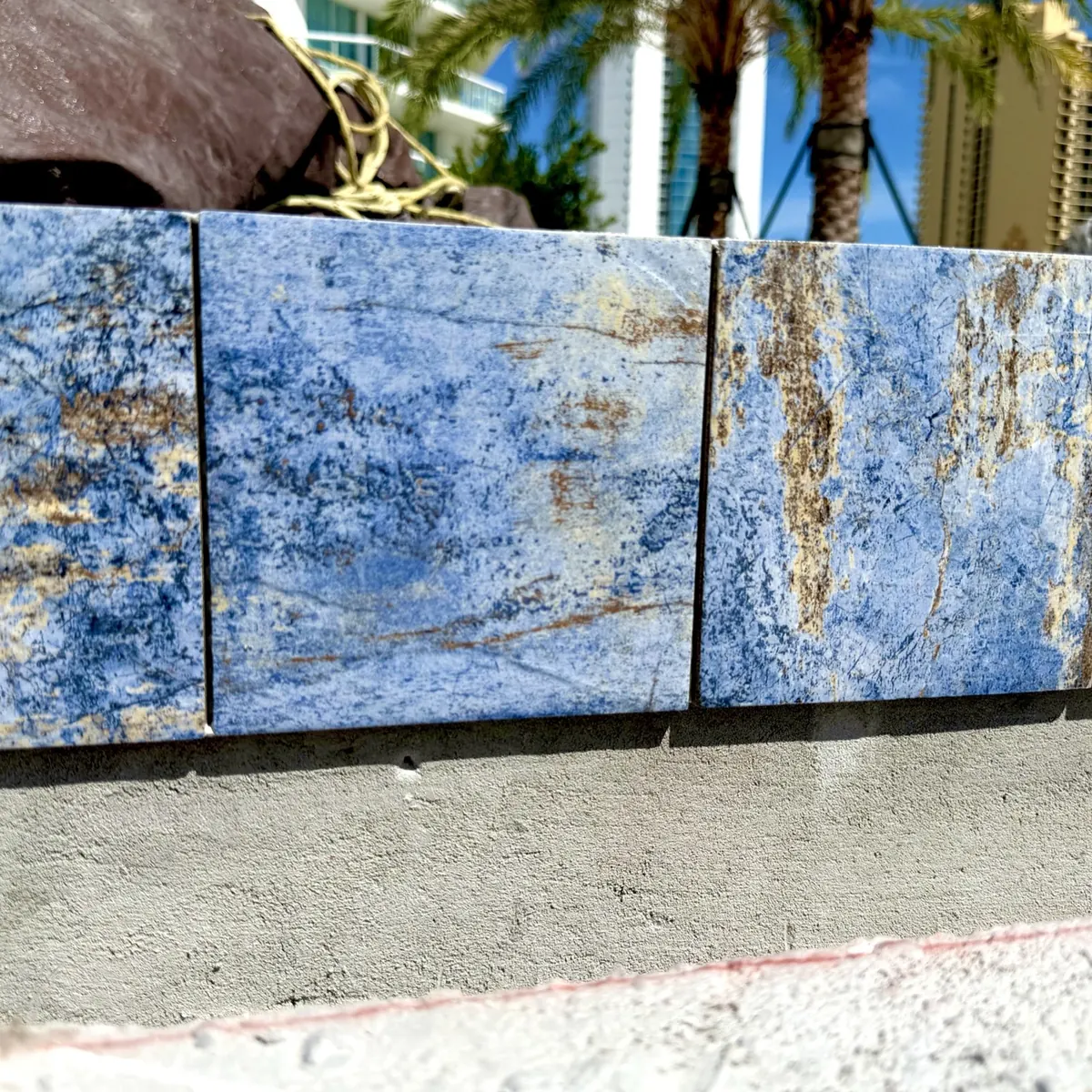
Handling the shell and the deck in one sequence lets the new deck surface tie in cleanly at the coping, and residents lose the pool for one closure instead of two. Our commercial pools and pool decks page outlines that work in more detail.
Permits, the health department and scheduling
Deck and pool work on a condominium needs the right approvals before the first cut. The local building department permits the construction, and Florida treats many association and hotel pools as public pools under Chapter 514 of the Florida Statutes, administered by the Department of Health. Your engineer and contractor should confirm which agencies need submittals for your scope.
Timing is the other big decision. Many associations prefer late spring through early fall, when seasonal residents are away, though summer rain and hurricane season have to be planned around. A good schedule sets the closure date, the order of work and the reopening plan in writing before the pool goes out of service, with work areas fenced and protected from residents.
On an elevated deck, the space below matters too. Shoring, overhead protection and closed parking spaces may be needed in the garage while concrete is removed above, so residents should hear early which spaces, entrances and walkways are affected. Materials and debris should move on scheduled days, with notices posted ahead of the noisiest work.
Planning pool deck resurfacing as part of a bigger picture
A pool deck rarely fails on its own. The same salt, water and age that wear the deck also affect balconies, garages and facades. Boards that fold pool deck resurfacing into their reserve study and inspection planning can schedule the work on their own terms instead of after a leak forces a closure. Repair costs rise the longer water stays in the concrete, so earlier is almost always easier.
Start with the documents the association already has: the latest milestone or recertification report, the reserve study, any past leak reports and the original deck drawings if they exist. Together they show the engineer and contractor where to look first, and they help the board compare bids for the same scope.
How SERPE-CO can help
SERPE-CO is a family-owned Florida Certified General Contractor, CGC #1523974, based in Pompano Beach, with more than 20 years in the field. We resurface pool shells, rebuild and waterproof decks and planters, and repair the structure under elevated pools for associations from Palm Beach County to Miami-Dade County, always working to the engineer's documents. To talk through your deck, request a site visit or call (954) 718-3094.
CEO and co-founder of SERPE-CO, a family-owned Florida Certified General Contractor (CGC #1523974). In concrete restoration since 2005 and a contributor to the Florida Community Association Journal. This article is general information, not engineering or legal advice.