Parking Garage Restoration
Parking Garage & Plaza Deck Restoration
Repairs and traffic coatings for decks that handle vehicles, foot traffic and rain.
In short
What is parking garage restoration?
Parking garage restoration repairs a parking structure's slabs, beams, columns and joints and then protects the driving surface with a traffic-rated system. Engineers call for it when they find spalling or delaminated concrete, bare rebar, leaking expansion joints or a deck coating worn through to concrete. Each of those conditions lets salty water work its way down to the steel.
Free milestone planner
Is a milestone inspection coming due on your building?
Enter the year your building got its certificate of occupancy and how many stories it has. The planner estimates your deadline under Florida law, then you can send it to SERPE-CO for a second look.
Add the year and story count for an estimated due date.
Want a second look at your timeline? Send your building details and SERPE-CO will follow up about the inspection, likely repairs and how to plan for them.
About this estimate
This is a planning estimate drawn from the statewide rule in Florida Statute 553.899. Your local building department sets the real deadline and may call for the first inspection at 25 years instead. Broward County also has its own Building Safety Inspection Program. Check your date with your building official and engineer, or contact SERPE-CO and we will help you sort it out.
Parking Garages & Plaza Decks
Water soaks into garages and plaza decks from above, and the steel inside corrodes. Our crews fix slabs, beams, columns and joints, then add a traffic-rated system so the same leak path cannot do that damage twice.
With more than 20 years in the field, SERPE-CO handles parking garage restoration work from St. Lucie to Miami-Dade for condominium associations, property managers and owners of commercial buildings.
Reviewed by Brett Serpe, MBA, GC, CEO of SERPE-CO · Florida Certified General Contractor CGC #1523974
Prepared by the SERPE-CO project team, with more than 20 years in concrete restoration. Last reviewed November 2026.
Why it happens
How salt and water attack garages from inside
Garages take the exposure of a bridge but are built with the details of a building. Every car that pulls in drips rainwater, and near the ocean the water and air both carry salt. Water sits in the low spots, soaks into the driving surface and travels through cracks and broken joints to the level below. Chloride builds up in the top layer of steel, around drains and where beams meet columns, and the bar rusts long before the deck shows it.
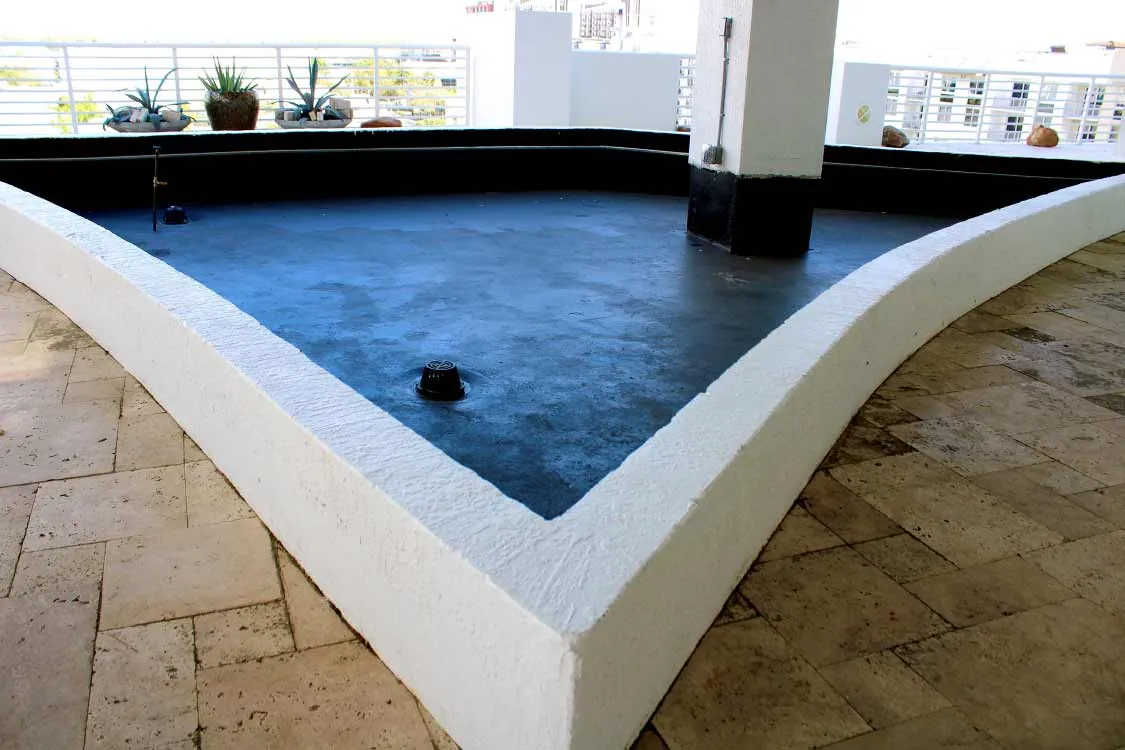
A plaza deck brings a second issue. Its membrane sits buried beneath pavers, planters or a topping slab, so a leak can go unnoticed for years. Expansion joints open and close with every change in temperature and tend to give out before anything else. Precast garages see the same exposure at the joints between double tees and at the connections where they bear. Drips, white deposits on the ceiling and rust stains underneath all tell you the deck has stopped keeping water out.
The work
Parking Garage Restoration: what the job covers
- 01Double-tee, slab, beam and column repairs
- 02Vertical and overhead concrete repairs
- 03New expansion joint systems
- 04Vehicle and pedestrian deck traffic coatings
- 05Plaza deck membranes beneath planters and pavers
- 06Drainage fixes, re-striping and new signage
How we do it
The order of deck repairs and traffic coatings
In most garages the engineer surveys the deck by chain dragging the driving surface and looking over the soffits, beams and columns from below. Our team marks each delamination, agrees quantities with the engineer, and plans the phases with management so residents can still get in and out. Bays where slab or beam repairs reduce capacity are shored first. We barricade each work zone and keep dust and slurry contained, so none of it reaches parked cars or storm drains.
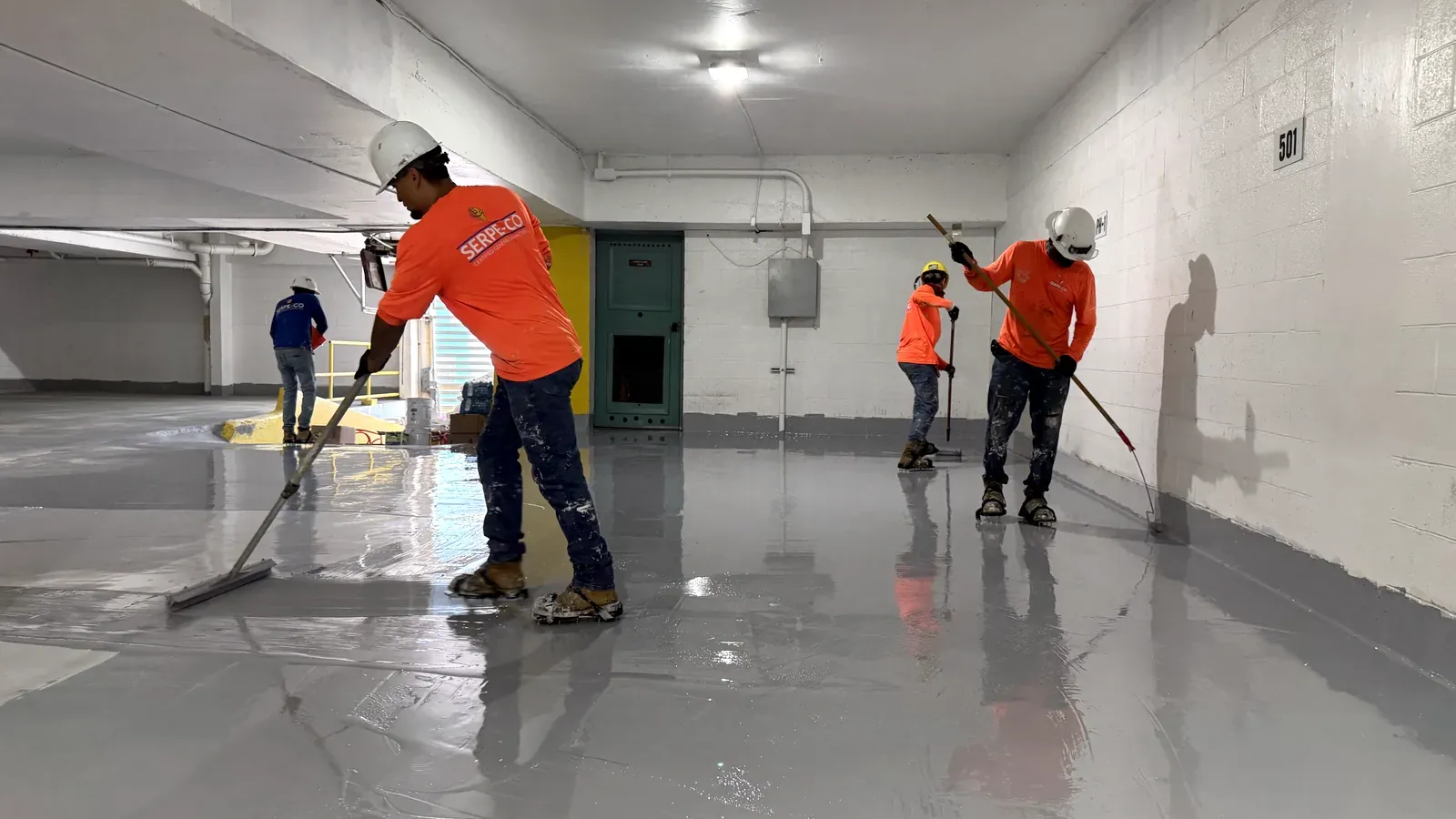
Concrete repairs go first. On the top surface, each delamination is sawcut and removed down to sound concrete, below the bar where it has rusted, then cleaned and poured back, full depth where the damage runs through. Underneath, the soffits, beams and columns get their repairs either formed and poured or troweled by hand, following the engineer's detail. Cracks get routed and sealed, drains are cleaned out or added where water ponds, and expansion joint blockouts are rebuilt with solid edges for the new seal.
Protection comes next. The deck gets shot blasted or profiled the way the coating maker specifies, and the crew checks moisture and cure time before the system is applied. A vehicular traffic coating is built up in coats: primer first, a flexible base membrane next, and wear coats loaded with aggregate on top, thicker at ramps and turns. New seals go into the expansion joints, the lines are repainted, and cars return to each area only after the data sheet cure time.
Materials we use
Deck coatings, joint seals and steel protection for parking structures
A vehicular traffic coating is built in layers, and its chemistry is matched to the deck. Polyurethane has been the standard for years: a flexible base layer that spans cracks, then wear layers loaded with grit. PMMA and polyurea-type systems cure far faster, so ramps and entrances stay closed for less time, and some hybrids add an epoxy wear layer for turning lanes that take heavy abrasion. Where no membrane is called for, a penetrating silane sealer cuts down water and chloride uptake, though it will not bridge a crack or stop a leak.
Garage expansion joints are picked to handle the movement the engineer has calculated and the traffic rolling over them. Choices include pre-compressed foam, extruded rubber glands set in a blockout and edged with elastomeric concrete nosings, plus winged seals tied into the deck membrane. Control joints and routed cracks get a traffic-grade polyurethane or silicone sealant. To control corrosion, the engineer may call for zinc anodes in patches, surface-applied inhibitors, or a powered impressed current cathodic protection system where decks are badly contaminated.
Built to hold up
What helps garage deck repairs and coatings last
Deck coatings tend to fail early for the same few reasons: no surface profile, concrete that was still too wet, repair mortar that had not cured, or a wear coat rolled too thin in the lanes where cars turn hardest. Lasting work begins with shot blasting to the profile the data sheet calls for, moisture testing, and detail work around drains, cracks and column bases ahead of the main coats. Drainage counts just as much, since standing water will find every pinhole in a membrane.
A parking garage restoration proposal should lay out the phasing level by level, how many spaces each phase takes out of use and what shoring sits under the bays being repaired. Ask which coating system is proposed, how thick it is built in each traffic zone and how long it cures before cars come back. Expect adhesion tests or a mock-up, film thickness checks and an engineer's look at exposed steel. Any coating warranty comes from the manufacturer, on terms it sets.
How we run a job
Scheduled around the residents and staff who use the building.
- 01
Meet on site
Each job starts on site, walking the property and its conditions with your manager, board or engineer.
- 02
Follow the engineer's scope
The engineer writes the scope. We price it line by line, plan access and lay out each phase to build it.
- 03
Put safety first
We can never work too safely: shoring, swing stages, barricades and notices go up first.
- 04
Build the repairs
Crews work through the repairs in order, stopping for inspections wherever the engineer calls for them.
- 05
Finish and document
Final inspections, a closed permit and a full record of the work for the association.
Counties we cover
Parking Garage Restoration, county by county
Summary
Parking Garage Restoration: what to remember
- 01
A traffic coating combines primer, a flexible membrane and grit-filled wear coats, applied heavier where cars climb ramps, turn and brake.
- 02
Penetrating sealers slow salt uptake in garage slabs but cannot span a crack or stop an active leak.
- 03
Expansion joints leak more often than anything else in a garage, and the engineer sizes them for the movement expected.
- 04
Shot blasting, moisture tests and fully cured patches all come before a deck membrane goes down.
Glossary
Words that show up in an engineer's report
- Double tee
- A precast floor unit shaped like two capital letter T sections joined side by side. Seams between neighboring double tees need sealing.
- Traffic coating
- A liquid waterproof membrane with grit broadcast into its top layers, so it stands up to tire wear while keeping water and road salt out of the slab.
- Chain drag
- A survey method that pulls a length of chain over a deck. Where the ring turns into a dull rattle, the concrete beneath is delaminated.
- Blockout
- A recess cast or sawcut in the deck along both sides of an expansion joint, made to hold the joint system and its nosing.
- Cathodic protection
- A way of controlling corrosion that makes the rebar the protected half of an electrical circuit, using either sacrificial anodes or a powered system.
Questions
Parking Garage Restoration: questions boards ask
Will the garage close during the work?
In most cases, no. Work moves one level or bay at a time while cars route around the active zone. Management signs off on the shoring, barricades and parking plan before we close off any section.
How long before a garage traffic coating needs to be recoated?
That depends on traffic, exposure and which system went down. Drive lanes, turns and ramps lose their wear coat first, and those spots can usually be recoated while the membrane underneath stays in place. Regular checks matter more than a set schedule, because once the membrane wears through, salt and water are back in the slab.
What causes the white stains on our garage ceiling?
Most often, efflorescence. Water moving through the slab picks up minerals from the concrete and leaves them where it drips out and dries. The stain is not structural in itself, but it proves water is moving through a crack or joint, and those drips can spot car paint. Finding the source and sealing it is the fix.
Does every level of a parking garage need a traffic coating?
No. A full membrane is usually specified on levels above occupied space, on the open top deck and on entry lanes where cars bring in rainwater. Slabs on grade normally go without one. Middle supported levels might get a membrane or only a penetrating sealer, depending on condition, chloride levels and the owner's plans. The specification decides.
What is post-tensioned concrete, and how does it change garage repair work?
A post-tensioned slab gets its strength from high-strength steel tendons pulled tight once the concrete has set. Chipping or cutting near a tendon or its anchor without a plan can release that force all at once. That is why repair work on a post-tensioned deck starts by locating the tendons, and the engineer designs any work on them.
Do owners need to leave during the work?
Rarely. Residents stay home while crews move through the building by elevation or stack. Each balcony is closed only during its own repair, and owners hear from us before anything affects them. The board and manager approve the sequence and access plan first.
Will you coordinate with our engineer?
Always. SERPE-CO works closely with associations and professional engineers, building every structural repair to the engineer of record's specification and lining up their inspections as the job goes. No engineer yet? We can help you take the first step.
Industry standards and guides
- International Concrete Repair Institute (ICRI): repair guidelines for concrete
- American Concrete Institute (ACI): codes and guides for concrete construction and repair
- Florida Building Code
On every project, our repair methods and materials follow the engineer's specification, the product maker's requirements and the current building code. Treat this page as general information, not engineering advice.
Other services we provide
 General Contracting
A single contractor answering for the trades, the timeline and the finished result.
Waterproofing
Track down where water enters, then seal the envelope so the building stays dry.
 Commercial Pools & Decks
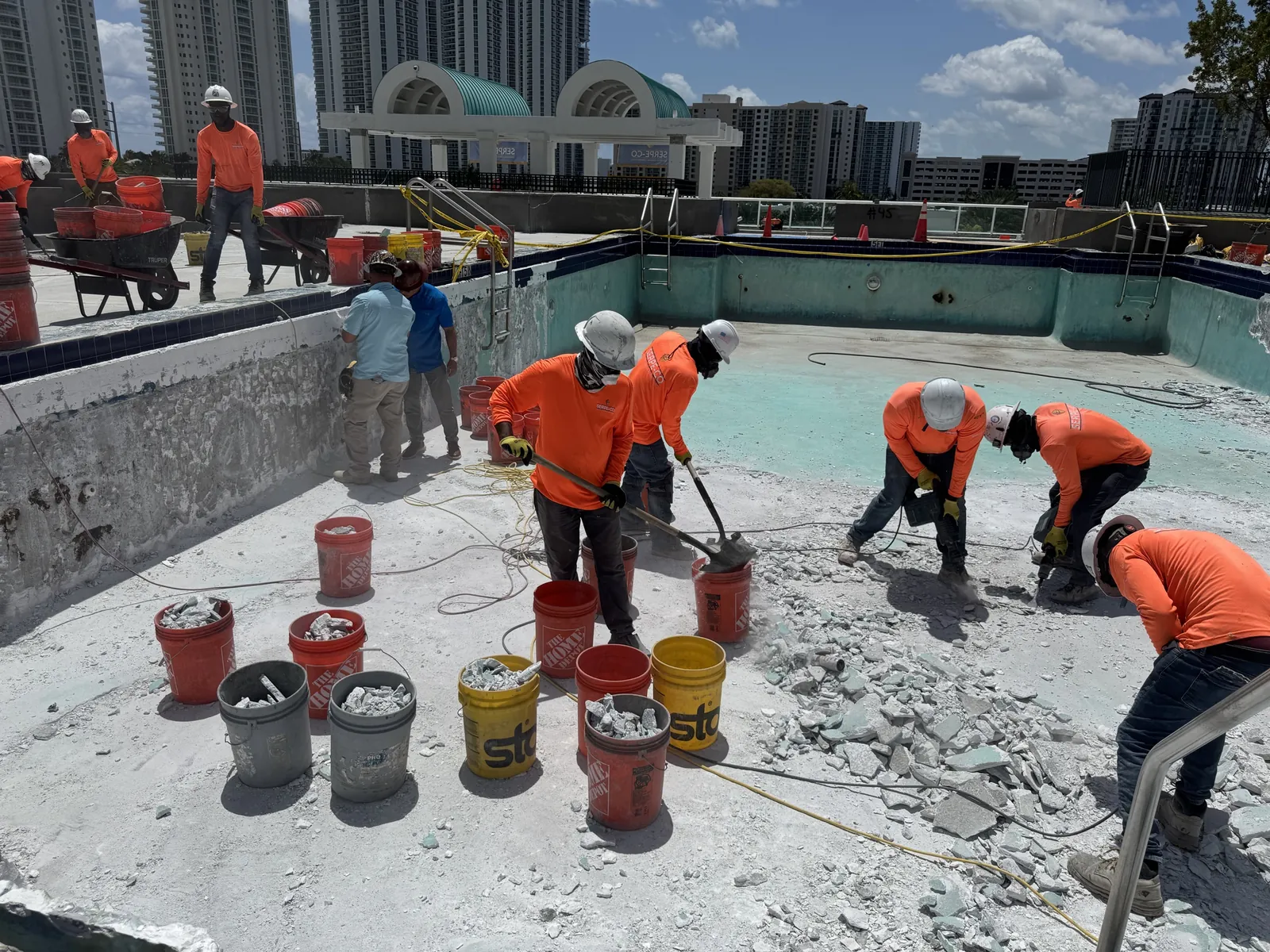
Resurfaced pool shells, repaired decks and sound structure under elevated pools.
Working with an engineer?
Holding drawings, specifications or a complete set of bid documents?
Structural engineers, property engineers and board members send SERPE-CO much of our restoration, pool and roofing work. Once a scope has been drawn and specified, our team prices what the documents show, raises questions where something is unclear, and lays out each line so boards can weigh the bids on equal terms.
Request an estimate
Let's plan your restoration.
Tell us where the building is and what you are seeing. We set up a visit to the property, then send a written proposal, or tell you an engineer needs to write the scope first.
- More than 20 years in the field
- St. Lucie, Martin, Palm Beach, Broward and Miami-Dade
- Family-owned Certified General Contractor
Rather call?(954) 718-3094