Safe play surfaces
Playground Turf Built to the Fall Height
Under a play structure, turf is a safety surface first. SERPE-CO installs certified playground turf systems over a shock pad and a draining base, matched to the equipment's fall height.
In short
What makes playground turf safe under play equipment?
Playground turf is safe when the whole system, turf plus the shock pad under it, has been tested to ASTM F1292 for a critical fall height at least as high as the equipment's fall height. IPEMA certifies products to F1292, and the manufacturer provides the certificate. For accessibility, the surface should meet ASTM F1951, which the 2010 ADA Standards require for accessible playground surfaces. SERPE-CO installs the certified system, base and drainage; a certified playground safety inspector or the owner's consultant inspects.
The standard
Playground turf and ASTM F1292 critical fall height
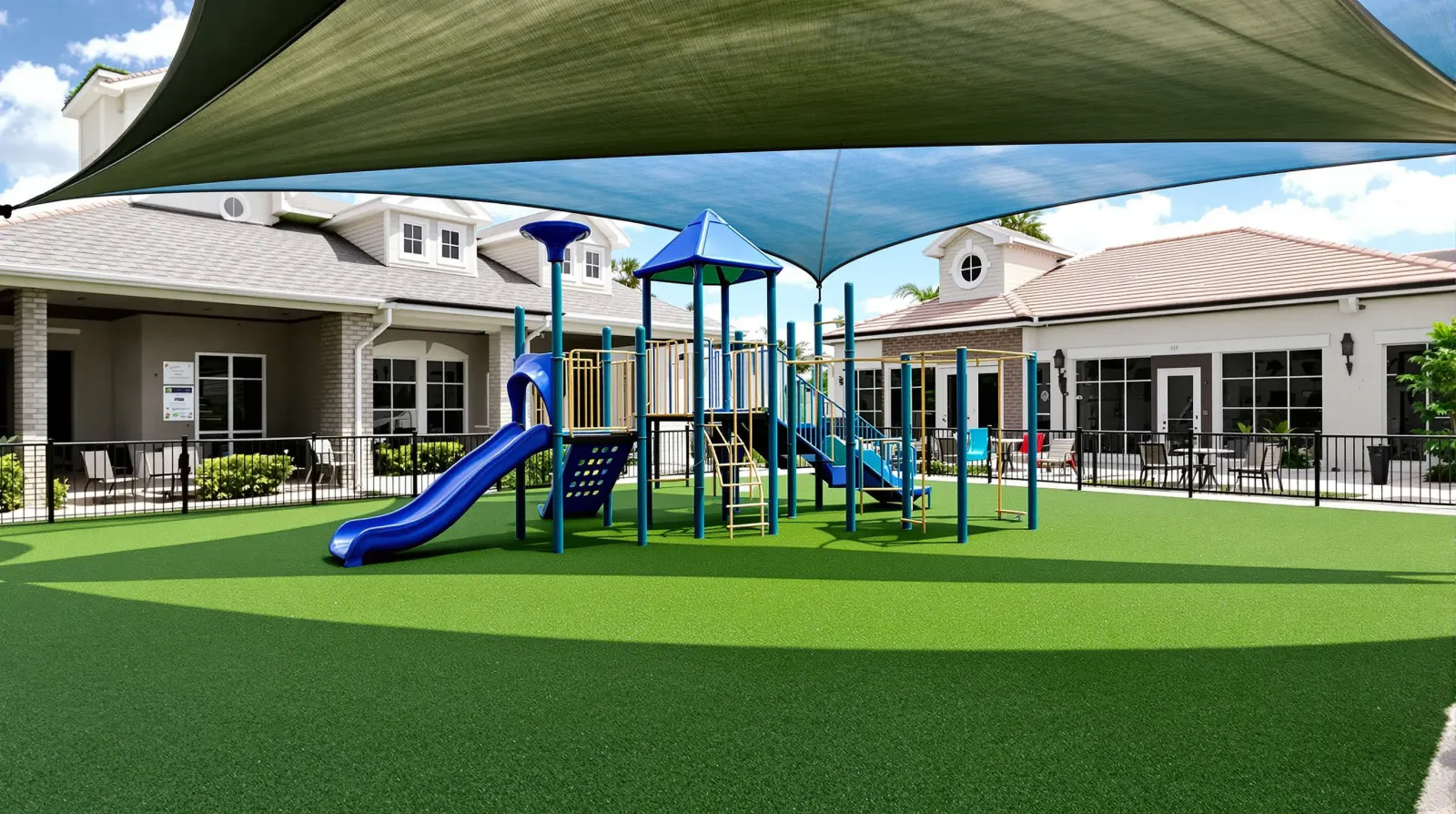
Playground turf under swings, slides and climbers is a safety surface, not just a lawn replacement. ASTM F1292 is the standard that measures impact attenuation for playground surfacing and reports it as a critical fall height: the height from which a fall onto that surface stays within the standard's limits. The surfacing system must meet or exceed the fall height of the equipment it serves. A tall climber needs a surface rated for a higher fall than a toddler platform.
The rating belongs to the tested system, not to the turf alone. Playground turf on its own rarely absorbs much impact. The cushioning comes mostly from the shock pad underneath, and the turf, the pad and sometimes the infill are tested together. Changing one layer, using a thinner pad or a different infill, can change the rating. That is why the system installed has to match the system that was tested.
IPEMA, the International Play Equipment Manufacturers Association, certifies surfacing products to ASTM F1292. Before any order is placed, the board or owner should ask the manufacturer for the F1292 certificate showing the critical fall height for the exact system, and SERPE-CO compares it with the equipment's fall height. SERPE-CO does not certify surfacing. The manufacturer provides the certificate, and the installer builds the system as tested.
Under the turf
The shock pad and the base below it
The shock pad is a foam or rubber layer that sits between the base and the turf. Thicker pads generally reach higher critical fall heights, and the manufacturer's certificate states which pad thickness goes with which height. Pads are laid tight, joints are kept closed, and the pad is fixed or held as the manufacturer's instructions require, so it cannot shift and leave a soft or hard spot under a slide exit.
Under the pad, a compacted, graded stone base gives a flat, stable platform. The area is excavated, often about 3 to 4 inches for a standard base and deeper where the pad and system call for it, with geotextile fabric where the soil needs it. Crushed stone or aggregate goes in compacted lifts, graded so water moves off the play area. A play surface over a concrete slab still gets a draining layer or pad so water can reach the slab's drains.
Where a playground sits on a podium, a rooftop or a deck over a waterproofing membrane, the building's structural engineer or design professional confirms loads, drainage and hold-down first. SERPE-CO builds the base and drainage to that design and installs the certified playground turf system on top, following the manufacturer's instructions layer by layer.
Access for every child
ASTM F1951 and ADA section 1008.2.6
A play area should be usable by children who use wheelchairs or walkers, and by the parents and grandparents who come with them. ASTM F1951 is the standard for accessibility of surfacing under and around playground equipment. The standard tests how firm and stable a surface is, meaning how much effort a wheelchair needs to roll across and turn on it. Short, dense playground turf over a firm pad can meet F1951 when the system has been tested that way.
The 2010 ADA Standards for Accessible Design, at section 1008.2.6, require that ground surfaces along accessible routes and in use zones of playgrounds comply with ASTM F1951. Ask the manufacturer for the F1951 report along with the F1292 certificate. Both documents should name the same system that SERPE-CO installs, including the turf, pad and any infill.
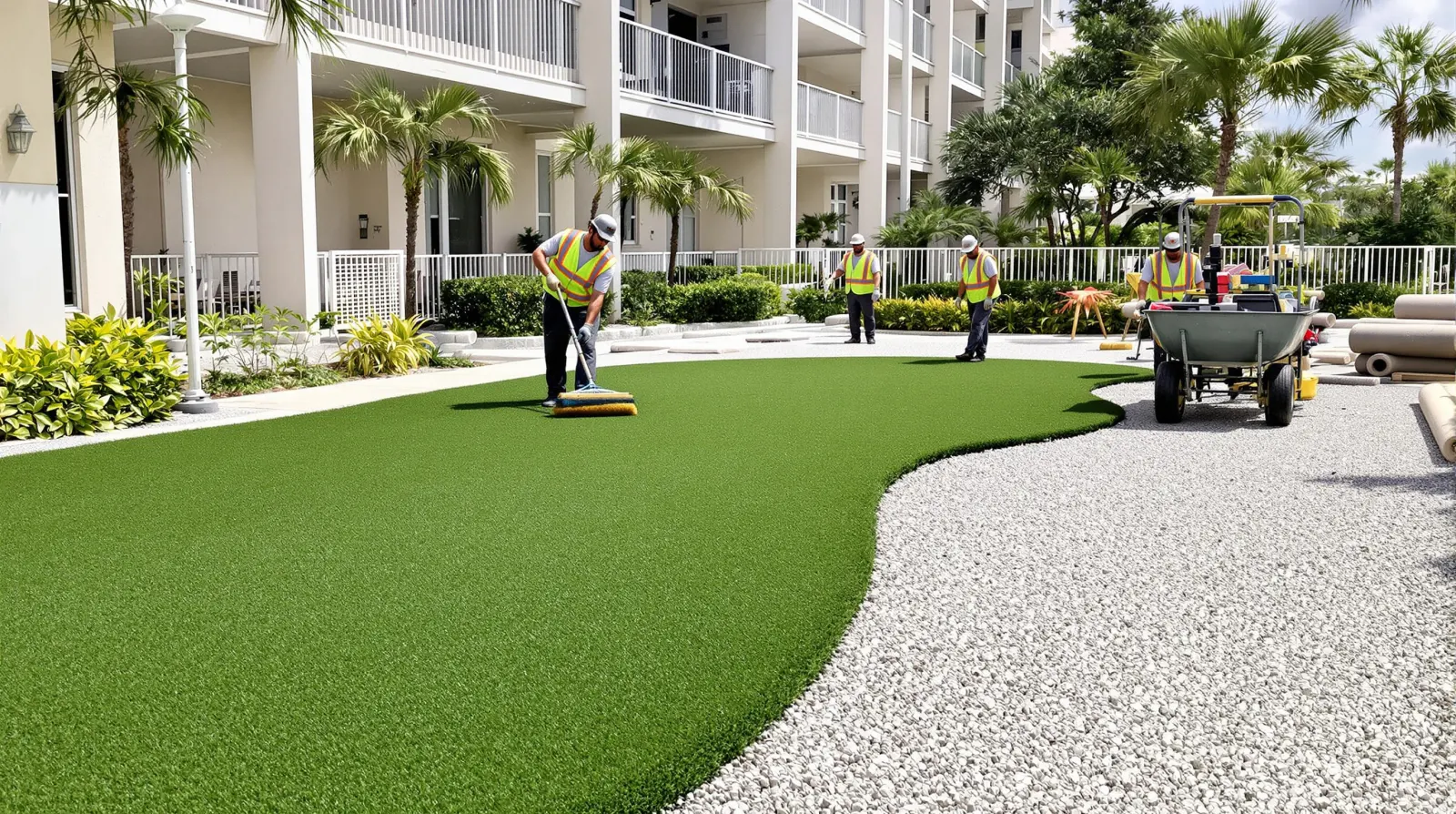
Accessibility also depends on transitions. Where playground turf meets a sidewalk, a concrete pad or the edge of a play area, the edge should be flush and secured, without a lip that stops a wheel or trips a child. SERPE-CO is a concrete contractor, so setting the walk and the turf edge to meet cleanly is part of how we build the job, not an afterthought.
Layout and drainage
Use zones, edges and drainage
The CPSC Public Playground Safety Handbook describes use zones: the area around and under equipment where a child could fall or land, which must be covered with protective surfacing. Use zones generally extend at least 6 feet in all directions from stationary equipment, with larger zones in front of and behind swings and at slide exits, as the handbook explains. The equipment maker's instructions also set the zones for each piece.
Use zones decide where playground turf and its shock pad must go, and how big the surfaced area has to be. The board or its playground consultant confirms the layout from the equipment drawings, and SERPE-CO builds the base and surface to cover those zones fully. Benches, fences, planters and walkways stay outside the use zones, which keeps parents close without putting hard objects where children might land.
South Florida rain is the other big layout issue. A play area that holds water after a storm keeps children off the equipment and wears the pad. SERPE-CO grades the base to drain, uses a permeable turf backing, and ties the low side to a drain or planting area. Footings for play equipment and shade posts are set before the base, with the surface finished tightly around each post.
Florida sun
Heat and shade on playground turf
Synthetic turf gets hot in full sun, and children sit, crawl and play on it. UF/IFAS reported in 2025 that natural turf was consistently cooler than synthetic turf, often by more than 10°C (18°F). A UNLV study measured synthetic turf about 69°F hotter than irrigated natural grass at its maximum, with peaks reaching 169°F. Heat is a real design issue for any Florida play area.
Shade is the strongest tool. Shade sails or canopies over the play structure, existing trees and the shadow of a building all lower surface temperatures where children play. A lighter turf color and a cooling infill, where the certified system allows it, also help. Some properties rinse the surface before peak afternoon use and post suggested hours in summer. Shade structure footings need to be planned with the design professional where a permit or engineering applies.
Inspection and care
Inspection and upkeep of playground turf
A playground surface is only as good as its current condition. The CPSC handbook encourages regular inspection and maintenance of public playgrounds, including the surfacing. For playground turf, that means checking for lifted seams, worn spots under swings and at slide exits, low areas that hold water, edges pulling loose and any damage to the pad below. The handbook's checklists are a practical starting point for the property manager.
Inspection belongs with qualified people. A certified playground safety inspector or the owner's consultant can inspect the play area and the surfacing and report what needs attention. SERPE-CO does not inspect or certify playgrounds. We install the certified system, fix seams, edges and base problems the inspector or manager identifies, and follow the manufacturer's instructions when repairs are made.
Day-to-day care is simple. Blow off leaves and debris, brush the turf to keep fibers upright, rinse spills and top up infill where the system uses one. High-wear spots under swings and at slide exits may need a wear mat or patch over time. SERPE-CO leaves a written care sheet with the turf and pad maker's instructions at the end of the job.
More turf areas
Other places turf earns its keep.
 Dog Parks
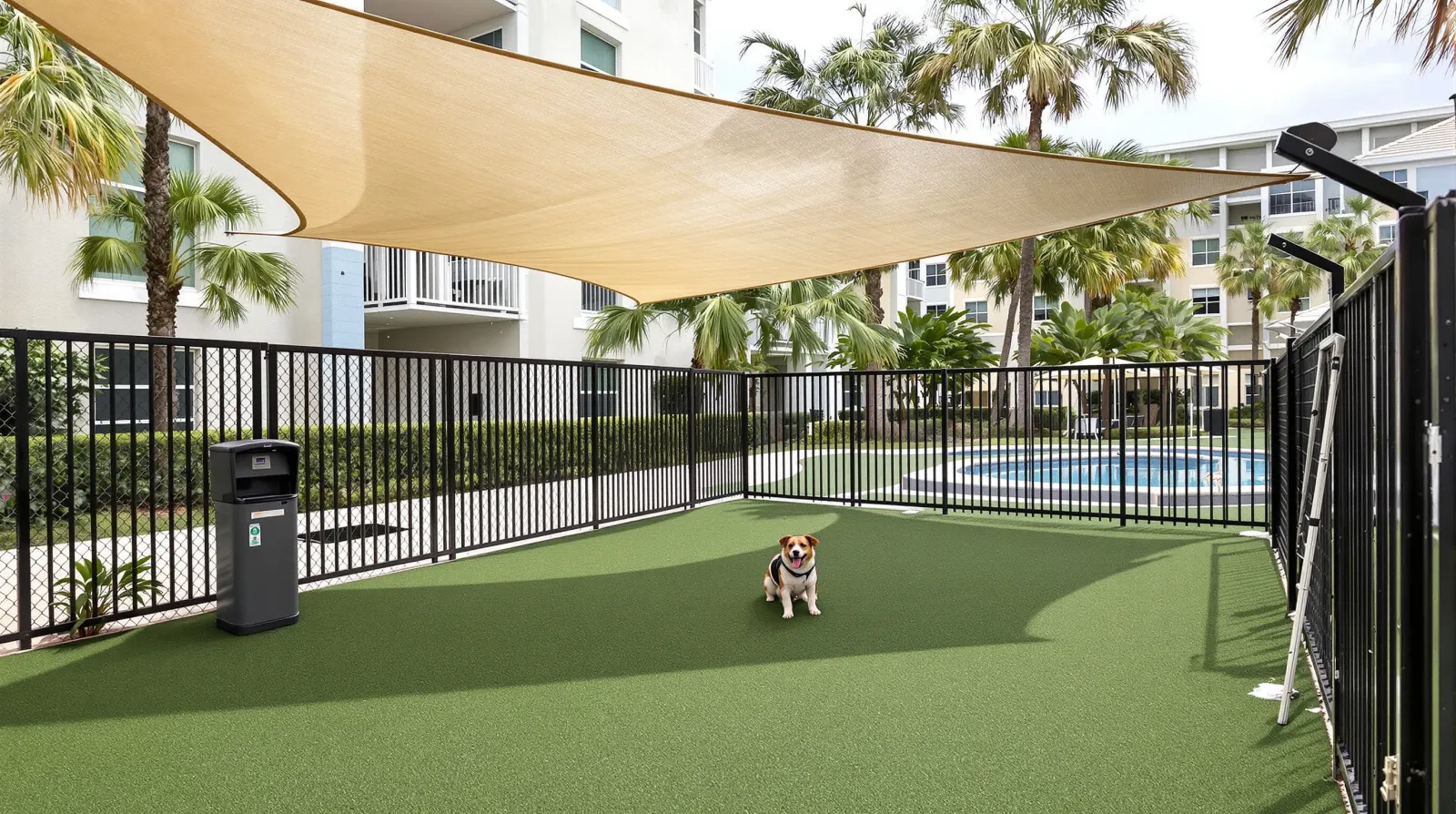
Dog runs and pet relief areas built to drain, rinse clean and stay fresh.
 Condo Common Areas
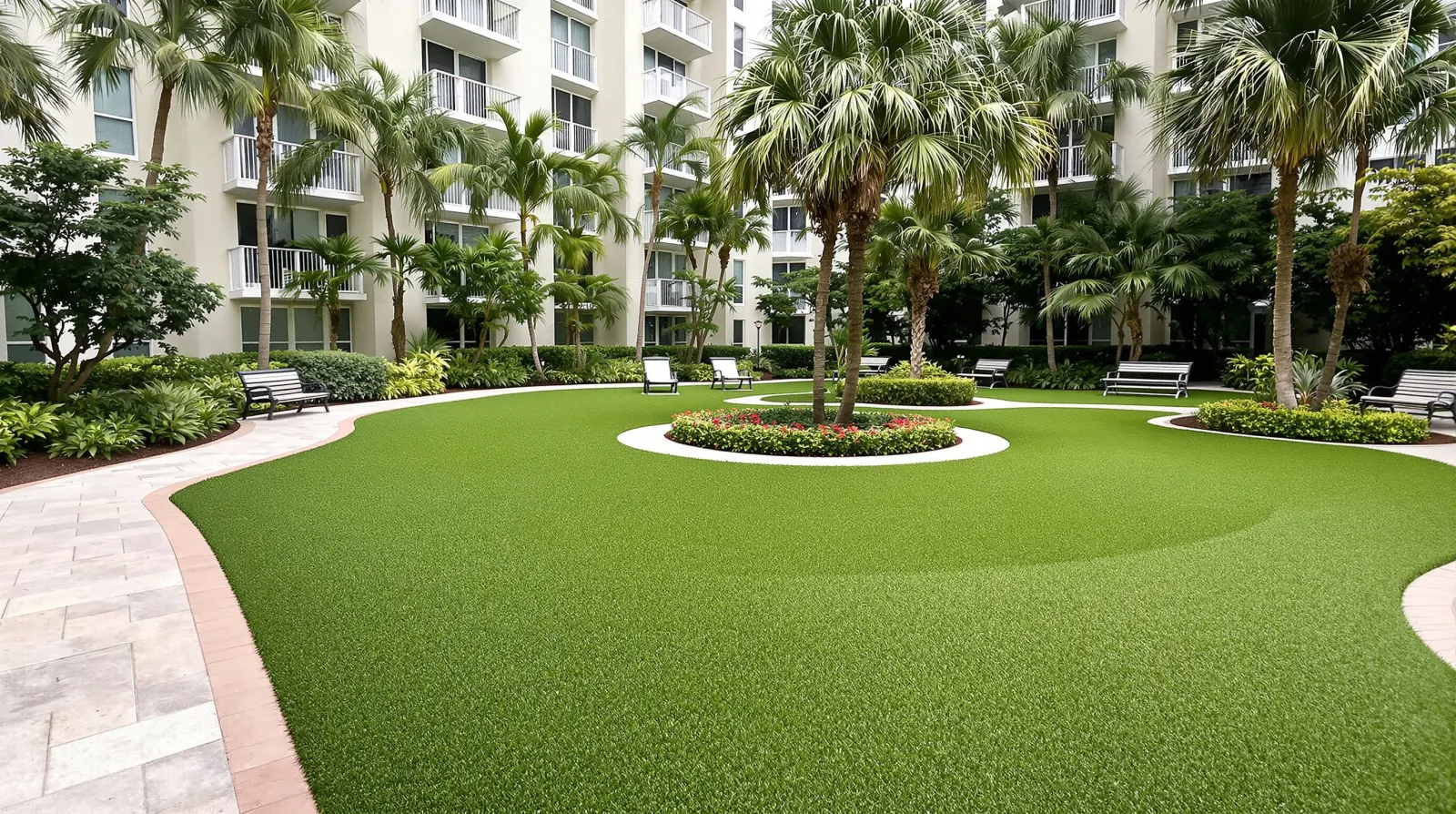
Courtyards, entries, medians and shady strips that stay green year-round.
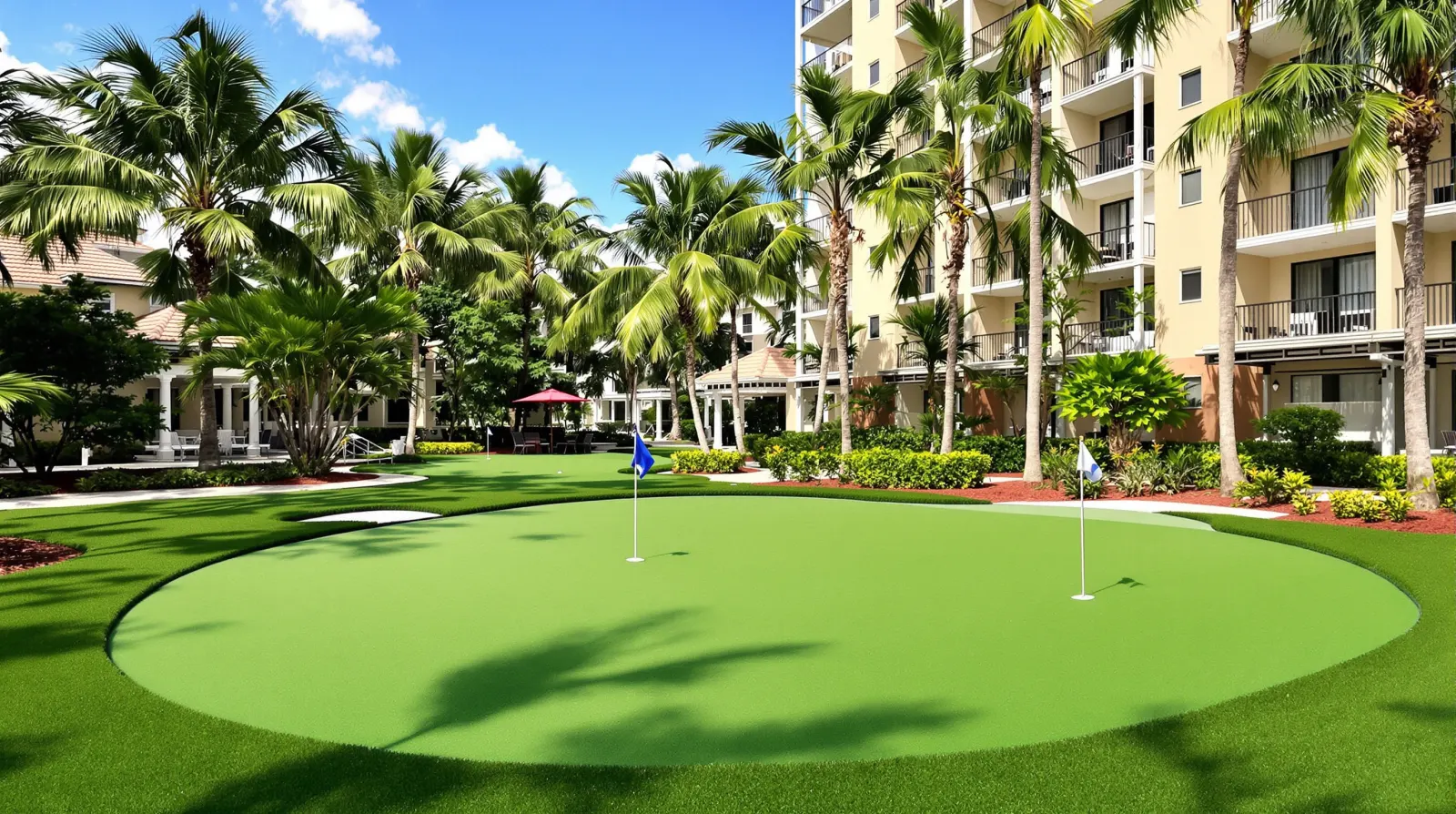 Putting Greens
Amenity putting greens with a shaped base, clean fringe and drainage that keeps up.
Artificial turf by city: Miami · Fort Lauderdale · Pompano Beach · Boca Raton · West Palm Beach · All turf services
Checklist
Documents and decisions for a playground turf project
- 01Equipment drawings showing fall heights and use zones
- 02Manufacturer's ASTM F1292 certificate for the exact turf and pad system
- 03Manufacturer's ASTM F1951 accessibility report for the same system
- 04Shock pad thickness that matches the required critical fall height
- 05Base and drainage plan, and design professional sign-off over slabs or membranes
- 06Flush edges at walks and pads along accessible routes
- 07Shade plan for the play structure and seating
- 08An inspection plan with a certified playground safety inspector or consultant
Related work
Concrete and waterproofing work that often goes with it.
Summary
Points to remember
- 01
Playground turf is a tested system; turf, pad and infill are certified together.
- 02
The ASTM F1292 critical fall height must meet or exceed the equipment's fall height.
- 03
Ask the manufacturer for the F1292 certificate and the F1951 accessibility report.
- 04
Cover the full use zones described in the CPSC handbook and the equipment instructions.
- 05
SERPE-CO installs; a certified playground safety inspector or the owner's consultant inspects.
Questions
Common questions.
Is playground turf safe for falls?
Playground turf is safe for falls when the full system, turf plus shock pad, is certified to ASTM F1292 for a critical fall height at least equal to the equipment's fall height. The turf alone does not provide that protection. Ask the manufacturer for the certificate for the exact system, and have it installed as tested.
Who certifies a playground surface?
IPEMA certifies surfacing products to ASTM F1292, and the manufacturer provides the certificate for its tested system. A certified playground safety inspector or the owner's consultant can inspect the finished play area. SERPE-CO does not certify or inspect playgrounds. We install the certified system, base and drainage to the manufacturer's instructions and the design professional's plans.
Does playground turf meet ADA requirements?
Playground turf can meet ADA requirements when the system has been tested to ASTM F1951 for firmness and stability. The 2010 ADA Standards, section 1008.2.6, require accessible playground surfaces to comply with F1951. Ask the manufacturer for the F1951 report, and keep edges flush where the surface meets walks and pads.
Can playground turf go over an existing concrete slab?
Often yes, with the right shock pad and a drainage layer so water can reach the slab's drains. The pad must match the certified system and the fall height. If the slab is a podium, a rooftop or over a membrane, the building's structural engineer or design professional confirms loads, drainage and hold-down first, and SERPE-CO builds to that design.
How hot does playground turf get?
Synthetic turf can get very hot in full sun. UF/IFAS found natural turf often more than 10°C (18°F) cooler, and a UNLV study recorded synthetic turf peaks reaching 169°F. Shade over the play structure, a lighter color, a cooling infill where the system allows it, and summer hours all help keep children comfortable.
What does SERPE-CO need to price playground turf?
The equipment drawings with fall heights and use zones, the manufacturer's F1292 certificate and F1951 report for the chosen system, and a site visit to see grades, drainage and access. For a ground-level play area, we then send a written proposal. A podium or rooftop play area needs the design professional's drawings first.
Sources and standards
- IPEMA: playground equipment and surfacing certification
- U.S. Access Board: 2010 ADA Standards, section 1008 (play areas)
- CPSC Public Playground Safety Handbook
- UF/IFAS: artificial turf heat in humid states like Florida (2025)
Photos on this page show typical turf installations. Turf over a structural slab, a roof or a waterproofing membrane follows the building's design professional and the product maker's instructions. Treat this page as general information, not engineering or legal advice.
Request an estimate
Tell us about your turf project.
Tell us where the building is and what you are seeing. We set up a visit to the property, then send a written proposal, or tell you an engineer needs to write the scope first.
- More than 20 years in the field
- St. Lucie, Martin, Palm Beach, Broward and Miami-Dade
- Family-owned Certified General Contractor
Rather call?(954) 718-3094