Pet areas that drain
Dog Park Turf for Condos, Apartments and HOAs
A dog run lives or dies by what happens under the grass. SERPE-CO builds the base, the drainage and the edges first, so the turf on top can be rinsed clean and stay that way.
In short
What makes dog park turf work at a condo or apartment building?
Dog park turf works when the base drains fast and the area can be rinsed every day. A good pet area has a compacted, free-draining stone base, turf with a backing that lets liquid pass, an antimicrobial infill, a hose bib or rinse station close by, and a cleaning routine that staff actually follow. Fencing, double gates, shade and waste stations finish the space. SERPE-CO builds the base, drainage and edges with the same care we give a pool deck.
Start below the grass
Why dog park turf starts with drainage
Dog park turf is a drainage project first and a landscaping project second. Every time a dog relieves itself, liquid has to pass through the turf backing, through the infill and down into the base before it can pool or sour. When the base is dense clay, settled fill or a slab with no slope, that liquid sits just under the blades, and the smell follows within weeks. The part residents never see is the part that decides whether the area works.
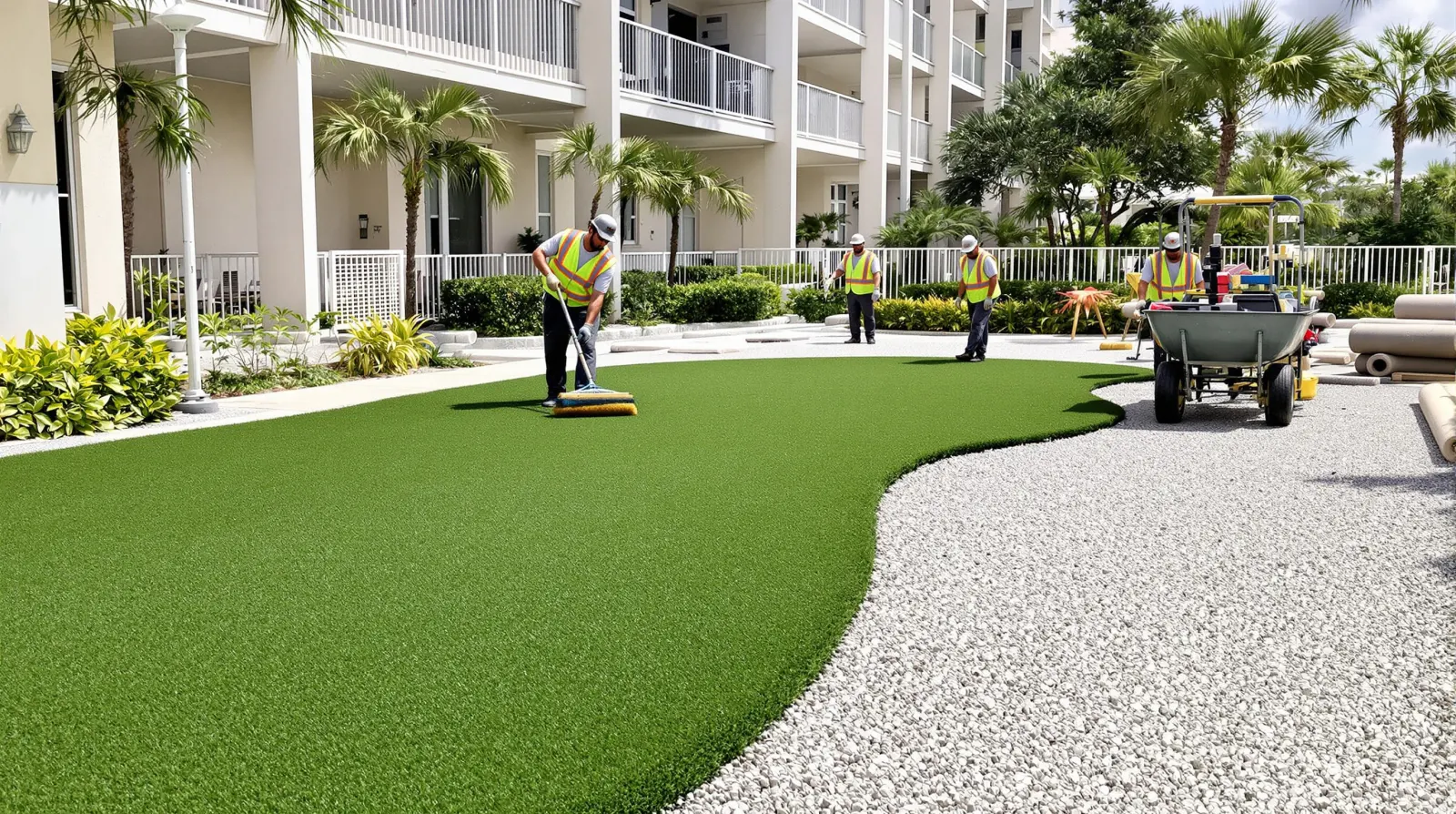
A typical ground-level pet area is excavated about 3 to 4 inches, then lined with geotextile fabric where the soil calls for it to keep the stone clean. Crushed stone or aggregate goes down in lifts, compacted and graded so water moves toward a perimeter drain, a lawn drain or a planting strip that can take it. SERPE-CO is a concrete and waterproofing contractor, so grading to drain and keeping water away from foundations and walkways is everyday work for our crews.
Some dog runs sit on a parking deck, a podium or a slab over occupied space. Over a waterproofing membrane or a structural slab, the building's structural engineer or design professional confirms loads, drainage and how the turf is held down, and SERPE-CO builds to that design. A drainage mat or pad between the slab and the turf keeps liquid moving to the deck drains instead of sitting on the membrane.
Infill and odor
Infill and odor control for a busy dog run
Infill is the granular layer brushed between the turf blades. In a pet area the infill does more than hold the blades upright. An antimicrobial infill, such as a coated sand made for pet use, resists the bacteria that cause odor and helps liquid drain down instead of clinging to the fibers. Plain silica sand is common on lawns, but on dog park turf an infill designed for pets usually makes the cleaning routine much easier.
Turf choice matters too. Pet areas tend to do best with a shorter, denser blade that is easy to pick up after and easy to rinse, and with a backing that is perforated or fully permeable so liquid passes straight through. Seams are glued on seam tape and kept tight, because a lifted seam is where dogs dig and where waste gets trapped. Edges are secured with nailer boards or edge trim, so the perimeter stays flat along fences and walkways.
Odor control on dog park turf comes from the whole system working together: a draining base, a permeable backing, the right infill, and regular rinsing. An enzyme cleaner made for synthetic turf can help in the busiest spots. No single product fixes a base that holds water, which is why SERPE-CO spends most of the effort below grade, where the long-term results are decided.
Rinse and water
Rinse stations and the watering rule
A rinse station is the single most useful feature in a pet area. A hose bib or a short spray post at the edge of the run lets staff or residents flush the busiest spots each day. Placing the rinse station on the high side of the slope pushes rinse water across the turf toward the drain. A small concrete pad under the station keeps that corner from turning into mud, and SERPE-CO can pour that pad as part of the job.
South Florida water rules are part of the reason boards look at turf. The South Florida Water Management District year-round landscape irrigation rule, Chapter 40E-24 of the Florida Administrative Code, has been in effect since March 2010 across the District's 16 counties. The rule limits landscape watering to 2 days a week in most areas (some areas 3) and bars watering between 10 a.m. and 4 p.m. Local ordinances can be stricter, and the board or manager should check the city and county rules for the property.
Rinsing a pet area to clean it is a different job from irrigating a lawn, but the property manager should still confirm how the local rules treat it. SERPE-CO can tie the rinse station into an existing hose bib or a nearby supply line, and the association's plumber or irrigation contractor can adjust any old sprinkler zones that no longer serve grass.
Fences, gates, shade
Fencing, gates, shade and waste stations
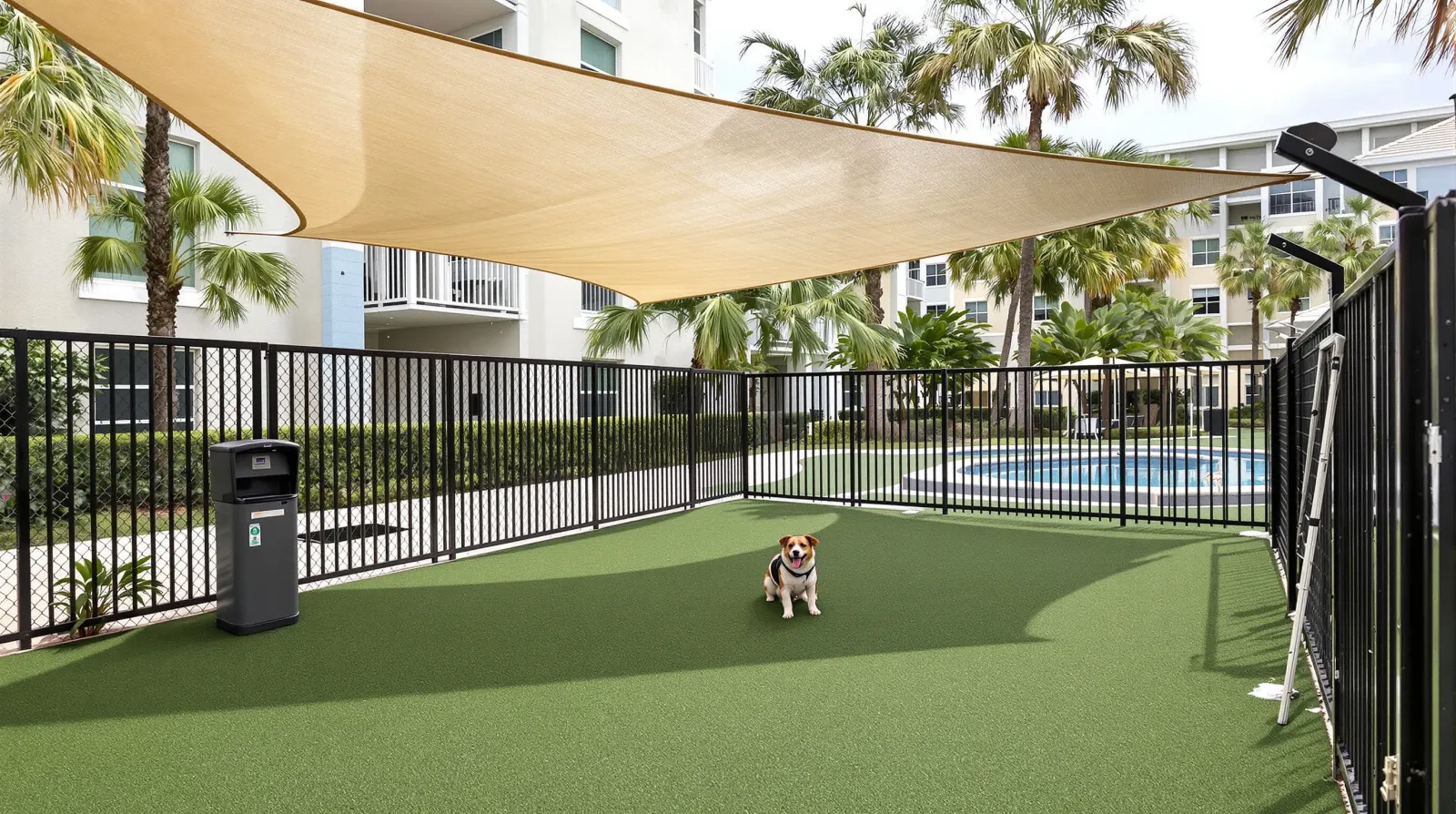
A dog park is a small site plan, and layout decides how residents use it. Most condo and apartment pet areas need a fence tall enough for the dogs the building allows, a double gate (an entry pen with two gates) so a dog cannot slip out while another comes in, and a hard walkway to the gate so people are not tracking across turf in wet shoes. Separate areas for small and large dogs are worth discussing with the board when space allows.
Fence posts, gate posts and bench footings are concrete work, and SERPE-CO sets them before the turf goes down so the base around each post is compacted and the turf edge can be finished tight. Waste stations with bag dispensers and lidded bins belong near the gate and near the exit path, where people pass them naturally. A concrete curb or a mow strip along the fence line keeps the turf edge clean and stops dogs digging under the fabric.
Shade belongs on the plan from the start. A shade sail, a pergola or an existing tree canopy gives dogs and owners a cooler place to wait, and a bench in the shade keeps people out of the hottest part of the run. Footings for shade structures need to be located and sized before the base is built, and where a shade structure needs a permit or engineering, the design professional confirms the footing and attachment.
Florida sun
Heat on dog park turf in full sun
Synthetic turf gets hot in full sun, and dogs walk on it with bare paws. UF/IFAS reported in 2025 that natural turf was consistently cooler than synthetic turf and water-scarce landscapes, often by more than 10°C (18°F). A UNLV study found synthetic turf's maximum surface temperature about 69°F higher than irrigated natural grass, with peaks reaching 169°F. Those numbers are why we talk about heat with every board before a pet area is built.
Heat on dog park turf can be managed, not removed. Shade over part of the run, a lighter turf color, a cooling or pet infill, and a quick rinse before the hottest hours all help. Many properties post simple signs suggesting morning and evening use in summer. Placing the run on the shaded side of the building, when there is a choice, often does more than any product.
Keeping it fresh
A cleaning routine for dog park turf
Dog park turf stays fresh when the cleaning routine is simple enough that staff keep doing it. Daily, someone picks up solid waste and rinses the busiest spots. Weekly, the whole run gets a full rinse, leaves and debris are blown off, and an enzyme cleaner goes on the areas dogs favor. Monthly or as needed, the turf is brushed against the grain with a power broom or stiff brush to stand the blades up and loosen trapped debris.
Infill settles and washes out over time, especially near the rinse station and the gate. Topping up infill keeps the antimicrobial layer working and keeps the blades supported. The Synthetic Turf Council publishes installation and maintenance guidelines that a property manager can use as a checklist alongside the turf maker's care instructions.
SERPE-CO hands the board or manager a short written care sheet at the end of the job, covering what to do daily, weekly and monthly, which products the turf maker allows, and what to watch for, such as a lifted seam, a low spot that holds water or an edge pulling away from a curb. Catching those early keeps a small fix small.
More turf areas
Other places turf earns its keep.
 Condo Common Areas
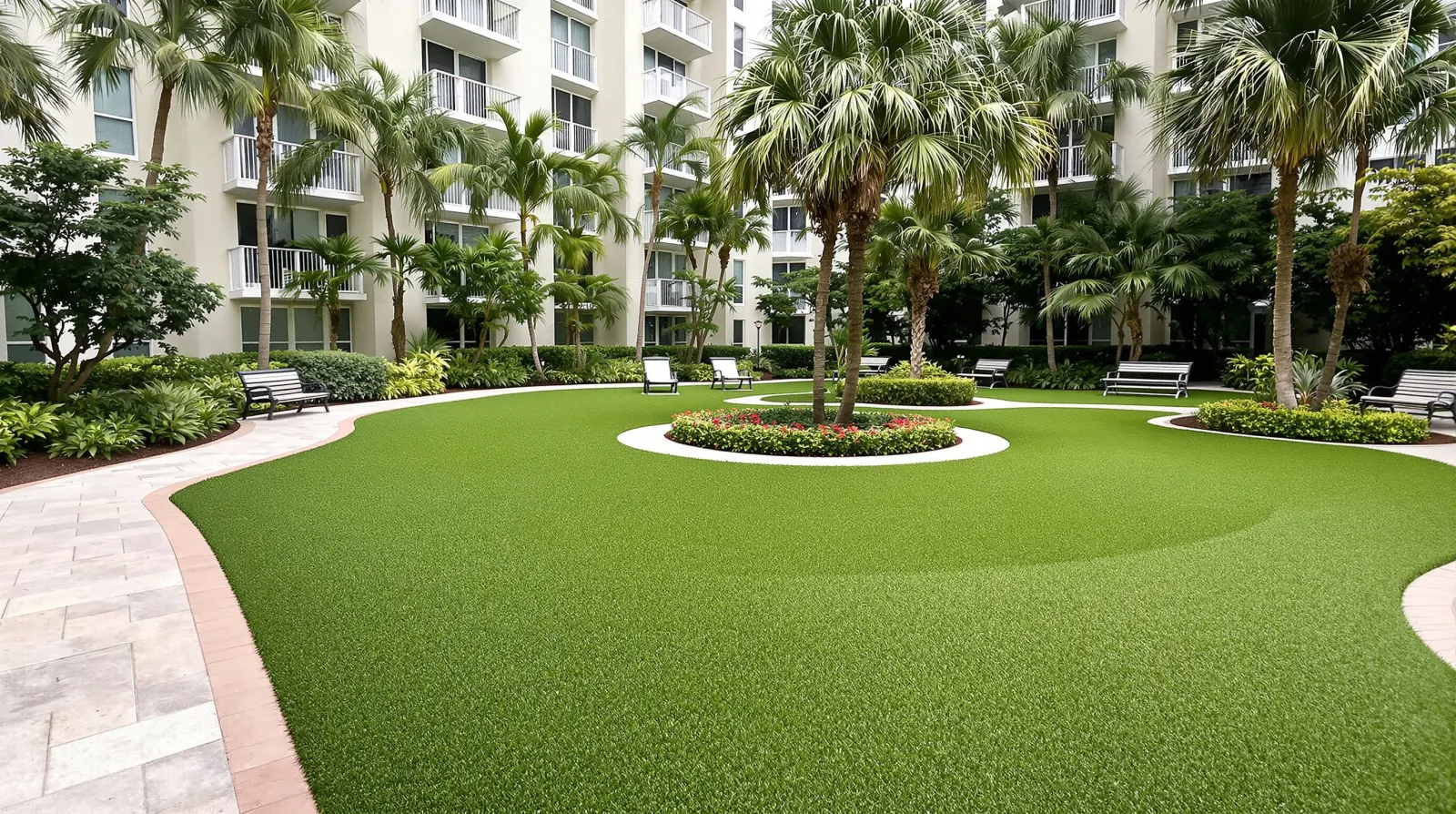
Courtyards, entries, medians and shady strips that stay green year-round.
 Rooftops & Terraces
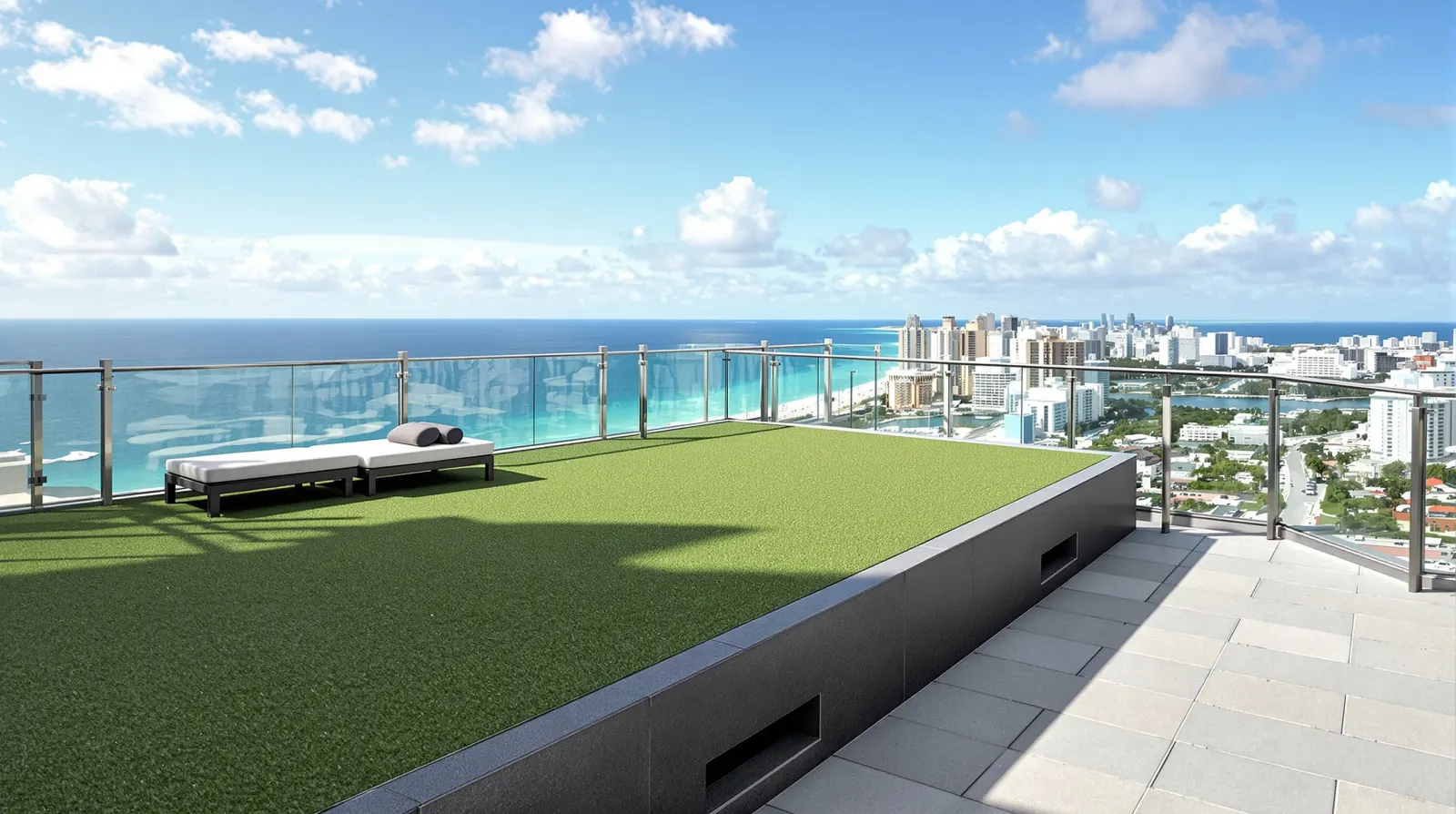
Green amenity decks and terraces that protect the waterproofing underneath.
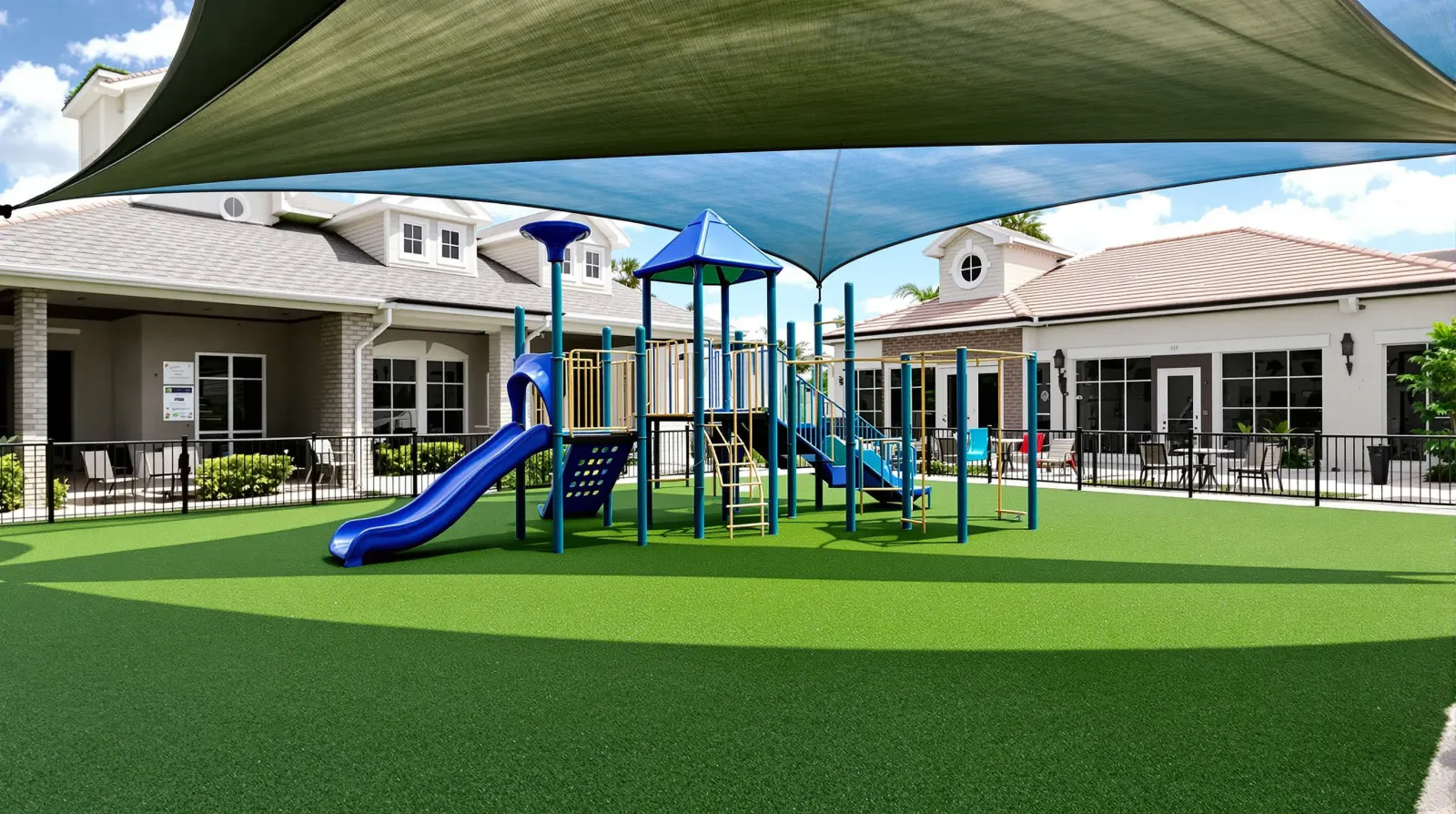 Playgrounds
Playground turf and shock pad matched to fall height, accessible and built to drain.
Artificial turf by city: Miami · Fort Lauderdale · Pompano Beach · Boca Raton · West Palm Beach · All turf services
Checklist
What a good dog park turf plan covers
- 01A compacted, graded stone base that drains to a set point
- 02Permeable turf backing and a short, dense pet blade
- 03Antimicrobial or pet-rated infill
- 04A rinse station on the high side, with a small concrete pad
- 05Fence, double-gate entry and a hard walkway to the gate
- 06Shade, a bench and waste stations near the gate
- 07Clean edges with curbs, mow strips or edge trim
- 08A written daily, weekly and monthly care sheet
Related work
Concrete and waterproofing work that often goes with it.
Summary
Points to remember
- 01
Dog park turf succeeds or fails in the base: drainage comes first.
- 02
Antimicrobial infill, a permeable backing and daily rinsing control odor together.
- 03
Plan fencing, a double gate, shade and waste stations before the turf goes down.
- 04
Turf gets hot in Florida sun, so shade and timing matter for paws.
- 05
Over a slab or membrane, the design professional confirms loads, drainage and hold-down.
Questions
Common questions.
Does dog park turf smell?
Dog park turf smells when liquid has nowhere to go. A draining stone base, a permeable backing, an antimicrobial infill and a daily rinse of the busy spots keep odor down. An enzyme cleaner made for synthetic turf helps in the areas dogs use most. If an existing pet area smells, the cause is usually the base, not the grass on top.
Can dog park turf go on top of an existing concrete slab?
Yes, with a drainage mat or pad between the slab and the turf so liquid can reach the slab's drains. The slab needs enough slope to drain. If the slab is over occupied space or a waterproofing membrane, such as a podium or parking deck, the building's structural engineer or design professional confirms loads, drainage and hold-down first, and SERPE-CO builds to that design.
How often should staff clean a turf dog run?
A simple routine works best: pick up waste and rinse the busy spots daily, give the whole run a full rinse and an enzyme treatment weekly, and brush the turf and top up infill monthly or as needed. Heavier use means more frequent rinsing. SERPE-CO leaves a written care sheet so the routine is clear for whoever does the work.
Is artificial turf too hot for dogs in South Florida?
Synthetic turf can get very hot in full sun. Studies from UF/IFAS and UNLV found turf surfaces far hotter than natural grass on sunny days. Shade over part of the run, a lighter turf color, a cooling infill and a rinse before peak hours all help, and many properties suggest morning and evening use in summer.
Can our HOA put in a dog park on common property?
Common areas are association property, so the board decides what goes there, following its governing documents and the city's landscape and zoning rules. Questions about turf and the law go to the association's attorney. SERPE-CO can visit the site, look at drainage, access and water supply, and send a written proposal the board can review.
What does SERPE-CO need to price a dog park?
For a ground-level dog run, we need a site visit to see the soil, the slopes, where water drains today and where a rinse station could tie in. Then we send a written proposal. A site plan, the fence and gate preferences, and any shade ideas from the board help. Rooftop or podium pet areas need the design professional's drawings first.
Sources and standards
- SFWMD year-round landscape irrigation rule (fact sheet)
- UF/IFAS: artificial turf heat in humid states like Florida (2025)
- UNLV: artificial turf may be too hot for summer use
- Synthetic Turf Council guidelines
Photos on this page show typical turf installations. Turf over a structural slab, a roof or a waterproofing membrane follows the building's design professional and the product maker's instructions. Treat this page as general information, not engineering or legal advice.
Request an estimate
Tell us about your turf project.
Tell us where the building is and what you are seeing. We set up a visit to the property, then send a written proposal, or tell you an engineer needs to write the scope first.
- More than 20 years in the field
- St. Lucie, Martin, Palm Beach, Broward and Miami-Dade
- Family-owned Certified General Contractor
Rather call?(954) 718-3094