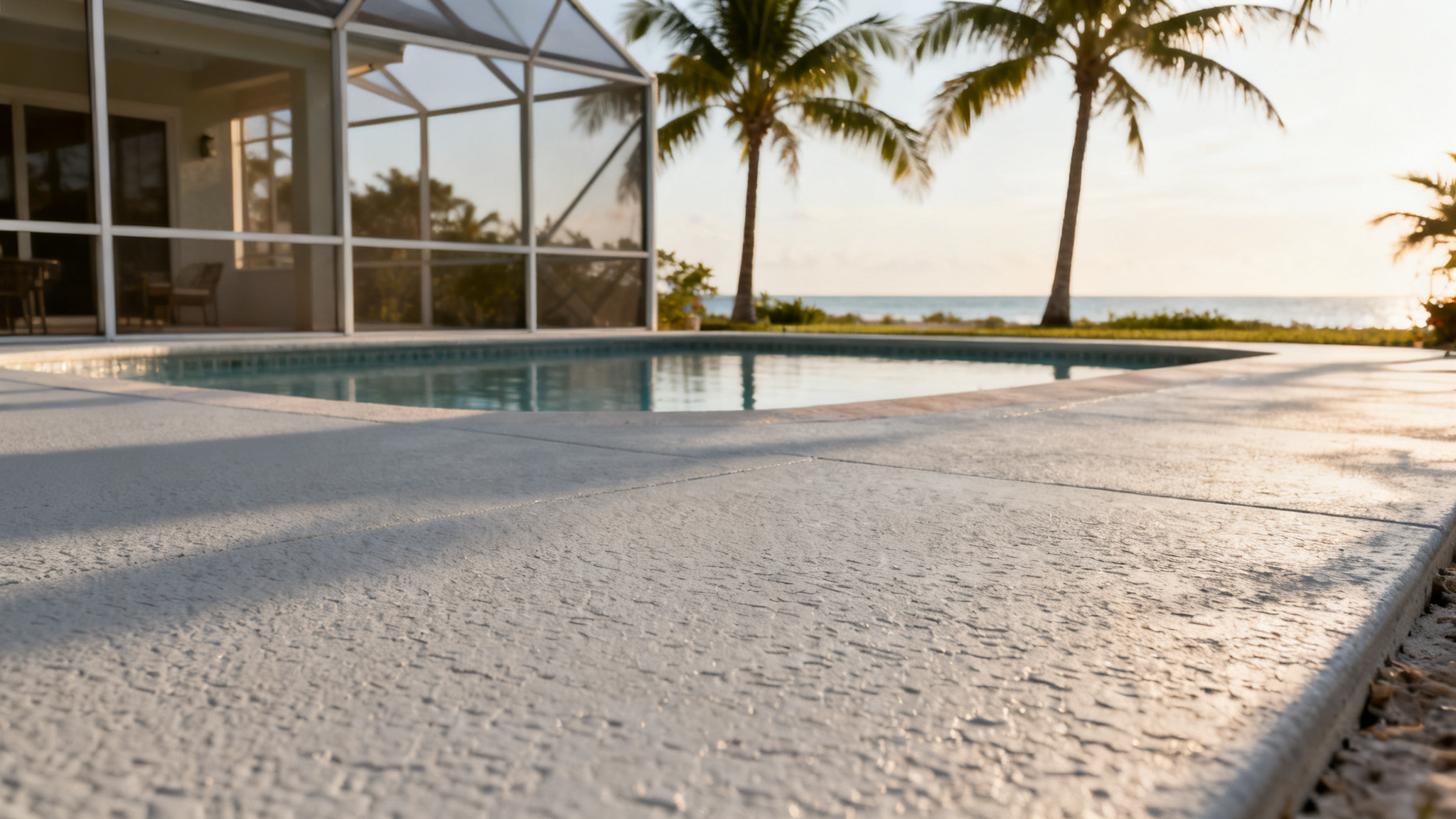
What Is a Concrete Overlay in Jensen Beach, and Is It Right for Your Slab?
A concrete overlay Jensen Beach homeowners choose is a thin, polymer-modified cementitious layer bonded to an existing slab to renew its surface without demolition. It works well when the slab underneath is structurally sound and the damage is cosmetic, such as fading, stains, light scaling or surface wear.
- Tap the slab with a hammer or chain and listen for hollow sounds.
- Note any cracks that are widening or any sections sitting at different heights.
- Photograph standing water after a rain to show drainage problems.
Concrete Overlay Jensen Beach: How the System Works
An overlay is a thin layer, usually a fraction of an inch to about an inch, of polymer-modified cement that bonds to an existing slab. It is not a new slab poured on top. Its job is to refresh the wearing surface, so the bond to what lies underneath matters more than anything else.
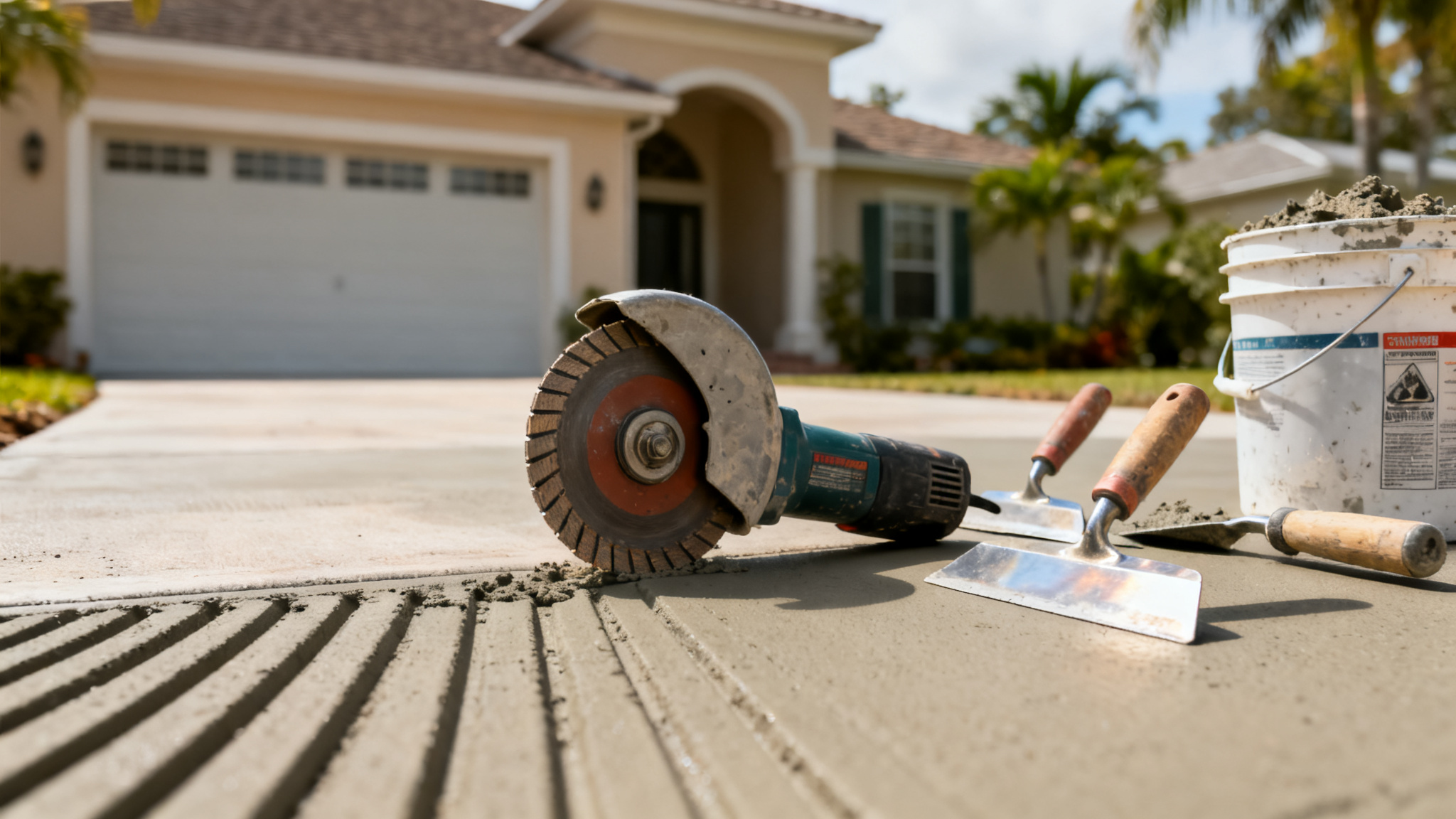
That is why every concrete overlay Jensen Beach project we plan begins with surface preparation. We remove oils, coatings, laitance and loose material, then profile the surface so the new layer can grip. Skipping that work is the most common reason overlays peel or delaminate later.
Once bonded, the surface can be finished several ways: a smooth trowel finish, a light broom for traction, a stamped pattern, a spray-textured finish, or stains and dyes for color. A penetrating or film-forming sealer then protects the result.
What overlays are commonly used on
- Driveways: to cover stained, worn or pitted surfaces that are still firm.
- Pool decks: to add a cooler, textured, slip-resistant finish.
- Lanais and patios: to update tired, discolored slabs without demolition.
- Walkways and entries: to even out wear and improve curb appeal.
When Resurfacing Beats Replacement
Replacement is disruptive, noisy and slow, so many owners prefer to restore what they already have. Resurfacing is often a good fit when damage sits at the surface: fading, spalling, light scaling, hairline cracks, old coatings or stains that will not clean out.
It is the wrong tool when the slab itself has failed. Widening cracks, sections that rock or sit at different heights, and areas where soil has washed out underneath point to a base problem. An overlay placed over those conditions will usually telegraph the same cracks back through the new surface.
Signs we look for during an assessment
- Hollow sound: tapping with a hammer or chain can reveal delaminated areas.
- Crack behavior: stable hairline cracks are treatable, while moving cracks need a closer look.
- Drainage: standing water suggests a slope issue that a finish will not cure.
- Rust staining: this may indicate exposed or corroding reinforcement that needs repair first.
When replacement is the honest answer, we say so. A careful assessment keeps you from investing in a finish that will not hold up. Our Jensen Beach concrete restoration page outlines the repair work that often comes before any resurfacing.
Jensen Beach Conditions That Shape the Plan
Jensen Beach sits between the Indian River Lagoon and the Atlantic, so slabs here deal with strong sun, humidity, salt in the air, heavy summer rain and the occasional tropical storm. Each of these affects how an overlay should be specified and sealed.
Salt and moisture drive corrosion in embedded steel and can lead to surface scaling. Constant UV fades dyes and breaks down weak sealers. Afternoon storms in the wet season mean surfaces need to shed water and dry without growing mildew.
For a concrete overlay Jensen Beach pool decks and driveways can live with, we weigh heat, traction and drainage together. Lighter colors stay cooler under bare feet. A fine texture gives grip when wet without being harsh on the skin. A UV-stable sealer helps color last.
Timing matters too. Overlays should not go down right before heavy rain or in the hottest part of the day, because fast surface drying can weaken the finish. We plan around the weather instead of forcing a schedule.
Microcement Jensen Beach: How It Differs From a Standard Overlay
Owners searching for microcement in Jensen Beach usually want a very smooth, seamless, modern look. Microcement is a thin, polymer-rich cementitious coating applied in very thin coats, often with a fine texture and a protective topcoat. It is closely related to an overlay but generally thinner and finer.
The main difference is where each performs best. A traditional overlay is typically more forgiving on exterior slabs that take traffic, sun and rain. Microcement is often chosen for interior floors, walls, showers, countertops and sheltered patios where a continuous, minimal look is the goal.
Choosing between them
- Exterior driveways and pool decks: a textured overlay with a UV-stable sealer is usually the practical choice.
- Interior floors and feature walls: microcement can deliver a seamless, contemporary surface.
- Covered lanais: either can work, depending on traction needs and sun exposure.
Both depend on the same fundamentals: a sound substrate, careful prep, correct curing and a quality sealer. We tell you which system fits the space before any finish is chosen, and we explain the tradeoffs plainly.
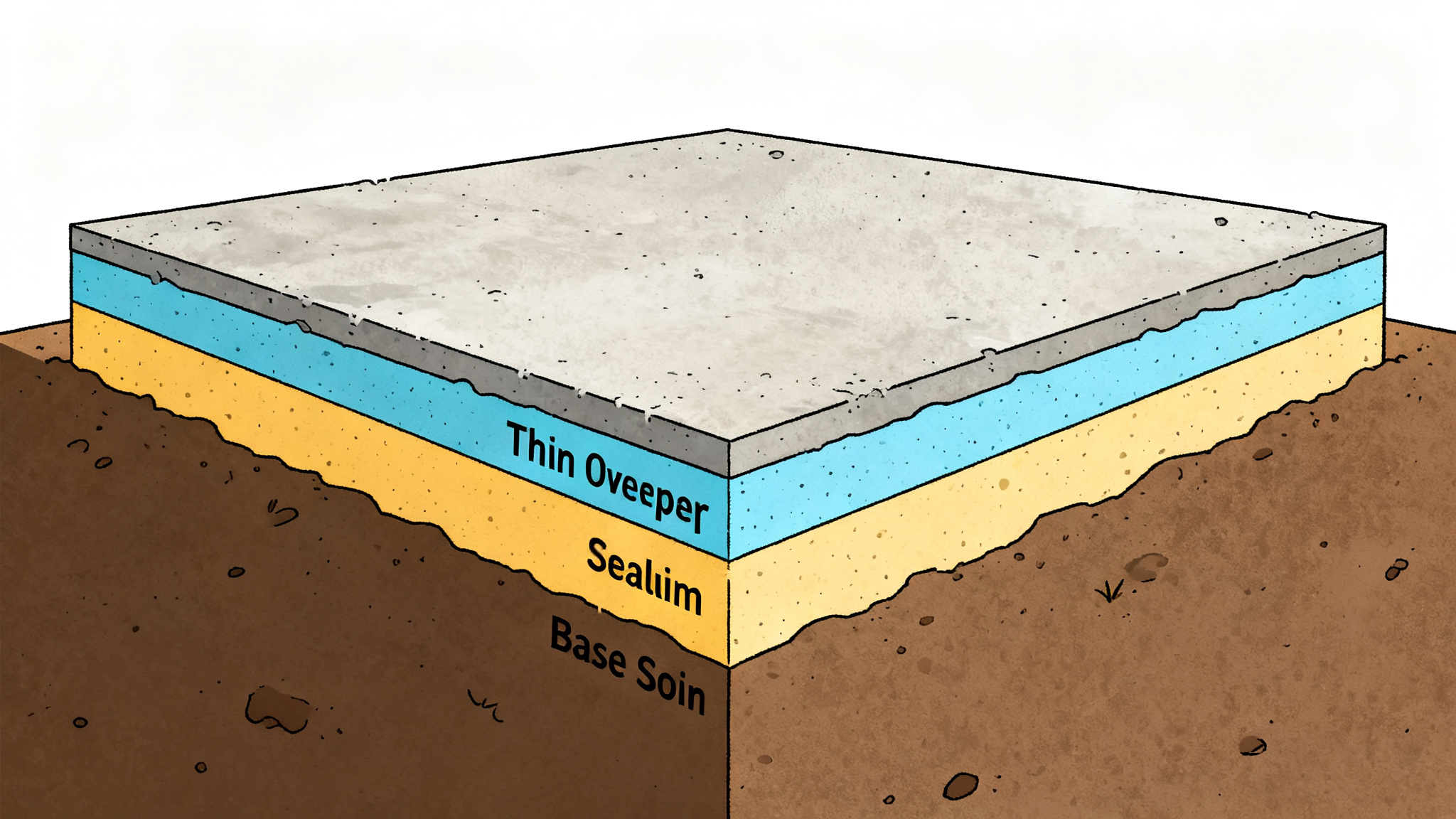
Our Concrete Overlay Jensen Beach Process, Step by Step
Every project is different, but a well-run job follows a consistent order. Rushing any step shows up later as peeling, color blotches or cracks.
- Assess the slab. We inspect for cracks, hollow areas, drainage problems and old coatings.
- Repair first. Cracks, spalls and low spots are filled or ground flat so they do not telegraph through.
- Clean and profile. We remove contaminants and mechanically open the surface for a strong bond.
- Prime and apply. A bonding primer goes down, followed by the overlay in controlled coats.
- Finish. We trowel, spray, stamp or broom the surface to the agreed texture, then add color if specified.
- Cure. The material is protected while it gains strength, with the weather in mind.
- Seal. A suitable sealer protects against stains, moisture and UV.
Existing control joints and expansion joints should be honored rather than buried, because the slab will keep moving at those lines. We discuss joint treatment up front so the finished look is never a surprise.
Grinding and profiling create fine dust, so good crews control it and protect nearby plants, screens and pool water. The federal OSHA guidance on crystalline silica explains why dust control matters for anyone working with cutting or grinding concrete.
Overlay Options at a Glance
The table below summarizes how common systems compare for coastal Florida slabs. Use it as a starting point for a conversation, not a final specification, since the right choice depends on your slab and how you use it.
If you are weighing several surfaces across your property, our concrete restoration services overview shows how resurfacing fits with cleaning, repair and sealing.
Verifying Credentials Before You Hire
Any contractor you consider, including us, should be easy to verify. Florida regulates contractor licensing under Chapter 489 of the Florida Statutes, and you can check license status and discipline history through the Florida DBPR license search. Match the name and license type to the contract you are given.
Beyond the license, ask for proof of liability insurance and, where applicable, workers’ compensation coverage. Ask who will actually be on your property and who supervises the work. Request a written scope that names the prep method, the overlay product, the sealer and the cure time.
Permitting rules can vary between Martin County and the surrounding municipalities, so ask how any required approvals will be handled. Be cautious of anyone who wants a large payment up front with no written scope, or who cannot explain their prep process in plain terms.
Caring for Your Overlay and Exploring Related Services
Routine care is simple. Rinse the surface regularly to remove salt and debris, clean spills promptly, use mild cleaners rather than harsh acids, and reseal on the schedule your sealer manufacturer recommends. Keep sprinklers from soaking the surface daily, which encourages mildew and staining.
An overlay is one part of a broader restoration plan. If your property is outside town, our Treasure Coast service areas page lists the other communities we cover, and our nearby location pages help you compare coastal conditions from one town to the next.
You can also return to the Jensen Beach restoration page to compare options before choosing a system for your slab.
| System | Best for | Key consideration |
|---|---|---|
| Textured overlay | Driveways, pool decks, walkways | Needs thorough prep and a UV-stable sealer |
| Stamped overlay | Patios, entries, lanais | Pattern depth and color should suit traction needs |
| Spray-textured finish | Pool decks, sun-exposed areas | Fine grip, cooler underfoot with lighter colors |
| Microcement | Interior floors, walls, sheltered patios | Thin and smooth, less forgiving outdoors |
| Stain or dye with sealer | Sound slabs needing color only | Hides little, so cracks and patches remain visible |
Frequently asked questions
What is a concrete overlay?
A concrete overlay is a thin layer of polymer-modified cementitious material bonded to an existing slab to renew its look and wearing surface. It is not a replacement slab. It works best on sound concrete with cosmetic damage such as fading, stains, light scaling or surface wear.
Can you put an overlay over cracked concrete in Jensen Beach?
Stable hairline cracks can usually be repaired and covered. Widening cracks, uneven sections or areas with washed-out soil beneath point to a base problem, and those cracks tend to reappear through a new surface. We assess crack behavior first and tell you honestly whether resurfacing is appropriate.
What is the difference between microcement and a concrete overlay?
Microcement is a thinner, finer, polymer-rich coating, often chosen for smooth interior floors, walls, showers and sheltered patios. A traditional overlay is typically thicker and more forgiving on exterior slabs such as driveways and pool decks that face sun, rain and traffic.
How do I verify a concrete contractor in Florida?
Check the license status and discipline history through the Florida Department of Business and Professional Regulation, then match the name and license type to your contract. Also ask for proof of liability insurance, workers’ compensation coverage where applicable, and a written scope naming prep, product, sealer and cure time.
How should I care for a new overlay?
Rinse the surface regularly to remove salt and debris, clean spills quickly, and use mild cleaners instead of harsh acids. Reseal on the schedule your sealer manufacturer recommends, and keep sprinklers from wetting the surface every day, since constant moisture encourages mildew and staining.
Ready to get started with SERPE-CO? Call (954) 718-3094
CEO and co-founder of SERPE-CO, a family-owned Florida Certified General Contractor (CGC #1523974). In concrete restoration since 2005 and a contributor to the Florida Community Association Journal. This article is general information, not engineering or legal advice.