For associations and managers
Condo Artificial Turf for Courtyards, Entries and Medians
The patches of grass that never look right, the shady side of the building, the median that eats sod every summer. Turf can fix them, built carefully and phased around the people who live there.
In short
Is condo artificial turf a good fit for our common areas?
Condo artificial turf is a good fit for common areas where grass keeps failing: deep shade under a tower, narrow strips along walkways, medians, entry beds and courtyards that are hard to mow and irrigate. The board decides, following its governing documents and the city's landscape code. SERPE-CO visits the site, looks at drainage and edges, and sends a written proposal for ground-level areas, with a schedule that keeps residents moving.
The usual trouble spots
Common areas where condo artificial turf solves a real problem
Every condo property has a few patches the landscaper fights all year. The north side of a tower that never gets direct sun. The strip between the sidewalk and the parking lot where sprinklers soak cars and walls. The entry median that goes brown each spring and gets replaced each fall. The courtyard under a big shade tree where roots and shade beat any sod. Those are the places condo artificial turf earns its keep.
Not every patch of grass should become turf. Large open lawns in full sun can get very hot, and some boards prefer a Florida-friendly planting plan with native plants and mulch beds instead. The UF/IFAS Florida-Friendly Landscaping program is a helpful guide for that conversation. Our team will say plainly when a planting bed or a hardscape change would serve a spot better than turf.
A walk around the property with the manager is the best way to sort the candidates. Our team looks at each patch, notes the sun and shade through the day, checks how water drains after a rain and asks how residents use the space. Many boards start with the two or three spots that cause the most complaints and add others later, once residents have seen how the first areas look and hold up.
First impressions
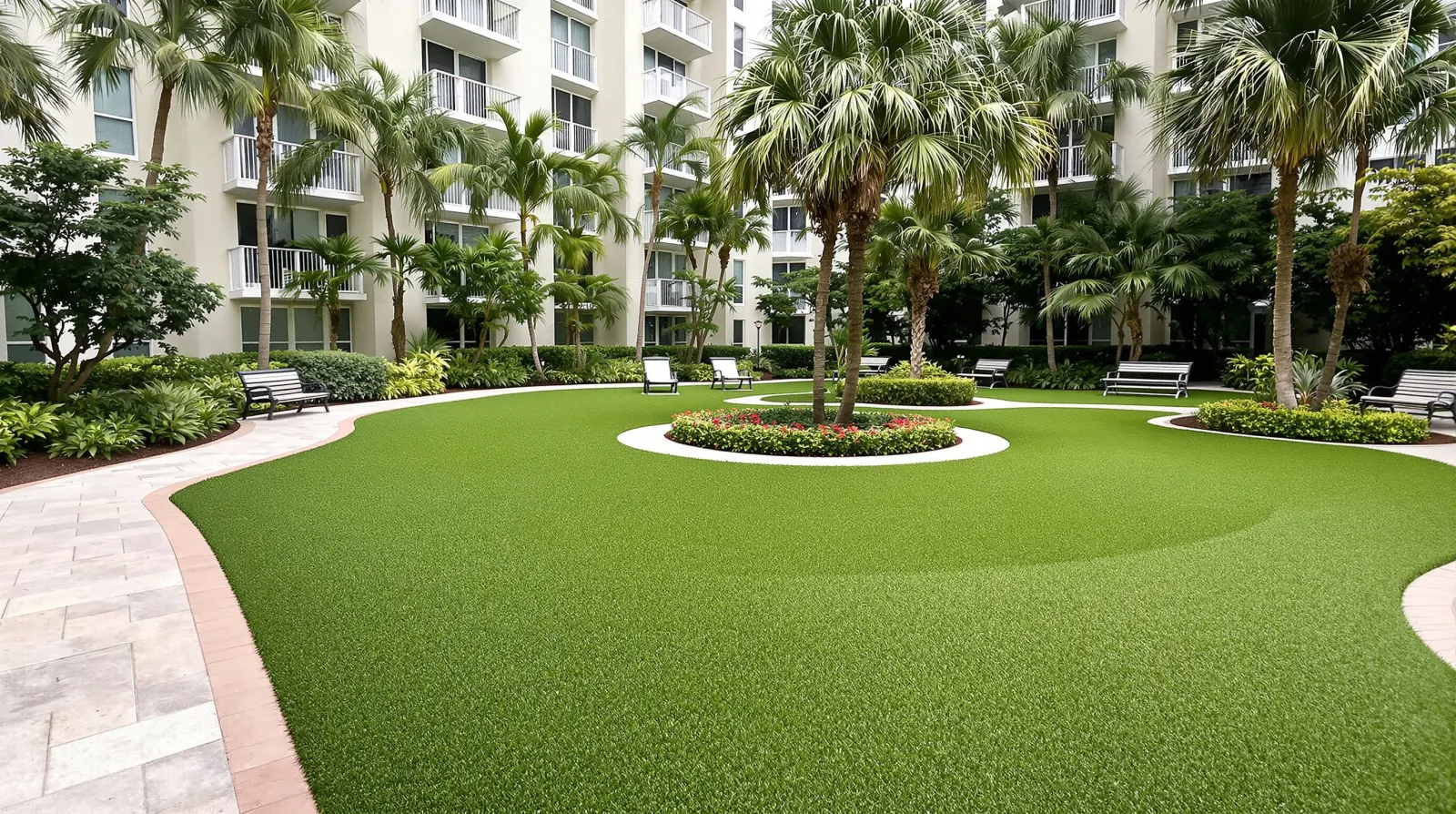
Entries, medians and walkway borders
The entry is what residents and guests see first, and a clean green border along the drive or around a monument sign makes the whole property look cared for. Turf at an entry needs a firm, anchored edge against curbs and pavers, since delivery trucks and cars will clip it. Our crews set edge trim or a nailer board and keep the turf flush with the curb so it cannot lift.
Walkway borders are a natural fit for condo artificial turf because they are narrow, hard to irrigate without spraying the sidewalk, and constantly trampled at the corners. Medians in a parking area take overspray, oil drips and foot traffic from people cutting across. For both, the base is graded to shed water away from the walk, and the turf is seamed with the grain running the same way so the strip reads as one piece.
SERPE-CO is a concrete contractor first, so if a sidewalk panel is heaved or a curb is broken next to the new turf, that repair can be part of the same project. Fixing the concrete and the green border together gives a cleaner result than patching one later.
Watering rules
Irrigation savings under SFWMD rules
The South Florida Water Management District sets a year-round landscape irrigation rule, Chapter 40E-24 of the Florida Administrative Code, in effect since March 2010 across its 16 counties. Watering is limited to two days a week in most areas, three in some, and never between 10 a.m. and 4 p.m. Cities and counties can add stricter limits. Grass in deep shade or narrow strips often struggles on that schedule, which is one reason it keeps failing.
When an area becomes condo artificial turf, its irrigation zone can be capped or rerouted to the planting beds that still need water. That cuts overspray onto walls, windows and walkways, and the staining that comes with it. Our crew caps or adjusts the heads during demolition and coordinates with the landscape or irrigation contractor so the remaining zones keep working. Pet relief areas are the exception, since they still need a rinse.
Board decisions
Board approval and governing documents
Common areas are association property, so the board makes the call, following the condominium's declaration and other governing documents and the city's landscape code. Some associations bring a material change to common areas to the owners for a vote, depending on what their documents say. The association's attorney is the right person for any legal question. SERPE-CO supplies what the board needs to decide: samples, a site plan, a written proposal and a clear schedule.
Homeowners' associations sometimes ask about Florida Statute 720.3075(4)(b). That section says HOA documents may not stop an owner from putting Florida-friendly landscaping, as defined in section 373.185, on the owner's own land. The statute does not name artificial turf, and it speaks to an owner's lot, not common areas. This page is not legal advice. For how the law applies to a particular community, the association should ask its attorney.
Working around residents
Phasing condo artificial turf around residents
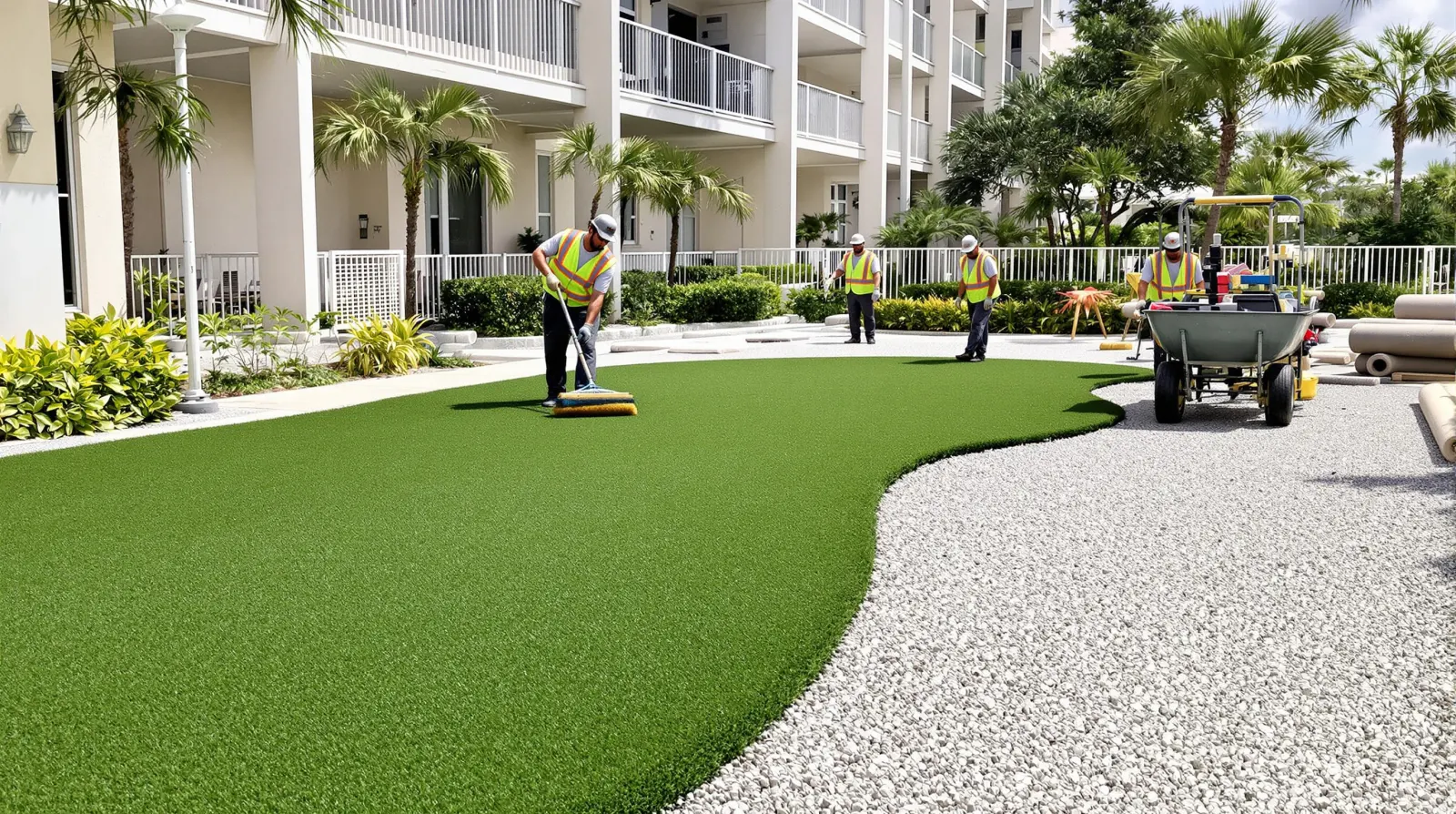
People live, walk dogs, park and receive deliveries on a condo property every day of a project. SERPE-CO breaks the work into phases, usually one courtyard, entry or median at a time, so most of the property stays open while one area is fenced off. Walkways next to the work stay open or get a clear detour, and our team posts notices with dates so residents know what to expect.
Deliveries of stone and turf rolls are scheduled with the manager to avoid move-in days and busy hours. Noisy steps such as sod removal and plate compaction happen during agreed hours. Each phase is cleaned and reopened before the next one starts. Safety comes first on every SERPE-CO site, because a common area is full of residents, children and pets who are not part of the crew.
Under the surface
How condo artificial turf is built to last on the ground
Ground-level condo artificial turf lives or dies by its base. Our crew removes the old sod and soil, lays geotextile fabric where the soil is soft or full of fines, and places crushed stone in thin lifts, compacting each one with a plate compactor. The finished base has a gentle fall away from buildings and walkways toward a bed, a swale or a drain, so a summer downpour soaks through and moves on instead of sitting in a puddle.
Common areas see mowers, edgers, delivery carts and people cutting corners, so edges and seams get extra care. Seams are glued on seam tape with the grain matched, and edges are fixed to a nailer board or edge trim along every curb and walk. Infill is chosen for the space: a sand infill for a quiet courtyard, a cooling infill where the sun is stronger, and an antimicrobial infill anywhere dogs are walked.
Once it is installed, condo artificial turf needs a lighter routine than grass, and the existing landscape company can usually take it on. Blowing off leaves and clippings from nearby beds, brushing the busy corners and topping up infill where it thins keep the surface looking even. Our team goes over that routine with the manager at handover.
More turf areas
Other places turf earns its keep.
 Dog Parks
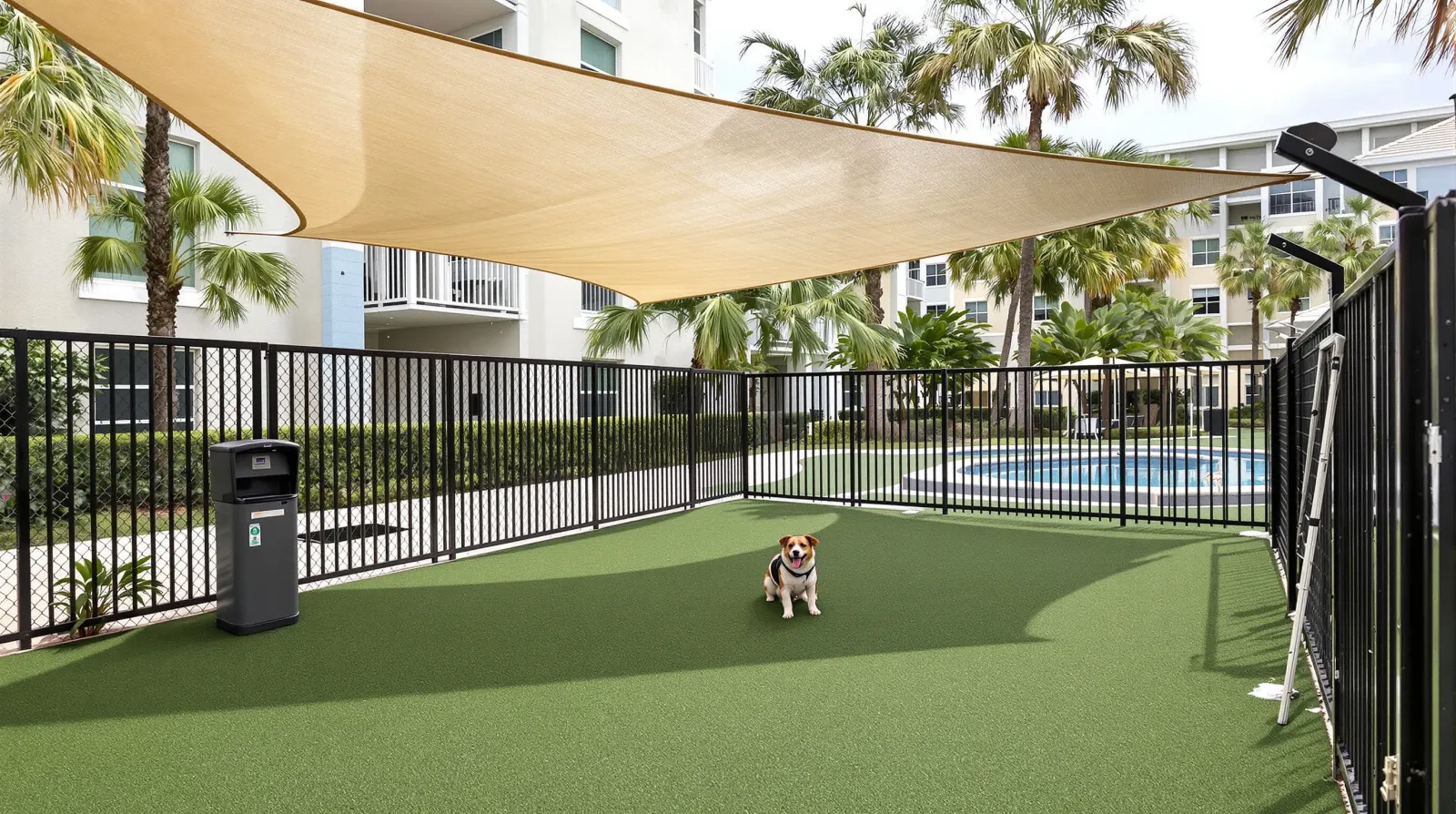
Dog runs and pet relief areas built to drain, rinse clean and stay fresh.
 Pool Decks
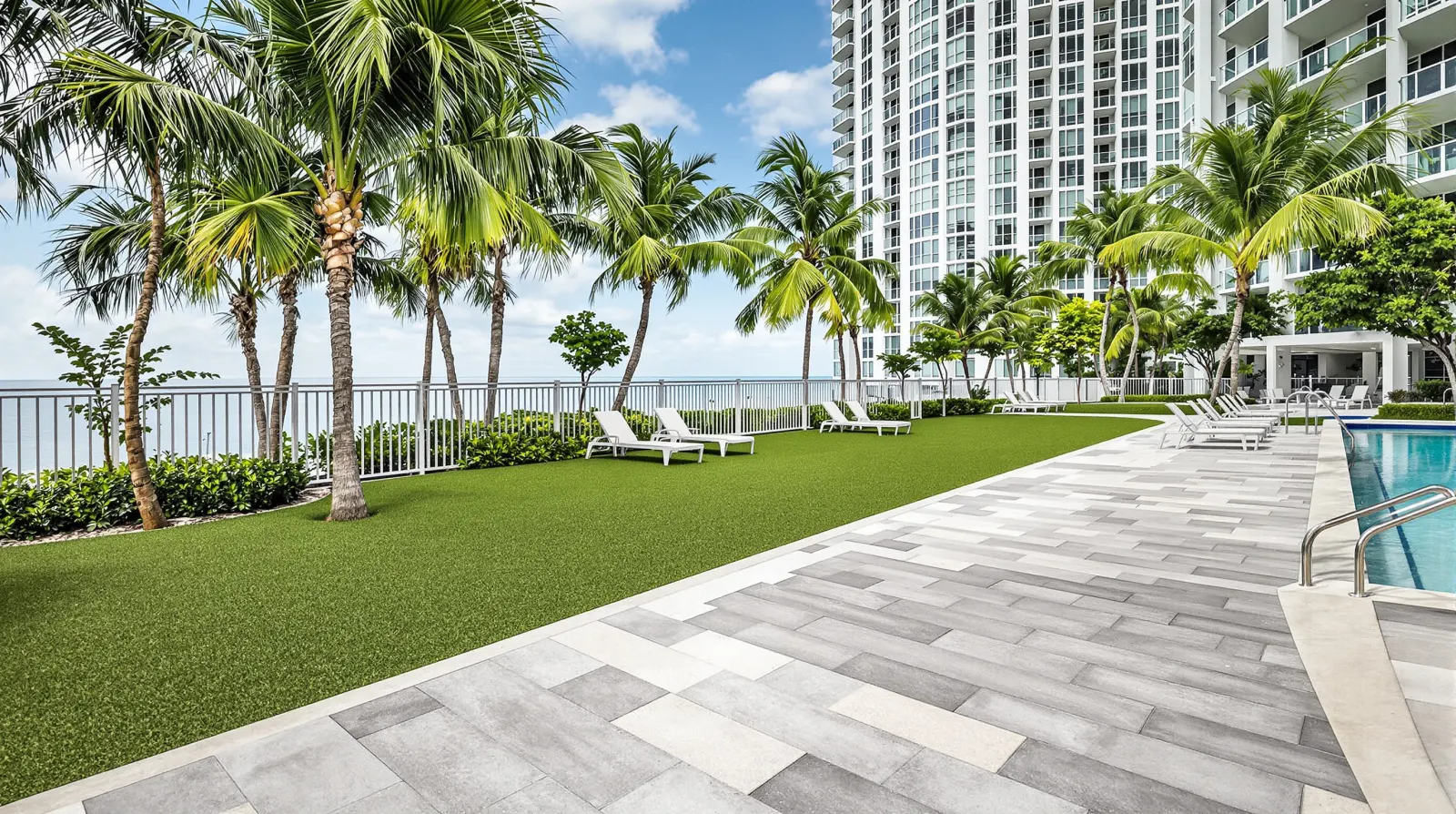
Turf beside the pool that drains fast and meets pavers and coping cleanly.
 Putting Greens
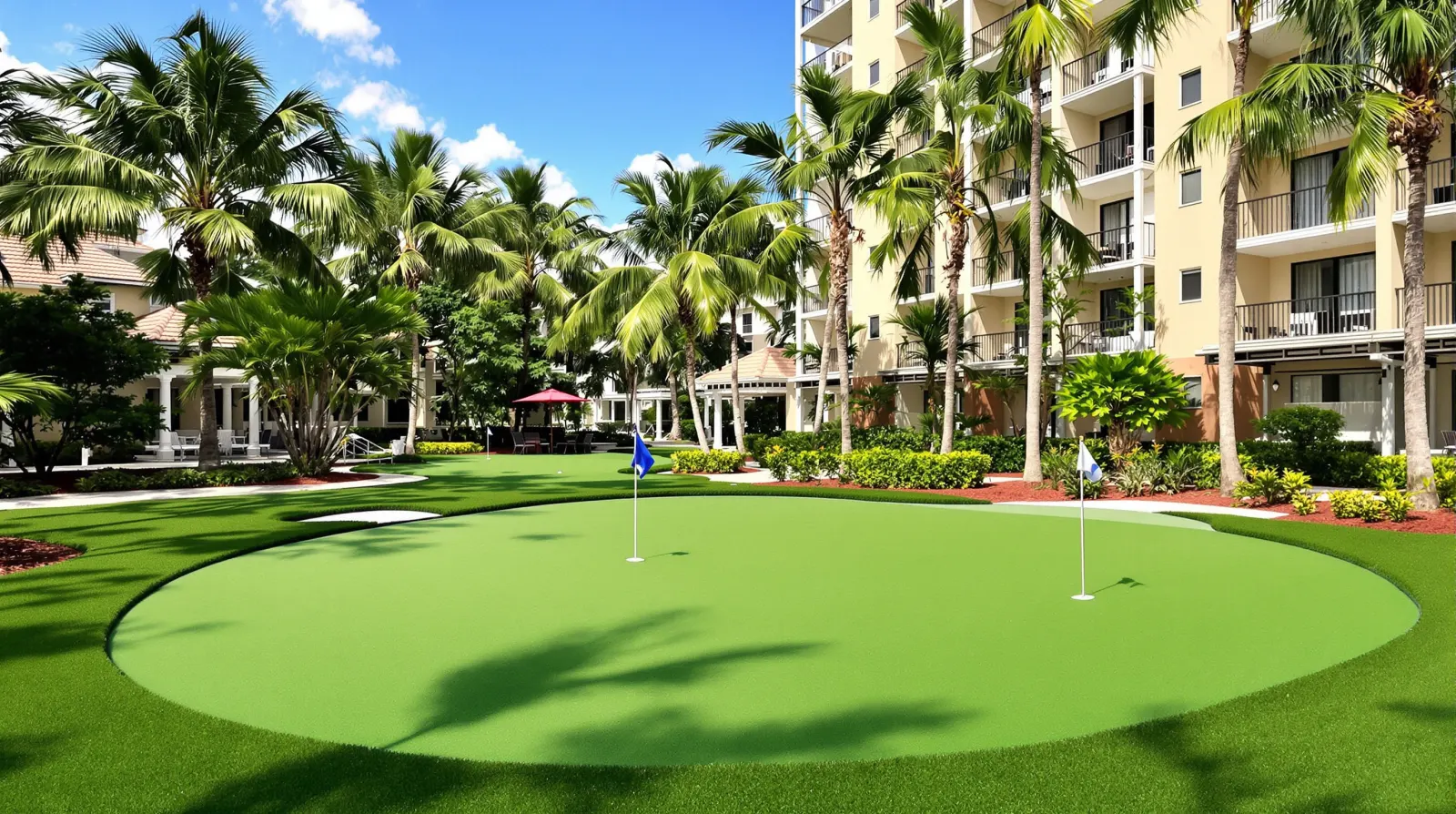
Amenity putting greens with a shaped base, clean fringe and drainage that keeps up.
Artificial turf by city: Miami · Fort Lauderdale · Pompano Beach · Boca Raton · West Palm Beach · All turf services
Checklist
Condo artificial turf checklist for boards and managers
- 01List the spots where grass keeps dying or is hard to irrigate
- 02Note shade, trees and roots in each area
- 03Mark irrigation zones that would be capped or rerouted
- 04Check the declaration and the city's landscape code
- 05Ask the association's attorney about any legal question
- 06Flag cracked walks or broken curbs next to the areas
- 07Agree on work hours and phases with the manager
Related work
Concrete and waterproofing work that often goes with it.
Summary
Points to remember
- 01
Turf fits the common areas where grass keeps failing: shade, narrow strips, medians and entries.
- 02
Some sunny lawns are better served by Florida-friendly planting, and we will say so.
- 03
Capping turf zones cuts water use under SFWMD rules and ends overspray on walls and walks.
- 04
The board decides on common areas under its governing documents, with legal questions going to its attorney.
- 05
Phasing one area at a time keeps most of the property open for residents.
Questions
Common questions.
Does artificial turf need a board vote at our condo?
That depends on the association's governing documents. Common areas are association property, so at minimum the board decides, and some documents require an owner vote for material changes to common elements. The association's attorney can tell you which applies. SERPE-CO can supply samples, a site plan and a written proposal for the meeting.
Why does grass keep dying in the same spots on our property?
The usual reasons are deep shade from the building or trees, root competition, foot traffic, poor drainage and irrigation limits. Shady strips and medians are hard to keep green on a two-day watering schedule. Turf is one fix; a planting bed or a hardscape change is another, and our team will help you compare.
Will turf help with water bills and overspray?
Converting irrigated grass to turf lets the association cap or reroute those zones, which cuts water use and stops sprinklers from hitting walls, windows and walkways. Pet relief areas still need occasional rinsing, so plan a hose bib or a rinse line near those.
Can residents still use the area during the project?
Most of the property stays open. SERPE-CO works one area at a time, fences it off, keeps nearby walks open or clearly detoured, and reopens each area before moving on. The manager gets a schedule ahead of time to share with residents.
Can you fix the sidewalks and curbs at the same time?
Yes. SERPE-CO is a concrete contractor, so heaved sidewalk panels, broken curbs and cracked edges next to the new turf can be repaired as part of the same project. Doing them together gives the new turf a clean, flush edge.
What happens to tree roots under the turf?
Roots are a common reason grass fails. Our crew works around large roots rather than cutting them without guidance, and adjusts the base and edges to fit. If roots are lifting a walkway, the board may want an arborist's opinion before the work is planned.
Sources and standards
- SFWMD year-round landscape irrigation rule (fact sheet)
- Florida Statute 720.3075 (homeowners' association documents)
- UF/IFAS Florida-Friendly Landscaping program
Photos on this page show typical turf installations. Turf over a structural slab, a roof or a waterproofing membrane follows the building's design professional and the product maker's instructions. Treat this page as general information, not engineering or legal advice.
Request an estimate
Tell us about your turf project.
Tell us where the building is and what you are seeing. We set up a visit to the property, then send a written proposal, or tell you an engineer needs to write the scope first.
- More than 20 years in the field
- St. Lucie, Martin, Palm Beach, Broward and Miami-Dade
- Family-owned Certified General Contractor
Rather call?(954) 718-3094